
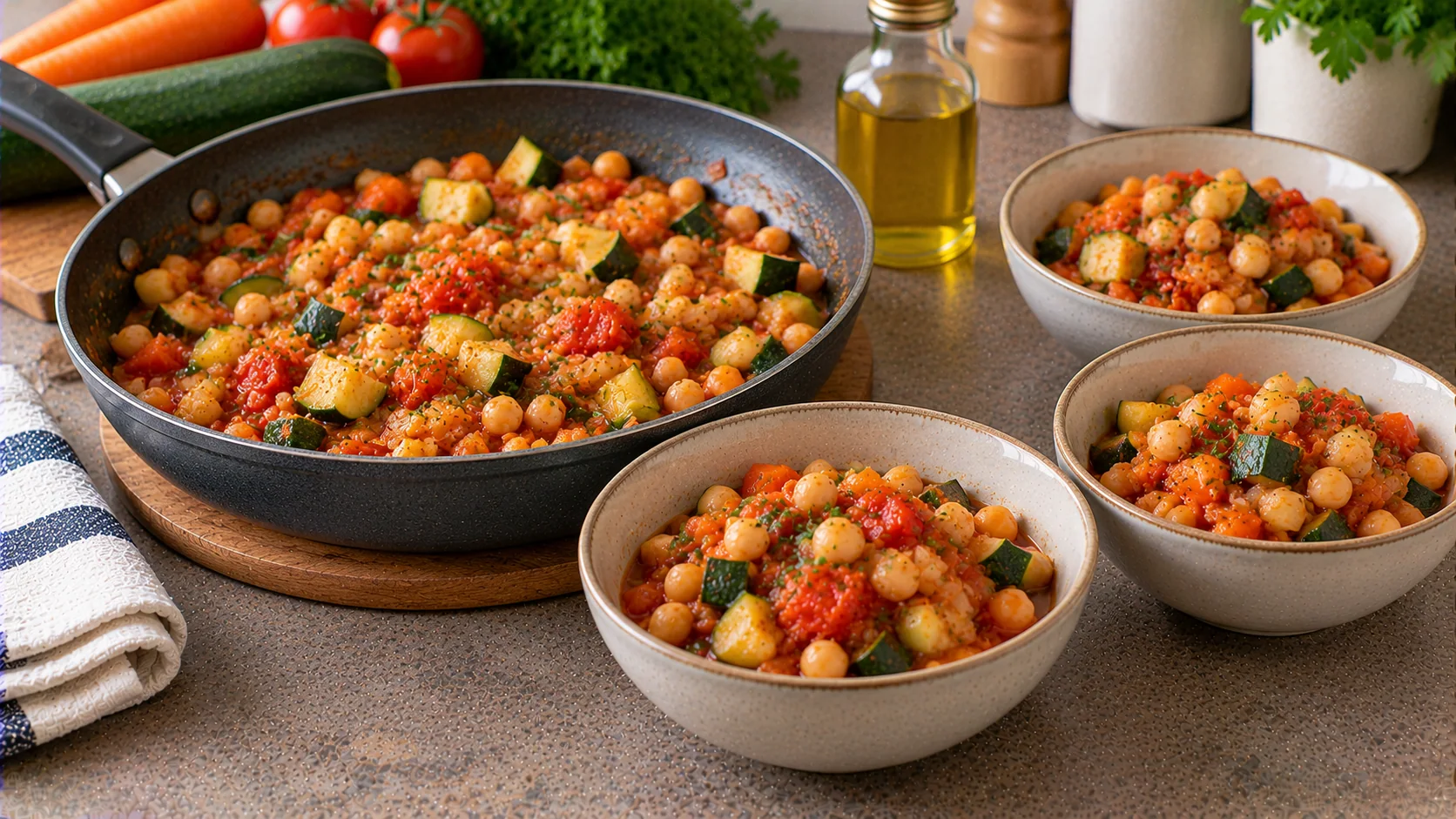
How to Count Cooking Oil in Shared Batch Meals
The problem with a shared pan
When a large pot feeds four or six people, logging all the cooking oil against one plate overstates its energy. Ignoring oil because the recipe contains vegetables understates it. The relevant question is how much oil was added to the batch, how much actually reached the food, and what fraction of the finished food was served. This is a portion-accounting method, not a laboratory measure of oil absorption. See our guide to oil left in the pan for the related issue of oil visibly left in a pan.
Weigh oil before it goes into the pan
Put the oil container on a kitchen scale, tare or record its weight, pour, then reweigh. The difference gives grams added. A tablespoon is a convenient cooking measure but can vary in size and fullness. For nutritional logging, grams are easier to reproduce. USDA FoodData Central reports approximately 884 kcal and 100 g fat per 100 g olive oil. That means 1 g of oil contributes about 8.84 kcal in this reference, not a universal promise for every branded blend. our balanced-plate guide can help put the resulting portion in context.
Example: one vegetable and bean batch, four portions
Assume 24 g of olive oil goes into a pan. The cooked beans, vegetables and grains make four equal 400 g portions after cooking. If the full 24 g remains with the served food, the oil contribution is 6 g fat and 53.04 kcal per portion. All the other ingredients must be calculated separately; these are oil-only numbers.
| Batch input | Entire batch | One of four equal portions |
|---|---|---|
| Oil added | 24 g | 6 g |
| Oil energy at 8.84 kcal/g | 212.16 kcal | 53.04 kcal |
| Fat from oil | 24 g | 6 g |
| Oil cost at €8 per litre | Not calculated without oil density | Not calculated |
Do not equate the food's cooked weight with the oil's weight. Water gained or lost during cooking changes the size of a serving but does not create or destroy the oil that was put in.
Formula for equal portions
Oil grams per portion = oil grams allocated to the batch ÷ number of equally sized portions. Oil calories per portion = oil grams per portion × the label's energy per gram (or the reference 8.84). Keep units consistent. For 15 g used in five equal containers, the allocation is 3 g and approximately 26.5 kcal per container. If you know the ingredient weights before cooking, still base the final serving division on actual portions eaten rather than assumed raw-to-cooked conversions.
Unequal portions: divide by finished weight
Imagine the finished batch weighs 1,600 g, but one person eats 500 g and another 300 g. Assuming even oil distribution, the first receives 500/1,600 × 24 = 7.5 g oil and about 66.3 kcal; the second receives 4.5 g and about 39.8 kcal. Stir thoroughly before dividing. If the oily sauce pools at the bottom, proportional allocation is only an estimate.
| Actual serving | Fraction of 1,600 g | Allocated oil | Oil energy |
|---|---|---|---|
| 300 g | 18.75% | 4.5 g | 39.8 kcal |
| 400 g | 25% | 6 g | 53.0 kcal |
| 500 g | 31.25% | 7.5 g | 66.3 kcal |
What if oil stays in the pan?
A greasy film or puddle may be left behind. The difference between oil poured and oil eaten is not reliably determined by looking: juices and water mix with fat, and food can retain oil. Use a range when precise measurement is impossible. A conservative logging convention is to allocate all the oil added unless a measurable amount is clearly discarded. If 4 g of oil could reliably be isolated and discarded from an initial 24 g, 20 g remains for the meal: 5 g and about 44.2 kcal across four equal servings. Never subtract an arbitrary fraction simply because the pan appears shiny.
Avoid double counting
If your recipe app already includes 24 g olive oil in the batch, do not add another 6 g to each of four servings: that counts the same oil twice. If you log the bean-and-grain mix as its ingredients without oil, add the allocated oil separately. A ready-made sauce may already list added fat; inspect the label before adding extra oil in the record. Distinguish a genuinely additional drizzle from the cooking fat already included.
When there are leftovers
If four portions are prepared but only three are eaten today, the fourth portion still carries its assigned oil. Do not divide total oil only among today's diners. For an unevenly portioned casserole, weigh the cooked food left in the container and allocate the same grams of oil per 100 g of mixed finished food. Label containers with the date and relevant recipe entry for later logging.
Oil spray and absorbent ingredients
An aerosol can deliver different amounts according to pressure and spray duration. Weigh the bottle before and after where practical, and check whether the propellant or water changes the product composition. Eggplant, breadcrumbs and porous foods may absorb more oil than beans or intact potatoes. This is one reason the equal-distribution model should not be presented as an exact absorbed-fat measurement. Deep-frying requires a different approach: oil taken up by the food cannot be inferred from the full fryer volume.
A quick audit of your calculation
The sum of all serving allocations must match the total oil assigned to the finished batch. With four portions at 6 g, 4 × 6 = 24 g. If the same batch is weighed into 300, 400, 400 and 500 g, those fractions sum to 1,600 g and their assigned oil sums to 24 g. Round only after calculating, otherwise small differences can accumulate. Keep the oil energy separate from the total meal energy until all ingredients have been accounted for.
Practical recording workflow
Record the type of oil, weighed amount, other ingredients, finished batch weight, number or weight of portions, and any genuinely measurable discarded oil. Name the recipe once in your tracker. When you reheat a portion, count any new oil added during reheating; do not count the original batch oil a second time. This approach is particularly useful for families, meal-prep boxes and shared dinners.
Sources
- USDA FoodData Central — food search: olive oil reference, roughly 884 kcal and 100 g fat per 100 g; check the entry and your own label.
- USDA FoodData Central — homepage: composition-data context. All example portions and allocations are arithmetic illustrations, not laboratory measurements of retained oil.