
Cooked pasta is convenient for lunch boxes and weeknight dinners, but leaving a warm saucepan on the stove until bedtime is not a safe meal-prep method. The issue is less the shape of the pasta than the time it spends warm after cooking. A practical plan begins with small containers, prompt refrigeration and portions that are removed only when needed.
This guide is about plain cooked pasta, such as spaghetti, penne or fusilli, drained after cooking. A creamy chicken pasta, seafood pasta salad or dish with cheese has additional ingredients and may require stricter handling. Follow an earlier use-by instruction when applicable. The advice below compares official guidance rather than inventing a pasta-specific universal expiry date.
How long can cooked pasta stay in the fridge?
There are different official approaches. The USDA guidance for cooked leftovers allows 3–4 days when food is cooled promptly and kept at 4°C or below. The UK Food Standards Agency recommends eating leftovers within 48 hours or freezing them. These are different authorities' recommendations, not two numbers that can be silently averaged. For an uncomplicated household meal-prep plan, eating plain pasta within 48 hours is a cautious choice. A 3–4-day plan relies on consistently following the USDA conditions and may not match more conservative national guidance.
| Situation | Action | What the time means |
|---|---|---|
| Freshly cooked pasta to serve now | Serve immediately | No holding on a warm counter |
| Portions for tomorrow | Cool quickly and refrigerate | Keep at 4°C or below |
| UK-style conservative planning | Eat or freeze within 48 hours | General FSA leftovers guidance |
| USDA leftovers guidance | Use within 3–4 days | Properly cooled and consistently refrigerated |
| Meal planned beyond the fridge window | Freeze promptly at −18°C or below | Quality can decline over time |
| Left outside too long | Discard | Reheating is not a rescue step |
The clock starts after preparation; reheating on day two does not restart the storage period. Write the preparation date on each container. If you cannot verify when or how a batch was stored, do not estimate safety from smell alone.
Cool pasta quickly after cooking
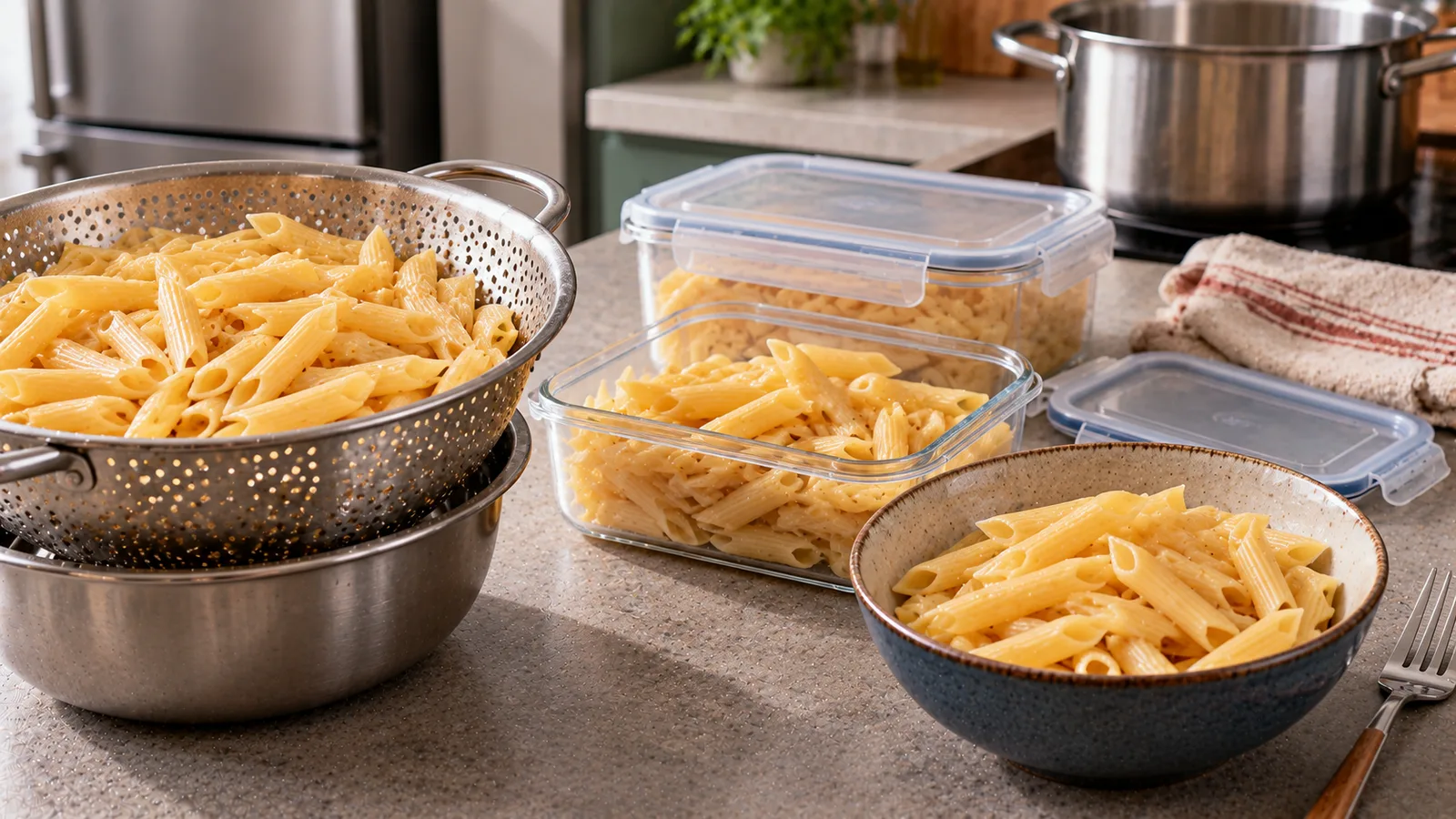
Drain the pasta, portion it with clean utensils and spread it among shallow, food-safe containers. A tightly packed deep pot retains heat much longer than several small portions. Put the containers in the refrigerator promptly; modest amounts of hot food may go directly into a working refrigerator. Avoid stacking many warm sealed boxes together so tightly that cold air cannot circulate. According to FoodSafety.gov, perishable leftovers must be refrigerated within 2 hours of cooking, or 1 hour when the surrounding temperature is above 32°C.
The two-hour rule is an outside limit, not an instruction to leave pasta at room temperature for two hours. Cooling should begin immediately. If you are preparing 900 g of cooked pasta for three meals, divide it into three approximately 300 g servings, rather than chilling a single 900 g block. Those weights are an organisational example, not a nutritional measurement or a guaranteed cooling rate. Measure how quickly your actual containers cool instead of assuming every portion behaves identically.
Do not rinse cooked pasta under questionable water or handle it with the same utensils used for raw poultry. Clean hands, surfaces and utensils help prevent recontamination after cooking. Refrigeration slows growth; it does not sterilise food.
Store and portion a batch without warming it repeatedly
Set the refrigerator to 4°C or below and confirm its temperature with an appliance thermometer. Use clean containers with fitted lids once sufficiently cooled; label them with the cooking date. Place ready-to-eat pasta away from dripping raw foods. A little oil may reduce sticking, but oil does not extend the microbiological storage time. Adding tomato sauce or cheese changes the recipe, not the fundamental need for prompt cooling.
For an ordinary three-meal example, cook pasta in the evening, immediately portion the batch, refrigerate tomorrow's serving, and freeze any portion you know will not be eaten within the applicable refrigerated window. Do not repeatedly take the entire batch out to scoop a handful. Removing one closed serving at a time reduces repeated exposure to warm kitchen air. If you have made a mixed pasta meal, assess all its ingredients and use the shorter relevant storage period.
Plain pasta can be eaten cold if it was cooked correctly, cooled quickly and refrigerated safely. Cold is a serving preference, not a substitute for correct handling. For travel or a work lunch, use an insulated bag with a cold pack where refrigeration is not available; a closed container alone does not keep food cold for hours.
Reheat only the portion you intend to eat
Reheat the selected portion until it reaches 74°C in the centre (165°F), the USDA leftovers target. Add a splash of water in a pan and stir frequently, or use a microwave-safe covered dish with a vent, pausing to stir and allowing standing time. Microwaves can leave cold spots, so a food thermometer provides a more reliable check than a hot rim or visible steam alone. The USDA reheating guidance describes this approach; the FSA recommends reheating food only once and making sure it is steaming hot throughout.
It is better to reheat a single serving than to warm and cool the same large box repeatedly. Do not place a lukewarm container back in the fridge and treat it as a new batch. A sauce prepared separately should also be heated and stored according to its own ingredients. If the pasta has spent too long warm, bringing it to a high temperature later does not guarantee that it is safe.
Why pasta needs special attention: Bacillus cereus
Dry pasta is shelf-stable; cooked, moist pasta is not. Food Standards Australia New Zealand identifies pre-cooked starchy foods, including pasta and rice, as relevant foods for Bacillus cereus. This bacterium can form spores, and some toxins are resistant to ordinary cooking temperatures. Improper cooling and warm holding create conditions in which the organism may multiply. The practical response is prompt cooling and cold storage, not alarm about every properly refrigerated portion.
Food contaminated with harmful microorganisms may look and smell normal. Visible mould, an unusual odour or slime is a clear reason to discard pasta, but an ordinary appearance is not proof of safety. Never taste a suspicious sample to decide. Discard pasta that has remained unrefrigerated beyond the applicable time limit, even if you believe you can reheat it thoroughly.
Freeze extra portions and plan the next meal
Freeze surplus cooked pasta promptly in one-meal portions at −18°C or below. Use airtight freezer-suitable packaging, note the date and leave only enough space for practical handling. Smaller portions can be reheated more evenly; add a little water to restore moisture. Thaw in the refrigerator or heat safely from frozen, not overnight on the kitchen counter. Freezing stops microbial growth while food remains frozen; it does not undo unsafe handling before freezing.
The USDA lists 3–4 months as a general freezer quality period for leftovers, not a guarantee that all pasta textures will remain ideal. Very soft pasta may lose firmness earlier. If you prefer al dente pasta, slightly undercooking the batch intended for freezing may help its texture, but it does not change the cooling and heating requirements. Always check the food's condition and the original handling history.
For related ingredient questions, see pasta nutrition and portion weights · protein and lentil pasta compared.
Sources
- USDA FSIS — Leftovers and Food Safety. Refrigerated and frozen leftovers, rapid cooling and reheating to 74°C.
- UK Food Standards Agency — Cooking Your Food. Using leftovers within 48 hours and reheating once.
- Food Standards Australia New Zealand — Bacillus cereus in food. Risk in cooked starches and why temperature control matters.
- FoodSafety.gov — Four Steps to Food Safety. Refrigerator and freezer temperatures and the 2-hour/1-hour limits.