
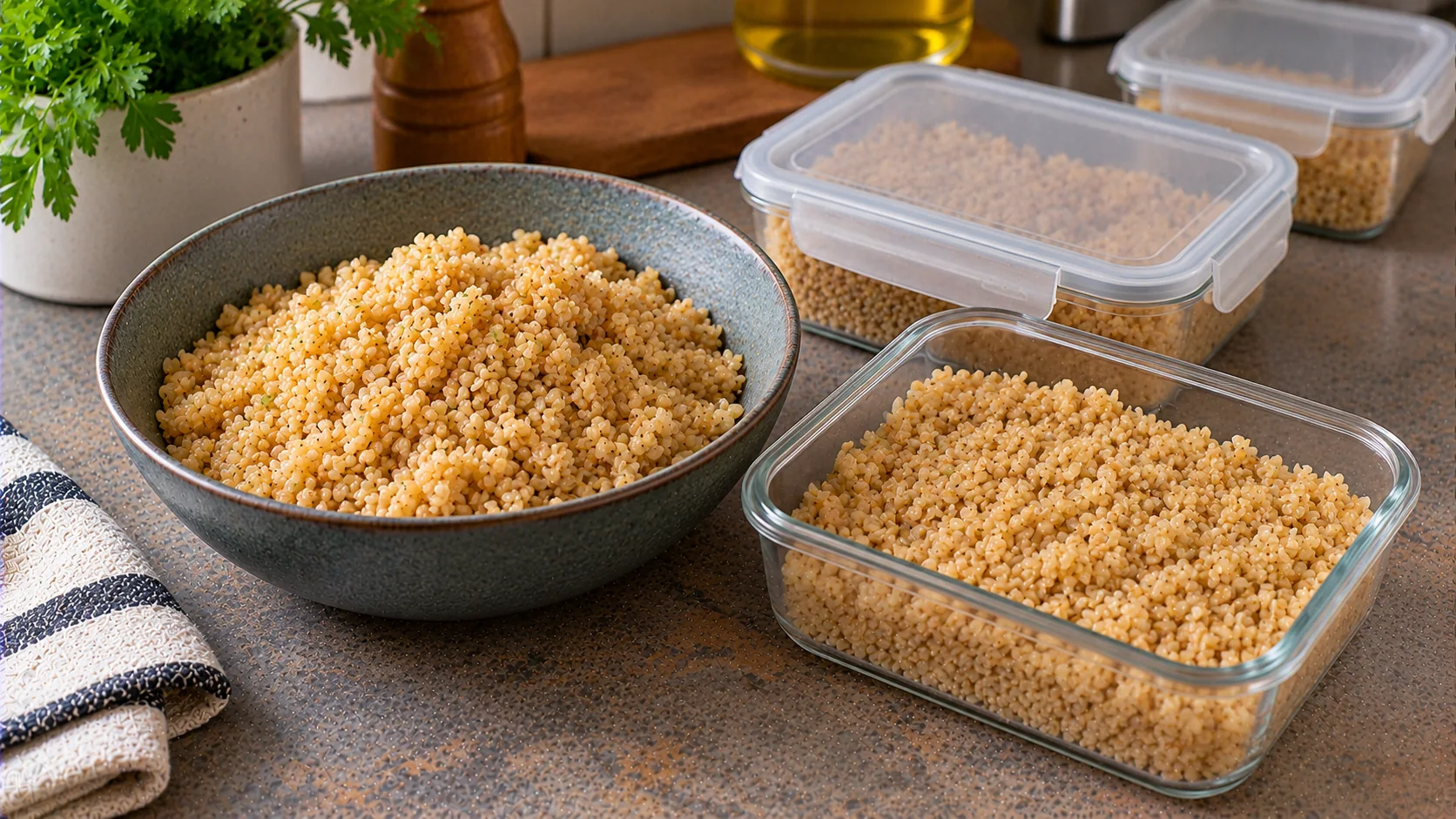
Can You Freeze Cooked Bulgur? Safe Cooling and Texture
Yes. Cooked bulgur can be frozen, provided it was handled safely before freezing. Freezing makes a convenient grain base for lunches, but it does not reverse unsafe time spent at room temperature. The essential steps are to cook with clean equipment, divide the bulgur into shallow portions, cool it promptly, seal it and freeze it before it sits warm for too long. This is a storage guide, not a new bulgur recipe.
First identify the bulgur you cooked
Bulgur is parboiled, dried, cracked wheat. Fine bulgur often hydrates with hot water, while coarse bulgur may need simmering. Follow your packet, because the water absorbed and the final tenderness differ. Wheat is an allergen: freezing does not remove gluten. The method here applies to plain cooked bulgur without meat or dairy sauce; for mixed meals the most perishable ingredient may set stricter handling requirements.
A safe timeline from pot to freezer
The USDA guidance on leftovers advises placing leftovers in refrigeration within two hours and using shallow containers to speed cooling. In a very hot environment above 32°C/90°F, the limit is one hour. The safest routine is to divide the grain immediately after cooking rather than leave a deep covered pot on the stove to cool overnight. The USDA's basic food safety guidance supports prompt cooling and thorough reheating.
| Stage | Action | Check |
|---|---|---|
| Just cooked | Fluff with a clean fork | No other food mixed in inadvertently |
| Prompt cooling | Divide into shallow containers | Do not leave a deep pot on the counter |
| Within 2 hours | Refrigerate or freeze | Within 1 hour when above 32°C |
| Frozen storage | Seal, date and label | Keep at about −18°C |
| Serving | Reheat thoroughly once | Food should be steaming hot throughout |
How to portion 600 g of cooked bulgur
For example, suppose 200 g dry bulgur produces 600 g cooked, an illustrative threefold yield rather than a guaranteed package instruction. Divide it into four 150 g cooked portions. The calculation is 600 ÷ 4 = 150 g. Alternatively make three 200 g portions. Freezer labels should state the cooked weight; 150 g cooked is not 150 g dry. Use a kitchen scale after cooking if portions need to be consistent. The water absorbed changes the weight but does not create additional protein or fibre.
Four steps to freeze individual portions
- Prepare bulgur according to the package directions, keeping the grain slightly firm if you plan to reheat it later.
- Spread it in a shallow clean container; split large batches into several containers for quick cooling. Move them into the refrigerator or freezer promptly rather than waiting until they have spent hours at room temperature.
- Once cooled, transfer into freezer-safe airtight containers or bags. Press bags flat, leave a little expansion space and remove excessive air to reduce drying. Do not seal steaming-hot grain in a deep insulating mass.
- Label with the date, cooked weight and any additions. Freeze at approximately −18°C and rotate older portions forward.
How long will texture stay good?
USDA guidance for frozen leftovers commonly uses three to four months as a quality guideline, not a sharp microbiological expiration date for continuously frozen foods. Bulgur may remain safe longer if consistently held frozen, but its taste and texture can deteriorate. Start with a one- to three-month quality target for plain bulgur and check it after thawing. This shorter target is practical advice, not a formally measured shelf-life study specific to bulgur. Discard portions that were mishandled before freezing regardless of how recently they were packed.
Thawing and reheating options
Thaw overnight in the refrigerator, or use the microwave defrost function followed by immediate full reheating. For a frozen portion, add 1–2 tablespoons of water to a microwave-safe covered bowl, stir halfway and heat until steaming hot throughout; a thermometer target of 74°C/165°F is used in USDA leftover guidance. On a hob, warm with a splash of water in a covered pan, stirring so no cold centre remains. Do not leave the container on the counter all day. When microwaving directly from frozen, allow additional time and break up any icy clumps.
The UK's Food Standards Agency reminder about cooked rice stresses quick handling of cooked grains and reheating only once. Its rice-specific one-day refrigerated limit should not be presented as a scientifically established bulgur-specific rule. A conservative approach for cooked bulgur is to chill promptly, freeze planned later portions early and avoid repeated warming and cooling.
What happens to texture?
Bulgur's grains may feel softer or clump after freezing because ice and reheating redistribute moisture. Fine bulgur is more likely to become compact; coarser bulgur can hold a looser bite. This is a kitchen expectation rather than a measured result for every brand. Spread freshly reheated bulgur with a fork, add a teaspoon or two of water if dry, and avoid aggressive boiling. A little olive oil or lemon dressing belongs after reheating for better flavour control; additions change calories and should be counted in a complete meal.
Where frozen bulgur works best
Frozen bulgur is useful for warm grain bowls, soups added near the end, stuffed peppers, and quick pan dishes. For cold salads, reheat and cool safely in the refrigerator before adding raw vegetables; do not mix a hot grain portion into a sealed lunchbox of cold ingredients and leave it unrefrigerated. For a prepared bulgur meal example, see a bulgur meal example. For broader make-ahead portions and grocery planning, see batch-cooking and portion planning. Both uses require that chilled ingredients remain cold during transport.
Mistakes that are worth avoiding
A full saucepan can stay warm in the centre long after the outside feels cool. Divide it. A freezer does not sterilise food that sat out overnight. Reheating repeatedly is also a poor strategy: portion before freezing so you warm only what you eat. If the grain was prepared with dairy, fish or meat, follow the stricter applicable advice for the complete dish. Labeling the cooked weight and date prevents confusion with dry weights and unknown leftovers.
Sources
- USDA FSIS — Leftovers and Food Safety — rapid cooling, refrigerated and frozen leftover guidance.
- USDA FSIS — Steps to Keep Food Safe — the two-hour rule, shallow containers and thorough reheating.
- UK Food Standards Agency — Student Food Safety — grain and rice handling context, not a specific bulgur shelf-life measurement.