
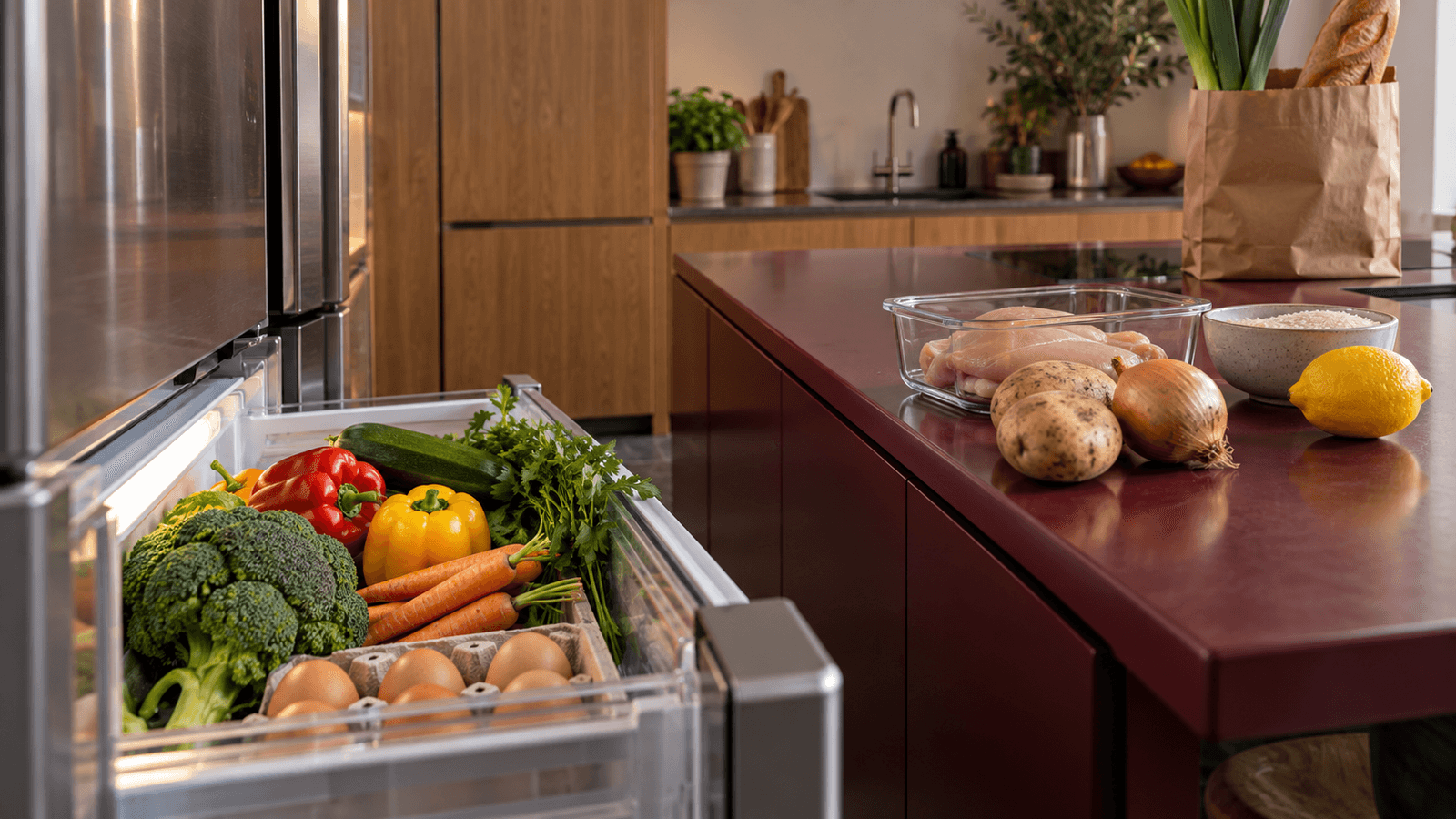
Meal planning does not have to mean preparing seven identical containers on Sunday or deciding exactly what you will eat every hour of the week.
At its simplest, meal planning means deciding what you are likely to eat before you become hungry and need to make the decision immediately.
A useful plan can be as simple as knowing:
- what you will eat for breakfast
- what you can take for lunch
- what you will cook for dinner
- which snacks are available
- what ingredients you need to buy
For beginners, the best meal plan is usually not the most detailed one. It is the one that makes everyday eating easier.
This guide shows you how to build one step by step.
What is meal planning?
Meal planning is the process of deciding meals in advance.
You might plan:
- one day
- several days
- a full week
Some people plan every meal. Others plan only dinners because that is the part of the day that causes the most difficulty.
There is no requirement to use a particular system.
The purpose is simply to reduce last-minute decisions and make sure the food you need is available when you need it.
Why meal planning can help
Without a plan, food decisions often happen when you are already:
- hungry
- tired
- busy
- commuting
- working
- looking after a family
That can make the easiest available option more attractive than the option you would have chosen earlier.
Meal planning moves some of those decisions to a calmer moment.
It can help you:
- organize groceries
- use ingredients you already own
- reduce unnecessary food purchases
- create more balanced meals
- control portions more consistently
- make cooking easier
- reduce food waste
- spend less time deciding what to eat
Meal planning is not automatically healthier or cheaper. The benefit depends on what you plan and whether the system actually fits your life.
Step 1: Decide how many days to plan
You do not need to begin with seven days.
If you have never planned meals before, start with two or three days.
For example:
Monday
- breakfast
- lunch
- dinner
Tuesday
- breakfast
- lunch
- dinner
Wednesday
- breakfast
- lunch
- dinner
Once that feels easy, extend the plan.
Planning fewer days can also be useful if your schedule changes frequently.
A flexible three-day plan that you actually use is better than a perfect seven-day plan that becomes irrelevant by Tuesday.
Step 2: Look at your schedule
Your calendar should influence your meal plan.
Before choosing recipes, ask:
- Which days will I be home late?
- Which days do I have more time to cook?
- Will I eat at a restaurant?
- Do I need lunch away from home?
- Are there evenings when cooking is unrealistic?
- Will anyone else be eating with me?
A meal plan should solve real logistical problems.
For example, planning a 60-minute dinner on the evening when you arrive home at 21:00 is unlikely to work.
That day may need:
- leftovers
- a very quick meal
- something prepared earlier
- a convenient freezer option
Save longer recipes for days when you actually have time.
Step 3: Check what food you already have
Before writing a grocery list, look in:
- the refrigerator
- freezer
- cupboards
- pantry
You may already have:
- vegetables that need to be used
- half a package of rice
- frozen fish
- eggs
- yogurt
- canned beans
- pasta
- potatoes
- sauces or herbs
Build some meals around these ingredients first.
This reduces duplicate purchases and helps prevent food waste.
A useful question is:
What should I use before I buy more food?
Mealisa's fridge-based workflow follows the same principle: identify available foods first, then generate useful meal ideas around them.
Step 4: Choose your main meals
For many beginners, dinner is the easiest place to start.
Choose a small number of realistic meals.
For example:
Monday: chicken, potatoes and roasted vegetables
Tuesday: lentil pasta with tomato sauce and salad
Wednesday: salmon, rice and broccoli
Thursday: leftovers
Friday: tofu stir-fry with vegetables and noodles
You do not need seven completely different recipes.
Repeating components can make planning much easier.
For example, roasted vegetables prepared on Monday might also be used in Tuesday's lunch.
Rice cooked for one dinner might become part of lunch the next day.
This is different from eating identical meals all week.
Step 5: Use a simple meal structure
If choosing meals feels difficult, use a basic framework.
A main meal can often be built from:
Protein
Examples:
- chicken
- fish
- eggs
- tofu
- tempeh
- beans
- lentils
- yogurt
Carbohydrate source
Examples:
- potatoes
- rice
- pasta
- bread
- oats
- couscous
- other grains
Vegetables or fruit
Choose what you enjoy, what is in season, or what needs to be used.
Dietary fat or sauce
Examples:
- olive oil
- nuts
- seeds
- avocado
- yogurt-based sauce
- pesto
Not every meal needs to follow this formula exactly. It is simply an easy starting point.
For more context on protein, carbohydrates and fat, see What Are Macros?.
Step 6: Plan breakfasts simply
Breakfast does not need seven different recipes.
In fact, repeating a breakfast you enjoy can reduce planning work.
Simple options include:
- skyr or Greek yogurt with oats and berries
- eggs with whole-grain toast and vegetables
- overnight oats with yogurt and fruit
- cottage cheese with fruit and nuts
- oatmeal with milk or yogurt
You might choose two breakfast options and alternate between them.
For example:
Option A: yogurt + oats + berries
Option B: eggs + toast + vegetables
That is already enough variety for many people.
Step 7: Plan lunches around convenience
Lunch often needs to work around school, work or travel.
Useful approaches include:
- leftovers from dinner
- sandwiches or wraps
- grain bowls
- salads with a protein source
- soup
- pre-cooked components assembled quickly
Leftovers are especially useful because they turn one cooking session into more than one meal.
If you cook four portions of dinner for two people, the remaining two portions can become tomorrow's lunch.
Step 8: Decide whether you need snacks
Not everyone needs planned snacks.
But if you regularly become hungry between meals, having an option available can prevent random food decisions.
Simple snacks might include:
- fruit
- yogurt
- skyr
- boiled eggs
- vegetables with hummus
- a small portion of nuts
- cottage cheese
Planning a snack does not mean you have to eat it.
It simply means you have a suitable option if you need one.
Step 9: Turn the meal plan into a grocery list
Once the meals are chosen, list the ingredients required.
Then remove anything you already have.
A useful grocery list can be organized into categories:
Vegetables and fruit
- broccoli
- peppers
- tomatoes
- salad
- berries
- apples
Protein foods
- chicken
- salmon
- eggs
- yogurt
- tofu
- beans
Carbohydrate foods
- potatoes
- rice
- oats
- whole-grain bread
- pasta
Other items
- olive oil
- herbs
- spices
- sauces
Organizing the list by store section can make shopping faster.
Step 10: Check quantities
A grocery list is more useful when it reflects the number of meals you are actually planning.
If chicken appears in three meals, estimate how much you need for those meals rather than simply writing "chicken."
You do not need laboratory precision.
The goal is to avoid buying far too much or discovering halfway through the week that an important ingredient is missing.
Step 11: Reuse ingredients intentionally
Ingredient overlap is one of the easiest ways to make meal planning more efficient.
Suppose you buy:
- chicken
- potatoes
- broccoli
- peppers
- rice
- yogurt
Those ingredients could become:
Meal 1: chicken + potatoes + broccoli
Meal 2: chicken + rice + peppers
Meal 3: potato and vegetable bowl with yogurt sauce
You still eat different meals, but fewer ingredients need to be purchased.
This can reduce both cost and food waste.
Step 12: Include one or two emergency meals
Plans change.
Keep at least one meal available that requires almost no effort.
Examples:
- frozen vegetables + eggs + bread
- canned beans + rice + salsa
- frozen fish + potatoes + vegetables
- soup + whole-grain bread + yogurt
- pasta + tomato sauce + tuna
An emergency meal prevents a disrupted schedule from destroying the entire plan.
It is not a failure of meal planning.
It is part of good meal planning.
Step 13: Do not plan every minute
Leave some flexibility.
You might plan five dinners and leave two evenings open for:
- leftovers
- restaurants
- spontaneous cooking
- social events
You can also move meals between days.
If Wednesday's salmon becomes Thursday's salmon, the plan still worked.
The plan is a tool, not a contract.
A simple 3-day beginner meal plan
Here is an example.
Day 1
Breakfast: Greek yogurt, oats and berries
Lunch: chicken wrap with vegetables
Dinner: salmon, potatoes and broccoli
Snack if needed: apple and yogurt
Day 2
Breakfast: eggs, whole-grain toast and tomatoes
Lunch: leftover salmon and potato bowl with salad
Dinner: lentil pasta with tomato sauce and vegetables
Snack if needed: fruit and a small portion of nuts
Day 3
Breakfast: oatmeal with yogurt and berries
Lunch: lentil pasta leftovers
Dinner: chicken, rice and roasted vegetables
Snack if needed: skyr
This is only an example. Portions and food choices should be adjusted to individual needs and preferences.
How to meal plan for balanced nutrition
Meal planning can make balanced eating easier because you can see the entire pattern before the week begins.
Ask:
- Do most meals contain a useful protein source?
- Am I including vegetables and fruit regularly?
- Do I have fibre-rich foods?
- Are portions appropriate for my needs?
- Is there enough variety?
- Does the plan actually fit my schedule?
You do not need to make every individual meal nutritionally perfect.
Look at the overall pattern.
Meal planning for weight loss
Meal planning can also support weight-management goals by making portions and food choices more predictable.
Useful strategies include:
- planning protein sources
- including plenty of vegetables
- knowing where higher-calorie meals will occur
- planning snacks instead of choosing them impulsively
- keeping convenient lower-effort meals available
However, meal planning itself does not guarantee weight loss.
Weight change still depends substantially on overall energy balance.
For more detail, see How to Lose Weight Sustainably and How Many Calories Should You Eat Per Day?.
Meal planning on a budget
Planning before shopping can reduce unnecessary purchases.
To control costs:
- check what you already own
- use ingredients across several meals
- compare price per kilogram or unit
- use frozen vegetables when appropriate
- include affordable proteins such as beans, lentils and eggs
- plan how leftovers will be used
- avoid buying ingredients for recipes you are unlikely to cook
A cheap ingredient that gets thrown away is not actually economical.
Budget meal planning is therefore partly about using what you buy.
Meal planning when cooking for two or more people
You do not necessarily need separate meals for everyone.
Start with a common base and adjust components.
For example:
Base meal: chicken, rice and vegetables.
One person may want:
- more rice
- less rice
- more vegetables
- a different sauce
- a different portion of chicken
The meal can remain largely the same.
This reduces cooking complexity while still allowing individual portions.
How much variety do you need?
You do not need 21 completely different meals every week.
Too much variety can actually make planning harder because every recipe requires different ingredients.
A practical approach might be:
- 2 breakfast options
- 3 lunch options
- 4–5 dinner options
- 2–3 snack options
Then rotate them.
Over time you can build a personal library of meals that are:
- easy
- affordable
- nutritious
- enjoyable
- predictable to shop for
Use leftovers strategically
Leftovers are not merely food that happened to remain after dinner.
They can be planned intentionally.
If Tuesday is busy, Monday's dinner can be cooked in a larger quantity.
For example:
Monday dinner:
chicken + potatoes + vegetables
Tuesday lunch:
leftover chicken + vegetables in a wrap
The same ingredients become a different meal with very little additional work.
Batch cooking versus meal planning
Meal planning and batch cooking are not the same thing.
Meal planning means deciding meals in advance.
Batch cooking means preparing larger quantities of food at once.
You can meal plan without batch cooking.
You can also batch-cook only selected components such as:
- rice
- potatoes
- roasted vegetables
- chicken
- lentils
Then combine them differently during the week.
How long should meal planning take?
Once you have a routine, planning does not need to take long.
A simple weekly process might be:
- Check the calendar.
- Check the fridge and freezer.
- Choose several meals.
- Decide where leftovers will be used.
- Make the grocery list.
As your list of familiar meals grows, the process becomes faster.
Common meal-planning mistakes
Planning too many new recipes
Trying five complicated new recipes in one week creates unnecessary work.
Keep most meals familiar and add one new recipe if you want variety.
Ignoring your schedule
A meal is only practical if you actually have time to make it.
Buying before checking the fridge
This increases duplicates and food waste.
Planning without leftovers
Leftovers can save substantial cooking time.
Making the plan too strict
Unexpected events happen.
Leave room to move meals between days.
Choosing meals you think you should eat
A theoretically perfect meal is useless if you dislike it and repeatedly replace it with something else.
Plan food you genuinely want to eat.
Can an app create a meal plan for you?
Yes. Digital meal-planning tools can reduce the manual work involved in selecting meals and organizing food.
A useful system can take into account factors such as:
- calorie goals
- protein and macro targets
- dietary preferences
- allergies or intolerances
- available cooking time
- budget
- number of meals
- ingredients already available
Mealisa is designed around this type of personalized planning.
Instead of treating meal planning as a fixed generic menu, it can use your profile and food information to generate meals that better fit your situation.
What if you do not follow the plan?
Nothing special happens.
Move the unused meal to another day if the ingredients are still suitable.
Freeze ingredients when appropriate.
Use leftovers.
Adjust the next grocery list.
The purpose of planning is to make life easier, not to create another rule you can fail.
A 10-minute meal-planning routine
If you want the simplest possible process:
Minute 1–2: Check your calendar
Identify busy evenings and meals away from home.
Minute 3–4: Check your food
Look through the refrigerator, freezer and cupboards.
Minute 5–7: Choose meals
Pick several dinners and decide which can create leftovers.
Minute 8–9: Fill breakfast and lunch gaps
Use a few reliable options.
Minute 10: Write the grocery list
Add only what you actually need.
That is enough to create a useful plan.
Frequently asked questions
How many days should a beginner meal plan?
Start with two or three days if a full week feels difficult. Expand once the process becomes easy.
Do I need to meal prep?
No. Meal planning and meal preparation are different. You can decide your meals in advance without cooking them in advance.
Is it okay to eat the same breakfast every day?
Yes. Repeating meals you enjoy can simplify planning. Variety can come from other meals across the week.
Should I plan snacks?
Only if they are useful for you. Planning snacks can help if you regularly become hungry between meals.
How do I plan meals when my schedule changes?
Use flexible meals that can move between days and keep one or two emergency options available.
Can meal planning save money?
It can help by reducing duplicate purchases, encouraging ingredient reuse and making leftovers easier to use. Actual savings depend on what you buy and how much food is wasted.
Can meal planning reduce food waste?
It can. Checking existing food before shopping and deliberately planning how ingredients and leftovers will be used can reduce avoidable waste.
The bottom line
Meal planning does not need to be complicated.
Start by checking your schedule and the food you already have.
Choose a few realistic meals.
Reuse ingredients where it makes sense.
Turn those meals into a grocery list.
Keep one or two emergency meals available.
Then adjust the plan when real life changes.
The best meal plan is not the one that looks perfect on paper.
It is the one that makes everyday eating simpler, more predictable and easier to maintain.
This article provides general nutrition and meal-planning information. Individual dietary needs can vary, particularly with allergies, medical conditions, pregnancy or other specific nutritional requirements.