
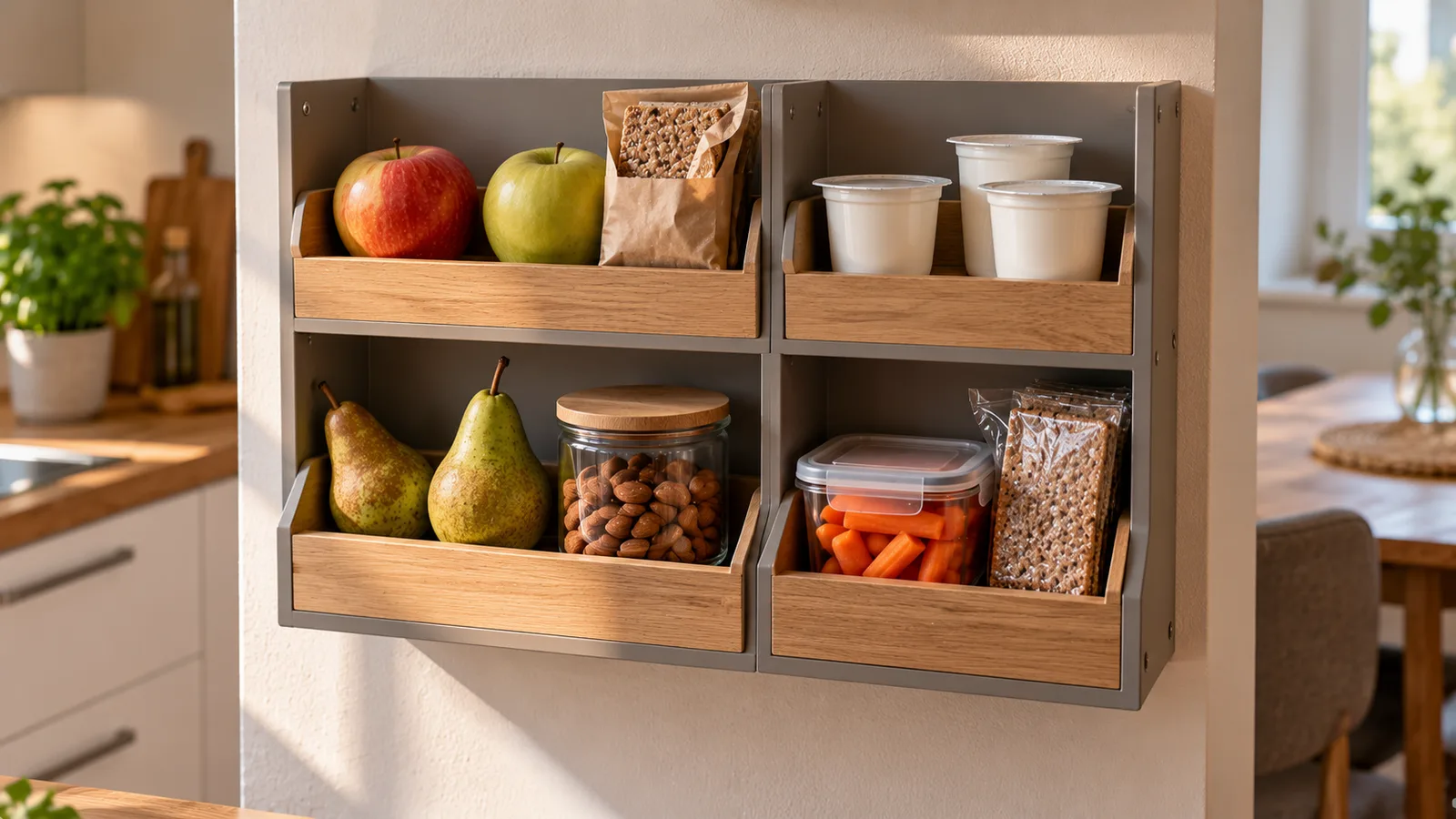
Planning snacks for the week does not mean preparing seven identical containers on Sunday.
A useful snack plan answers three simpler questions:
- When are you realistically likely to need a snack?
- What kind of snack will work in each situation?
- How much should you buy so that food is actually eaten?
The goal is to make snacks convenient without turning them into another complicated meal-prep project.
Start with your week, not with a snack list
Before deciding what to buy, look at the next seven days.
Mark the periods when a snack is likely to be useful.
For example:
| Day | Situation | Snack needed? |
|---|---|---|
| Monday | Long gap between lunch and dinner | Yes |
| Tuesday | Early dinner | Probably not |
| Wednesday | Afternoon away from home | Yes, portable |
| Thursday | Normal schedule | Optional |
| Friday | Late meeting | Yes |
| Saturday | Flexible day | Decide on the day |
| Sunday | At home | Optional |
In this example, buying seven mandatory snacks would make little sense.
You may only need three or four planned options plus a few flexible foods at home.
Decide why the snack is there
Not every snack needs the same purpose.
A snack might be useful because:
- there is a long gap between meals;
- you know dinner will be late;
- you need something portable while travelling or working;
- your planned meals are relatively small;
- you simply enjoy including a snack in your normal eating pattern.
If you routinely eat lunch at 13:00 and dinner at 18:00 without getting hungry, you do not need to schedule a snack just because a meal plan has a “snack” slot.
Use three snack categories
Instead of planning seven different recipes, divide options into three practical categories.
1. Grab-and-go
Useful when you have almost no preparation time.
Examples:
- fruit;
- plain yogurt or skyr;
- cottage cheese;
- a measured portion of nuts;
- ready-to-eat vegetables;
- a simple packaged option with suitable nutrition for your needs.
2. Two-component snacks
Combine two foods for a more substantial option.
Examples:
- yogurt + fruit;
- apple + nuts;
- vegetables + hummus;
- cottage cheese + berries;
- whole-grain bread + egg;
- banana + plain yogurt.
3. Prepared snacks
These require a little advance preparation.
Examples:
- overnight oats in a small container;
- boiled eggs with vegetables;
- homemade yogurt-and-oat mixture;
- portioned hummus with chopped vegetables;
- a small sandwich prepared for work.
You do not need options from every category every day.
The categories simply help match the snack to the situation.
Build a snack around what the rest of the day needs
Snacks do not exist separately from breakfast, lunch and dinner.
If lunch is low in protein, a protein-containing snack may fit well.
If the day's meals contain little fruit, fruit can be a useful snack component.
If dinner is soon, a smaller snack may make more sense than a substantial one.
This approach is more flexible than declaring one food the “perfect healthy snack.”
Protein can make a snack more substantial
Protein-containing snack options include:
- Greek yogurt;
- skyr;
- cottage cheese;
- eggs;
- tofu;
- hummus and other legume-based foods;
- milk or suitable dairy alternatives;
- leftovers of a protein-rich food when practical.
A snack does not need to be extremely high in protein.
The point is to consider the snack in the context of your overall day.
Add fruit or vegetables when practical
Fruit and vegetables are easy ways to add variety and fiber.
Options include:
- apples;
- bananas;
- berries;
- oranges;
- grapes;
- carrots;
- cucumber;
- peppers;
- cherry tomatoes.
Choose foods that match the situation.
A banana may be easier to carry than a container of chopped vegetables when you are away from home.
Nuts and seeds are useful but easy to overbuy
Nuts and seeds store well and are convenient, but they are energy-dense.
Instead of repeatedly eating directly from a large bag, you can portion the amount you intend to use.
They also work well as one component of a snack rather than the entire snack.
For example:
- apple + nuts;
- yogurt + seeds;
- fruit + a small portion of nut butter.
Plan quantities from actual snack occasions
Suppose you expect to need snacks on four weekdays.
You might plan:
- 2 yogurt-and-fruit snacks;
- 1 apple-and-nut snack;
- 1 vegetable-and-hummus snack.
Your shopping list then follows the plan.
You do not need seven yogurts, seven apples and seven portions of hummus unless you genuinely expect to eat them.
This reduces both overspending and food waste.
A sample five-day snack plan
| Day | Planned snack | Preparation |
|---|---|---|
| Monday | Skyr + berries | Pack in the morning |
| Tuesday | No planned snack | Keep fruit available if needed |
| Wednesday | Apple + nuts | Portable |
| Thursday | Carrots + hummus | Prepare the night before |
| Friday | Yogurt + banana | Grab and go |
Notice that the plan includes a day with no scheduled snack.
Weekly snack planning should reflect your routine rather than force extra eating.
Use perishability to decide what gets eaten first
Not every snack ingredient lasts equally long.
A practical order might be:
Earlier in the week
Use foods that are already ripe or have shorter usable lives.
Examples:
- ripe berries;
- opened yogurt;
- cut vegetables;
- prepared sandwiches.
Later in the week
Use more durable foods.
Examples:
- apples;
- oranges;
- unopened dairy products within their dates;
- nuts;
- shelf-stable options.
This simple sequencing can reduce the number of forgotten foods at the end of the week.
Keep one backup snack
Plans change.
Keep one or two durable options available for days when:
- a meeting runs late;
- you leave home unexpectedly;
- lunch is smaller than expected;
- dinner is delayed.
A backup could be:
- nuts;
- suitable whole-grain crackers;
- shelf-stable fruit;
- another portable option that fits your preferences.
The backup does not have to be eaten simply because it exists.
Do not prep everything seven days in advance
Some foods lose quality quickly after cutting or assembling.
Instead, divide preparation into two levels.
Weekly preparation
You can:
- buy the ingredients;
- boil several eggs;
- portion nuts;
- wash durable fruit;
- make sure portable containers are available.
Short-term preparation
Every one to three days:
- cut vegetables;
- assemble yogurt combinations;
- prepare sandwiches;
- portion foods that deteriorate quickly.
This reduces the chance that Friday's snack has been sitting prepared since Sunday.
Use overlapping ingredients
A good weekly plan uses ingredients in more than one place.
For example, buy:
- apples;
- plain yogurt;
- berries;
- carrots;
- hummus;
- nuts.
These can produce several combinations:
- yogurt + berries;
- apple + yogurt;
- apple + nuts;
- carrots + hummus;
- berries + yogurt + nuts.
Six ingredients can create variety without requiring six unrelated shopping lists.
Connect snacks with the rest of your meal plan
Ingredient overlap becomes even more useful when snack foods also appear in meals.
Examples:
- yogurt used at breakfast and as a snack;
- carrots used in lunch and with hummus;
- fruit used with breakfast and as a portable snack;
- eggs used in lunch and as a snack;
- bread used for breakfast and a small sandwich.
This can make grocery shopping simpler and reduce leftovers.
Plan portable snacks separately
A snack that works at home may not work on a train, in an office or while walking between appointments.
For days away from home, ask:
- Does it need refrigeration?
- Can it leak?
- Do I need utensils?
- Will it survive several hours in a bag?
- Can I eat it where I will be?
Plan portable days first because they usually have more constraints.
What about packaged snacks?
Packaged foods can be useful when convenience matters.
Instead of classifying them automatically as good or bad, consider:
- portion size;
- calories if relevant to your goals;
- protein;
- fiber;
- added sugars;
- salt;
- how satisfying you find the product;
- whether it actually fits the situation.
A packaged snack that prevents an unplanned convenience-store purchase may be useful even if it is not something you would choose at home.
If you are planning snacks for weight loss
A weekly snack plan can make calorie management easier because the snack is intentional rather than accidental.
But a snack is not automatically required for weight loss.
If you include one, consider:
- how it fits your daily calorie target;
- whether it helps manage hunger;
- whether it replaces or simply adds to other food;
- whether its portion is appropriate.
For the weight-loss-specific decision process, see How to Plan Snacks for Weight Loss.
If you track calories or macros
Reserve part of your daily target for snacks before assigning everything to main meals.
For example, if you normally eat one afternoon snack, include it when you split macros across meals.
That is usually easier than planning breakfast, lunch and dinner to use the full target and then trying to fit a snack into whatever remains.
If you do not track calories
Use a repeatable visual structure.
For example:
- one fruit + one protein-rich food;
- vegetables + a dip;
- one dairy food + fruit;
- a small bread-based snack + protein filling.
The hand portion method can also help when you want a visual way to estimate portions without weighing food.
How to make a snack shopping list
Do not start with the supermarket.
Start with the plan.
If your week contains four likely snack occasions, write those four first.
Example:
- Monday: yogurt + berries;
- Wednesday: apple + nuts;
- Thursday: vegetables + hummus;
- Friday: yogurt + banana.
Then translate them into ingredients:
- 2 yogurt portions;
- 1 portion berries;
- 1 apple;
- 1 banana;
- carrots or peppers;
- hummus;
- nuts.
Finally, check your kitchen before buying.
You may already have nuts, fruit or hummus.
A simple 10-minute weekly workflow
Minute 1–2: Check the calendar
Identify long gaps, travel, office days and late dinners.
Minute 3–4: Choose snack occasions
Decide which days genuinely need a planned snack.
Minute 5–6: Select options
Match portable foods to busy days and perishable foods to home days.
Minute 7: Check the kitchen
Look for foods that should be used first.
Minute 8: Calculate quantities
Buy for the number of expected snack occasions, not automatically for seven days.
Minute 9: Add one backup
Choose one durable emergency option.
Minute 10: Add items to the shopping list
Keep the list tied to the actual plan.
When plans change
Suppose Wednesday's meeting is cancelled and you no longer need the packed snack.
You can:
- move it to Thursday;
- use the ingredients at breakfast;
- add them to lunch;
- leave durable foods for another day.
A weekly plan should make changes easier, not create a rule that food must be eaten on a particular date.
Common planning mistakes
Planning seven snacks because there are seven days
Plan for actual eating occasions, not the calendar.
Buying too many different ingredients
More variety can create more leftovers.
Use overlapping ingredients.
Preparing fragile foods too early
Some snacks are better assembled closer to the day they will be eaten.
Forgetting portability
A good home snack may be inconvenient at work or while travelling.
Treating snacks as nutritionally isolated
Consider what breakfast, lunch and dinner already provide.
Ignoring what is already at home
Weekly planning should help use existing food before adding more.
A reusable snack-planning template
For each day, record:
| Question | Answer |
|---|---|
| Will I probably need a snack? | Yes / No / Optional |
| Where will I be? | Home / Work / Travelling |
| Does it need to be portable? | Yes / No |
| Main snack components | ___ |
| Preparation needed | ___ |
| Use-first ingredient | ___ |
You can complete the table in a few minutes.
After several weeks, you may notice that the same situations repeat.
Those patterns can become your default snack templates.
How Mealisa can help
Mealisa can treat snacks as part of the whole day rather than as isolated extras.
A weekly plan can account for your planned meals, remaining calories and macros, foods already available and the amount of preparation time you have.
When the schedule changes, the snack can be adjusted instead of rebuilding the entire day.
Key takeaway
Weekly snack planning is not about creating seven elaborate snack recipes.
A practical system is:
- identify when snacks are actually useful;
- match each situation with an appropriate type of snack;
- reuse ingredients across several combinations;
- buy only realistic quantities;
- prepare perishable foods close to when they will be eaten;
- keep one durable backup;
- adjust the plan when your schedule changes.
The result is a snack plan that supports the rest of your meals instead of becoming another complicated task.