
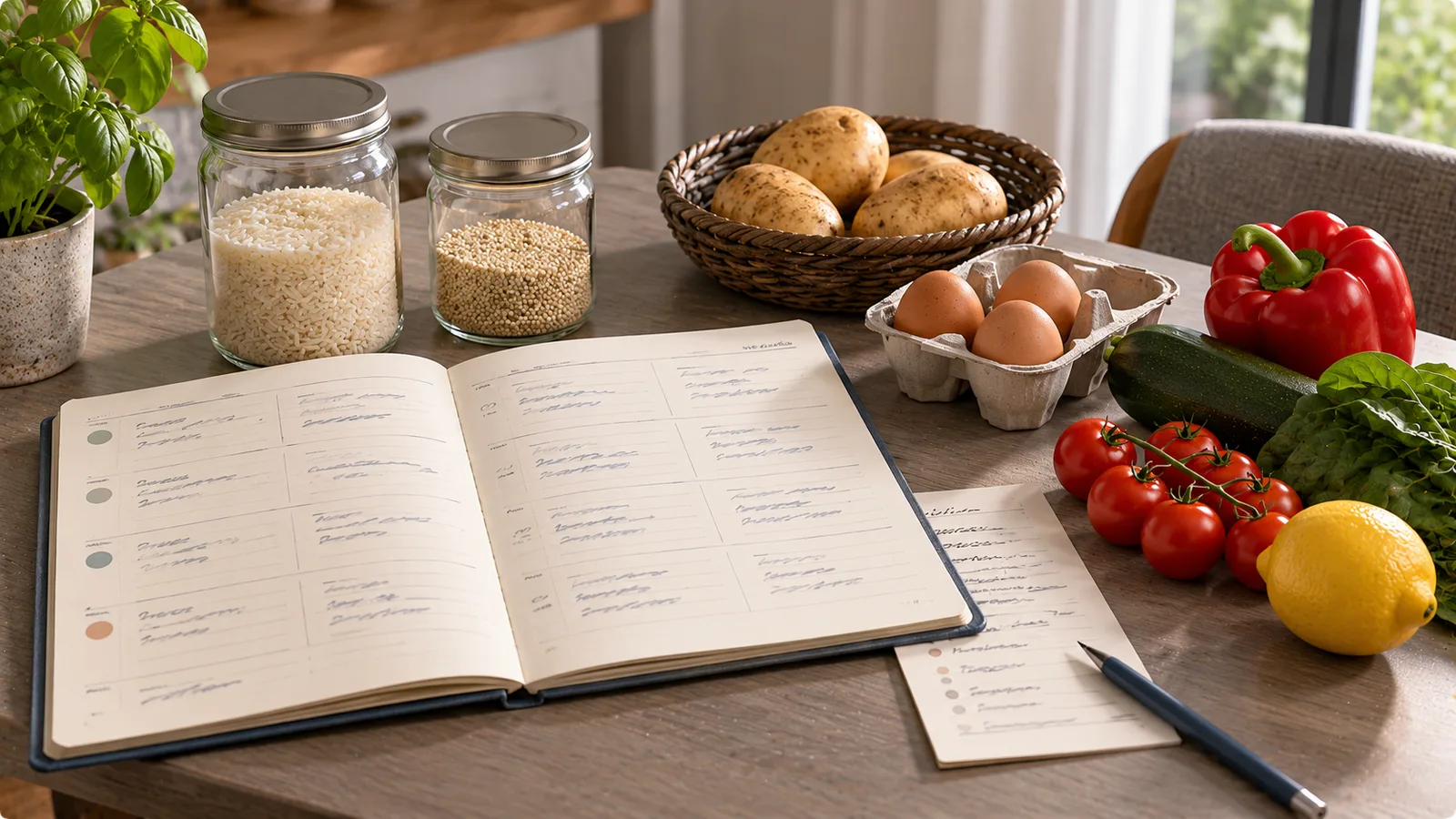
A gluten-free meal plan does not have to rely on specialty bread, expensive substitutes or complicated recipes.
Rice, potatoes, quinoa, vegetables, fruit, eggs, legumes, plain dairy products, fish and unseasoned meat can form the foundation of a varied week.
The challenge is choosing appropriate packaged ingredients, preventing gluten cross-contact and planning meals that are practical to prepare.
This seven-day gluten-free meal plan for one adult includes 21 meals, optional snacks, a consolidated shopping list and a preparation schedule.
It is a flexible example rather than an individualized prescription. Portion sizes should be adjusted to appetite, energy needs and medical circumstances.
Before you begin: what gluten-free means
Gluten is a group of proteins found in wheat, barley and rye.
For people with coeliac disease, avoiding gluten is a necessary medical treatment. Even small amounts from cross-contact can be relevant.
A gluten-free diet is not automatically healthier for everyone, and it is not a substitute for a medical diagnosis.
If you suspect coeliac disease but have not been tested, speak with a clinician before removing gluten, because changing your diet can affect the accuracy of diagnostic testing.
The NIDDK guidance on coeliac disease and diet and NHS treatment guidance explain these considerations.
Foods used in this plan
The meals rely mainly on:
- Rice, potatoes and quinoa.
- Certified or appropriately labelled gluten-free oats.
- Eggs, fish, chicken and plain yogurt.
- Beans, chickpeas and lentils.
- Vegetables, fruit, nuts and seeds.
- Clearly labelled gluten-free sauces and seasonings.
Naturally gluten-free ingredients can still be contaminated during production or preparation. Packaged ingredients should be checked individually.
Seven-day gluten-free meal plan
The portions below are examples for one adult. Grain weights are dry unless stated otherwise, while canned beans and fish are measured after draining.
| Day | Breakfast | Lunch | Dinner |
|---|---|---|---|
| Monday | Yogurt bowl with gluten-free oats, blueberries and walnuts | Chicken, rice and cucumber bowl | Baked salmon with potatoes and broccoli |
| Tuesday | Scrambled eggs, potatoes and tomatoes | Leftover salmon and quinoa salad | Turkey and bean chilli with rice |
| Wednesday | Overnight gluten-free oats with banana | Leftover turkey chilli | Chickpea and spinach curry with rice |
| Thursday | Greek yogurt, berries and pumpkin seeds | Leftover chickpea curry | Lemon chicken with roasted vegetables and quinoa |
| Friday | Spinach omelette and fruit | Chicken and quinoa salad | Baked cod with mashed potatoes and green beans |
| Saturday | Gluten-free oat porridge with apple | White bean and tuna salad | Beef and vegetable rice skillet |
| Sunday | Yogurt with fruit, gluten-free oats and almonds | Leftover beef and rice skillet | Lentil and vegetable soup with baked potatoes |
Leftovers should be cooled promptly, refrigerated and reheated safely. Freeze portions that will not be eaten within an appropriate refrigerated storage period.
Monday: start with simple ingredients
Breakfast: yogurt, oats and blueberries
Combine:
- 200 g plain Greek-style yogurt.
- 40 g labelled gluten-free oats.
- 100 g blueberries.
- 15 g walnuts.
Serve immediately or allow the oats to soften in the refrigerator.
Oats require special attention: ordinary oats may be contaminated with gluten-containing cereals. Choose oats specifically suitable for a gluten-free diet, and follow individual medical advice if oats are not tolerated.
Lunch: chicken and rice bowl
Use:
- 150 g raw chicken breast.
- 70 g dry rice.
- 100 g cucumber.
- 100 g tomato.
- 10 g olive oil.
- Lemon juice and herbs.
Cook the chicken thoroughly, prepare the rice and assemble the bowl.
Dinner: salmon, potatoes and broccoli
Use:
- 160 g salmon fillet.
- 250 g potatoes.
- 200 g broccoli.
- 10 g olive oil.
- Lemon and herbs.
Roast the potatoes and salmon until properly cooked. Steam or roast the broccoli.
Prepare an additional salmon portion for Tuesday's lunch only if you can cool and store it safely.
Tuesday: use leftovers strategically
Breakfast: eggs and potatoes
Prepare:
- 2 eggs.
- 200 g potatoes.
- 120 g tomatoes.
- 5 g olive oil.
Cook the potatoes and scramble the eggs in a clean pan.
Lunch: salmon and quinoa salad
Combine:
- 120–150 g safely stored cooked salmon.
- 60 g dry quinoa, cooked.
- 100 g cucumber.
- 80 g leafy greens.
- 10 g olive oil and lemon juice.
If leftover salmon is unavailable, cook a fresh portion or replace it with canned fish clearly labelled as gluten-free where relevant.
Dinner: turkey and bean chilli
For two servings, cook:
- 300 g raw ground turkey.
- 240 g canned kidney beans, drained.
- 400 g canned tomatoes.
- 150 g onion.
- 150 g bell pepper.
- 15 g olive oil.
- Gluten-free chilli seasoning.
Serve one portion with 60 g dry rice, cooked.
Refrigerate the second portion for Wednesday's lunch.
Check spice blends and stock products for gluten-containing ingredients.
Wednesday: a legume-based dinner
Breakfast: overnight oats
Mix the evening before:
- 50 g labelled gluten-free oats.
- 150 g plain yogurt.
- 120 ml milk.
- 100 g banana.
- 10 g chia seeds.
Refrigerate overnight.
Lunch: leftover turkey chilli
Reheat one portion of Tuesday's chilli until thoroughly hot.
Serve with leftover rice only if it was cooled and stored safely. Otherwise prepare a fresh portion.
Dinner: chickpea and spinach curry
For two servings, use:
- 240 g canned chickpeas, drained.
- 200 g spinach.
- 400 g canned tomatoes.
- 150 ml coconut milk.
- 100 g onion.
- 10 g oil.
- Gluten-free curry spices.
Simmer until the vegetables are tender.
Serve one portion with 60 g dry rice, cooked. Reserve the other portion for Thursday.
Thursday: prepare a second batch
Breakfast: yogurt and berries
Combine:
- 200 g Greek-style yogurt.
- 150 g mixed berries.
- 20 g pumpkin seeds.
- 1 medium banana if desired.
Lunch: leftover chickpea curry
Reheat the remaining curry thoroughly.
Serve with freshly cooked rice or a safely stored portion.
Dinner: lemon chicken and quinoa
Use:
- 170 g raw chicken breast.
- 70 g dry quinoa.
- 150 g courgette.
- 150 g carrots.
- 100 g bell pepper.
- 10 g olive oil.
- Lemon, garlic and herbs.
Cook an extra chicken portion for Friday's lunch if your storage arrangements are suitable.
Friday: fish and vegetables
Breakfast: spinach omelette
Prepare:
- 2 eggs.
- 80 g spinach.
- 5 g olive oil.
- 1 orange or another piece of fruit.
Lunch: chicken and quinoa salad
Combine:
- 120–150 g cooked chicken.
- 60 g dry quinoa, cooked.
- 100 g cucumber.
- 100 g tomato.
- 10 g olive oil.
- Lemon juice.
Dinner: cod and mashed potatoes
Use:
- 180 g cod fillet.
- 300 g potatoes.
- 50 ml milk.
- 200 g green beans.
- 10 g olive oil or butter.
Cook the fish thoroughly and mash the potatoes with the milk.
Check any packaged seasoning or sauce before use.
Saturday: an easy one-pan dinner
Breakfast: apple oat porridge
Cook:
- 60 g labelled gluten-free oats.
- 200 ml milk.
- 120 g chopped apple.
- 15 g peanut butter.
- Cinnamon.
Check that the peanut butter and other packaged ingredients are appropriate for your dietary requirements.
Lunch: tuna and white bean salad
Combine:
- 120 g canned tuna, drained.
- 150 g canned white beans, drained.
- 120 g tomato.
- 100 g cucumber.
- 10 g olive oil.
- Lemon juice and parsley.
Dinner: beef and vegetable rice skillet
For two servings, use:
- 300 g lean ground beef.
- 140 g dry rice.
- 200 g carrots.
- 200 g bell pepper.
- 150 g courgette.
- 15 g olive oil.
- Gluten-free tamari or another verified gluten-free seasoning.
Cook the rice separately.
Brown the beef thoroughly, add vegetables and season.
Refrigerate the second serving for Sunday lunch.
Ordinary soy sauce commonly contains wheat; do not assume it is gluten-free.
Sunday: finish with a flexible meal
Breakfast: yogurt, oats and fruit
Combine:
- 200 g plain yogurt.
- 40 g labelled gluten-free oats.
- 150 g seasonal fruit.
- 15 g almonds.
Lunch: leftover beef and rice
Reheat Saturday's safely stored portion thoroughly.
If it was not stored safely, prepare a fresh meal rather than relying on leftovers.
Dinner: lentil and vegetable soup
For two servings, simmer:
- 150 g dry lentils.
- 200 g carrots.
- 150 g onion.
- 150 g celery.
- 400 g canned tomatoes.
- 700–900 ml water or verified gluten-free stock.
- 15 g olive oil.
Serve one portion with 250 g baked potatoes.
Freeze or refrigerate the second soup portion promptly.
Optional snacks
Choose snacks according to hunger and overall nutritional needs:
- 1 apple and 20 g almonds.
- 150 g plain yogurt.
- 1 banana and 15 g peanut butter.
- Carrot sticks with 60 g hummus.
- 2 boiled eggs.
- 150 g cottage cheese with berries.
Check labels on flavoured yogurt, hummus, nut mixes and other processed snacks.
Snacks are optional, not a requirement to follow the plan.
Grocery list for one adult
The following amounts are approximate shopping quantities for the seven-day menu, including meals with planned leftovers. Packaging sizes may require purchasing slightly more.
Protein and dairy
| Ingredient | Approximate amount |
|---|---|
| Chicken breast | 500–650 g raw |
| Salmon | 300–350 g |
| Cod | 180–200 g |
| Ground turkey | 300 g |
| Lean ground beef | 300 g |
| Canned tuna | 1 can, about 120 g drained |
| Eggs | 6 |
| Plain yogurt / Greek-style yogurt | 900–1,100 g |
| Milk | 400–500 ml |
| Cottage cheese, optional | 150 g |
Grains and legumes
| Ingredient | Approximate amount |
|---|---|
| Labelled gluten-free oats | 200–250 g |
| Dry rice | 450–550 g |
| Dry quinoa | 180–220 g |
| Dry lentils | 150 g |
| Canned kidney beans | 240 g drained |
| Canned chickpeas | 240 g drained |
| Canned white beans | 150 g drained |
| Potatoes | 1.2–1.5 kg |
Vegetables and fruit
| Ingredient | Approximate amount |
|---|---|
| Tomatoes | 500–650 g fresh |
| Canned tomatoes | About 1.2 kg |
| Cucumber | 400–500 g |
| Broccoli | 200 g |
| Spinach | 300 g |
| Carrots | 600–700 g |
| Bell peppers | 450–550 g |
| Courgettes | 300–350 g |
| Onions | 450–550 g |
| Celery | 150 g |
| Green beans | 200 g |
| Leafy greens | 80–100 g |
| Mixed berries | 350–450 g |
| Bananas | 2–3 |
| Apples | 1–2 |
| Other seasonal fruit | 2–3 portions |
| Lemons | 2–3 |
Pantry ingredients
- Olive oil: approximately 120–160 ml.
- Coconut milk: 150 ml.
- Chia seeds: 10 g.
- Walnuts: 15 g.
- Pumpkin seeds: 20 g.
- Almonds: 15 g, plus optional snacks.
- Peanut butter: 15 g, plus optional snacks.
- Gluten-free stock, tamari and seasonings.
- Garlic, herbs and cinnamon.
Amounts vary if you choose optional snacks or substitute meals.
Preparation schedule
Before Monday
- Check that oats, sauces, seasonings and other packaged foods are suitable.
- Wash vegetables and fruit.
- Prepare a clean gluten-free cooking area.
- Portion raw proteins and refrigerate or freeze them appropriately.
- Cook grains in amounts you can cool and store safely.
Tuesday evening
Cook the two-serving turkey chilli.
Cool the reserved portion promptly and refrigerate it for Wednesday.
Wednesday evening
Cook the two-serving chickpea curry.
Refrigerate the second portion for Thursday.
Saturday evening
Cook the two-serving beef and rice skillet.
Store Sunday's portion safely.
Avoid preparing large quantities of cooked rice far in advance unless you can cool, refrigerate and handle it safely.
Preventing gluten cross-contact
For someone with coeliac disease, selecting naturally gluten-free ingredients is only part of the process.
Gluten can be transferred through shared equipment or food preparation surfaces.
Pay particular attention to:
- Shared toasters.
- Cutting boards and worktops with crumbs.
- Colanders previously used for wheat pasta.
- Shared butter, jam and spreads containing crumbs.
- Flour dust in baking areas.
- Frying oil shared with breaded foods.
- Bulk bins and unpackaged foods.
Use clean equipment, wash surfaces and consider separate utensils where necessary.
The NHS guidance for coeliac disease discusses avoiding gluten and contamination.
How to read gluten-free labels in Europe
Under Commission Implementing Regulation (EU) No 828/2014, the statement “gluten-free” may be used when the food contains no more than 20 mg/kg of gluten.
This is a regulated threshold, not a promise of absolute zero gluten.
The EU also requires specified allergenic ingredients, including cereals containing gluten, to be identified in ingredient information under applicable food-labelling rules.
See the European Commission's allergen information.
Important distinctions:
- “Wheat-free” does not automatically mean gluten-free.
- An ingredient list without an obvious wheat ingredient is not always enough to establish suitability for coeliac disease.
- Oats require special care because of cross-contact and individual tolerance.
- Sauces, marinades, stock and seasoning mixes should be checked.
- Gluten-free certification or appropriate labelling can simplify purchasing decisions.
Is the plan nutritionally complete?
The plan includes a variety of protein sources, legumes, vegetables, fruit, dairy products and naturally gluten-free starches.
However, it does not guarantee a particular calorie intake or exact nutrient targets.
Individual needs vary by age, body size, activity, health status and other factors.
People following a gluten-free diet may need to pay particular attention to dietary fibre, iron, folate and other nutrients depending on their overall food choices.
The NIDDK recommends working with a healthcare professional or dietitian when managing coeliac disease.
For precise nutritional planning, calculate the actual products and portions used rather than relying on generic meal-plan averages.
Adjusting the plan
For more energy: Increase rice, potatoes, quinoa or other appropriate portions, or add snacks.
For less energy: Reduce energy-dense additions while preserving sufficient overall nutrition.
For more protein: Adjust portions of fish, chicken, eggs, yogurt or legumes according to your needs.
For dairy-free eating: Replace yogurt and milk with suitable alternatives, checking protein and calcium.
For a vegetarian version: Replace meat and fish with eggs, tofu, beans or lentils, checking seasoning and cross-contact.
For a smaller budget: Use more eggs, dried legumes, frozen vegetables and suitable rice or potatoes.
Any substitution should still meet the gluten-free requirements relevant to the person eating it.
The practical takeaway
A workable gluten-free week is built around naturally gluten-free foods, verified packaged ingredients and safe preparation.
This plan gives you seven distinct days without requiring specialty substitutes at every meal.
If gluten avoidance is medically necessary, especially for coeliac disease, ingredient verification and prevention of cross-contact are just as important as the menu itself.