
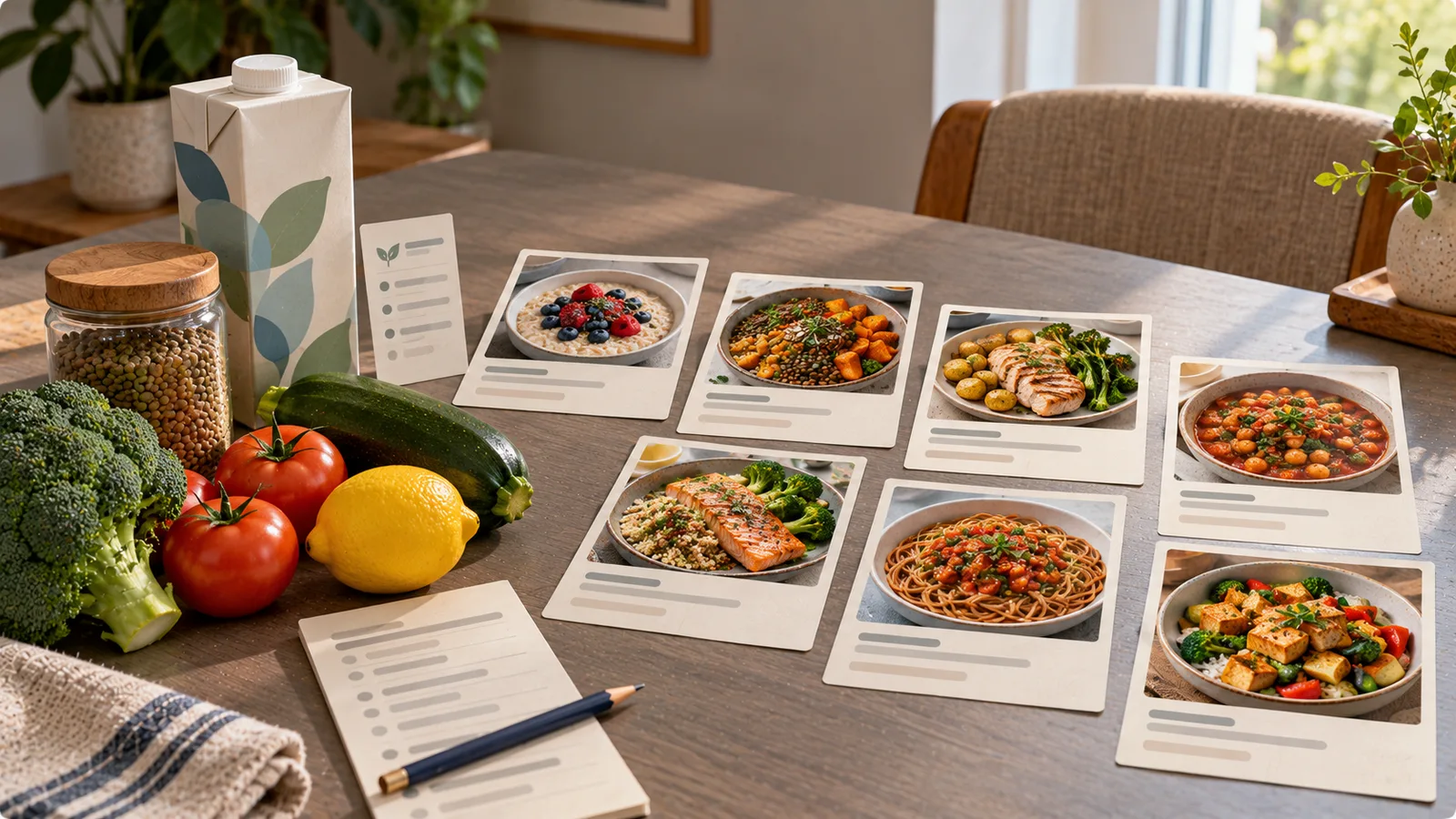
A dairy-free meal plan should do more than replace milk with a plant-based drink. It needs to provide complete meals, practical shopping quantities and a reliable way to replace nutrients commonly obtained from dairy foods.
This seven-day plan is designed for one adult who wants to avoid milk, cheese, yoghurt, butter and other dairy ingredients. It includes eggs, fish and meat, so it is dairy-free, not vegan.
The menu is a flexible example rather than an individually calculated diet. Energy and protein needs depend on body size, activity, age and health circumstances. Increase or decrease portions to suit your needs.
Your seven-day dairy-free menu
| Day | Breakfast | Lunch | Dinner | Optional snack |
|---|---|---|---|---|
| Monday | Oats with fortified soy drink, banana and walnuts | Chickpea, cucumber and tomato salad with bread | Chicken, brown rice and roasted broccoli | Apple and pumpkin seeds |
| Tuesday | Scrambled eggs, wholegrain toast and tomatoes | Leftover chicken rice bowl with vegetables | Lentil and vegetable soup with bread | Fortified soy yoghurt and berries |
| Wednesday | Overnight oats with fortified soy drink and berries | Lentil soup with a side salad | Baked salmon, potatoes and green beans | Orange and almonds |
| Thursday | Peanut-butter toast, banana and fortified soy drink | Salmon and potato salad with lemon dressing | Tofu and vegetable stir-fry with rice | Carrot sticks and hummus |
| Friday | Soy yoghurt with oats, berries and seeds | Leftover tofu rice bowl | Turkey and kidney-bean chilli with rice | Pear and walnuts |
| Saturday | Mushroom and spinach omelette with toast | Leftover turkey chilli | Wholewheat pasta with tomato sauce, white beans and spinach | Fruit and fortified soy drink |
| Sunday | Warm porridge with apple, cinnamon and soy drink | White-bean and vegetable wrap | Roast chicken with potatoes, carrots and broccoli | Soy yoghurt or nuts |
Choose bread, wraps, sauces and other packaged products only after checking their ingredients. Dairy can appear in foods that do not look like obvious milk products.
Suggested meal quantities
These quantities are starting points for one adult, not fixed nutritional prescriptions.
Breakfasts
- Porridge or overnight oats: 60 g oats, 250 ml calcium-fortified soy drink, 100–150 g fruit and 15 g nuts or seeds.
- Egg breakfast: 2 eggs, 80 g wholegrain bread and 150 g vegetables.
- Soy yoghurt bowl: 200 g unsweetened calcium-fortified soy yoghurt, 50 g oats, 100 g berries and 15 g seeds.
- Peanut-butter toast: 80 g bread, 25 g peanut butter, one banana and 200 ml fortified soy drink.
Use a little olive or rapeseed oil rather than butter for cooking.
Lunches
- Chickpea salad: 150 g drained chickpeas, 250 g mixed vegetables, 10 g olive oil and 80 g bread.
- Chicken rice bowl: 120–150 g cooked chicken, 150–200 g cooked rice and 200 g vegetables.
- Lentil soup: 350–450 g prepared soup with 60–80 g bread.
- Salmon potato salad: 100–120 g cooked salmon, 200 g potatoes and 200 g salad vegetables.
- Tofu bowl: 150 g tofu, 150–200 g cooked rice and 200 g vegetables.
- Turkey chilli: 350–450 g prepared chilli, with rice if needed.
- White-bean wrap: one dairy-free wrap, 150 g drained white beans and 150–200 g vegetables.
Dinners
- Chicken and rice: 150 g raw boneless chicken, 75 g dry brown rice and 250 g broccoli.
- Lentil soup: 80 g dry lentils, 250 g mixed vegetables and 80 g bread.
- Salmon dinner: 150 g salmon, 250 g potatoes and 200 g green beans.
- Tofu stir-fry: 180 g tofu, 75 g dry rice and 250 g vegetables.
- Turkey chilli: 150 g lean ground turkey, 150 g drained kidney beans, 200 g tomatoes and 75 g dry rice.
- Bean pasta: 80 g dry wholewheat pasta, 150 g drained white beans, 150 g tomato sauce and 100 g spinach.
- Roast chicken: 180 g raw boneless chicken, 250 g potatoes and 250 g vegetables.
Cooked weights and dry weights are deliberately identified separately. They should not be substituted without adjusting the calculation.
Grocery list for one adult
The list covers the main ingredients for the seven days. Quantities are approximate because appetite, edible yield, package sizes and leftovers vary.
| Category | Buy approximately |
|---|---|
| Oats | 350 g |
| Wholegrain bread | 500–600 g |
| Wholewheat pasta | 100 g dry |
| Brown or other rice | 350–400 g dry |
| Dairy-free wraps | 1 small pack |
| Potatoes | 1 kg |
| Chicken | 600–700 g raw boneless |
| Salmon | 250–300 g |
| Lean ground turkey | 300 g |
| Eggs | 6 |
| Firm tofu | 350–400 g |
| Dry lentils | 200 g |
| Chickpeas | 1 can |
| Kidney beans | 1 can |
| White beans | 2 cans |
| Calcium-fortified unsweetened soy drink | 2 litres |
| Calcium-fortified unsweetened soy yoghurt | 500–750 g |
| Bananas | 3 |
| Apples | 3 |
| Oranges or pears | 3 |
| Berries | 400 g |
| Broccoli | 500–600 g |
| Carrots | 500 g |
| Green beans | 250 g |
| Spinach | 300 g |
| Mushrooms | 200 g |
| Tomatoes, cucumber and salad vegetables | 1.2–1.5 kg combined |
| Onions and garlic | 400–500 g combined |
| Canned tomatoes or passata | 700–900 g |
| Nuts and seeds | 200 g combined |
| Peanut butter | 1 small jar |
| Olive or rapeseed oil | Pantry quantity |
| Lemon, herbs and spices | As needed |
Check whether canned beans are already drained and whether the stated fish and meat weights are raw. If cooking for two adults, approximately double the food quantities, adjusting for different appetites.
Prepare once, use ingredients more than once
A practical sequence reduces weekday work:
- Before Monday: wash vegetables, cook a batch of rice, and prepare chickpea salad ingredients separately from dressing.
- Monday: cook enough chicken for Monday dinner and Tuesday lunch. Refrigerate the extra portion promptly.
- Tuesday: prepare lentil soup for Tuesday dinner and Wednesday lunch.
- Wednesday: cook salmon for dinner; reserve Thursday lunch only if it can be cooled, refrigerated and consumed safely.
- Thursday: cook extra tofu and vegetables for Friday lunch.
- Friday: make enough turkey chilli for Saturday lunch.
- Weekend: prepare pasta and roast chicken fresh, using remaining vegetables.
Cool cooked food promptly, refrigerate it, and follow local food-safety guidance for storage and reheating. For rice, avoid leaving it at room temperature; cool and refrigerate promptly and reheat thoroughly when appropriate. Freeze portions when you cannot use them within a safe storage period.
Calcium matters when removing dairy
Milk, yoghurt and cheese are important calcium sources in many diets. Removing them without replacements can reduce calcium intake.
The US National Institutes of Health lists calcium recommendations that vary by age and sex: for example, 1,000 mg daily for adults aged 19–50, with higher recommendations for some older adults. These are US reference values, not a universal target for every country or individual. NIH Office of Dietary Supplements — Calcium.
Practical dairy-free calcium sources include:
- plant drinks fortified with calcium;
- fortified soy yoghurt;
- calcium-set tofu, when the label confirms calcium content;
- canned sardines or salmon with edible bones;
- certain vegetables, including kale and broccoli.
The calcium content of plant drinks and tofu varies substantially by brand. Check the nutrition label rather than assuming every soy, oat or almond product contains the same amount. NIH — Calcium food sources.
This menu deliberately includes fortified soy products on multiple days. Whether it meets your calcium needs depends on the brands and actual portions you choose. The menu has not been independently verified to meet every nutrient target.
Dairy-free does not mean lactose-free
A lactose-free cow's milk product can still contain milk proteins. It is therefore not a dairy-free substitute for someone avoiding milk proteins.
Lactose intolerance and cow's milk allergy are different conditions. NHS — Dairy and alternatives in your diet.
If you have a diagnosed milk allergy, a generic meal plan cannot guarantee safety. Check every ingredient, potential cross-contact information and the guidance from your allergy care team.
How to check packaged food labels
In the EU, milk is one of the allergens that must be identified when present as an ingredient in prepacked foods. Allergenic ingredients are emphasised in the ingredient list. European Commission — Allergies and food labelling.
Pay particular attention to:
- whey and whey powder;
- casein and caseinates;
- milk powder and skimmed milk powder;
- cream, butter and ghee;
- cheese and milk-based sauces;
- bakery products, chocolate, bread and prepared meals.
A product labelled "lactose-free" is not automatically free from milk protein.
Precautionary statements such as "may contain milk" require separate consideration when managing an allergy. Do not treat the absence of a precautionary statement as a guarantee of no cross-contact.
For EU packaged foods, ingredient and allergen information should be checked using the rules applicable to the product and market. Your Europe — Food labelling rules.
How to adapt the plan
For higher energy needs: increase rice, potatoes, bread or oats; add olive oil, nuts or an additional snack.
For lower energy needs: adjust starches and added fats while retaining varied vegetables and adequate protein.
For a vegetarian version: replace chicken, fish and turkey with suitable combinations of tofu, beans, lentils and other protein sources; review nutrient coverage rather than making direct one-for-one substitutions.
For a soy-free version: choose other suitable dairy-free foods and fortified products, but check protein and calcium because many non-soy plant drinks are lower in protein.
For a milk allergy: do not rely on these substitutions alone; ingredient checks and individual clinical advice remain necessary.
The purpose of this seven-day plan is to make dairy-free eating practical without relying on expensive specialty products at every meal.