
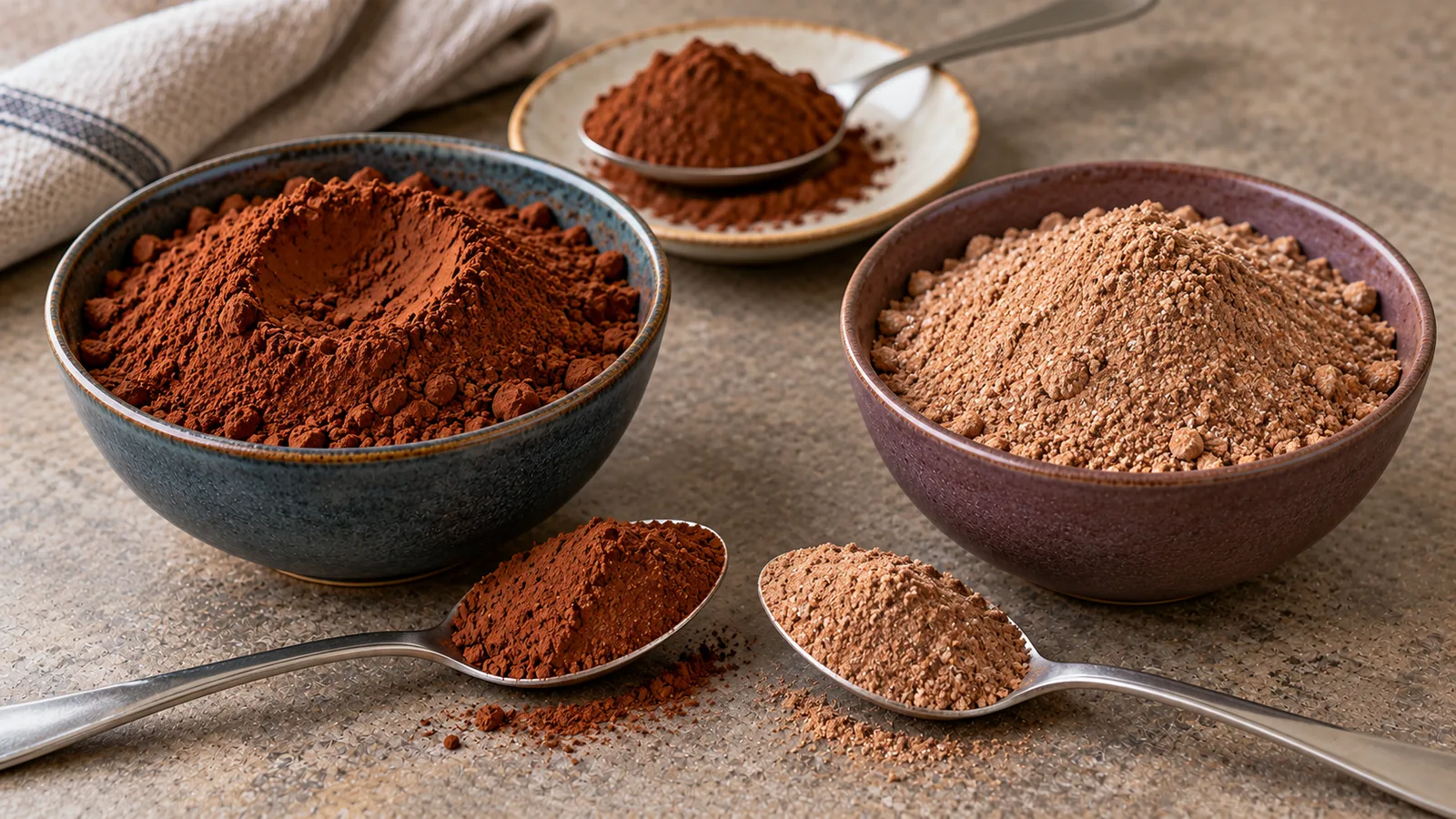
Unsweetened cocoa powder has 228 kcal per 100 g in the USDA SR Legacy entry (FDC 169593). A level tablespoon weighing 5.4 g contributes about 12 kcal; a teaspoon assumed to weigh 1.8 g contributes about 4 kcal. A sweetened instant cocoa drink mix is a different food: a USDA reference mix (FDC 174122) has 398 kcal per 100 g. The correct answer depends on which powder you used and how many grams went into the cup, cake or bowl.
Cocoa powder calories: first identify the product
The word cocoa can refer to baking cocoa without added sugar, alkalized (Dutch-process) cocoa, or a sweetened hot-chocolate mixture. These products should not share one calorie entry in a food diary. Here are specific USDA reference entries, not averages for all supermarket brands.
| Dry product, measured before adding liquid | kcal per 100 g | What the figure represents |
|---|---|---|
| Unsweetened cocoa powder (FDC 169593) | 228 | Plain dry cocoa; no added sugar in this reference |
| Unsweetened cocoa, processed with alkali (FDC 169594) | 220 | A different processing method and reference composition |
| Cocoa drink mix, powder (FDC 174122) | 398 | A reference sweetened drink powder, not pure cocoa |
The 398 kcal value is an example composition, not a promise that every packet contains 398 kcal. Some mixes include milk powder or other ingredients, and some are sold as reduced-sugar products. Use the nutrition panel of your own package when available. A product called 'hot chocolate' may be a premix rather than pure cocoa even if a photograph of cocoa beans appears on the front.
How many calories are in a teaspoon or tablespoon?
The USDA portion weight for a tablespoon of the plain powder entry is 5.4 g. One-third of that, 1.8 g, is a practical teaspoon approximation—not a guaranteed weight for every spoon or brand. Calculations use 228 × grams ÷ 100.
| Approximate plain cocoa quantity | Weight used | Calculated kcal |
|---|---|---|
| 1 level teaspoon | 1.8 g | 4 kcal |
| 1 level tablespoon | 5.4 g | 12 kcal |
| 2 level tablespoons | 10.8 g | 25 kcal |
| Weighed recipe amount | 10 g | 23 kcal |
| Weighed recipe amount | 20 g | 46 kcal |
| Dry product reference | 100 g | 228 kcal |
These are rounded results; for example, 5.4 × 228 / 100 = 12.3 kcal, while 20 g supplies 45.6 kcal. A heaped tablespoon may contain considerably more than 5.4 g. The best method for recipe calculations is to put the bowl on a kitchen scale, tare it and add cocoa until the screen displays the grams required. Different spoon shapes and compacted powders explain why visual estimates diverge.
Sweetened cocoa: grams matter more than the word 'cocoa'
Using the USDA drink-mix example of 398 kcal per 100 g, 15 g of dry mix is about 60 kcal, 25 g about 100 kcal, and 30 g about 119 kcal, before any milk. Measure the powder first. Mixing it with water adds no meaningful energy; milk, cream, sugar, marshmallows or whipped toppings add their own energy and should be recorded separately unless the package specifically gives the nutrition of a prepared drink.
For a transparent example, suppose the cup contains 15 g of that illustrative sweetened mix (about 60 kcal) and 200 ml of milk labelled 47 kcal per 100 ml (94 kcal). The finished cup then has approximately 154 kcal. This is not a universal hot-chocolate value: the exact result changes with the mix, milk and serving size. By contrast, mixing 5.4 g plain cocoa with water provides around 12 kcal before adding anything else. Add 10 g of table sugar, if used, and that contributes about 40 kcal using 4 kcal per gram.
Nutrients in plain unsweetened cocoa
The same USDA dry-cocoa record lists 19.6 g protein, 13.7 g fat, 57.9 g total carbohydrate by difference, 37 g dietary fiber and 1.75 g sugars, all per 100 g. The fiber amount is part of the USDA carbohydrate-by-difference figure, so do not blindly compare 57.9 g with a European product label's 'carbohydrate' field, which generally lists available carbohydrate separately from fiber. Conventions differ, and this is why summing protein, fat and the displayed total carbohydrate with a simple 4/4/9 rule need not reproduce the listed calorie figure.
Cocoa is a concentrated dry ingredient, yet the usual 5–10 g in a bowl or mug contributes a much smaller fraction of those per-100 g totals. It can add chocolate flavor without the same calories as a whole chocolate bar, but pure cocoa and dark chocolate are not interchangeable nutrition entries: chocolate also contains cocoa butter and commonly sugar. Cocoa contains naturally occurring methylxanthines, including caffeine; it is not automatically caffeine-free, and quantities vary between products. The reference figures describe foods, not medical effects.
Recipes: count the whole mixture, then divide
If a breakfast bowl has 10 g plain cocoa, start with about 23 kcal from cocoa and then add oats, yogurt, milk, fruit and sweeteners individually. If a cake uses 20 g plain cocoa, that contributes 46 kcal to the entire cake, not to each slice. Dividing the cocoa contribution between eight equally sized slices gives about 5.7 kcal per slice, but the flour, butter, eggs and other ingredients must also be included before stating the cake's total calories.
A drink is similar. First choose the correct powder record, weigh the dry amount, then count the prepared liquid and any added sugar. If the packaging reports calories per prepared serving with milk, read the directions and avoid counting the milk twice. If the panel reports calories per 100 g of dry powder, the final drink weight is not a meaningful substitute for the powder grams: water increases mass without adding calories.
Choosing and storing cocoa powder for reliable tracking
Look at the ingredients list before searching for a calorie estimate. 'Cocoa powder' alone generally refers to unsweetened cocoa; 'sugar, cocoa powder...' signals a mixture. Also check whether figures are given per 100 g powder, per prepared 100 ml or per mug. Different presentations are not directly comparable. A label with a serving size of one scoop is useful only after checking the scoop's actual mass.
Keep dry powder sealed in a cool, dry place and follow the package instructions. Clumping or moisture can make spoon measurements less consistent, another reason to weigh a recipe. For eight localized Mealisa articles, serving units may be described differently across countries, but grams remain the comparable measurement. If two brands have different energy values, prefer the label on the product you actually used rather than replacing it with a generic reference estimate.
For related but distinct questions, see dark chocolate calories · sugar calories · added sugar versus total sugar.
A repeatable way to log cocoa in Mealisa
- Decide whether the ingredient is plain unsweetened cocoa, Dutch-process cocoa or a sweetened drink mix.
- Enter the powder's weight in grams before mixing or baking; use 5.4 g per level tablespoon only as a fallback estimate.
- Apply the relevant per-100 g value or, preferably, the manufacturer's panel.
- Log added milk, sugar, cream and toppings separately unless already included in a prepared-serving value.
- For shared dishes, divide the completed recipe's total by the number or weight of actual portions.
This workflow keeps small flavoring amounts realistic while preventing a sugary premix from being treated as unsweetened cocoa. The main question is always the same: which dry ingredient, how many grams, and what else was added?
Sources
- USDA FoodData Central — SR Legacy FDC 169593, 'Cocoa, dry powder, unsweetened' (228 kcal/100 g, 5.4 g/tablespoon, macronutrients); FDC 169594, processed with alkali (220 kcal/100 g); and FDC 174122, 'Beverages, Cocoa mix, powder' (398 kcal/100 g). Search these IDs or names in the database; compare the actual brand label for packaged products.