
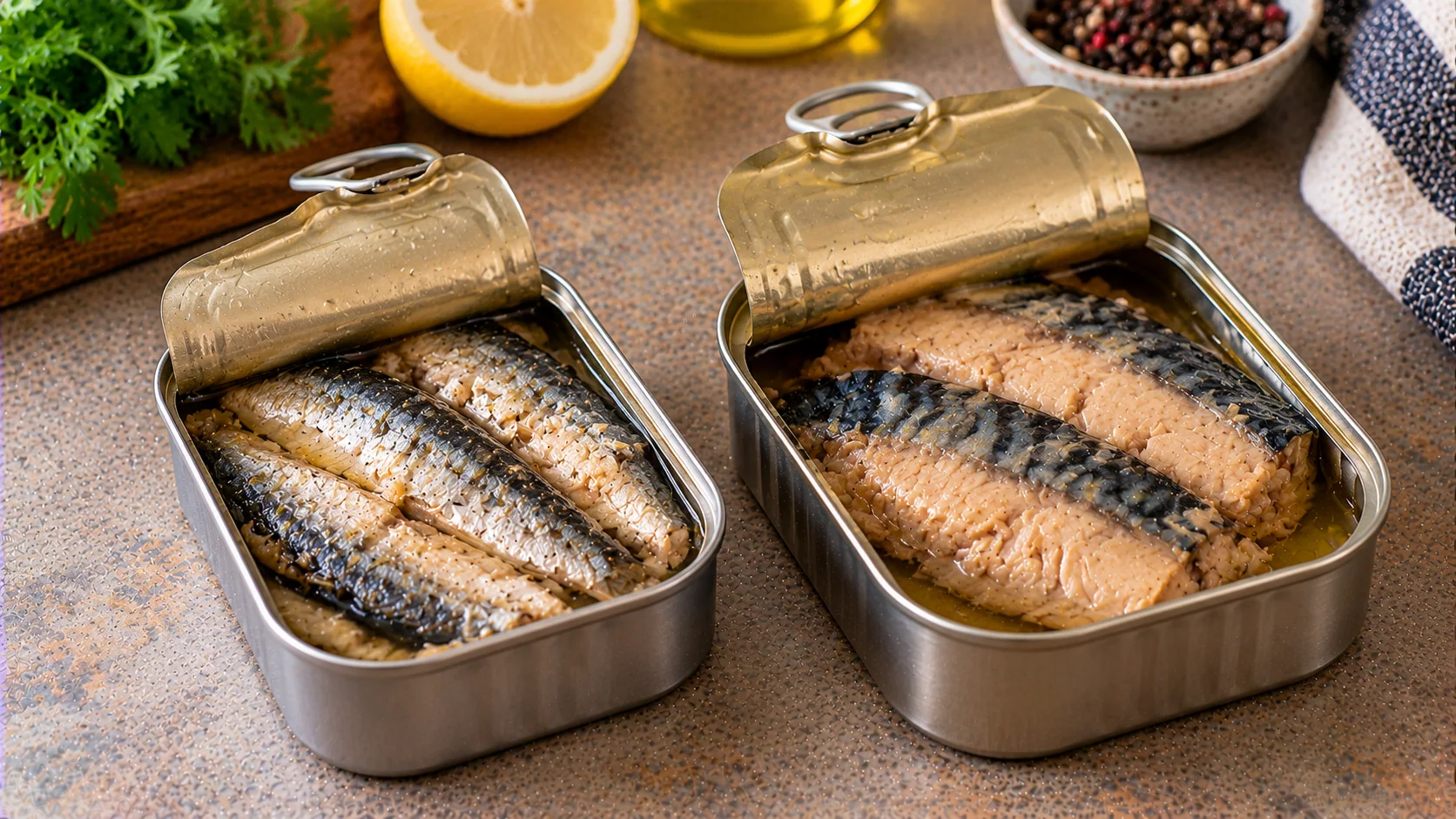
Tinned Sardines vs Tinned Mackerel: Protein and Salt
Tinned sardines and tinned mackerel are convenient sources of fish protein, but no single number describes every tin. Species, serving size, whether the fish is in brine, oil or tomato sauce, and the amount of liquid discarded all change the comparison. This guide focuses specifically on protein and salt per 100 g of drained fish, then converts those numbers into the amount actually eaten. It does not attempt to declare one fish universally healthier.
The fairest comparison starts with drained fish
Choose two tins and read their labels before comparing. Where a drained weight is provided, use that weight to estimate how many portions the tin supplies. If the label gives nutrients for the drained product, those values apply to the fish after draining; if it describes the contents as sold, do not automatically treat it as a drained-fish analysis. These are not interchangeable measurements.
A can marked 125 g net with 90 g drained contains 90 g of fish in this worked example, not 125 g of fish. Two 90 g drained tins deliver 180 g of fish. The other 35 g per tin is packing liquid and possibly small residues, depending on the product. Always read the exact can rather than treating these figures as standard sizes.
Illustrative side-by-side label comparison
The following are hypothetical labels designed to teach the calculation, not verified products or universal nutrient averages. Both columns describe 100 g drained edible fish. Actual sardines and mackerel may have higher or lower values.
| Label item | Sardines, example | Mackerel, example |
|---|---|---|
| Protein per 100 g drained | 24 g | 23 g |
| Salt per 100 g drained | 1.20 g | 0.75 g |
| Net content | 125 g | 125 g |
| Drained fish weight | 90 g | 95 g |
| Protein per whole drained tin | 21.6 g | 21.85 g |
| Salt per whole drained tin | 1.08 g | 0.71 g |
The table demonstrates why comparing only the 100 g columns misses a portion-size detail. The mackerel example provides 5 g more fish per tin, so the protein per tin ends up almost equal despite a slightly lower protein concentration. With salt, the gap persists even after converting to drained tin weight.
Calculate protein in the portion you actually eat
Use protein per 100 g × drained grams eaten ÷ 100. For the example sardines, 24 × 90 ÷ 100 = 21.6 g protein. For mackerel, 23 × 95 ÷ 100 = 21.85 g. For a 60 g sardine portion, the result is 14.4 g. A shared tin should be divided by the fish each person receives, rather than by a presumed half when portions differ.
If the nutrition panel lists nutrients per tin instead of per 100 g, check whether its declared serving is the drained fish, the entire canned contents or something else. When those bases are ambiguous, ask the manufacturer or use the figures with a clearly stated assumption. <a href="https://fdc.nal.usda.gov/">USDA FoodData Central</a> provides background food-composition entries, but a generic entry should not override the actual can's label.
Salt: do not confuse it with sodium
In EU-style nutrition tables, salt is normally listed in grams. Some databases or imported labels report sodium instead. To convert for comparison, use salt ≈ sodium × 2.5, with both values expressed in grams. For example, 320 mg sodium = 0.320 g sodium ≈ 0.80 g salt. Do not multiply an already labelled salt figure by 2.5 again.
| Worked portion | Protein | Salt |
|---|---|---|
| 60 g example sardines | 14.4 g | 0.72 g |
| 90 g example sardines | 21.6 g | 1.08 g |
| 60 g example mackerel | 13.8 g | 0.45 g |
| 95 g example mackerel | 21.85 g | 0.71 g |
Salt content is a product feature, not a fixed distinction between the two species. Sardines in tomato sauce can differ from sardines in spring water; mackerel with spices or added salt can differ from a plain version. Inspect salt per 100 g on each label, then convert to your real serving.
Does brine, oil or tomato sauce change the result?
Yes, potentially, but in different ways. Salted brine may raise the salt declared for the food; oil primarily changes the energy and fat contribution when consumed. Tomato sauce may contain salt, sugar or other ingredients and can be nutritionally important if you eat the sauce. Draining oil does not prove the fish contains zero absorbed oil, and rinsing salty fish is not a reliable way to calculate how much sodium was removed. Use the relevant declared nutrition basis.
A practical supermarket comparison is to choose like-for-like products first: fish in water against fish in water, or fish in oil against fish in oil. Where you cannot match the liquid, state the difference instead of attributing it all to the species. The presence of soft edible sardine bones can make calcium content relevant, but that is a separate question from this protein-and-salt comparison.
A worked shopping example with two tins
Suppose a sardine tin costs €1.39 for 90 g drained fish and a mackerel tin costs €1.69 for 95 g drained fish. These prices are fictional examples, not current offers.
| Calculation | Sardines | Mackerel |
|---|---|---|
| Cost per 100 g drained | €1.54 | €1.78 |
| Protein per tin, illustrative | 21.6 g | 21.85 g |
| Cost per 10 g protein | €0.64 | €0.77 |
The first calculation is price ÷ drained grams × 100. The second is price ÷ protein per tin × 10. For example, €1.39 ÷ 90 × 100 = €1.54, rounded. This ranking could reverse with different brands, larger cans or promotions. our anchovies-versus-sardines comparison covers other sardine comparisons, while our protein-per-euro guide explains how to evaluate protein in relation to price.
Portion planning and safety considerations
A tin can be part of a meal alongside potatoes, whole grains, vegetables and beans. Check its declared serving size if you monitor sodium intake. If the tin contains enough fish for two people, weigh or reasonably estimate the split; dividing the net weight including oil would overcount fish consumed. Once opened, follow the package's refrigeration instructions and transfer leftovers to a suitable covered container if recommended. Do not store opened fish at room temperature.
Different mackerel species matter for mercury guidance. The <a href="https://www.fda.gov/food/consumers/advice-about-eating-fish">FDA/EPA fish advice</a> lists sardines, Atlantic mackerel and Pacific chub mackerel among its Best Choices, but king mackerel is a Choice to Avoid. A tin labelled simply “mackerel” may require checking the species. This distinction matters particularly for pregnant or breastfeeding people and children; follow applicable national guidance.
What matters most at the shelf
Compare the same drained edible weight; then read protein and salt on the applicable nutrition basis. Check species, sauce or oil, and the amount of fish you will actually eat. If protein is almost tied, salt, taste, price, convenience and preparation style can reasonably decide the purchase. Neither sardines nor mackerel wins every label comparison.
Sources
- USDA FoodData Central — food-composition database.
- FDA/EPA — Advice about Eating Fish, including different mackerel species.
- European Commission — Food information to consumers.
Values and shop prices in the worked tables are educational assumptions; use the actual pack label for a personal comparison.