
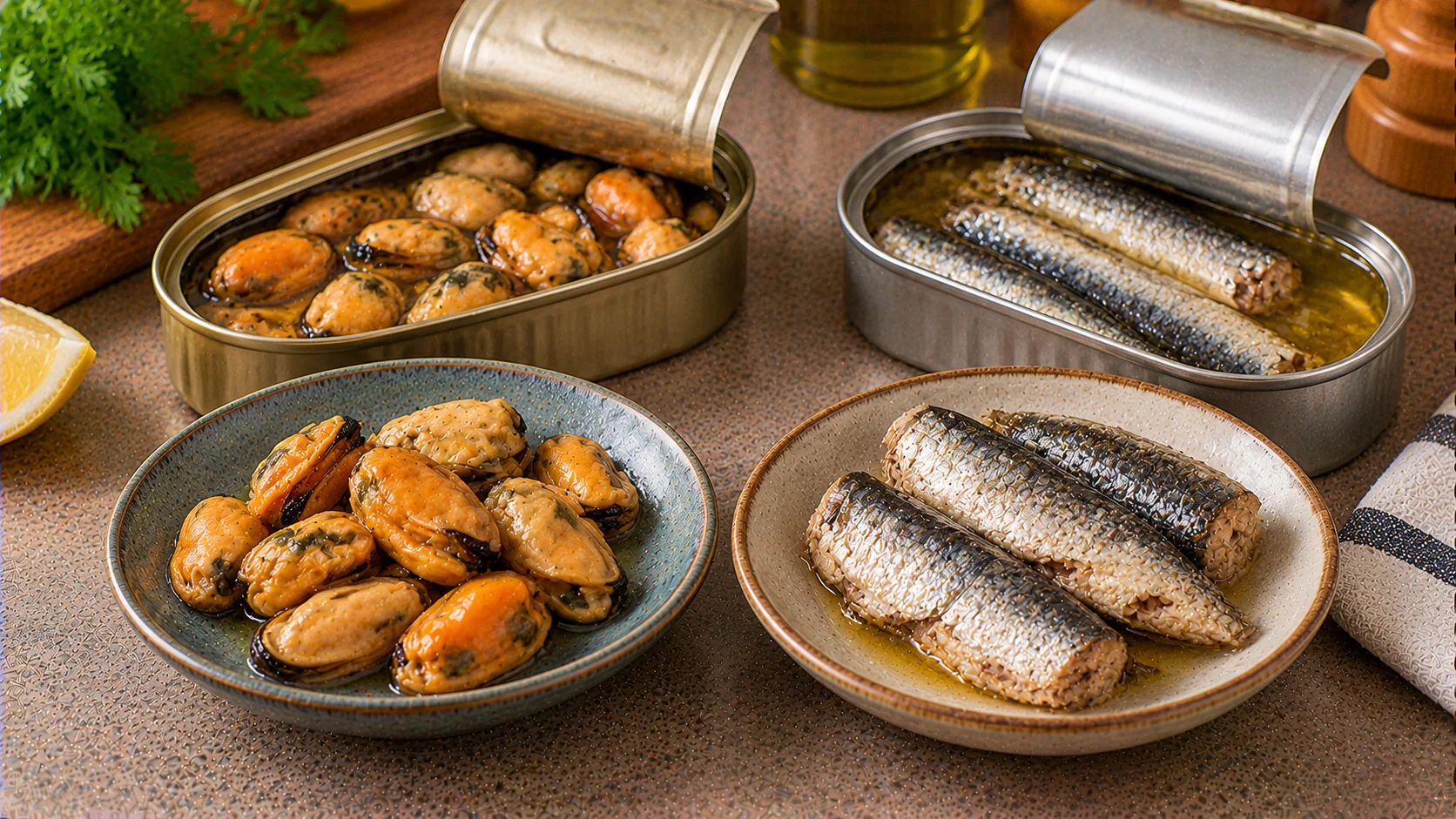
Start with the actual food in the tin
Mussels are bivalve shellfish; sardines are small oily fish. Both can be a convenient seafood option, but comparing only the package size or the word “protein” misses important differences. The useful unit is the amount you will actually eat. Check the exact species, packing liquid, drained mass and nutrition panel. A tomato-sauced mussel product and sardines in olive oil cannot be treated as plain, interchangeable meat portions. our canned-fish comparison provides context for other canned-fish decisions.
Why mussels and sardines are not interchangeable
These foods have different textures, flavours and nutrient profiles. Mussels often contribute meaningful dietary iron and vitamin B12; sardines offer protein and, depending on whether edible bones remain, calcium. Fat and omega-3 content also differ by fish, packing medium and processing. No general ranking fits every tin. Use actual labels for salt and fat, and a food-composition database only as background when your own product does not declare a nutrient.
Read drained weight before judging nutrients
Net weight includes the food and its packing liquid. Drained weight, where provided, better approximates the solid food you eat. Some labels express nutrients per 100 g of the product as sold, while others make the serving basis clearer: read the wording, not just the number. If you eat all the oil or sauce, count it; if you pour it away, do not assume the published nutrition panel describes perfectly what remains. Record the drained mass using a kitchen scale when possible.
Worked protein and iron example
Consider two deliberately hypothetical tins, not verified branded products. Suppose the mussels provide 17 g protein and 5 mg iron per 100 g of edible mussels; the sardines provide 24 g protein and 2.5 mg iron per 100 g of edible sardines. For a 90 g edible portion, multiply each per-100-g figure by 0.90. The exercise demonstrates the arithmetic, not a guaranteed composition for all canned mussels or sardines. Compare with the actual label or USDA FoodData Central entries for the correct preparation.
| Illustrative nutrient | Mussels, 100 g | Sardines, 100 g | Mussels, 90 g | Sardines, 90 g |
|---|---|---|---|---|
| Protein | 17 g | 24 g | 15.3 g | 21.6 g |
| Iron | 5 mg | 2.5 mg | 4.5 mg | 2.25 mg |
| Edible mass in example | — | — | 90 g | 90 g |
What the iron figures mean
Iron is essential for oxygen transport, but the amount listed in food data is not identical to the amount a person absorbs. Absorption depends on overall diet, iron status and the chemical form of iron. Seafood can contain highly bioavailable heme iron, while plant foods contribute mainly nonheme iron. Citrus and vegetables may help with nonheme iron in a mixed meal. Do not use a high-iron canned product to diagnose or independently treat iron deficiency. See the NIH iron fact sheet for the distinction between intake and absorption.
Price per edible portion
Compare the purchase price to edible mass, not just tin size. In another hypothetical shop example, a €2.40 tin yielding 100 g drained mussels costs €2.40 per 100 g edible seafood. A €1.80 tin yielding 90 g drained sardines costs €2.00 per 100 g. For a 90 g portion, the mussels cost €2.16 and sardines €1.80. These are calculation examples, not current supermarket quotations. Promotions, brand sizes, sauce and local availability can reverse the result.
| Illustrative cost input | Mussels | Sardines |
|---|---|---|
| Tin price | €2.40 | €1.80 |
| Edible drained weight | 100 g | 90 g |
| Cost per 100 g | €2.40 | €2.00 |
| Cost of 90 g | €2.16 | €1.80 |
Oil, sauce and salt can change the comparison
Mussels might be sold in brine, a marinade, escabeche or tomato sauce. Sardines may come in water, oil or sauce. Salt content can differ greatly among products, so compare salt in grams per 100 g and then per actual eaten portion. For a product containing 1.2 g salt per 100 g, 90 g provides 1.08 g salt. Draining oily fish reduces some packing oil, but it does not reliably subtract a fixed number of calories. A sauce you eat is part of the meal and its label basis matters.
Other nutrients worth checking
Sardines may supply long-chain omega-3 fats, vitamin B12 and calcium if their bones are eaten; mussels can contribute iron, B12 and other minerals. Quantities vary. The FDA/EPA fish advice lists sardines among lower-mercury “Best Choices,” but specifically notes that it does not have sufficient reliable mercury data to place mussels on that chart. Do not interpret absence from that chart as proof of high or low mercury. Follow national seafood advice when pregnant or planning meals for children: FDA/EPA guidance.
Two practical meal examples
For a quick mussel lunch, toss 90 g drained mussels with 120 g cooked, cooled barley, diced cucumber and lemon; add the sauce only after checking its salt. For a sardine lunch, mash 90 g drained sardines with lemon and serve on wholegrain toast with sliced tomato. Those weights describe the edible seafood, not the unopened tins. The grain, bread and vegetables change the meal’s total protein, iron, calories and price. If you want exact totals, enter every ingredient separately rather than treating the entire meal as one tin.
Choosing for different priorities
If protein per edible gram is your priority, compute actual grams of protein from each label and portion. If iron matters, look for an iron declaration or a suitably matched food database entry, then consider your dietary needs with professional advice if deficiency is suspected. For budget shopping, divide price by drained grams. If you are watching salt, compare like-for-like packaging and calculate the portion. You can also consult our guide to canned seafood portions for another canned-seafood comparison; it does not replace reading today’s label.
Storage and safety after opening
Follow the package instructions before opening, reject damaged or bulging tins, and avoid products with off odours or unexpected appearance. Once opened, transfer unused fish or shellfish to a clean, covered food-safe container, refrigerate promptly and use within the label’s specified time. If no instructions are given, the conservative option is to eat promptly rather than treat an open tin as shelf-stable. Shellfish allergy is distinct from fish allergy; check ingredients and avoid cross-contact. Pregnant or immunocompromised people should use product-specific safety guidance.
A label-first shopping checklist
Pick two actual tins. Write down price, net weight, drained weight, protein per 100 g, salt per 100 g and, if available, iron. Determine whether the nutrition panel refers to drained solids, drained solids with sauce, or the product as sold. Measure the serving you will eat. Multiply each nutrient by edible grams divided by 100, and compare both price per 100 edible grams and price per serving. Treat unlisted iron as unknown, not zero. This method is more reliable than declaring that mussels or sardines always win.
Sources
- USDA FoodData Central — food-composition references; match preparation and edible form.
- NIH Office of Dietary Supplements: Iron — iron, food sources and absorption.
- FDA/EPA fish advice — fish choices and limitations for mussel mercury data.