
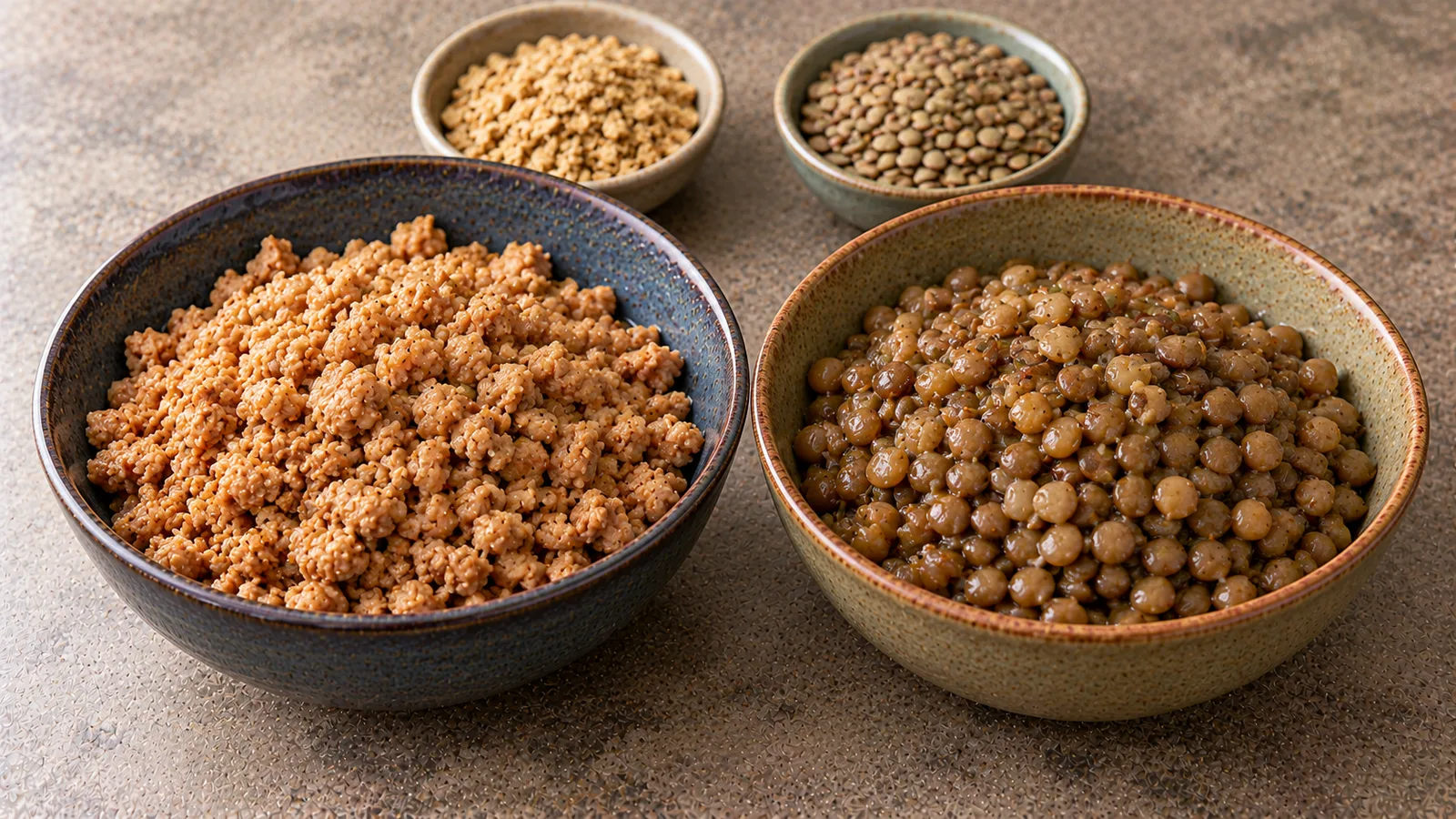
Textured soy protein (TSP), also called textured vegetable protein (TVP), and lentils are inexpensive-looking staples that can fill the protein position in a vegetarian meal. Yet a comparison can go wrong before a single ingredient reaches the pan. The soy pieces are sold dry, the lentils may be measured dry or cooked, and both absorb water. A headline such as “52 g versus 9 g protein per 100 g” compares a dry commercial soy label with already-boiled lentils. It is not an equal-state comparison.
This guide uses two identifiable German-market products: dmBio Soja Schnetzel, a partially defatted textured soybean product, and dmBio Rote Linsen, dried red lentils. The official soy product label and red-lentil label provide the dry-weight numbers. We then build two practical bowls and calculate their protein, fiber and ingredient cost. Neither result represents every soy mince, every lentil variety or a finished meal with sauce and oil.
What exactly are textured soy protein and lentils?
TSP is made from processed soybeans, often defatted soy flour, that are texturized and dried. In this example the ingredients are partially defatted soybeans. The resulting pieces are shelf-stable when dry and are meant to be soaked and then thoroughly cooked. Different TSP brands may contain soy concentrates, flavorings, salt or other ingredients, so the plain product used here should not be confused with a ready-seasoned meat substitute.
Red lentils are pulses rather than a manufactured textured ingredient. The example pack contains 99.8% red lentils and 0.2% sunflower oil. They are rinsed and boiled until edible; they tend to soften into a creamy consistency, whereas hydrated soy pieces retain more of a chewy texture. This difference matters to recipes: one is good for a crumbled, sauce-absorbing filling; the other is useful for dals, soups and thick sauces. The comparison is about nutrition and cost, not about declaring one ingredient more natural or universally better.
Dry-to-dry: the fairest starting point
These values are for 100 g as sold, before water, broth, frying oil or sauce. Fiber is listed separately from carbohydrate on these European product labels.
| Per 100 g dry product | dmBio soy pieces | dmBio red lentils |
|---|---|---|
| Energy | 371 kcal | 341 kcal |
| Protein | 52 g | 26 g |
| Fiber | 15 g | 13 g |
| Carbohydrate | 16 g | 50 g |
| Fat | 7.6 g | 1.5 g |
| Salt | 0.03 g | less than 0.01 g |
The soy product supplies twice as much labelled protein per 100 g dry as the chosen red lentils. It also contains a little more fiber, notably less carbohydrate and more fat. Its energy per 100 g dry is only 30 kcal higher. This is a statement about two specific packages; the nutrient content of textured soy can vary with how extensively the soybeans were defatted, and lentil varieties and brands differ too.
A useful second view is protein relative to energy. Here the soy label gives roughly 14.0 g protein per 100 kcal (52 ÷ 371 × 100), compared with 7.6 g for lentils (26 ÷ 341 × 100). That is a meaningful difference when the main target is concentrated protein. It does not settle the question of affordability, eating satisfaction or overall meal quality.
Real bowls: 50 g dry soy versus 75 g dry lentils
For a practical recipe, compare 50 g of dry soy pieces with 75 g of dry red lentils. The weights deliberately differ: soy is concentrated, while a somewhat larger dry lentil portion makes a substantial standalone legume base. The following numbers use the pack's dry values, not an unrelated cooked-food database.
| Without added sauce or oil | 50 g dry soy | 75 g dry lentils |
|---|---|---|
| Energy | 185.5 kcal | 255.8 kcal |
| Protein | 26.0 g | 19.5 g |
| Fiber | 7.5 g | 9.75 g |
| Carbohydrate | 8.0 g | 37.5 g |
| Fat | 3.8 g | 1.13 g |
| Salt, before cooking | 0.015 g | less than 0.008 g |
The soy serving gives 6.5 g more protein, whereas the lentil serving gives 2.25 g more fiber and more carbohydrate for energy. Soy therefore suits a light, protein-focused sauce or filling; lentils suit a substantial bowl when you also want carbohydrate, fiber and a softer texture. Neither portion automatically forms a complete dinner. Vegetables, grains, oils, condiments and the person's appetite determine the rest of the meal.
The table does not pretend that these are matched-calorie servings. If equal energy is your priority, scale the dry grams by the energy on each package rather than comparing a large lentil bowl with a tiny soy garnish. If equal protein is the priority, 75 g dry lentils deliver 19.5 g, so about 37.5 g dry soy would provide the same labelled protein. The food volumes and recipe roles would still differ.
Hydration changes concentration, not the dry-ingredient total
The soy label directs cooks to cover 100 g dry pieces with 300 ml hot vegetable broth for 15 minutes, drain briefly and fry thoroughly. How much liquid remains is not specified. For a transparent teaching example, suppose your 50 g dry soy portion weighs 170 g after soaking and draining, while 75 g dry lentils weigh 180 g after cooking and draining. These are hypothetical measured yields, not manufacturer-guaranteed yields. Your kitchen measurements can differ considerably.
| Illustrative finished-weight scenario | Hydrated soy | Cooked red lentils |
|---|---|---|
| Starting dry weight | 50 g | 75 g |
| Assumed finished weight | 170 g | 180 g |
| Yield multiplier | 3.40× | 2.40× |
| Protein in whole portion | 26.0 g | 19.5 g |
| Protein per 100 g finished | 15.29 g | 10.83 g |
| Calories per 100 g finished | 109.1 kcal | 142.1 kcal |
The formula is straightforward: protein per 100 g prepared = labelled dry protein in the portion ÷ actual prepared weight × 100. For soy, 26 ÷ 170 × 100 = 15.29 g; for lentils, 19.5 ÷ 180 × 100 = 10.83 g. This calculation assumes the labelled nutrients remain in the edible batch. In reality, draining can carry away some dissolved nutrients and solids; use the figures as a practical approximation rather than a laboratory analysis.
If the soy retained more broth and weighed 200 g, the same 26 g of estimated protein would become 13.0 g per 100 g. If the lentils became a thick 150 g mixture, their 19.5 g would become 13.0 g per 100 g. Neither outcome means protein appeared or vanished. This is why a protein ranking per 100 g cooked food is not reliable without a clearly defined water content.
Why a cooked lentil database gives a different number
USDA's plain boiled-lentils reference, FDC 172421 reports approximately 116 kcal and 9.02 g protein per 100 g cooked, with 7.9 g fiber. That is a legitimate reference for lentils weighed after cooking. It is not a replacement for the dmBio red-lentil dry label when you know the exact uncooked amount used.
Our illustrative 180 g cooked red-lentil portion would give 10.83 g protein per 100 g under the dry-ingredient method. USDA's general cooked-lentils reference gives 9.02 g. They are not a contradiction: different lentils, cooking methods, absorbed water and nutrient accounting may all differ. For repeatable tracking, pick one method and do not count 75 g of dry lentils and 180 g of cooked lentils as two separate foods. Our lentils calorie guide explains that measurement-state distinction further.
Real shelf prices and what one portion costs
The two linked dm product pages displayed €1.75 for 150 g soy pieces and €1.45 for 500 g dried red lentils when checked on 17 October 2026. These are time- and retailer-specific online listings, not a price guarantee; local availability, postage and later changes can alter the checkout total. All calculations below use those exact pack sizes and displayed prices.
| Price comparison, no added ingredients | Soy pieces | Red lentils |
|---|---|---|
| Package size | 150 g | 500 g |
| Displayed package price | €1.75 | €1.45 |
| Dry ingredient price per kg | €11.67 | €2.90 |
| Dry amount used | 50 g | 75 g |
| Cost of ingredient used | €0.58 | €0.22 |
| Protein in chosen portion | 26.0 g | 19.5 g |
| Approx. cost per 10 g protein | €0.22 | €0.11 |
Method: €1.75 ÷ 150 × 50 = €0.5833, rounded to €0.58; €1.45 ÷ 500 × 75 = €0.2175, rounded to €0.22. For the protein metric, divide the unrounded portion cost by protein grams and multiply by ten. The soy portion costs approximately €0.224 per 10 g protein, the lentils approximately €0.112. These metrics exclude energy for cooking, sauces, broth, oil, vegetables and delivery charges.
If you need to buy both unopened packages today, you pay €3.20, not €0.80. The unused 100 g soy and 425 g lentils remain pantry stock. If you only want one ingredient, compare that individual package's upfront cost with how often you will actually use it. Our budget grocery-list guide distinguishes ingredients consumed from money spent at checkout.
The salt question: plain granules versus seasoned substitutes
Plain dry soy pieces in this example declare 0.03 g salt per 100 g, or only 0.015 g in the 50 g dry portion. Plain red lentils declare less than 0.01 g per 100 g dry. Neither item begins as a heavily salted ready meal. But the soy preparation instructions specifically suggest vegetable broth, which may contain salt. If you soak 50 g soy in salted stock and retain some of that liquid, the finished dish's salt is no longer the packet's small number.
Similarly, lentils cooked in water without salt are different from canned salted lentils, a commercial lentil soup or a spicy ready meal. Do not compare a plain dried soy product against a seasoned canned lentil product without acknowledging the preparation. Check sodium or salt on every ready-made product and count sauces and seasoning separately. The European Commission's labelling guidance explains why ingredient lists, allergens and declared salt values deserve attention.
Two useful dinners with comparable recipe steps
Soy ragù: soak 50 g dry soy pieces as instructed, drain, cook thoroughly and simmer with chopped tomatoes, onion, garlic and herbs. Add a measured amount of oil and serve with pasta or vegetables. Log the 50 g dry soy once, then all other ingredients. If you use broth, include its salt and calories where relevant. This produces a textured sauce, not merely a bowl of soy soaked in water.
Red-lentil tomato pot: rinse 75 g dry lentils, cook in water according to the pack until tender and add tomatoes, onion and spices. Choose the liquid quantity to produce the texture you want; red lentils tend to soften and thicken the sauce. Count the 75 g dry lentils and the same separately measured toppings or oil. The two resulting dishes can have very different final weights, so compare their complete recipe totals as well as their eaten portions.
To make the dishes nutritionally more similar, aim for an equal protein target rather than forcing equal cooked weight. At approximately 20 g protein, the soy requires about 38.5 g dry while the lentils require about 76.9 g dry, based on these labels. You may then build an equal-vegetable, equal-oil meal around either base and decide whether the texture and appetite fit your goal.
Protein quality is not the same as protein grams
Soy and lentils differ in their amino-acid compositions and how their proteins are digested, but a figure such as “52 g protein” alone does not provide a validated DIAAS score or prove that every meal with soy is superior. The DGE protein reference identifies legumes, including soy and lentils, among useful protein foods and emphasizes the role of variety. For the more technical distinction between quantity, amino-acid pattern and digestibility, see our protein-quality guide.
A varied menu with pulses, whole grains, vegetables and other foods can provide useful protein without every meal being optimized around a single highest-protein item. Consider total daily intake, dietary preferences and whether the dish actually satisfies you. A diet composed only of concentrated protein substitutes would miss much of what eating a varied selection of foods offers.
Fiber, digestion and meal satisfaction
The soy pieces list 15 g fiber per 100 g dry, red lentils 13 g. In our selected portions, however, the lentil bowl contributes more total fiber because it starts with more dry grams. Adding vegetables can substantially change either meal. This is a reminder to compare the meal as eaten rather than assigning one blanket winner from the package's 100 g line.
People unused to legumes or large fiber portions may notice bloating or bowel changes. Moderate portions, adequate fluids and gradually increasing intake can be more comfortable than suddenly doubling legumes. Different individuals tolerate soy and lentils differently. DGE recommends pulses as part of regular eating, not as a guarantee of an immediate medical benefit. Its legumes guidance provides broader context.
Allergens, handling and storage
Soy is an EU-declared allergen, and the dmBio soy pieces explicitly list soybean ingredients. Lentils are not a safe substitute for every person with legume allergies, either; personal allergies and cross-contact matter. The red-lentil label warns about possible traces of gluten-containing cereals. People with a diagnosed allergy should rely on the individual product's current allergen statement and professional advice, not the phrase “plant-based.” The European Commission's allergen information describes the mandatory labelling framework.
Do not eat textured soy pieces dry simply because they are shelf-stable: hydrate and cook them according to the pack. Lentils should also be cooked rather than eaten dry. Once either ingredient is a cooked dish, cool leftovers promptly in shallow containers and refrigerate. The USDA food-safety guide advises using most cooked leftovers within three to four days and reheating leftovers thoroughly to 74 °C. Follow stricter instructions on any specific product if applicable.
Which should you buy?
Choose plain textured soy when a chewy mince-like texture and concentrated protein are the priority, and you will actually use the pack. Choose dry lentils when a low-cost pantry staple with generous fiber, carbohydrates and versatile soup-or-dal uses better fits your cooking. They can also work together: a small amount of soy adds texture to a lentil sauce, but you must calculate both dry ingredients instead of labelling the mixture as one food.
A ready-made soy burger is yet another category. It can contain added oils, binders and more salt than plain TSP. That is the separate question addressed in our plant-based burger versus lentils comparison. The conclusion here is specific: this soy product wins on protein concentration; these red lentils are markedly cheaper per portion and per 10 g protein at the verified listing prices. Neither outcome makes one the universal healthier choice.
Sources and calculation notes
- dmBio Soja Schnetzel: ingredients, preparation, nutrition and listed price.
- dmBio Rote Linsen: ingredients, nutrition and listed price.
- USDA FoodData Central: boiled lentils, SR Legacy 172421.
- German Nutrition Society: protein reference.
- German Nutrition Society: pulses and nuts.
- European Commission: food labelling and allergens and allergy information.
- USDA Food Safety and Inspection Service: safe handling and leftovers.
Nutrition values are taken from the stated dry product labels. Package prices were displayed online on 17 October 2026 and can change; they are observations, not guaranteed future prices. Finished weights of 170 g soy and 180 g lentils are explicit illustrative yield assumptions. No added sauce, oil, cooking energy, postage or significant nutrient loss is included in the comparison tables. The total ingredient amount should always be recorded before calculating the per-serving value.