
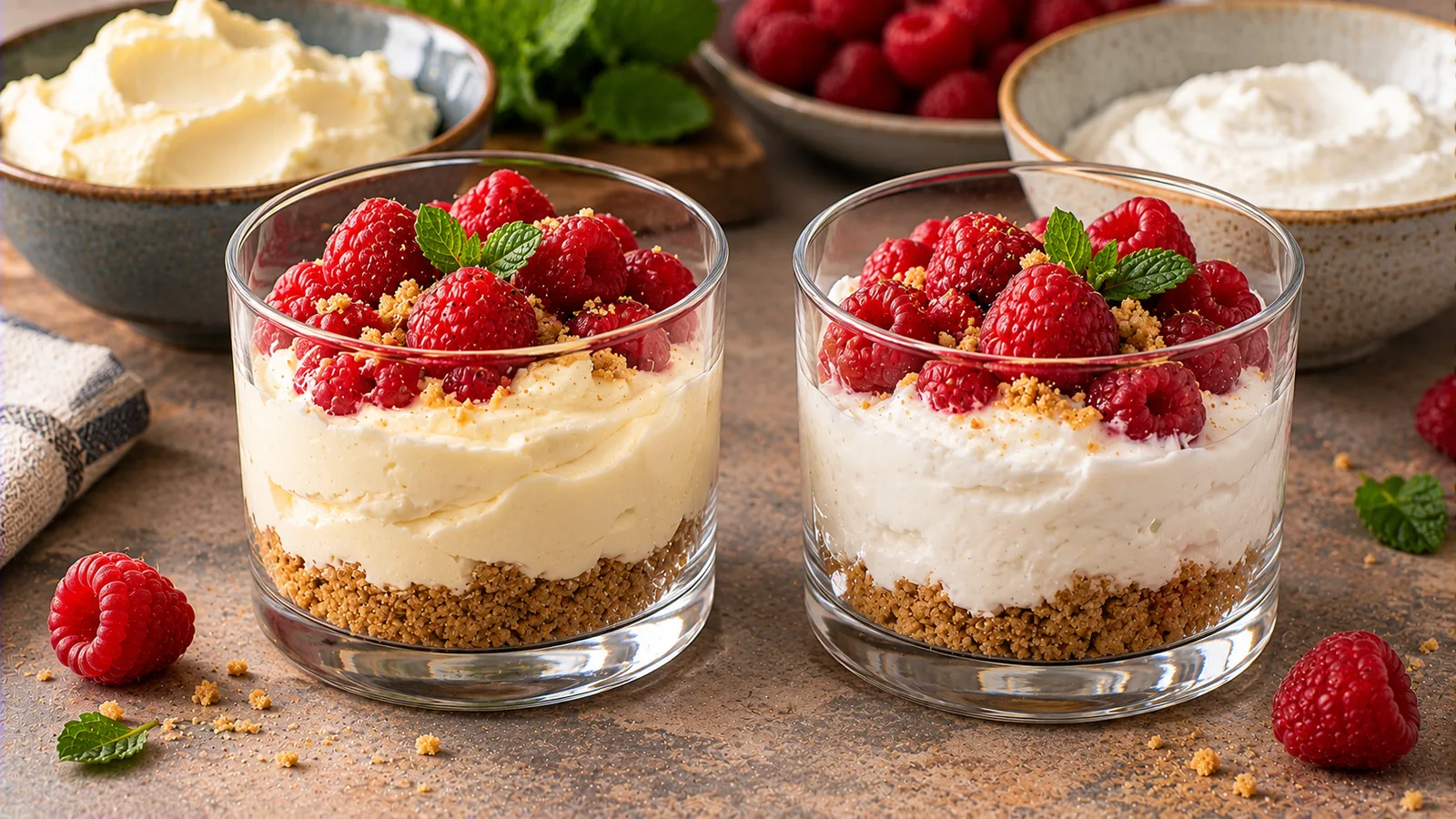
Mascarpone and low-fat quark can both make a spoonable dessert, but treating them as interchangeable gram for gram can change the finished result dramatically. Mascarpone is rich and smooth; German Magerquark is much leaner, tangier and relatively high in protein. The relevant comparison is not merely which tub has fewer calories: how much of each dairy base goes into the same dessert, what texture will it produce, and what happens once sugar, biscuits or cream are added?
This is a dessert substitution comparison, not another general mascarpone calorie listing or a broad quark-versus-skyr guide. The numbers below come from two specifically identified manufacturer labels, not universal averages for every brand. Check the product in your own fridge before calculating.
Two actual product labels, compared per 100 g
For a controlled illustration, we use Galbani Santa Lucia mascarpone in Italy and Schwarzwaldmilch Magerquark 0.2% in its 500 g tub. Neither is a weighted national average; mascarpone and quark brands, recipes and packs can differ. The following values refer to 100 g of dairy product as sold, without added sugar or other dessert ingredients.
| Label value per 100 g | Mascarpone, specified Galbani label | Low-fat quark, specified Schwarzwaldmilch label |
|---|---|---|
| Energy | 383 kcal | 70 kcal |
| Total fat | 39 g | 0.2 g |
| Saturated fat | 27 g | 0.1 g |
| Protein | 4 g | 12.7 g |
| Carbohydrate | 4 g | 3.7 g |
On the selected labels, 100 g of quark contains 313 kcal less, 38.8 g less fat and 8.7 g more protein than the same mass of mascarpone. This is a composition comparison, not a promise that an entire tiramisu has the same differences. A supplier's formulation, whipped cream, eggs, chocolate or sugar will change the final dessert.
Matched dessert-base portions: 150 g, three ways
Imagine three identical-size bowls holding 150 g of dairy base only. The first is all mascarpone, the second all quark and the third combines 75 g of each. Multiplying the corresponding label values by 1.5 or 0.75 gives a transparent comparison.
| Dairy base, 150 g total | Energy | Fat | Protein |
|---|---|---|---|
| 150 g mascarpone | 574.5 kcal | 58.5 g | 6.0 g |
| 150 g low-fat quark | 105.0 kcal | 0.3 g | 19.05 g |
| 75 g mascarpone + 75 g quark | 339.75 kcal | 29.4 g | 12.525 g |
These values are arithmetic results from the named labels, deliberately shown before rounding; they are not laboratory measurements of mixed desserts. With a pure 150 g dairy portion, the mascarpone-to-quark change is 469.5 kcal, 58.2 g fat and 13.05 g protein in the opposite direction. A 75 g + 75 g blend falls between the two for all three nutrients. A 150 g bowl of dairy base is a comparison unit, not a recommended serving size.
For a more realistic layered glass containing 150 g of dairy base plus 20 g biscuit and 80 g berries, calculate the biscuit and berries from their own labels separately. They are the same in each comparison bowl, so they do not alter the difference attributable to the dairy base. They do increase the actual total energy and carbohydrate of every glass; do not present the numbers in the table as complete-dessert nutrition.
What changes in the spoon: fat, acidity and water
Mascarpone usually gives a velvety, dense and coating sensation with a relatively mild dairy taste. The cream-derived fat helps a dessert feel rich even before additional cream is folded in. Low-fat quark brings a fresh, more acidic flavour and a different structure. Depending on brand, quark may be firm, slightly grainy or leave a little whey on standing. Both can hold their shape when cold, but they do not behave identically when combined with liquids, beaten or refrigerated.
The German Federal Centre for Nutrition (BZfE guidance on quark and related dairy foods) describes quark as a different dairy product category from yoghurt or skyr. Its summer-cake suggestions also use Magerquark as a base for light fruit creams, sometimes combined with cream or cream cheese. That supports the culinary approach of blending ingredients for texture, but it does not mean any quark substitution will reproduce a classic mascarpone recipe exactly.
If your quark releases liquid, drain it briefly through a clean fine sieve in the refrigerator and measure the amount you actually use. If you add milk to loosen it, the dessert is no longer an equal-mass comparison; record the added quantity. Blend briefly until smooth rather than beating aggressively, which can make some mixtures thinner. Chilling may improve firmness, but it cannot recreate missing fat.
Which substitution works for which dessert?
A fruit-and-biscuit glass: quark can take the leading role
For two glasses, whisk 200 g low-fat quark with vanilla and lemon zest, then layer with 120 g berries and 40 g crushed biscuits. Taste before deciding whether to add sweetener; if you do, include it in any nutrition calculation. Divide all ingredients equally. Refrigerate covered. This is an original quark-based fruit dessert, not a mascarpone clone, so its brighter acidity is an advantage rather than a defect.
To make it creamier, replace 100 g of the 200 g quark with 100 g mascarpone while keeping the total dairy weight at 200 g. This is the 50:50 direction demonstrated in the comparison, not an instruction to add 100 g mascarpone on top. Different biscuits and berries vary in carbohydrate and sweetness; calculate a full glass only using their actual labels.
Tiramisu-style layers: begin with a partial swap
For a home version, a useful first trial is half mascarpone, half well-stirred quark by weight in the dairy part of the filling. Expect a tangier cream and potentially less stable cut edges; do not promise a traditional tiramisu texture. If the recipe includes whipped cream, eggs, sugar or custard, evaluate those separately. Ladyfingers absorb liquid from coffee and filling, so the final firmness also depends on soaking and chilling time.
Use pasteurised egg products or an egg-free filling rather than casually adding uncooked shell eggs to a no-bake dessert. This substitution article is not a validation of any raw-egg recipe. Use clean utensils, keep dairy cold and follow the most perishable ingredient's storage guidance.
Cheesecake: the baking method matters more than the label swap
Low-fat quark works naturally in many German-style cheesecakes when the recipe is built for quark, with its own egg, starch and baking balance. Swapping all the mascarpone in an unfamiliar baked filling for quark can change moisture, acidity, shrinkage and the set. Trial a smaller batch or choose a tested quark-cheesecake recipe rather than assuming a 1:1 replacement will work. Do not claim a lower-fat version always has fewer calories per slice if the crust, sugar or serving size changes.
No-bake piping, frostings and set creams: test before a celebration
For piped decorations or a dense no-bake cake, mascarpone often produces a fuller texture without much added liquid. Quark alone may be less smooth or release whey. A partial blend, a recipe-specified setting ingredient or controlled draining may help, but changing gelatin, starch or other setting agents without testing can undermine the result. Neither the nutrient table nor a spoon test guarantees slice stability after several hours on a warm table.
Is the quark version always a healthier dessert?
The selected low-fat quark label has less saturated fat and more protein, but that does not make every quark dessert nutritionally superior on every measure. The added sugar, biscuit portion, chocolate, cream and size of the actual serving still matter. Protein is only one nutrient: avoid claiming that mascarpone is 'protein-free' or that a sweetened dessert is automatically a high-protein product. The European Commission's rules for nutrition claims distinguish legally defined claims such as low fat and high protein from casual descriptions. Do not transfer claims made for an ingredient automatically to a finished mixed dessert.
Likewise, a product labelled 'Magerstufe' describes a low-fat grade of quark and is not a claim that the final dessert is low in fat after you add mascarpone or cream. People with a milk allergy should avoid both products; lactose intolerance is different, and neither ordinary product should be assumed lactose-free. Choose explicitly labelled alternatives where appropriate. For a reference focused only on mascarpone's calories and portion sizes, see mascarpone calories and portion sizes. For the distinct comparison of quark with skyr, see quark versus skyr for texture and protein.
Shopping and handling checks before you mix
Compare the per-100-g nutrition panel for the exact products available where you live. Mascarpone brands differ, and low-fat quark can range slightly in protein, carbohydrate and fat. Do not confuse '40% fat in dry matter' with 40 g fat per 100 g of food; the measurements describe different things. Plain quark and flavoured quark desserts also cannot be treated as equivalent because the latter may contain added sugars or cream.
Keep unopened products according to their labels and cold desserts refrigerated. FoodSafety.gov advises chilling perishable food within 2 hours, or within 1 hour when ambient conditions exceed 32°C. Do not assume a dairy dessert is safe because it smells fine or because it was chilled overnight after a long warm period. If preparing ahead, use the shorter shelf-life instruction of the ingredients, store covered, and serve promptly.
Decision in one glance
Choose mascarpone when a rich, mild taste and dense, velvety texture are central to the dessert. Choose low-fat quark when a tangier fruit cream or a recipe specifically designed for quark is acceptable and you want the label-based lower-fat, higher-protein dairy base. Use a 50:50 blend when testing a middle ground, but adjust sweetness, liquid and setting expectations rather than promising a perfect replacement.
The matched 150 g comparison makes the difference measurable; the finished recipe decides whether the substitution succeeds.
Sources
- Galbani Santa Lucia mascarpone — manufacturer nutrition label (per 100 g: 383 kcal, 39 g fat, 4 g protein).
- Schwarzwaldmilch Magerquark 0.2%, 500 g — manufacturer nutrition label (per 100 g: 70 kcal, 0.2 g fat, 12.7 g protein).
- BZfE — differences between quark, skyr and yoghurt.
- BZfE — lighter summer desserts with quark.
- European Commission — permitted nutrition claims.
- FoodSafety.gov — refrigeration and safe food handling.
Calculation boundary: label-derived dairy-base arithmetic, not a measured, complete dessert or a prediction of what every brand will contain.