
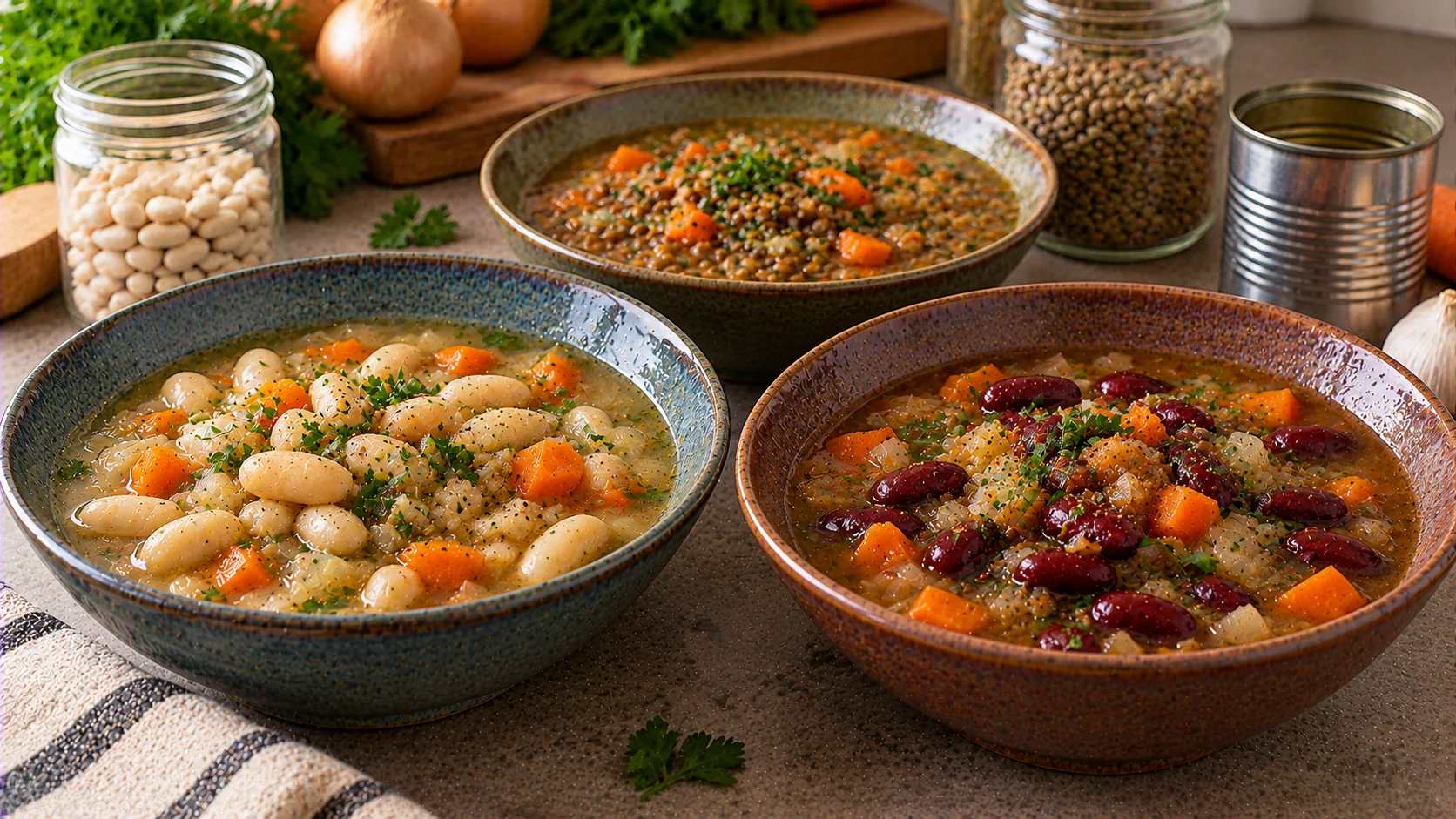
The Cheapest Healthy Soup Base: Dried Beans, Canned Beans or Lentils?
For a vegetable soup, the cheapest packet is not always the cheapest pot. Dry beans can be inexpensive but need soaking and longer cooking; canned beans are ready to add but the tin includes liquid; dry lentils cook much sooner. The fair comparison is a four-serving soup containing about 500 g of cooked pulses, not a kilogram of uncooked beans versus a tin weighing 400 g.
Quick answer
Using the illustrative German shop prices and electricity assumptions below, a four-portion soup costs about €2.64 with dried beans, €3.83 with canned beans, or €2.65 with dried lentils, including the same €2.00 vegetables and seasonings. Dry beans and lentils are nearly tied under these assumptions; lentils take less time. These are reproducible examples, not verified store offers, and neither ingredient is automatically the healthiest choice.
Keep the finished soup comparable
Each version uses the same vegetables, about 500 g cooked or drained pulses and approximately 1.2 litres of water or unsalted stock. You will get four generous portions, although final weight depends on evaporation and vegetable size. Do not compare dried pulses by dry weight against the entire unopened weight of a tin: the water is not food solids.
| Soup variant | Amount bought or used | Cooked, edible pulse mass assumed | Pulse cost | Cooking electricity | Full soup cost | Per 4 portions |
|---|---|---|---|---|---|---|
| Dried beans | 200 g dry at €1.99/kg | 500 g (2.5× yield) | €0.40 | €0.25 | €2.64 | €0.66 |
| Canned beans | 2 × 400 g tins, each 240 g drained | 480 g (use both tins) | €1.78 | €0.05 | €3.83 | €0.96 |
| Dried lentils | 210 g dry at €2.49/kg | 504 g (2.4× yield) | €0.52 | €0.12 | €2.65 | €0.66 |
The vegetable base contributes €2.00 in every row; rounded totals use unrounded underlying costs. A 20 g edible difference between canned and other examples is disclosed rather than hidden. If exact parity is important, measure 480 g cooked pulses for every version and recalculate accordingly.
Grocery list for one four-serving pot
Choose one pulse option from the first table, not all three. For the shared base buy or use: one onion (120 g edible), two carrots (200 g), two celery stalks (120 g), 200 g frozen spinach, 1 tablespoon olive or rapeseed oil (15 ml), 1.2 litres water or low-salt stock, and pepper, garlic and herbs to taste. The €2.00 base is a fixed illustrative allowance, not the sum of verified retail labels; oil and seasoning amounts are included in the cooking directions. If you add potatoes, pasta, meat or cream, they change both cost and nutrition.
Method 1: dried beans — plan ahead
- Sort 200 g dry beans, rinse and soak as instructed for their variety; discard soaking water. Never treat soaking alone as cooking.
- Boil in fresh water and cook thoroughly until soft, following pack-specific safe cooking directions, especially for kidney beans. A slow cooker that does not reach a sufficient boil is not suitable for cooking raw red kidney beans safely.
- Drain and weigh approximately 500 g cooked beans. If yield is lower, use the actual mass when comparing portions.
- In another pot soften chopped onion, carrots and celery in 15 ml oil for 6–8 minutes, add water or stock, cook 12 minutes, then add beans and frozen spinach; heat until fully hot and vegetables are tender.
Allow around 15 minutes active vegetable preparation plus the bean soaking and cooking time (often an hour or more, variety dependent). The energy model assumes 0.70 kWh for cooking and soup heating combined; this is not a measurement of your appliance.
Method 2: canned beans — the quickest start
- Drain two 400 g cans and check the actual drained weight on the label (example: 240 g each). Rinse if preferred; sodium varies with the product and rinsing method.
- Sauté chopped onion, carrot and celery in 15 ml oil for 6–8 minutes; add 1.2 litres liquid and simmer about 12 minutes.
- Add the 480 g drained beans and 200 g frozen spinach; cook until the soup is piping hot. Adjust water to the texture you like.
Expect about 25–30 minutes total and approximately 15 minutes active work. The energy example uses 0.15 kWh. Low-salt or no-added-salt cans make salt control easier; compare the nutrition panel, rather than assuming every canned bean is salty.
Method 3: dried lentils — no long soak
- Rinse 210 g dry brown or green lentils and check for debris. They generally do not need prolonged soaking; follow pack instructions.
- Soften the chopped vegetables in 15 ml oil for 6–8 minutes, add lentils and 1.2 litres water or stock.
- Simmer until the lentils are fully tender, often 20–30 minutes depending on variety, topping up liquid as required. Add 200 g frozen spinach for the final minutes and heat through.
Allow roughly 35–45 minutes total. The model assumes 0.35 kWh. Red split lentils break down and make a smoother soup; green or brown hold their shape better. Recheck cooking time and yield if you change type.
Reproduce the cost, including energy
The formula is soup cost = pulse purchase cost + €2.00 base + (kWh × electricity price). Here electricity is assumed to cost €0.35/kWh. Dried beans: 0.200 kg × €1.99/kg = €0.398; energy 0.70 × €0.35 = €0.245; total €2.643, or €0.66075 per serving. Lentils: 0.210 × €2.49 = €0.5229; energy €0.1225; total €2.6454, or €0.66135 per serving. Canned: 2 × €0.89 + €2.00 + €0.0525 = €3.8325, or €0.9581 per serving. Numbers in the table are rounded to two decimals. Time is not monetised; if you value convenience highly, canned beans may still be preferable.
A bag must usually be purchased whole even if you use only 200–210 g. Distinguish cost of ingredients consumed (the table) from cash paid at checkout (whole-package prices). Leftover dry pulses remain available for another soup if stored correctly.
How yield and prices can reverse the winner
Cooked bean yield is not fixed: variety, soaking and draining change it. At 2.0× yield, 200 g dry beans provide only 400 g cooked; at 3.0× they provide 600 g. Likewise, a labelled 400 g can might have a different drained weight, making its edible-price comparison better or worse. For a fair recalculation, divide the ingredient cost by actual edible grams, then multiply by the grams used in soup. Changing energy rates, batch size or cooking method also changes the answer.
| What changes? | Why it matters | What to check |
|---|---|---|
| Drained can weight | The liquid is not a serving of beans | Drained mass on label and after straining |
| Cooked dry yield | Water absorption changes portion mass | Weigh fully cooked, drained beans |
| Energy usage | Long cooking may increase cost | Your meter or appliance rating and time |
| Portion size | A larger bowl dilutes neither price nor salt | Divide complete pot into four comparable servings |
| Package cost | Checkout spend differs from consumed cost | Keep unopened remainder for future meals |
Nutrition, salt and suitability
Beans and lentils contribute protein, fibre and other nutrients, but a cheap soup is not automatically balanced. A bowl may need bread, a grain or another food for a more substantial meal; its energy content varies with oil and additions. Compare actual labels or trustworthy compositional data instead of asserting identical protein or calorie values for different pulse varieties. Lentils cook relatively quickly; white beans give a creamier bite; kidney beans need stricter raw-bean preparation. This is a cost-and-method guide, not a medical comparison.
For a different general-purpose dry-versus-canned yield analysis, read the general dried-versus-canned bean comparison. For ways to incorporate low-cost pulses into complete meals, see more affordable pulse-based meals.
Storage and food safety
Cool soup promptly in shallow containers and refrigerate; use refrigerated leftovers within 3–4 days or freeze portions for longer. Reheat leftovers thoroughly to 74°C/165°F. Follow the USDA leftover safety guidance. Raw dried kidney beans require correct boiling and thorough cooking, not merely a short simmer; follow validated package instructions.
Sources
- USDA FSIS: leftovers and food safety — rapid cooling, refrigerated storage and safe reheating.
- USDA FSIS: safe food basics — hot holding, refrigeration and reheating.
Every price, cooked yield and kWh value in this example is a stated modelling assumption. Check actual packs, weights, electricity tariffs and label nutrition.