
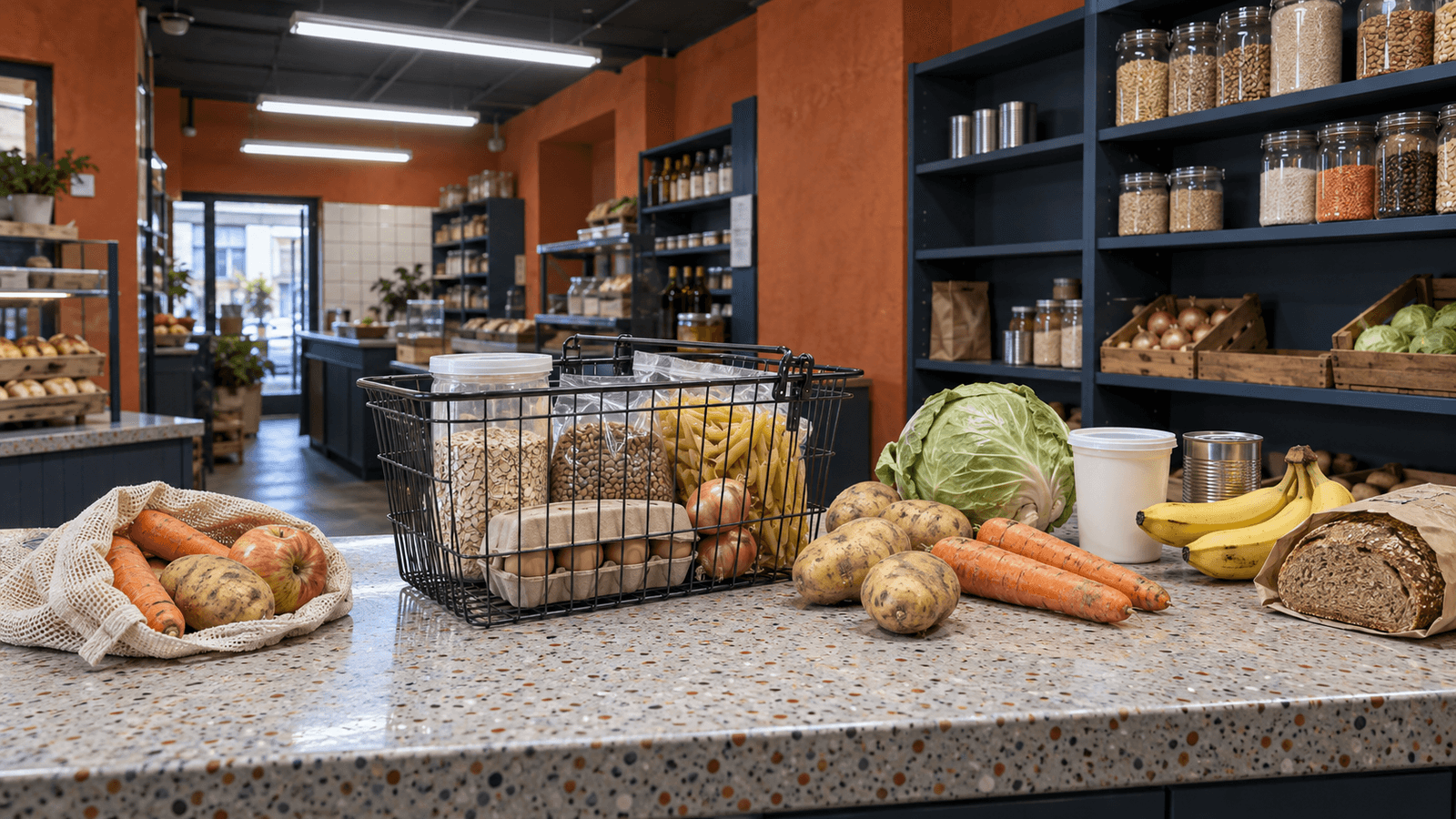
Healthy eating does not require filling your shopping cart with expensive specialty foods.
A practical budget-friendly diet is usually built from ordinary ingredients used efficiently.
The biggest opportunities often come from:
- planning before shopping
- comparing prices in useful units
- choosing versatile ingredients
- using affordable protein sources
- buying produce strategically
- cooking around what you already have
- reducing food waste
- using leftovers intentionally
The goal is not to buy the cheapest possible food.
It is to get useful nutrition, satisfying meals and enough variety from the money you already plan to spend.
Start with the food you already have
Before making a shopping list, check:
- refrigerator
- freezer
- pantry
- cupboards
Look especially for food that should be used soon.
For example:
- vegetables beginning to soften
- opened yogurt
- half a loaf of bread
- cooked rice
- eggs
- canned beans
- frozen vegetables
- potatoes
These foods are already paid for.
Using them before buying replacements is one of the simplest ways to reduce unnecessary spending.
Plan meals before you shop
Shopping without a plan can create two problems:
- buying ingredients you do not actually need
- forgetting ingredients required for useful meals
You do not need a rigid seven-day menu.
A simple plan might be:
Monday: lentil pasta
Tuesday: chicken, potatoes and vegetables
Wednesday: leftovers
Thursday: bean and rice bowl
Friday: flexible
Saturday: fish with potatoes and vegetables
Sunday: soup using remaining ingredients
For a reusable planning system, see Weekly Meal Planning Template.
Build meals around versatile ingredients
An ingredient becomes more valuable when it can appear in several meals.
Useful examples include:
- eggs
- oats
- potatoes
- rice
- pasta
- lentils
- beans
- yogurt
- frozen vegetables
- carrots
- onions
- cabbage
- seasonal vegetables
- chicken
- canned fish
- tofu
Rice might become:
- a side dish
- a grain bowl
- fried rice
- part of a soup
- a base for beans or lentils
Yogurt might become:
- breakfast
- snack
- sauce
- dressing
The more ways you can realistically use an ingredient, the lower the chance that part of it will be wasted.
Compare price per useful unit
The cheapest package is not always the best value.
Compare prices using units such as:
- price per kilogram
- price per 100 grams
- price per liter
- price per portion
A larger package may have a lower unit price, but it only saves money if you actually use it.
If half of it is thrown away, the apparent saving disappears.
Store brands can reduce costs
For many basic foods, store-brand versions can be cheaper than heavily marketed alternatives.
Examples may include:
- oats
- rice
- pasta
- canned beans
- frozen vegetables
- plain yogurt
- milk
- flour
- canned tomatoes
Compare the nutrition information, package size and unit price rather than assuming that a more expensive brand is automatically better.
Affordable protein sources
Protein does not need to come only from expensive meat or fish.
Budget-friendly options can include:
- eggs
- lentils
- beans
- chickpeas
- plain yogurt
- quark or similar fresh dairy products
- tofu
- canned tuna or other canned fish
- chicken thighs
- discounted meat or fish that can be frozen
Prices vary by country, store and season, so the cheapest option is not always the same.
Combining animal and plant protein sources can increase variety while keeping costs manageable.
For more about protein in meals, see What Are Macros?.
Use beans and lentils
Dry or canned legumes can provide:
- protein
- carbohydrates
- fiber
- minerals
They also work in many inexpensive meals:
- lentil soup
- bean chili
- chickpea curry
- pasta with lentils
- bean and rice bowls
- salads
- wraps
Canned legumes are convenient.
Dry legumes can sometimes offer a lower cost per cooked portion, although they require more preparation.
Eggs are highly versatile
Eggs can work for:
- breakfast
- sandwiches
- rice dishes
- salads
- quick dinners
- vegetable skillets
Their versatility makes them useful when you want to keep a smaller number of ingredients at home.
Frozen vegetables can be practical
Fresh vegetables are not automatically better for every budget or situation.
Frozen vegetables can be useful because:
- they keep much longer
- you can use only the amount needed
- preparation is often minimal
- waste can be lower
Useful options include:
- broccoli
- spinach
- peas
- mixed vegetables
- green beans
Fresh and frozen vegetables can both fit into a balanced diet.
Buy fresh produce strategically
Fresh produce can become expensive when it is purchased without a plan and then discarded.
A useful approach is to combine:
Foods to use early
Examples:
- leafy greens
- berries
- mushrooms
- ripe tomatoes
Foods that often keep longer
Examples:
- carrots
- cabbage
- onions
- potatoes
- apples
This makes it easier to spread produce across the week.
Seasonal foods can offer better value
Prices can change throughout the year.
Instead of building every meal around one specific vegetable, keep substitutions flexible.
For example:
If broccoli is expensive, another vegetable may fit the same meal.
If berries are expensive, apples or another available fruit may be more practical.
Healthy eating does not require the same produce every week.
Use carbohydrates as affordable meal foundations
Foods such as:
- potatoes
- rice
- oats
- pasta
- bread
- other grains
can provide relatively inexpensive foundations for meals.
Combine them with:
- protein
- vegetables or fruit
- some dietary fat
rather than treating them as complete meals by themselves.
For a simple framework, see What Is a Balanced Meal?.
Do not automatically avoid canned food
Canned foods can be useful budget ingredients.
Examples:
- beans
- chickpeas
- lentils
- tomatoes
- tuna
- corn
They store for a long time and can make quick meals easier.
Check the nutrition label when sodium, added sugar or other ingredients are relevant to your needs.
Use your freezer as a budget tool
A freezer can prevent food from becoming waste.
You may be able to freeze:
- bread
- meat
- fish
- cooked grains
- soups
- sauces
- some leftovers
- ripe fruit for smoothies or cooking
Freezing a food before it spoils is often more economical than throwing it away and buying it again.
Cook larger portions when it actually helps
Batch cooking can save time and sometimes money, but only if the extra portions will be eaten.
Good candidates include:
- soups
- chili
- curry
- pasta sauce
- stews
- cooked grains
You can refrigerate or freeze portions for later.
Do not cook large quantities simply because meal prep advice says you should.
Plan leftovers deliberately
Instead of treating leftovers as accidental, assign them a future meal.
Example:
Monday dinner:
roasted chicken, potatoes and vegetables
Tuesday lunch:
chicken and vegetable bowl
Another example:
Saturday:
large pot of lentil curry
Sunday:
leftover curry with rice
This reduces both cooking effort and waste.
Create a “use first” area
Keep foods that need attention visible.
You might dedicate one refrigerator shelf or container to foods that should be used soon.
Examples:
- opened packages
- cooked leftovers
- ripe vegetables
- half-used ingredients
When planning the next meal, check this area first.
Avoid buying aspirational food
A common source of waste is buying food for the person you imagine you will be next week.
For example:
You buy large quantities of fresh vegetables because you intend to cook every evening.
Then work becomes busy and much of the food spoils.
A better plan reflects your real schedule.
If Thursday is always busy, plan something quick for Thursday.
Budget-friendly planning is realistic planning.
Keep several low-cost backup meals
Backup meals can reduce expensive last-minute decisions.
Examples:
Eggs + potatoes + vegetables
Simple, flexible and built from common ingredients.
Beans + rice + vegetables
Uses inexpensive pantry staples.
Pasta + tomatoes + lentils
A practical mixed meal from shelf-stable ingredients.
Oats + yogurt + fruit
Works for breakfast or a quick meal.
Vegetable soup + bread + protein source
Useful for using ingredients that need to be eaten.
The exact combinations can change depending on local prices.
Make a grocery list from meals
Instead of writing:
- chicken
- rice
- tomatoes
- yogurt
start with the meals.
For example:
Meal 1: chicken + potatoes + vegetables
Meal 2: lentil pasta
Meal 3: bean rice bowl
Meal 4: eggs + bread + vegetables
Then combine overlapping ingredients.
This makes it easier to see which foods have several purposes.
Separate needs from optional extras
When your budget is limited, divide the list into:
Core foods
Ingredients required for planned meals.
Optional foods
Items that are useful but not necessary this week.
If the total is higher than expected, remove optional items first rather than randomly deleting ingredients from planned meals.
Use a flexible budget rather than perfect daily spending
Food spending does not need to be identical every day.
One week you may need to buy:
- oil
- rice
- spices
- oats
These last longer than one week.
Another week may therefore be cheaper.
Looking at spending across several weeks can give a more realistic picture than judging a single grocery trip.
Convenience can still have value
The cheapest ingredient is not always the most practical.
For example, dry beans may cost less than canned beans, but canned beans can save time.
Frozen chopped vegetables may cost more than some fresh alternatives but reduce preparation and waste.
Budget planning should consider:
- price
- time
- storage
- waste
- likelihood that the food will actually be used
A slightly more expensive ingredient that you reliably eat can be better value than a cheaper ingredient you discard.
Healthy eating does not require “superfoods”
You do not need expensive powders, exotic berries or specialty products to build nutritious meals.
Ordinary foods can provide the foundation:
- oats
- eggs
- beans
- lentils
- potatoes
- seasonal vegetables
- fruit
- yogurt
- rice
- whole-grain products
- affordable protein sources
Variety across your overall diet matters more than buying foods because they are marketed as premium health products.
Budget-friendly breakfast ideas
Oats with yogurt and fruit
Use seasonal or frozen fruit depending on price.
Eggs and toast
Add vegetables or fruit when practical.
Yogurt, oats and banana
Uses a small number of versatile ingredients.
Overnight oats
Useful when mornings are busy.
Breakfast does not need a long ingredient list.
Budget-friendly lunch ideas
Leftover bowl
Combine:
- leftover grain or potatoes
- protein
- vegetables
- simple sauce
Lentil soup
Can be prepared in several portions.
Egg sandwich
Add vegetables or fruit.
Bean and rice bowl
Easy to adjust using available vegetables.
Budget-friendly dinner ideas
Lentil pasta
Combine pasta, lentils, tomatoes and vegetables.
Chicken and potato tray meal
Use vegetables that are currently affordable.
Chickpea curry
Serve with rice.
Vegetable omelet
Useful for vegetables that need to be eaten.
Bean chili
Can be cooked in a larger batch and frozen.
Eating well on a budget for weight management
Budget meals do not need to be extremely small or restrictive.
A useful meal structure can include:
- protein
- vegetables or fruit
- a carbohydrate source
- some dietary fat
If weight loss is the goal, portions and overall energy intake still matter.
See How to Lose Weight Sustainably.
Budget planning and calorie tracking
Tracking can sometimes reveal which foods provide useful nutrition and satisfaction relative to their cost and energy content.
But you do not need to weigh every ingredient.
For a lower-friction approach, see How to Track Calories Without Weighing Everything.
Avoid false savings
Some shopping habits look economical but can cost more in practice.
Buying huge packages you cannot finish
Lower unit price does not help if food is wasted.
Buying sale items without a plan
A discount is not a saving if you would not otherwise buy or use the food.
Driving to several stores for tiny differences
Transport and time also have value.
Replacing meals with snacks
Several convenience snacks can sometimes cost more than a simple meal.
Buying ingredients for one complicated recipe
Special ingredients may remain unused afterward.
A simple budget-shopping workflow
Step 1: Check food at home
Identify what should be used first.
Step 2: Check your week
Know which days require quick meals.
Step 3: Choose several main meals
Favor overlapping ingredients.
Step 4: Add breakfasts and lunches
Reuse ingredients where practical.
Step 5: Create one combined list
Remove everything already at home.
Step 6: Compare unit prices
Especially for foods you buy frequently.
Step 7: Make substitutions when prices are poor
Stay flexible.
Step 8: Store food properly
Protect what you have purchased.
Step 9: Review leftovers before the next shopping trip
Turn them into meals before buying more.
Example of one ingredient across several meals
Suppose you buy a bag of carrots.
Instead of using two carrots for one recipe and forgetting the rest:
Monday:
roasted carrots with chicken and potatoes
Wednesday:
carrots in lentil soup
Friday:
carrot sticks with a yogurt-based dip
Sunday:
remaining carrots in a curry or soup
This is the basic principle of budget meal planning:
buy ingredients with a realistic path to being eaten.
How Mealisa can help with food budgets
Mealisa can combine nutrition planning with practical constraints such as:
- food budget
- calorie targets
- macro targets
- dietary preferences
- allergies and intolerances
- cooking time
- available ingredients
Meal suggestions can then be built around both nutrition and real-world limits.
If ingredients are already available at home, they can be prioritized instead of automatically generating another shopping list.
Tracking prices can also make it easier to understand how food choices affect spending over time.
The objective is not simply to generate the cheapest meals.
It is to find meals that make sense nutritionally, financially and practically.
Common mistakes when eating healthy on a budget
Assuming healthy food must be expensive
Many useful staple foods are relatively simple and inexpensive.
Shopping before planning
This often creates disconnected ingredients.
Ignoring food already at home
Unused food is wasted money.
Buying too much fresh produce
Buy quantities that match your actual week.
Avoiding frozen or canned foods
They can be convenient and reduce waste.
Choosing only by package price
Compare unit price and how much you will realistically use.
Planning seven complicated dinners
Simple repeated ingredients can make the week cheaper and easier.
Forgetting leftovers
Leftovers can replace another purchased meal.
Frequently asked questions
Is healthy eating expensive?
It can be, but it does not have to be. Costs depend on location, food choices, shopping habits and waste. Basic foods such as oats, potatoes, legumes, eggs, seasonal produce and frozen vegetables can support many balanced meals.
What are good cheap protein sources?
Depending on local prices, options can include eggs, beans, lentils, chickpeas, yogurt, tofu, canned fish and some cuts of chicken.
Are frozen vegetables healthy?
Frozen vegetables can be a practical way to include vegetables while reducing spoilage and preparation time.
Is buying in bulk always cheaper?
No. A lower unit price only saves money if you can store and use the food before it is wasted.
How can I reduce my grocery bill?
Plan meals, use existing food first, compare unit prices, reduce waste, use versatile ingredients and keep inexpensive backup meals available.
Should I buy organic food on a limited budget?
Organic products are not required to build a nutritious diet. Choose foods according to your priorities, availability and budget.
Can meal planning save money?
It can help by reducing unnecessary purchases, increasing ingredient reuse and making leftovers easier to use.
How do I eat more vegetables without spending too much?
Compare seasonal fresh produce with frozen and canned options, choose vegetables you actually use and reduce spoilage by planning when they will be eaten.
The bottom line
Healthy eating on a budget is less about finding one perfect list of cheap foods and more about building an efficient system.
Check what you already have.
Plan several realistic meals.
Choose versatile ingredients.
Compare useful unit prices.
Use affordable protein sources.
Combine fresh, frozen and canned foods.
Plan leftovers.
Freeze food before it becomes waste.
And keep enough flexibility to substitute ingredients when prices change.
A food budget works best when the food you buy actually becomes food you eat.
This article provides general nutrition information and is not individualized medical or dietary advice.