
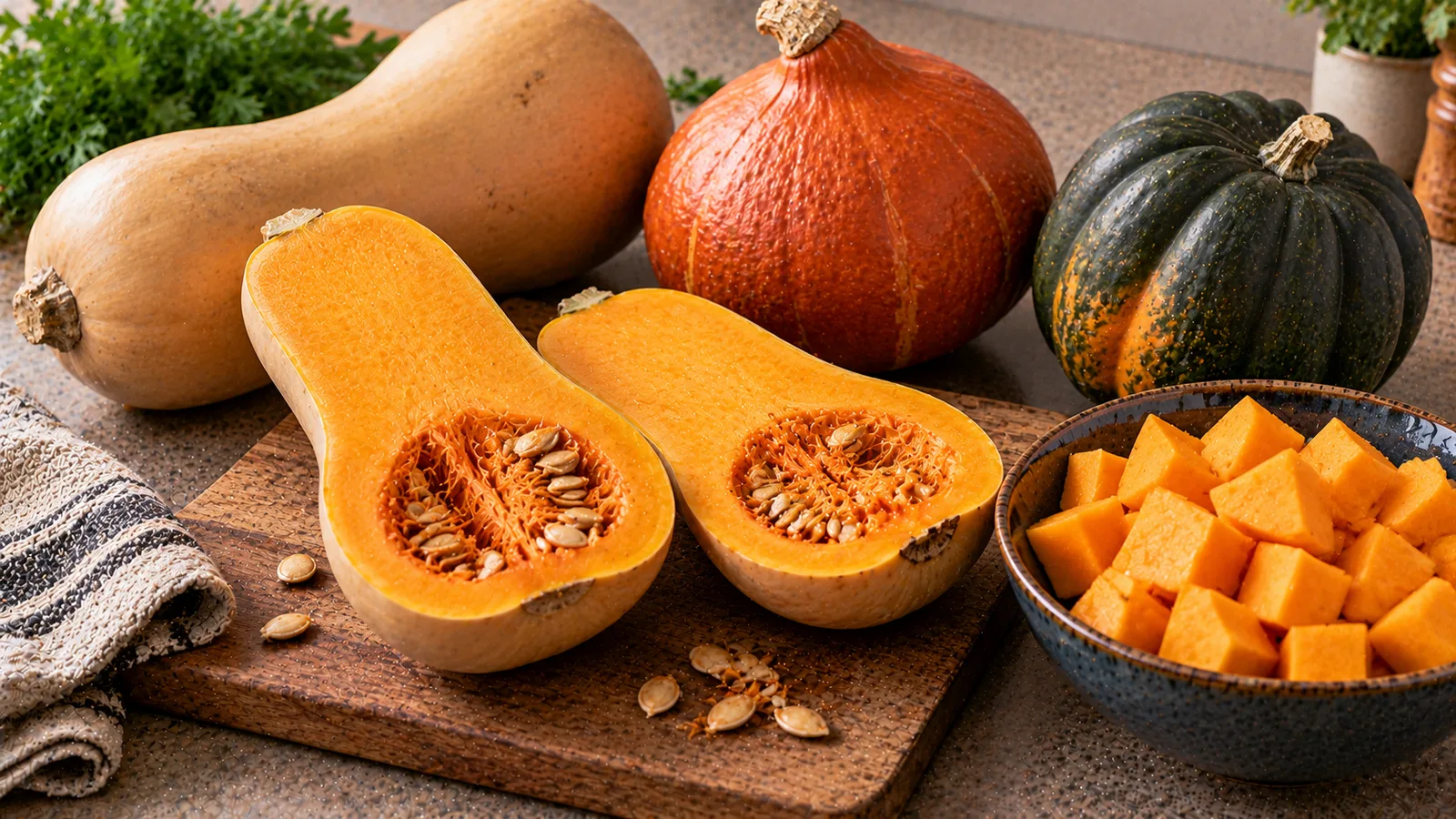
Buying winter squash by the kilogram seems straightforward until the knife comes out. A whole squash includes seeds, stem, and sometimes a rind too tough or unpleasant to eat. The number that matters for a food budget is not only the price on the shelf: it is the price of the flesh you will actually cook and serve. A variety that looks cheaper per kilogram can cost more per dinner if you discard a large share or cannot use it before it spoils.
This guide compares butternut, acorn, delicata and kabocha by measured edible yield, storage needs and cost per 200 g usable portion. The figures in the example are illustrative kitchen measurements and hypothetical euro prices, not today's supermarket offers or guaranteed yields for a variety.
Start with the meal, not the cheapest sticker
For smooth soup or mash, butternut has a useful shape and dense flesh, though you will usually remove its rind. Acorn squash works well roasted in halves: scoop out the cooked flesh and count what you actually eat. Delicata has a relatively tender skin when roasted, so keeping it can reduce preparation waste. Kabocha can be roasted in wedges; its rind may be eaten when cooked sufficiently tender, depending on the squash and your preference. A tough or damaged rind is not something to force yourself to eat for a better spreadsheet result.
University of Maine Extension distinguishes tender skins such as delicata and acorn from the tougher skins of butternut and some pumpkins: squash preparation and edible skins. The variety also affects whether you need long cooking, fine purée, or firm cubes. Compare candidates for the same intended dish, rather than treating every kilogram as interchangeable.
What counts as edible yield?
Edible yield is the weight you plan to use divided by the weight purchased, before roasting or boiling. Weigh the whole squash first. After washing, cutting, removing the stem and seeds, and peeling if appropriate, weigh the raw edible pieces. If you intend to eat a tender cooked skin, include that part; if you expect to discard it after roasting, leave it out. Record the choice so you can compare your next purchase fairly.
Edible yield (%) = raw usable weight ÷ whole purchased weight × 100. A 1,500 g butternut that supplies 1,050 g prepared flesh gives 70% in that particular kitchen test. It does not establish 70% as a universal butternut yield. Size, shape, skin thickness, seed cavity, damaged areas and peeling technique all change the result.
Do not divide by the weight after roasting to calculate preparation yield: roasting evaporates water, while boiling may add water. The cooked weight is useful for serving sizes, but measures a different thing. Keep a separate record if you track recipe calories by raw ingredients.
Four illustrative purchases, measured the same way
The table assumes four independently weighed squashes and invented prices for arithmetic practice, not verified market prices. Each 200 g portion is raw, trimmed edible squash before cooking. Round the final amount only after calculating from the original weights.
| Squash and preparation | Bought | Usable raw weight | Yield | Illustrative purchase price | Cost per 200 g usable |
|---|---|---|---|---|---|
| Butternut, peeled and deseeded | 1,500 g | 1,050 g | 70% | €3.75 | €0.71 |
| Acorn, flesh without rind | 1,200 g | 720 g | 60% | €2.40 | €0.67 |
| Delicata, tender skin retained | 800 g | 640 g | 80% | €2.80 | €0.88 |
| Kabocha, edible skin retained | 1,400 g | 1,120 g | 80% | €3.78 | €0.68 |
For butternut, €3.75 divided by 1.05 kg usable is €3.57 per usable kilogram; multiplying by 0.20 kg makes about €0.71 per portion. For acorn, €2.40 ÷ 0.72 kg × 0.20 kg is about €0.67. Delicata costs €2.80 ÷ 0.64 kg × 0.20 kg, or about €0.88; kabocha is €3.78 ÷ 1.12 kg × 0.20 kg, or about €0.68. All four results describe the vegetable component, not a complete dinner.
Notice that the delicata example has high edible yield yet the most expensive usable portion: its assumed purchase price outweighs the saving from eating its skin. A smaller but cheaper squash might also leave insufficient flesh for the planned number of diners. Always compare the total usable grams required, not the percentage alone.
Turn usable portions into a price per meal
Suppose a weekday meal uses 200 g prepared raw squash plus lentils, grain, seasoning and cooking fat that together cost an assumed €0.80 per person. The illustrative ingredient total is €1.51 with butternut, €1.47 with acorn, €1.68 with delicata or €1.48 with kabocha. These are examples for a budget calculation, not a priced recipe or grocery quotation. If your portion is 300 g, multiply the squash cost by 1.5; do not multiply every other ingredient unless the rest of the recipe also increases.
One 1,050 g prepared butternut supplies five full 200 g servings and 50 g left for another recipe, before cooking loss. To avoid leftovers, plan the remaining flesh for soup, roast vegetables or a freezer-friendly purée. For a smaller household, choosing a modest squash can cost less overall even if the price per usable kilogram is higher, because food left unused contributes no meals.
For comparable yield-and-cost calculations, see edible cost of fresh versus frozen berries · edible yield of canned versus dried beans.
Which squash will last until you cook it?
Whole, sound winter squash generally prefers a cool, dry, ventilated location, not a damp refrigerator drawer. Iowa State University Extension gives approximate storage windows after suitable curing and under suitable conditions: acorn around 5–8 weeks, butternut 2–3 months and Hubbard 5–6 months. These are not guarantees; damage, temperature and maturity can reduce storage life considerably. Iowa State storage guidance.
Purdue Extension places acorn, delicata and spaghetti types among squash best used relatively soon, while hard-skinned kabocha and Hubbard can often be stored longer. This matters if you shop for several weeks at once. Do not buy an oversized delicata expecting it to keep like a carefully stored Hubbard. Purdue variety guide.
Do not confuse curing (a controlled postharvest process for certain types) with leaving a damaged shop-bought fruit in a warm kitchen. Acorn and delicata are not handled exactly like butternut or kabocha. Choose a mature squash that feels heavy for its size, with an intact surface and a firm dry stem. Reject soft, wet, punctured or moldy areas rather than counting on storage to fix them.
After cutting: use the refrigerator, not the pantry
Wash the rind under running water before your knife crosses it. Once cut, refrigerate covered pieces promptly or freeze suitable prepared portions. USDA FSIS relays FDA advice not to leave cut or cooked produce at room temperature for more than two hours: cut produce safety. A whole hard rind is not a safety shield once it has been opened. Plan cut produce for prompt use; if it develops spoilage, discard it.
Cooking also changes the bookkeeping. For a roasted tray, record the weight of raw usable squash and the oil you add, then divide the final dish by the number of servings. The cooked tray might weigh less because of water evaporation. The calorie content of the full ingredients has not automatically shrunk in the same proportion. This buying-and-yield guide is deliberately separate from calorie profiles for individual squash varieties.
A five-minute shopping decision
Before buying, answer four questions: How many 200 g vegetable portions do I need? Is the skin part of the food I actually want to eat? How much of the seed cavity and any damaged flesh will be removed? Can the whole fruit remain in good condition until my cooking day? If you have no past yield data, buy one squash, weigh the usable flesh and save the result. Use your measured yield, not an internet percentage, for the next price comparison.
A price label gives the starting cost. Your cutting board and your meal plan determine the actual value. Buy for the texture you need, the amount you can finish and the storage time you can reliably provide.