
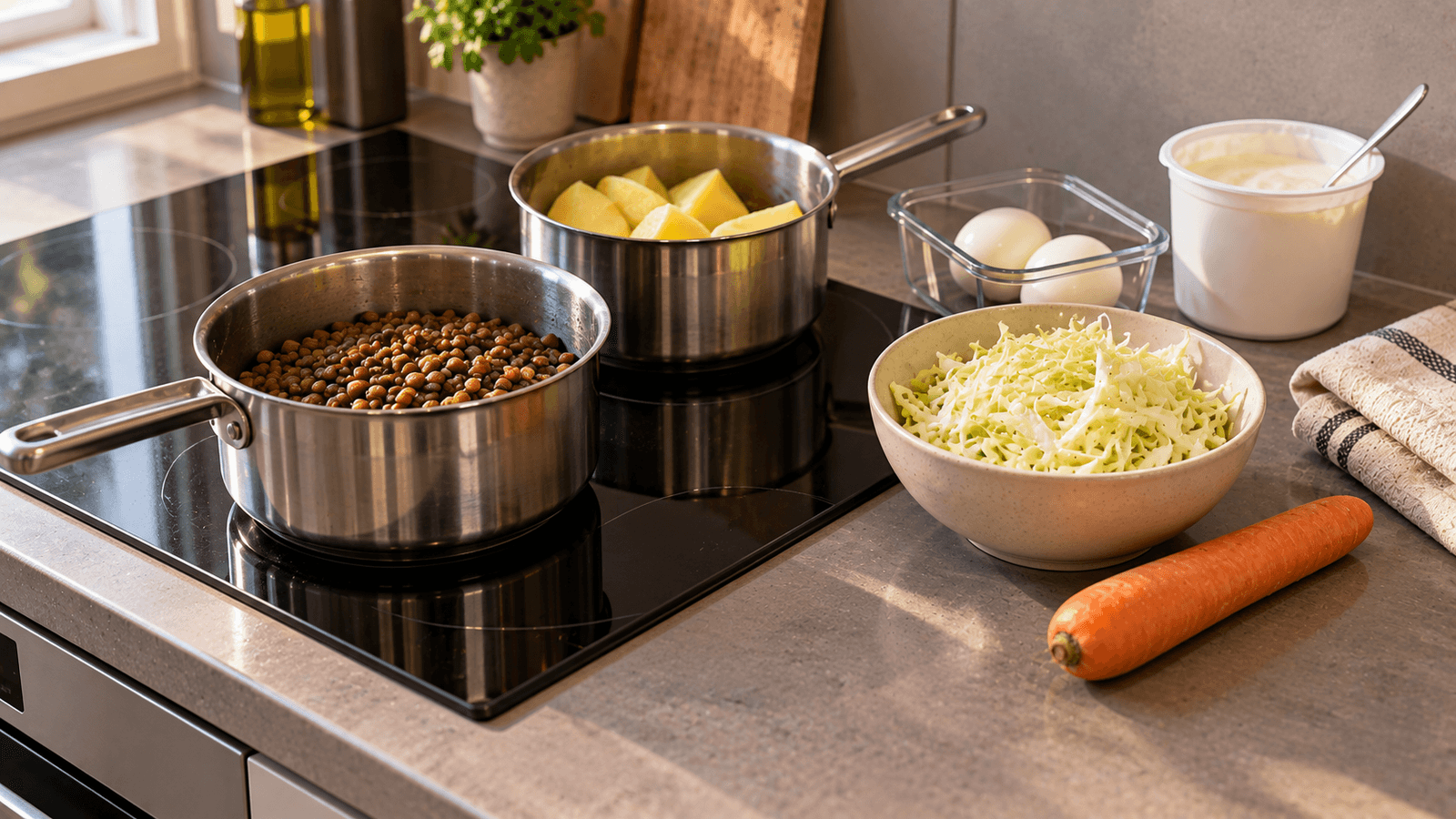
A cheap healthy lunch does not require specialty ingredients, expensive protein products or a completely different recipe every day.
Some of the most useful budget lunches are built from ordinary staples that can appear in several meals during the week: potatoes, rice, pasta, lentils, beans, eggs, oats, seasonal vegetables, frozen vegetables and simple protein sources.
The key is to combine inexpensive ingredients in a way that produces a satisfying meal without buying a long list of products for a single lunch.
20 cheap healthy lunch ideas
| Lunch | Main budget ingredients | Why it works |
|---|---|---|
| Lentil vegetable soup | lentils, carrots, onions, potatoes | inexpensive batch meal with fiber and protein |
| Egg and potato bowl | potatoes, eggs, vegetables | simple ingredients with good staying power |
| Chickpea rice bowl | chickpeas, rice, frozen vegetables | pantry-friendly and easy to scale |
| Bean tomato pasta | pasta, beans, canned tomatoes | combines inexpensive staples in one meal |
| Tuna potato salad | potatoes, canned tuna, vegetables | stretches a smaller amount of protein |
| Lentil tomato pasta | lentils, pasta, tomatoes | useful meat-free batch lunch |
| Egg fried rice | leftover rice, eggs, frozen vegetables | ideal for using cooked rice |
| Bean and vegetable wrap | beans, vegetables, flatbread | portable and easy to customize |
| Potato and cottage cheese bowl | potatoes, cottage cheese, vegetables | simple combination with protein |
| Chickpea tomato stew | chickpeas, tomatoes, onions | inexpensive pantry-based meal |
| Vegetable omelet with bread | eggs, leftover vegetables, bread | good for using small leftovers |
| Lentil rice bowl | lentils, rice, vegetables | low-cost base with flexible toppings |
| Chicken and cabbage bowl | chicken, cabbage, rice | cabbage adds inexpensive volume |
| Bean baked potato | potato, beans, simple topping | minimal preparation and low ingredient count |
| Vegetable pasta with beans | pasta, beans, vegetables | easy to prepare several portions |
| Savory oats with egg | oats, egg, vegetables | uses a cheap breakfast staple differently |
| Chickpea couscous bowl | chickpeas, couscous, vegetables | quick preparation with shelf-stable ingredients |
| Leftover grain bowl | leftover grain, protein, vegetables | turns small leftovers into a complete lunch |
| Lentil potato curry | lentils, potatoes, spices | inexpensive batch-friendly combination |
| Soup and egg sandwich | homemade vegetable soup, egg, bread | combines two simple low-cost components |
Prices vary substantially by country, store, season and package size, so the most useful approach is to compare the cost of ingredients where you actually shop rather than relying on one universal price per serving.
1. Lentil vegetable soup
Dry lentils are useful for budget lunches because they are shelf-stable, expand during cooking and can form the main protein and fiber component of a meal.
A simple version can use:
- lentils
- onion
- carrots
- potatoes
- canned tomatoes
- stock or seasoning
Cook several portions at once.
The same ingredients can also be reused in stews, curries and grain bowls, reducing the number of one-purpose groceries you need to buy.
2. Egg and potato bowl
Potatoes and eggs make a flexible lunch base.
Combine:
- boiled or roasted potatoes
- eggs
- cabbage, carrots, cucumber or another inexpensive vegetable
- herbs or a simple dressing
If you already cook potatoes for dinner, prepare extra and use them for lunch the next day.
That reduces both preparation time and food waste.
3. Chickpea rice bowl
A basic bowl can contain:
- rice
- chickpeas
- frozen mixed vegetables
- a small amount of sauce or seasoning
Dry chickpeas can be inexpensive when cooked in larger batches, while canned chickpeas save preparation time.
Choose whichever option makes more sense after considering both price and convenience.
4. Bean tomato pasta
Pasta does not need an expensive meat sauce to become a substantial lunch.
Try combining:
- pasta
- canned tomatoes
- beans
- onion
- frozen spinach or another vegetable
Beans add protein and fiber while allowing one inexpensive sauce to cover several portions.
5. Tuna potato salad
Canned tuna can cost more than lentils or beans, but potatoes can help stretch a smaller amount across a complete meal.
Use:
- boiled potatoes
- canned tuna
- cucumber or another vegetable
- onion
- yogurt-based or simple vinaigrette dressing
The meal does not need to contain an entire large can of tuna per person to use tuna as a meaningful ingredient.
6. Lentil tomato pasta
Cook lentils directly into a tomato-based sauce.
Combine with pasta and vegetables.
This works particularly well for batch cooking because the sauce can be:
- eaten with pasta
- served over potatoes
- added to rice
- frozen for later
One preparation can therefore support several different meals.
7. Egg fried rice
Leftover cooked rice can become lunch rather than sitting unused in the refrigerator.
Use:
- properly stored cooked rice
- eggs
- frozen peas or mixed vegetables
- a small amount of cooking oil
- seasoning
Follow appropriate food-safety guidance for cooling, refrigerating and reheating cooked rice.
The budget advantage comes from deliberately planning a use for leftover rice rather than cooking an unrelated lunch.
8. Bean and vegetable wrap
Wraps can be built from:
- beans
- shredded cabbage
- carrots
- lettuce or seasonal vegetables
- yogurt sauce or another simple dressing
- flatbread or tortilla
Cabbage and carrots are particularly useful when they are inexpensive locally because they can be used across several meals and generally store better than delicate salad leaves.
9. Potato and cottage cheese bowl
A simple combination of potatoes and cottage cheese can provide carbohydrate and protein without requiring many ingredients.
Add:
- cucumber
- tomato
- radish
- frozen or cooked vegetables
- herbs
If cottage cheese is expensive where you live, compare its unit price and protein content with yogurt, eggs, beans or other alternatives rather than assuming it is automatically the cheapest option.
10. Chickpea tomato stew
For a pantry-oriented lunch, combine:
- chickpeas
- canned tomatoes
- onion
- carrots
- spices
Serve it alone, with rice or with bread.
Because the main ingredients are shelf-stable, this is also useful as a backup lunch when fresh groceries are running low.
11. Vegetable omelet with bread
Eggs make it easy to use small amounts of vegetables that would otherwise be left behind.
An omelet can include:
- eggs
- leftover cooked vegetables
- onion
- frozen spinach
- mushrooms when affordable
Serve with bread or potatoes if you want a larger meal.
This is less about finding the absolute cheapest recipe and more about preventing ingredients you already bought from being wasted.
12. Lentil rice bowl
Rice and lentils are inexpensive staples in many markets and can be prepared in large batches.
Add vegetables and a sauce or seasoning for variety.
Instead of changing the entire recipe every day, change one component:
Monday: tomato and herbs
Tuesday: curry spices
Wednesday: yogurt sauce and cucumber
The base remains inexpensive while the meals feel less repetitive.
13. Chicken and cabbage bowl
When chicken fits your budget, combine a moderate portion with lower-cost ingredients rather than making meat the majority of the meal.
For example:
- rice
- cabbage
- carrots
- chicken
- simple sauce
The vegetables and grain increase the total amount of food without requiring a very large portion of the more expensive ingredient.
14. Bean baked potato
Bake a potato and top it with beans.
Add vegetables and, if desired, a small amount of yogurt or cheese.
This lunch has a short ingredient list and can be adapted to whatever beans are cheapest.
If you are already using the oven for another meal, cooking additional potatoes at the same time can also reduce extra preparation.
15. Vegetable pasta with beans
This is useful when you need several portable lunches.
Cook:
- pasta
- beans
- frozen or seasonal vegetables
- a simple tomato or yogurt-based dressing
Divide it into portions.
For food safety, refrigerate prepared meals promptly and use appropriate storage times for the ingredients involved.
16. Savory oats with egg
Oats are not limited to breakfast.
Cook them with water or milk and add:
- egg
- frozen spinach
- peas
- herbs
- a small amount of cheese if desired
This can be useful when oats are one of the least expensive grains in your local store.
17. Chickpea couscous bowl
Couscous is useful for quick lunches because it requires little preparation.
Combine:
- couscous
- chickpeas
- cucumber, carrots or seasonal vegetables
- herbs
- simple dressing
If couscous is relatively expensive where you shop, the same idea works with rice, bulgur or another lower-cost grain.
18. Leftover grain bowl
A cheap lunch does not always need its own recipe.
Start with what is already available:
Base: leftover rice, bulgur, couscous or potatoes
Protein: beans, lentils, egg, chicken or tofu
Vegetables: leftovers, frozen vegetables or fresh produce
Flavor: sauce, herbs or spices
This turns several small quantities into one intentional meal.
19. Lentil potato curry
Lentils and potatoes can create a substantial batch meal with relatively few ingredients.
Add:
- onion
- canned tomatoes
- curry spices
- frozen spinach or another vegetable
Serve alone or with a modest amount of rice.
The same pot can provide several lunches, which reduces both cooking time per serving and the chance that individual ingredients remain unused.
20. Soup and egg sandwich
If you already have vegetable soup, pair it with a simple egg sandwich rather than preparing another complete recipe.
The sandwich can use:
- boiled egg
- bread
- lettuce or cucumber
- a small amount of yogurt-based spread
Combining two simple components is often cheaper and easier than trying to make every lunch a unique recipe.
Build a cheap lunch from four components
You can create many lunches without following a specific recipe.
Choose one item from each useful category:
| Component | Budget-friendly examples |
|---|---|
| Base | potatoes, rice, pasta, oats, bread, couscous |
| Protein | lentils, beans, chickpeas, eggs, cottage cheese, canned fish |
| Produce | carrots, cabbage, frozen vegetables, seasonal produce |
| Flavor | canned tomatoes, herbs, spices, yogurt sauce, small amount of oil |
You do not need all four categories at every meal in exactly this format.
The framework simply makes it easier to turn inexpensive groceries into a practical lunch.
Use the same ingredient in several lunches
Buying one ingredient for one recipe can increase both cost and waste.
Instead, plan ingredient overlap.
For example, one bag of carrots might be used in:
- lentil soup
- chickpea bowls
- wraps
- fried rice
A cabbage might appear in:
- chicken rice bowls
- wraps
- salads
- soups
A batch of lentils might become:
- lentil soup
- lentil pasta sauce
- lentil rice bowls
- curry
This is one of the simplest ways to make a budget meal plan more efficient.
Compare unit prices, not only package prices
A larger package is not automatically cheaper.
Compare the price per:
- kilogram
- 100 g
- liter
- other standardized unit shown by the retailer
Then consider whether you will actually use the larger package.
A lower unit price saves money only when the food is consumed rather than discarded.
For a broader method, see How to Calculate Cost per Meal.
Frozen and canned foods can reduce lunch costs
Fresh produce is not always the least expensive practical option.
Frozen vegetables can be useful because you can take only the amount needed and keep the rest.
Canned foods such as beans, chickpeas, tomatoes and fish can reduce preparation time and provide a longer storage window.
When comparing options, consider:
- unit price
- edible quantity
- preparation time
- storage life
- likelihood of waste
The cheapest sticker price is not always the cheapest food you actually eat.
Batch cooking changes the cost of convenience
Preparing four lunches at once does not necessarily make the ingredients cheaper, but it can make a low-cost option easier to use.
For example, one pot of lentil stew can provide several ready lunches.
Without those prepared portions, a busy day may lead to buying a more expensive lunch away from home.
The useful comparison is therefore sometimes:
prepared homemade lunch vs purchased convenience lunch
rather than:
batch-cooked lunch vs another home recipe.
Keep one emergency lunch at home
A budget plan becomes fragile if every lunch depends on fresh ingredients.
Keep at least one shelf-stable or freezer-based option.
For example:
- canned beans + rice + frozen vegetables
- lentil soup from the freezer
- canned fish + potatoes
- pasta + canned tomatoes + beans
An emergency meal reduces the need for an unplanned purchase when the refrigerator is nearly empty.
A simple five-lunch example
You do not need five completely different sets of ingredients.
A week could look like this:
| Day | Lunch | Ingredients reused |
|---|---|---|
| Monday | Lentil vegetable soup | lentils, carrots, onion |
| Tuesday | Chickpea rice bowl | rice, carrots |
| Wednesday | Egg fried rice | rice, frozen vegetables |
| Thursday | Lentil tomato pasta | lentils, onion, tomatoes |
| Friday | Bean baked potato | potatoes, beans |
The meals differ, but the shopping list remains relatively compact.
That is often more useful for a budget than chasing five unrelated "cheap recipes."
Choose lunches you will actually eat
The lowest theoretical cost per serving is not useful if the meal repeatedly gets left in the refrigerator.
A sustainable budget lunch should be:
- affordable
- reasonably satisfying
- practical to prepare
- suitable for your schedule
- easy enough to repeat
- based on foods you actually like
Budget eating works best when cost, nutrition, convenience and food waste are considered together.