
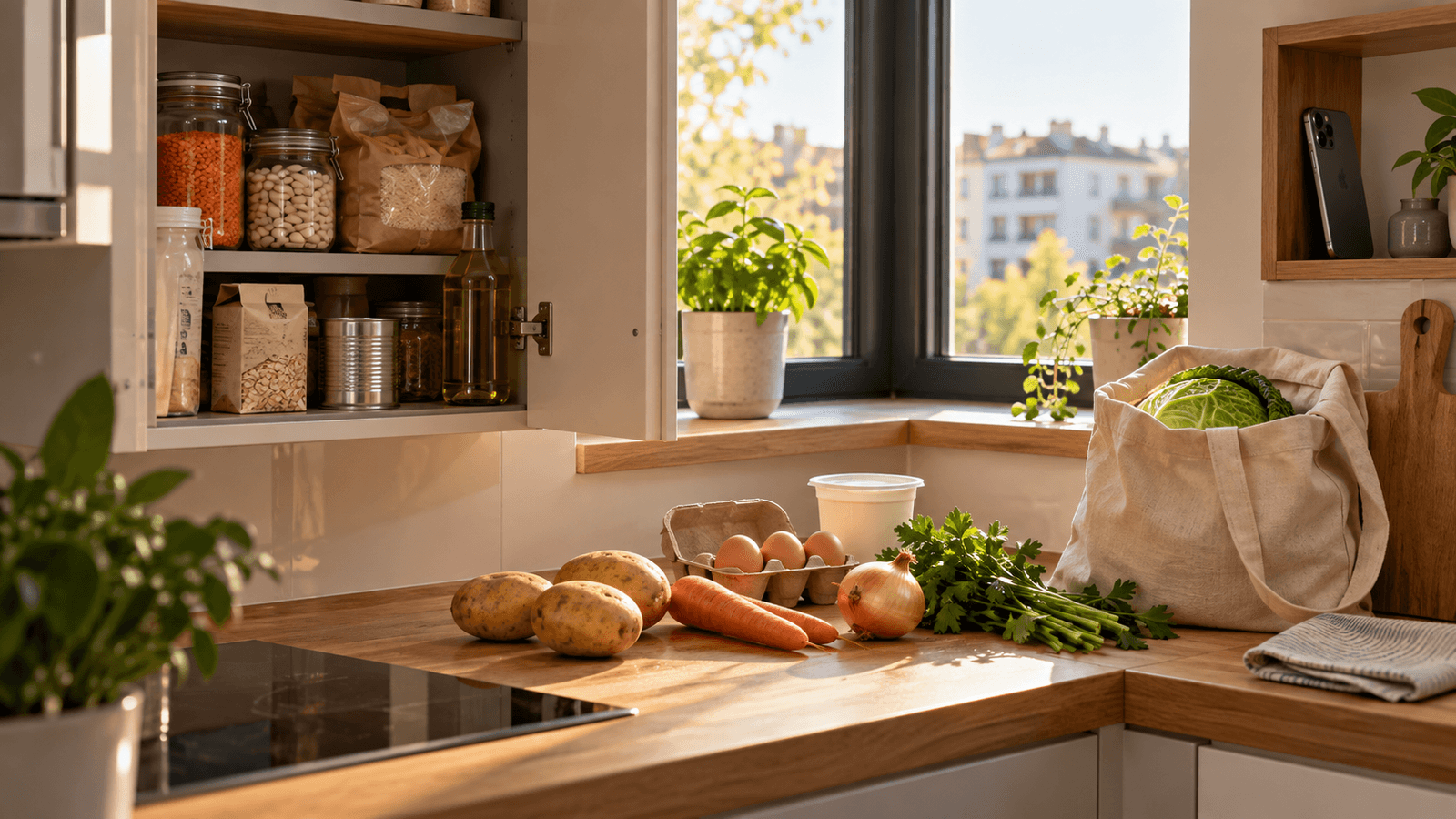
Cheap healthy meals do not require unusual ingredients, complicated recipes or a kitchen full of premium products.
A practical budget meal is usually built from ordinary foods that are inexpensive, versatile and easy to use across several dishes.
The goal is not to find the absolute cheapest food.
It is to get useful nutrition, enough food and enjoyable meals from the money you already plan to spend.
That usually means combining a few reliable building blocks:
- an affordable protein source
- a filling carbohydrate
- vegetables or fruit
- a modest amount of fat or sauce
- seasonings that make simple ingredients enjoyable
What makes a meal both cheap and healthy?
Price alone does not determine whether a meal is good value.
A useful budget meal should ideally be:
- affordable per serving
- reasonably filling
- based on accessible ingredients
- easy to prepare
- flexible enough to use leftovers
- compatible with your nutrition goals
- realistic enough to repeat
An inexpensive ingredient that gets thrown away is not necessarily economical.
Likewise, a cheap meal that leaves you hungry shortly afterward may lead to additional food purchases later.
The practical goal is value per usable meal, not simply the lowest price on the shelf.
Start with affordable staple foods
Staples create the foundation of budget cooking.
Depending on local prices, useful options can include:
- oats
- rice
- pasta
- potatoes
- bread
- dried or canned lentils
- beans
- chickpeas
- eggs
- frozen vegetables
- seasonal vegetables
- canned tomatoes
- plain yogurt
- milk
- flour
You do not need all of these.
Choose the foods that are inexpensive where you live and that you actually enjoy eating.
For a broader shopping strategy, see How to Build a Budget Grocery List.
Build the meal around a protein source
Protein is often one of the more expensive parts of a meal, so choosing it strategically can have a large effect on cost.
Budget-friendly options may include:
- eggs
- lentils
- beans
- chickpeas
- plain yogurt or skyr
- cottage cheese
- canned fish
- chicken thighs
- tofu
- combinations of legumes and grains
Prices vary by country, store and season, so there is no single cheapest protein source everywhere.
The important point is to compare foods you actually use rather than assuming that one category is always cheaper.
Legumes are especially useful for budget meals
Lentils, beans and chickpeas work well because they combine several useful characteristics.
They are:
- relatively inexpensive in many markets
- easy to store
- rich in fiber
- a source of plant protein
- suitable for soups, stews, curries, salads and pasta dishes
They can also stretch meals containing meat.
For example, minced meat can be combined with lentils or beans in tomato-based sauces, chili or stews.
This increases the number of servings without requiring every portion to contain a large amount of meat.
Eggs are flexible
Eggs can work at breakfast, lunch or dinner.
They can be used in:
- omelets
- scrambled eggs with vegetables
- sandwiches
- rice dishes
- potato dishes
- soups
- simple baked dishes
Their versatility matters because an ingredient that works in several meals is less likely to remain unused.
Use carbohydrates as practical meal foundations
Rice, potatoes, pasta, oats and bread are often economical sources of energy.
There is no need to remove them simply because a meal is intended to be healthy.
Instead, combine them with protein and other nutrient-rich foods.
Examples:
- rice + beans + vegetables
- potatoes + eggs + cabbage
- pasta + lentil tomato sauce
- oats + yogurt + fruit
- bread + eggs + vegetables
- rice + chicken + frozen vegetables
Simple combinations are often easier to budget than recipes requiring many specialized ingredients.
Potatoes can be particularly useful
Potatoes are versatile, filling and compatible with many inexpensive foods.
They can be:
- boiled
- roasted
- mashed
- added to soup
- combined with eggs
- served with beans
- used with frozen vegetables
The total cost of the meal still depends on what you add to them, especially oils, cheese, meat and sauces.
Frozen vegetables can reduce waste
Fresh vegetables are useful, but frozen vegetables can be particularly practical when cooking on a budget.
They:
- keep much longer
- can be used in small amounts
- require little preparation
- reduce the risk of unused produce spoiling
- work in soups, rice, pasta and stir-fries
They are especially useful for vegetables you do not reliably finish when buying fresh.
Fresh, frozen and canned foods can all have a place in a practical diet.
Buy fresh produce strategically
Cheap healthy eating does not require buying every vegetable available.
Choose produce based on:
- current price
- season
- shelf life
- versatility
- what you will actually eat
Cabbage, carrots, onions and potatoes, for example, often work in many different meals and generally store better than delicate produce.
Local prices vary, so build your list around what offers good value in your own stores.
Use expensive ingredients as accents
An ingredient does not have to be cheap to fit a budget meal.
Sometimes a smaller amount of a flavorful ingredient can improve an otherwise inexpensive dish.
Examples include:
- cheese
- nuts
- pesto
- olives
- seeds
- herbs
- flavorful sauces
The key is that these foods do not have to make up most of the meal.
A little cheese on a lentil pasta dish is very different financially from building the entire meal around a large quantity of cheese.
Learn a few flexible meal formulas
You do not need dozens of recipes.
A few flexible structures can generate many meals.
Formula 1: Grain + legume + vegetables
Examples:
- rice + beans + frozen vegetables
- couscous + chickpeas + carrots
- pasta + lentils + tomato sauce
Formula 2: Potatoes + protein + vegetables
Examples:
- potatoes + eggs + cabbage
- potatoes + cottage cheese + cucumber
- potatoes + chicken + frozen broccoli
Formula 3: Soup or stew
Start with:
- onion
- carrots or another inexpensive vegetable
- lentils, beans or potatoes
- canned tomatoes or broth
- herbs and spices
Soup is useful for combining small quantities of ingredients that need to be used.
Formula 4: Oats + dairy or alternative + fruit
Oats can become:
- porridge
- overnight oats
- yogurt bowls
- simple baked oat dishes
Formula 5: Bread + protein + produce
Examples:
- egg sandwich + tomatoes
- cottage cheese + bread + cucumber
- bean spread + bread + carrots
These formulas are deliberately simple.
Their advantage is that ingredients can move between meals.
Example: one group of groceries, several meals
Imagine buying:
- potatoes
- rice
- oats
- eggs
- lentils
- plain yogurt
- onions
- carrots
- cabbage
- frozen mixed vegetables
- canned tomatoes
- apples
Those ingredients could become:
- oatmeal with yogurt and apple
- lentil and tomato soup
- rice with eggs and vegetables
- potatoes with cabbage and eggs
- lentil tomato sauce with rice
- yogurt with oats and apple
- vegetable and potato soup
You are not buying a completely separate ingredient list for every recipe.
That is one of the most effective ways to keep meal costs under control.
Reuse ingredients, not necessarily identical meals
Budget meal planning does not require eating the same finished dish every day.
Instead, reuse ingredients in different combinations.
For example, carrots might appear in:
- lentil soup
- rice with vegetables
- a cabbage salad
- a potato stew
The ingredient repeats, but the meal changes.
This reduces waste without making the week feel completely repetitive.
For more planning ideas, see How to Meal Plan on a Budget.
Plan around what you already have
Before shopping, check:
- refrigerator
- freezer
- pantry
- bread storage
- opened packages
Then build upcoming meals around foods that need to be used.
This prevents buying another package of something already at home.
It also helps identify incomplete meals.
If you already have rice and lentils, for example, you may only need vegetables and a few flavoring ingredients to create several meals.
Calculate cost per serving, not only package price
A larger package can cost more at checkout but less per serving.
However, bulk buying only saves money when the food gets used.
Ask:
- How many realistic servings will this provide?
- Can I store it safely?
- Will I actually eat it?
- Can it be used in several meals?
A cheap price per kilogram is not useful if half the product is discarded.
Store brands can be useful
For basic foods, store-brand products may offer similar practical functionality at a lower price than heavily marketed alternatives.
Common examples include:
- oats
- rice
- pasta
- canned tomatoes
- beans
- lentils
- frozen vegetables
- plain yogurt
Compare unit prices where available rather than relying only on packaging or promotions.
Promotions are useful only when they match your plan
A discount does not automatically save money.
Buying something you would not otherwise use can increase spending.
Promotions are most useful for:
- staples you already buy
- freezer-friendly foods
- shelf-stable foods
- products you know you will finish
Avoid allowing discounts to completely determine your meal plan.
Reduce food waste deliberately
Food waste and food cost are closely connected.
Useful habits include:
- freezing bread before it becomes stale
- freezing leftovers in usable portions
- cooking vegetables that are beginning to soften
- using ripe fruit in oats or yogurt
- keeping older foods visible
- labeling frozen leftovers
- planning one flexible “use-it-up” meal
The cheapest meal may be the one made from food already in your kitchen.
Leftovers can become ingredients
Leftovers do not always need to be repeated exactly.
Cooked rice can become:
- vegetable rice
- an egg-and-rice meal
- a side for beans
Roasted vegetables can become:
- soup
- pasta additions
- sandwich fillings
Cooked potatoes can become:
- a potato-and-egg skillet
- soup
- a cold potato dish
This makes leftovers easier to use.
Batch cooking can help — but keep it practical
Cooking larger quantities can save time and sometimes energy costs.
But there is no benefit in preparing twelve portions of a meal you will stop wanting after the second day.
A more flexible strategy is to batch-cook components:
- rice
- lentils
- potatoes
- roasted vegetables
- a basic tomato sauce
Then combine them differently during the week.
Cheap does not mean nutritionally perfect
Every meal does not need to contain every nutrient in ideal proportions.
Nutrition works across the overall diet.
A simple lentil soup with bread may be a perfectly useful meal even if it does not look like a carefully styled nutrition photograph.
A bowl of oats with yogurt and fruit can be inexpensive and practical.
Ordinary food counts.
Use protein strategically rather than excessively
Adding more protein to every meal can increase food costs unnecessarily.
Protein needs vary.
The practical goal is to include useful protein sources across the day rather than automatically choosing the largest possible portion.
Affordable protein sources can be combined.
For example:
- lentils + yogurt
- beans + rice
- eggs + bread
- oats + milk or yogurt
- potatoes + cottage cheese
For more context, see Macros vs Calories: What Matters More?.
Fiber-rich foods often work well on a budget
Many inexpensive staple foods also provide fiber.
Examples include:
- oats
- lentils
- beans
- chickpeas
- potatoes
- cabbage
- carrots
- whole-grain bread
- apples
Fiber can contribute to a satisfying diet while also increasing the usefulness of inexpensive staples.
See High-Fiber Foods: Practical Everyday Choices.
Keep seasonings simple but useful
Budget food does not have to taste bland.
A small collection of frequently used seasonings can transform the same basic ingredients.
Depending on your preferences:
- black pepper
- paprika
- garlic
- dried herbs
- curry powder
- cumin
- chili
- mustard
- vinegar
- soy sauce
Do not buy a large spice collection just because a recipe requests it.
Build it gradually around flavors you actually use.
Be careful with recipes that require many one-use ingredients
A recipe may appear inexpensive when each ingredient is considered separately.
But buying ten products specifically for one meal can make the first preparation expensive.
When evaluating a recipe, ask:
What will I do with the remaining ingredients?
Recipes are more budget-friendly when the same products can be reused elsewhere.
Healthy convenience foods can still fit
Cooking everything from scratch is not always realistic.
Useful convenience foods may include:
- canned beans
- canned lentils
- frozen vegetables
- frozen fruit
- canned tomatoes
- pre-cooked grains when reasonably priced
- plain yogurt
- canned fish
The cheapest option is not useful if the required preparation time makes you abandon the plan and order food instead.
Time has practical value too.
Cheap meals for busy days
Keep two or three very easy combinations available.
For example:
Eggs, bread and vegetables
Cook eggs, add bread and whatever vegetables are available.
Rice, beans and frozen vegetables
Combine cooked rice with beans and frozen vegetables, then season.
Yogurt, oats and fruit
Useful when cooking time is limited.
Lentil tomato pasta
Combine pasta with canned tomatoes and lentils.
Potato and egg meal
Use boiled or pan-cooked potatoes with eggs and vegetables.
These are templates rather than strict recipes.
Do not let “healthy” branding increase the bill unnecessarily
Products marketed as:
- high-protein
- fitness
- superfood
- low-carb
- wellness
- detox
are not automatically necessary for a healthy diet.
Ordinary foods can often provide the same practical nutritional role for less money.
Compare the actual food rather than the marketing language.
Budget meals and portion size
Cost control does not mean serving tiny portions.
Use inexpensive high-volume ingredients to make meals substantial.
Vegetables, potatoes, legumes and soups can help increase food volume without relying entirely on expensive ingredients.
At the same time, be deliberate with energy-dense ingredients such as oils, nuts and cheese.
For more detail, see Portion Control for Weight Loss: A Practical Guide.
A simple budget meal checklist
Before choosing a meal, ask:
- Do I already own part of it?
- What is the main protein source?
- What inexpensive carbohydrate can provide the base?
- Which vegetable or fruit fits?
- Can ingredients be reused in another meal?
- Will leftovers be eaten or frozen?
- Does the meal require expensive one-use ingredients?
- Is the preparation realistic for the time available?
If most answers are favorable, the meal is probably practical for a budget.
Common mistakes when trying to eat cheaply
Buying too many different ingredients
Variety is useful, but every meal does not need a completely different shopping list.
Choosing food only by package price
Cost per usable serving matters more.
Ignoring waste
Discarded food is expensive food.
Buying bulk quantities without a plan
Large packages only help when they are stored and used.
Assuming healthy food must be expensive
Many basic nutritious foods are inexpensive.
Assuming everything must be cooked from scratch
Convenient staples can prevent more expensive last-minute choices.
Buying “healthy” specialty products unnecessarily
Marketing can increase price without making the product essential.
Making meals too small
A cheap meal that leaves you hungry may not work well in practice.
How Mealisa can support budget meals
A useful meal-planning system should consider more than calories.
Mealisa can help connect:
- foods already available
- nutrition goals
- meal ideas
- budget preferences
- cooking time
- repeated ingredients
Instead of treating every meal as an isolated recipe, the goal is to make the week's food work together.
That can make planning simpler and reduce unnecessary purchases.
Frequently asked questions
What are the cheapest healthy meals?
There is no universal cheapest meal because food prices vary by location. Meals based on staples such as oats, potatoes, rice, lentils, beans, eggs and seasonal or frozen vegetables are often practical starting points.
Is healthy eating expensive?
It can be, but it does not have to be. Cost depends heavily on food selection, store, waste, convenience products and how ingredients are reused.
Is frozen food healthy?
Frozen vegetables and fruit can be practical components of a nutritious diet. They can also reduce waste because they keep longer than many fresh products.
Are canned beans useful for budget meals?
Yes. They are convenient and can be used in soups, stews, rice dishes, salads and sauces. Dried beans may cost less per serving in some locations but require more preparation.
Is rice good for cheap meals?
Rice is a versatile carbohydrate and can form the base of inexpensive meals when combined with protein and vegetables.
How can I make meat meals cheaper?
Use smaller amounts of meat alongside inexpensive ingredients such as lentils, beans, vegetables, potatoes, rice or pasta when appropriate for the recipe.
Do cheap meals have enough protein?
They can. Eggs, legumes, dairy products, tofu, canned fish and some meat cuts can provide protein without requiring expensive specialty foods.
How can I avoid wasting groceries?
Check what you already own, plan ingredient overlap, freeze foods before they spoil and include flexible meals designed to use leftovers.
Do I need meal prep containers?
No. Budget meal planning does not require special containers. Ordinary household storage that safely fits the food is enough.
The bottom line
Cheap healthy meals are usually built from ordinary foods rather than special diet products.
Choose a few affordable staples, add practical protein sources, use vegetables strategically, reuse ingredients across meals and pay attention to food waste.
You do not need the cheapest possible diet.
You need a food system that gives you satisfying meals, useful nutrition and manageable costs without buying a completely new set of ingredients for every recipe.
This article provides general educational nutrition information and is not a substitute for individualized medical or dietetic advice.