
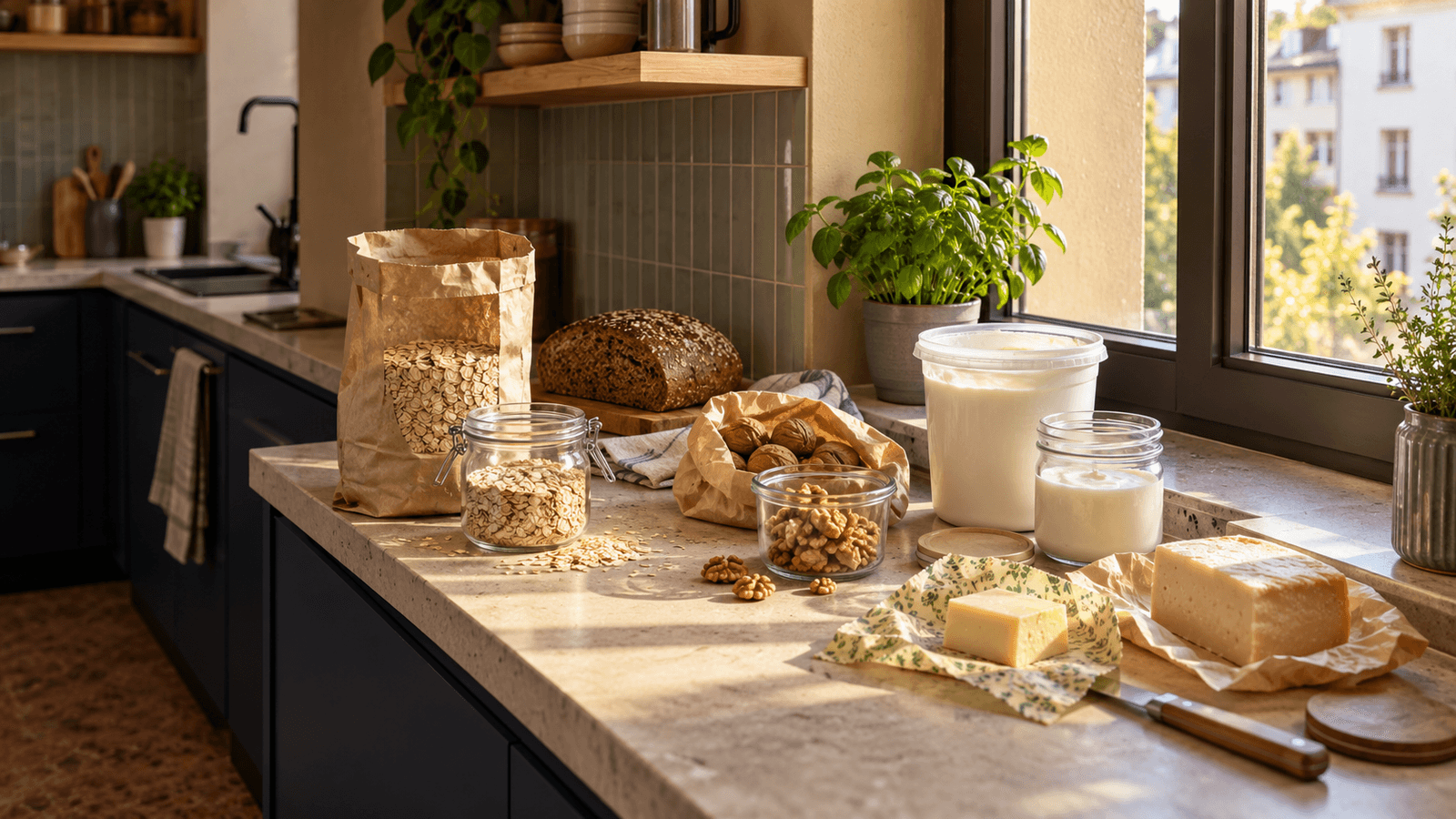
Portion control for weight loss does not mean making every meal as small as possible.
It means adjusting the amount of food you eat so that your overall energy intake better matches your goal.
That distinction matters.
A large portion of vegetables is very different from a large portion of oil, nuts or cheese. Portion control therefore works best when it considers both how much food you eat and how energy-dense that food is.
The goal is not to eat the smallest portions possible.
The goal is to build portions that are satisfying, nutritionally useful and compatible with your overall calorie needs.
Why portion size matters for weight loss
Weight loss requires an energy deficit over time.
You can create that deficit in different ways, and portion size is one of the most practical variables you can change.
If the foods you normally eat stay roughly the same but portions become moderately smaller, total calorie intake may decrease.
But the effect depends heavily on the food.
Reducing a large amount of low-calorie vegetables by 50 grams makes relatively little difference.
Reducing an extra pour of oil, a large serving of cheese or a calorie-dense snack may make a much larger difference.
This is why useful portion control is not simply “eat less of everything.”
For more context on energy intake, see Do You Need to Count Calories to Lose Weight?.
Portion control is not the same as calorie counting
Calorie counting assigns an estimated energy value to food.
Portion control focuses on the amount you serve and eat.
The two can work together, but they do not have to.
You can manage portions without recording every calorie by:
- using familiar serving sizes
- repeating meals you understand well
- serving energy-dense foods deliberately
- building meals around protein and high-volume foods
- avoiding automatic second servings
- noticing how much oil, sauce and toppings you use
Some people prefer numerical tracking.
Others find a portion-based approach easier to maintain.
Start with the foods where portions matter most
Not every food needs the same level of attention.
Portion awareness is particularly useful for energy-dense foods such as:
- cooking oils
- butter
- nuts
- nut butters
- cheese
- chocolate
- pastries
- chips
- creamy sauces
- dressings
- calorie-containing drinks
These foods can fit into a balanced diet.
The issue is that relatively small amounts may contribute substantial energy.
You do not need to avoid them.
You simply benefit from knowing roughly how much you are using.
Do not automatically shrink vegetables and other high-volume foods
One common mistake is making the entire meal smaller.
That can reduce calories, but it can also leave the meal much less satisfying.
Instead, consider keeping or increasing foods that provide substantial volume for relatively few calories.
Examples can include:
- leafy vegetables
- tomatoes
- cucumber
- zucchini
- mushrooms
- cabbage
- broccoli
- cauliflower
- berries
- many fruits
- broth-based vegetable soups
This can allow the physical size of a meal to remain substantial even when its total calorie content is lower.
See High-Volume Foods for Weight Loss.
Protein can make portion control easier
A meal made smaller without considering its composition may leave you hungry soon afterward.
Including a meaningful protein source can help make meals more satisfying.
Examples include:
- eggs
- fish
- poultry
- lean meat
- skyr or Greek-style yogurt
- cottage cheese
- tofu
- tempeh
- beans
- lentils
Protein does not eliminate hunger, and more is not always better.
But meals that consistently contain very little protein may be harder for some people to structure around a calorie deficit.
Fiber also matters
Fiber-rich foods can contribute volume and satiety.
Useful sources include:
- vegetables
- fruit
- legumes
- whole grains
- oats
- potatoes with skin
- seeds
- nuts
Fiber is not a magic weight-loss nutrient.
Its practical value is that fiber-rich foods can help create meals that are more filling and nutritionally useful.
For examples, see High-Fiber Foods: Practical Everyday Choices.
A simple way to think about a meal
You do not need to divide every meal into mathematically exact sections.
Instead, ask four practical questions:
- Where is the protein?
- Is there enough food volume from vegetables, fruit or another high-volume food?
- How large is the portion of starch or other carbohydrate?
- How much energy-dense fat, sauce or topping has been added?
This framework works across many cuisines and does not require a special plate.
Use your normal dishes consistently
Dish size can influence how much food you serve without thinking about it.
You do not need special “diet plates.”
A simpler strategy is to use the same bowls, containers and serving utensils regularly.
Familiar dishes make portions easier to recognize.
After repeated use, you begin to know what your usual amount of rice, pasta, yogurt or cereal looks like in the containers you already own.
Consistency can be more useful than constantly changing serving vessels.
Should you weigh food?
You do not have to weigh every food indefinitely.
But temporary weighing can be educational.
It can help you learn what:
- 30 g of nuts
- 50 g of cheese
- 80 g of dry pasta
- 150 g of yogurt
- a tablespoon-sized amount of oil
actually looks like in your kitchen.
After learning your common foods, you may be able to estimate many portions adequately without weighing them every time.
The goal is practical awareness, not perfect measurement.
Hand portions can be useful — but they are approximate
Some people use their hand as a rough portion reference.
For example:
- palm-sized protein portions
- fist-sized carbohydrate portions
- thumb-sized portions of fats
These can be convenient because your hand is always available.
However, hand sizes differ and foods differ in energy density.
Treat hand portions as rough visual cues rather than precise nutrition measurements.
Portion packaged foods before eating
Eating directly from a large package makes it easy to lose track of quantity.
Instead of eating from:
- a large bag of chips
- a box of crackers
- a large container of nuts
- a family-size chocolate package
take out the amount you intend to eat first.
Put the remaining package away.
This creates a visible stopping point.
It does not prohibit having more, but it makes the decision more deliberate.
Cooking oil deserves special attention
Oil is easy to underestimate because it can disappear visually into food.
A generous free pour may contribute much more energy than expected.
You do not need to eliminate oil.
Useful strategies include:
- measuring it occasionally to learn your normal pour
- using a consistent spoon or dispenser
- adding it deliberately rather than automatically
- accounting for oil used in roasting, frying and dressings
The same principle applies to butter, mayonnaise and creamy sauces.
Sauces and toppings can change a portion substantially
The base meal may look moderate while toppings add substantial energy.
Examples include:
- cheese
- mayonnaise
- creamy dressing
- pesto
- sour cream
- nut butter
- seeds
- nuts
- oil-based sauces
Again, the goal is not removal.
The goal is awareness.
Portion control and hunger
If portion control leaves you constantly hungry, the strategy may need adjustment.
Possible reasons include:
- the calorie deficit is too aggressive
- meals contain little protein
- meals contain little fiber
- food volume is low
- meals are spaced too far apart for your preferences
- many calories come from liquids
- sleep or stress is affecting appetite
Hunger should not automatically be interpreted as a failure of willpower.
Meal structure matters.
See How to Manage Hunger While Losing Weight.
Eat slowly enough to notice the meal
Eating speed can affect how much opportunity you have to notice fullness.
You do not need to turn every meal into a timed exercise.
Simple changes can help:
- sit down when practical
- reduce distractions sometimes
- chew normally rather than rushing
- pause before automatically taking another serving
- notice whether you are still physically hungry
The purpose is not ritual.
It is simply to create enough time to recognize the meal you have eaten.
Pause before getting seconds
A second serving is not automatically a problem.
But it is useful to separate hunger from habit.
Before taking more food, ask:
Am I still hungry, or am I continuing because the food is available?
If you are still hungry, more food may be appropriate.
If you are already satisfied, the pause may prevent an automatic extra portion.
Serve food in the kitchen when useful
Keeping large serving dishes on the dining table can make additional portions almost effortless.
For some households, serving the initial meal in the kitchen and leaving the remaining food there creates a small pause before seconds.
This is not a strict rule.
It is simply an environmental tool that can reduce automatic eating.
Portion control for pasta and rice
Pasta and rice are common foods where cooked volume can vary substantially.
A useful approach is to learn your normal dry portion before cooking.
Once you know what your usual serving looks like, you do not need to measure it every time.
You can also combine pasta or rice with:
- vegetables
- legumes
- protein sources
- tomato-based sauces
- broth-based components
to create a larger and more satisfying meal without relying entirely on a very large starch portion.
Portion control for bread
Bread portions can vary widely depending on:
- slice thickness
- loaf size
- toppings
- what else is included in the meal
Rather than treating bread as a food that must be avoided, consider the entire meal.
Two slices of bread with a substantial protein source and vegetables are nutritionally different from several slices covered heavily with butter and cheese.
Context matters.
Portion control for snacks
Snacks are easy to underestimate because they may not feel like “real meals.”
A handful here and a few bites there can accumulate across the day.
Helpful strategies include:
- portioning snacks before eating
- choosing single portions from larger packages
- pairing fruit with yogurt or another protein source
- deciding whether you are actually hungry before snacking
- keeping highly tempting foods less immediately visible if that helps
You do not need to eliminate snacks.
The goal is to make them intentional.
Portion control in restaurants
Restaurant portions can be larger and more energy-dense than typical home meals.
You rarely know the exact amount of:
- oil
- butter
- sauce
- cheese
- sugar
used in preparation.
Practical options include:
- stopping when comfortably satisfied
- leaving some food if the portion is unusually large
- sharing when appropriate
- taking leftovers home
- choosing vegetables or salad as a side when you want more volume
- enjoying the restaurant meal without trying to estimate every gram
One restaurant meal does not determine long-term progress.
Patterns matter more.
Buffets require a different strategy
Buffets combine large portions, variety and easy access to repeated servings.
A simple approach is:
- look at the options before serving yourself
- choose the foods you actually want
- build one intentional first serving
- eat it before deciding whether you want more
This can reduce the tendency to take food simply because it is available.
What about desserts?
Dessert can fit into weight loss.
Portion control does not require removing every sweet food.
Options include:
- choosing a smaller portion
- sharing
- eating dessert less frequently
- choosing the dessert you actually want rather than several alternatives
- adjusting the rest of the meal if appropriate
A sustainable approach generally works better than repeatedly trying to be perfect.
Liquid calories and portions
Drinks can contribute energy without providing the same eating experience as solid food.
Examples include:
- sugary soft drinks
- juice
- sweetened coffee drinks
- milk-based beverages
- alcohol
You do not necessarily need to avoid them.
But if weight loss has stalled, beverage portions are worth reviewing.
Portion control does not mean eating from tiny containers
Very small plates and bowls can sometimes make a portion look larger, but relying on visual tricks is not necessary.
A better long-term skill is learning what appropriate portions of your common foods look like.
That knowledge transfers between:
- home
- restaurants
- work
- travel
- different dishes
The goal is not to trick yourself.
It is to understand your food.
Avoid making every portion decision separately
Decision fatigue can make portion control harder.
Repeated meal structures can help.
For example, you may learn that your usual breakfast contains:
- one familiar yogurt portion
- a consistent amount of oats
- fruit
- a small amount of nuts
You can then repeat approximately the same structure without recalculating it every morning.
Meal planning can make this easier.
See Quick Meal Planning for Busy Weeks.
How to adjust portions when weight loss stalls
Do not react to one day of scale movement.
Body weight fluctuates because of:
- water
- glycogen
- sodium
- digestive contents
- hormonal changes
Look at the longer-term trend.
If there is genuinely no downward trend over several weeks and weight loss remains the goal, you can review portions systematically.
Start with foods where small changes can matter most:
- oils
- sauces
- snacks
- cheese
- nuts
- sweets
- large starch portions
- calorie-containing drinks
You may not need to reduce the entire meal.
Avoid aggressive portion cuts
If progress is slower than expected, cutting every portion dramatically is usually unnecessary.
Aggressive restriction can increase:
- hunger
- fatigue
- food preoccupation
- difficulty maintaining the plan
Smaller, targeted changes are often easier to sustain.
Portion control without counting calories
A simple no-counting framework can look like this:
Breakfast
Include a protein source, a fiber-rich carbohydrate or fruit, and be deliberate with calorie-dense additions.
Lunch
Start with protein and vegetables or another high-volume component, then add an appropriate carbohydrate and fat source.
Dinner
Use the same principle while adjusting portions based on hunger, activity and what you ate earlier.
Snacks
Choose them intentionally rather than automatically.
This is not a rigid formula.
It is a repeatable structure.
Portion control while counting calories
If you already track calories, portion control becomes the physical side of the same process.
The app may tell you that a food contains a certain number of calories per 100 grams.
Portion awareness tells you how much of that food you actually ate.
Tracking quality therefore depends on both:
- food identification
- portion estimation
For more detail, see How Accurate Is Calorie Counting?.
Photo-based portion estimation
Food photos can make tracking faster, but portion size remains one of the hardest parts to estimate from an image.
A photo may not reveal:
- exact food weight
- depth of a container
- hidden ingredients
- cooking oil
- density of the food
- how much was eaten afterward
Mealisa can use visual information to estimate foods and portions, while allowing corrections when the user knows more.
This is more practical than pretending every photo produces a perfectly exact measurement.
Common portion-control mistakes
Making every food smaller
This can unnecessarily reduce vegetables, fruit and other useful high-volume foods.
Ignoring oils and sauces
Small amounts can meaningfully affect energy intake.
Eating directly from large packages
It removes a clear visual portion boundary.
Using portion rules too rigidly
Hunger and energy needs are not identical every day.
Treating restaurant estimates as exact
Restaurant portions and recipes contain substantial uncertainty.
Trying to eliminate hunger completely
Some variation in appetite is normal.
Making the deficit too aggressive
A smaller portion is not automatically a better portion.
A practical seven-step approach
If you want to improve portion control without making eating complicated:
- Identify the most energy-dense foods you eat regularly.
- Learn what your normal portions of those foods look like.
- Include a useful protein source in main meals.
- Keep generous portions of appropriate high-volume foods.
- Portion snacks before eating them.
- Pause before automatic second servings.
- Adjust based on longer-term progress rather than individual days.
This creates structure without requiring perfect measurement.
Portion control versus food restriction
These are not the same thing.
Portion control means choosing an amount.
Restriction often means creating rigid rules about what you are allowed to eat.
A flexible portion approach can include:
- bread
- pasta
- rice
- cheese
- chocolate
- desserts
- restaurant meals
while still managing overall intake.
That flexibility can make a plan easier to maintain.
When portion control may not be appropriate
For people with a current or previous eating disorder, intensive portion control, calorie tracking or food weighing may be unhelpful or harmful.
Individual guidance from an appropriately qualified healthcare professional may be more suitable.
Medical conditions, pregnancy, adolescence and other circumstances can also change nutritional needs.
Frequently asked questions
What is the best portion size for weight loss?
There is no universal portion size. Appropriate portions depend on the food, total energy needs, activity, body size, goals and the rest of the diet.
Do I need smaller plates to lose weight?
No. Smaller plates are optional. Learning recognizable portions of foods you commonly eat is generally more transferable.
Should I weigh every meal?
No. Temporary weighing can help you learn unfamiliar portions, but indefinite weighing is not required for most people.
Can I eat large portions and still lose weight?
Yes, depending on the foods. Large portions of low-energy-density foods can fit within a calorie deficit more easily than large portions of energy-dense foods.
How do I control portions without being hungry?
Prioritize meal structure: adequate protein, fiber-rich foods, high-volume foods and a calorie deficit that is not unnecessarily aggressive.
Can I eat pasta while losing weight?
Yes. Pasta can fit into a weight-loss diet. Portion size, sauce, added fats and the rest of the meal influence the total energy content.
Can I eat snacks while losing weight?
Yes. Snacks can fit within your overall energy intake. Portioning them deliberately can make intake easier to understand.
Is portion control better than calorie counting?
They are different tools. Portion control manages the physical amount of food, while calorie tracking estimates energy intake. Some people use one, some use both, and some use neither.
Can Mealisa estimate portion sizes from photos?
Mealisa can use visual information to help estimate portions, but image-based estimates are not perfectly exact. User corrections can improve the result when more information is available.
The bottom line
Portion control for weight loss is not about making every meal tiny.
It is about understanding where portion size meaningfully affects calorie intake.
Pay more attention to energy-dense foods, keep useful amounts of protein and fiber-rich foods, use high-volume foods to build satisfying meals, and make snacks, sauces, oils and second servings more deliberate.
You do not need perfect portions.
You need a repeatable approach that helps your overall intake match your goal while still allowing you to eat normal food.
This article provides general educational nutrition information and is not a substitute for individualized medical or dietetic advice.