
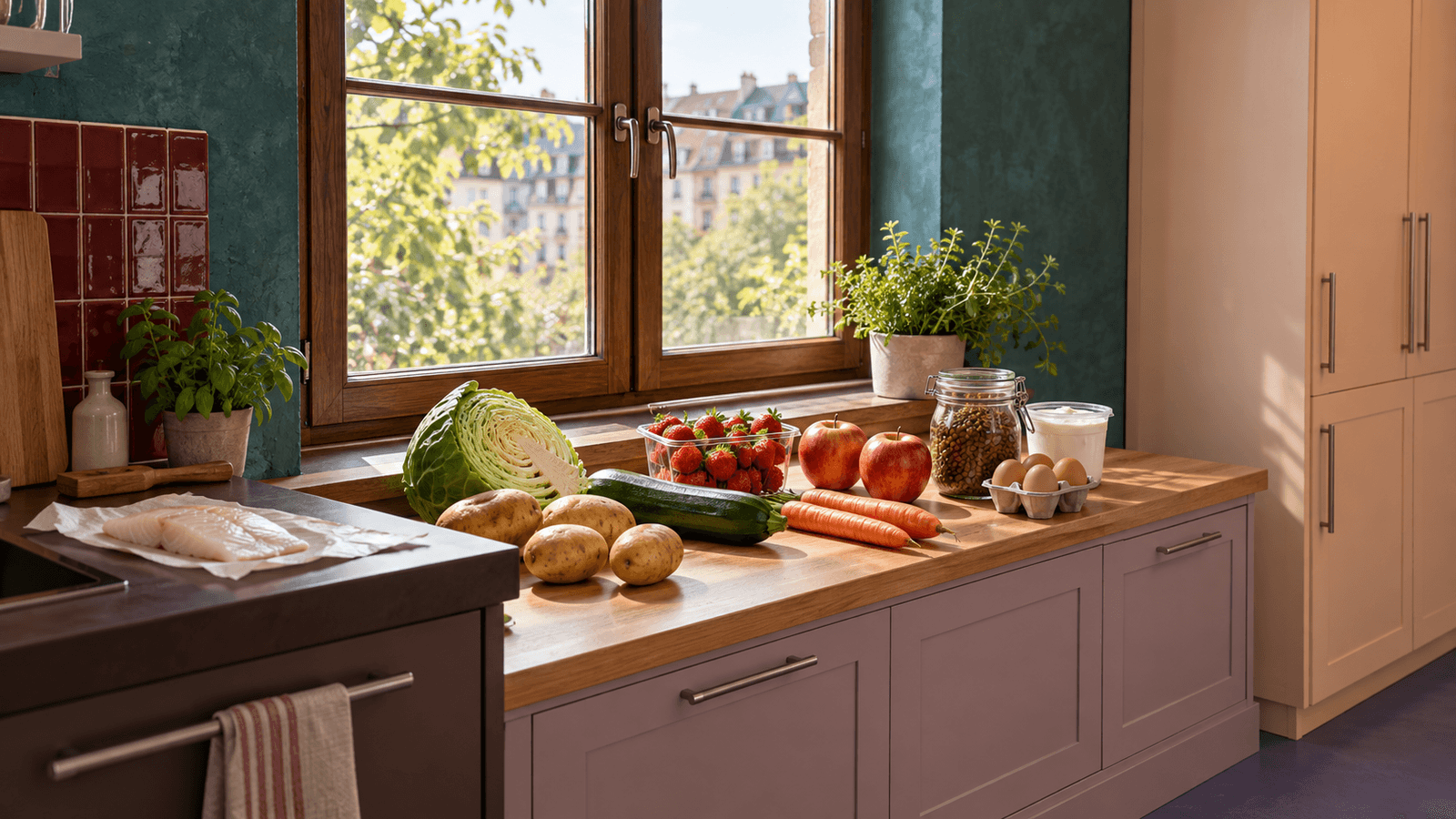
When you are trying to manage calorie intake, the most useful foods are not always simply the foods with the fewest calories.
A food also needs to fit your appetite, meals and everyday routine.
Filling low-calorie foods can help because they often provide one or more of the following:
- protein
- fiber
- water
- physical food volume
- relatively low energy density
These characteristics can make it easier to build satisfying meals without using an unnecessarily large share of your daily calories.
There is no single food that guarantees fullness or weight loss.
But some foods are particularly useful when you want more satisfying food for a given calorie intake.
What makes a food filling?
Fullness is influenced by more than calories alone.
Important factors can include:
- protein content
- fiber content
- water content
- food volume
- energy density
- texture
- how quickly the food is eaten
- the rest of the meal
- individual preferences
This is why two foods with similar calories may feel very different after eating them. (Dhillon et al. (2016) — Protein and satiety, systematic review)
For a broader explanation, see What Is Satiety and Which Foods Help You Feel Full?.
What does low-calorie actually mean?
There is no need to divide foods into rigid categories of “low-calorie” and “high-calorie.”
For practical weight management, it can be more useful to think about how much food you receive for a given amount of energy.
Foods containing a lot of water and fiber often provide more physical volume.
Foods containing substantial amounts of fat are usually more energy dense because fat provides more energy per gram than protein or carbohydrate.
That does not make higher-calorie foods unhealthy.
It simply means portion size can matter more when total calorie intake is a goal.
1. Potatoes
Potatoes can be surprisingly useful for filling meals.
They provide:
- carbohydrate
- potassium
- some fiber
- substantial food volume when boiled or baked
Preparation matters.
Boiled or baked potatoes are very different from potatoes prepared with large amounts of oil, butter, cheese or creamy sauces.
For a lower-calorie meal, use potatoes as a substantial carbohydrate component and combine them with protein and vegetables.
2. Skyr and high-protein yogurt
Plain skyr and similar high-protein yogurts can provide substantial protein for a relatively moderate calorie intake.
They can work as:
- breakfast
- snack
- dessert base
- sauce ingredient
Add fruit for additional volume and fiber.
Choose products based on your preferences and nutritional needs rather than assuming the lowest-fat option is always necessary.
3. Cottage cheese
Cottage cheese can be another convenient protein source.
It works with both savory and sweet foods.
Possible combinations include:
- cottage cheese with tomatoes and cucumber
- cottage cheese with fruit
- cottage cheese on whole-grain bread
- cottage cheese alongside potatoes or vegetables
Protein can make a meal or snack more satisfying than relying only on low-calorie vegetables.
4. Eggs
Eggs are not among the very lowest-calorie foods per gram, but they can still be useful in filling meals because they provide protein and are easy to combine with high-volume foods.
For example:
- eggs with vegetables
- eggs with potatoes
- eggs with whole-grain bread
- eggs added to a vegetable-based meal
The overall meal matters more than labeling an individual food as good or bad.
5. Lean poultry
Chicken and turkey can provide substantial protein without requiring a very large calorie contribution when relatively lean cuts and moderate cooking fats are used.
They can be combined with:
- vegetables
- potatoes
- rice
- legumes
- salads
- soups
Be aware that breading, frying and calorie-dense sauces can significantly change the energy density of the final dish.
6. Lean fish and seafood
Many types of fish and seafood provide protein with moderate calories.
Examples can include:
- cod
- pollock
- shrimp
- tuna in water
- other lean white fish
Fatty fish such as salmon provide more calories but also valuable nutrients and can absolutely fit into a balanced diet.
The goal is not always to choose the lowest-calorie option.
7. Beans
Beans combine:
- fiber
- plant protein
- carbohydrate
- substantial texture
They can be more calorie dense than many vegetables, but they may also be considerably more filling.
Use beans in:
- soups
- stews
- salads
- wraps
- mixed vegetable dishes
A food does not need to have extremely few calories to be useful for appetite management.
8. Lentils
Lentils are another practical combination of fiber and plant protein.
They work well in:
- lentil soup
- vegetable stew
- curry
- salads
- mixed grain dishes
Because dry lentils absorb water during cooking, cooked lentils can provide substantial food volume.
9. Broccoli
Broccoli contains a large amount of water and provides fiber for relatively few calories.
It can increase the volume of:
- pasta dishes
- rice bowls
- stir-fries
- soups
- mixed dinners
Avoid thinking of broccoli as a replacement for the entire meal.
It is usually more satisfying when combined with protein, carbohydrate and some dietary fat.
10. Cauliflower
Cauliflower is another high-volume vegetable that can be used in many ways.
It can be:
- roasted
- steamed
- added to soup
- mixed into curries
- combined with potatoes
- used in vegetable mixtures
There is no need to turn every carbohydrate food into a cauliflower substitute.
It can simply be another vegetable that increases meal volume.
11. Cabbage
Cabbage is inexpensive, versatile and relatively low in energy density.
It can be used:
- raw in slaws
- cooked in soups
- sautéed
- added to stews
- mixed with potatoes or meat
- used in stir-fries
Its texture can also make meals feel physically substantial.
12. Zucchini
Zucchini contains a large amount of water and can add considerable volume to meals.
Use it in:
- pasta sauces
- vegetable mixtures
- soups
- omelets
- baked dishes
- stir-fries
It works especially well when you want to make a mixed dish physically larger without adding a large number of calories.
13. Mushrooms
Mushrooms can add:
- volume
- savory flavor
- texture
for relatively few calories.
They work well with eggs, meat, pasta, potatoes and other vegetables.
Cooking method matters because mushrooms can absorb substantial amounts of oil.
14. Tomatoes
Fresh tomatoes contain a lot of water and can contribute volume and flavor.
Use them in:
- sandwiches
- salads
- egg dishes
- sauces
- vegetable mixtures
- soups
Tomato-based sauces can also be relatively light when they are not dominated by oil, cream or cheese.
15. Cucumbers
Cucumbers are very high in water and low in energy density.
They are useful when you want:
- additional crunch
- side vegetables
- more food volume
- a refreshing snack component
On their own, however, they may not keep you full for long.
Pair them with a protein source or a more complete meal.
16. Carrots
Carrots provide:
- fiber
- water
- natural sweetness
- crunchy texture
They can be eaten raw, roasted, added to soups or used in mixed dishes.
They are more substantial than many leafy vegetables while still being relatively low in calories.
17. Bell peppers
Bell peppers provide considerable volume and can be eaten raw or cooked.
They work well in:
- stir-fries
- egg dishes
- sandwiches
- salads
- roasted vegetable dishes
- soups
Different colors can also make meals more varied without requiring complicated recipes.
18. Leafy greens
Spinach, lettuce and other leafy greens provide a large physical volume for relatively few calories.
They can be useful in:
- salads
- sandwiches
- wraps
- soups
- omelets
- cooked vegetable dishes
However, a very large bowl of leaves alone may not be satisfying.
Add protein, carbohydrates and appropriate fat according to the meal.
19. Berries
Strawberries, raspberries and similar berries can provide relatively large portions compared with many calorie-dense desserts.
They also provide fiber and water.
Try them with:
- skyr
- yogurt
- cottage cheese
- oats
This can create a more substantial snack or breakfast.
20. Apples
Apples provide water, fiber and a food structure that requires chewing.
A whole apple can often feel more substantial than the same fruit consumed as juice.
Pairing fruit with yogurt or another protein source can make a snack more complete.
21. Oranges
Whole oranges provide water and fiber.
Like apples, they generally require more eating time than juice.
Whole fruit is often useful when you want something sweet while keeping the food physically substantial.
22. Melon
Melons contain a large amount of water and can provide a relatively large serving for moderate calories.
They can be useful as:
- fruit with breakfast
- dessert
- snack component
Because individual responses to fruit differ, combine it with other foods if fruit alone does not keep you satisfied.
23. Soups with vegetables and protein
Soup can provide substantial food volume because of its water content.
A useful filling soup may contain:
- vegetables
- potatoes or grains
- beans or lentils
- chicken, fish or another protein source
The calorie content depends heavily on ingredients.
Cream, large amounts of oil, cheese and fatty meats can substantially increase energy density.
Soup is therefore a format rather than automatically a low-calorie food.
24. Oats
Oats are more calorie dense than watery vegetables, but they can still be useful for satiety because they provide fiber and absorb liquid.
A moderate portion of oats combined with:
- yogurt
- skyr
- fruit
- milk
can create a substantial breakfast.
Again, “filling low-calorie foods” does not mean eating only foods with the smallest calorie number.
25. Air-popped popcorn
Plain air-popped popcorn can provide considerable physical volume because the kernels expand during preparation.
The calorie content can rise quickly when large amounts of:
- butter
- oil
- sugar
- caramel coatings
are added.
For people who enjoy crunchy snacks, a simple version can sometimes provide more volume than compact snack foods.
Filling foods versus high-volume foods
These ideas overlap, but they are not identical.
A high-volume food provides a large physical amount for relatively few calories.
A filling food may also benefit from protein, fiber, texture or other characteristics.
For example:
cucumber is extremely high in water and volume but may not be very satisfying on its own.
Skyr has less physical volume but provides substantial protein.
Lentils are more energy dense than cucumber but provide both protein and fiber.
The most useful meals often combine several of these properties.
For more examples, see High-Volume Foods for Weight Loss.
Protein plus volume
A practical strategy is to combine a protein source with high-volume foods.
Examples:
- chicken with potatoes and vegetables
- skyr with berries
- eggs with vegetables and bread
- cottage cheese with fruit
- fish with potatoes and broccoli
- lentils with vegetables
This can be more satisfying than simply trying to make every ingredient as low in calories as possible.
Fiber plus volume
Fiber-rich foods can also help make meals more substantial.
Examples include:
- lentils with vegetables
- beans in soup
- oats with berries
- potatoes with vegetables
- whole grains with a large vegetable portion
If your current fiber intake is low, increase it gradually and drink adequate fluids.
For more practical ideas, see How to Eat More Fiber.
Energy density matters
Energy density describes how many calories a food provides relative to its weight.
Foods containing a lot of water often have lower energy density.
Foods containing substantial fat often have higher energy density.
This does not mean you should eliminate energy-dense foods.
Olive oil, nuts, seeds, cheese and avocado can all fit into a nutritious diet.
But portions can be relatively small while still contributing meaningful calories.
A useful meal can combine lower-energy-density foods with smaller amounts of more energy-dense ingredients.
Cooking method can change the picture
The same basic food can have very different calorie density depending on preparation.
Consider potatoes.
Boiled potatoes contain the potato itself plus water.
Deep-fried potatoes contain additional cooking fat.
The food is still potato, but the calorie density of the final dish changes substantially.
The same principle applies to vegetables, meat and fish.
Useful cooking methods can include:
- boiling
- steaming
- baking
- grilling
- air frying with moderate added fat
- sautéing with a controlled amount of oil
You do not need to avoid oil.
Simply recognize that cooking fat contributes energy.
Sauces and toppings matter
A large bowl of vegetables may begin as a low-calorie dish.
Adding generous quantities of:
- oil
- mayonnaise
- creamy dressing
- cheese
- nuts
- seeds
can significantly increase calories.
These ingredients are not inherently bad.
But if your goal is a filling meal for moderate calories, use calorie-dense toppings intentionally.
Do low-calorie foods guarantee weight loss?
No.
Weight loss depends on overall energy balance over time.
It is possible to eat mostly nutritious foods and still consume enough energy to maintain or gain weight.
It is also possible to include higher-calorie foods while losing weight if overall intake remains appropriate.
Filling low-calorie foods are tools that can make calorie management easier.
They are not a separate mechanism for weight loss.
Do you need to count calories?
Not necessarily.
Some people use calorie tracking.
Others manage their intake through portions, food choices and routines.
Filling foods can be useful in either approach.
If you prefer not to track every calorie, see Do You Need to Count Calories to Lose Weight?.
How to make a meal more filling without making it huge
You do not always need to double the amount of food.
Try adjusting the composition.
For example:
- include a clear protein source
- add vegetables
- choose a fiber-containing carbohydrate
- include enough fat for taste and satisfaction
- use water-rich foods where appropriate
The result can be a normal-sized meal that provides better satiety.
How to make a meal larger for similar calories
If you prefer larger meals, consider replacing part of a very energy-dense component with a lower-energy-density food.
For example:
- add vegetables to pasta sauce
- add mushrooms and zucchini to a meat dish
- use more vegetables in soup
- combine potatoes with a large vegetable side
- add berries to yogurt
The goal is not to dilute every meal.
Use this strategy where it genuinely improves satisfaction.
Cheap filling low-calorie foods
Many useful foods are also relatively inexpensive.
Depending on local prices, examples may include:
- potatoes
- cabbage
- carrots
- oats
- lentils
- beans
- frozen vegetables
- seasonal fruit
- eggs
- plain yogurt
This can make a filling eating pattern compatible with a limited food budget.
Frozen vegetables count
Frozen vegetables can be just as practical as fresh vegetables for everyday meals.
They are useful because they:
- keep longer
- reduce waste
- require little preparation
- can be added directly to many dishes
A freezer bag of broccoli, spinach or mixed vegetables can make it easier to increase meal volume without frequent shopping.
Canned foods can also be useful
Canned beans, lentils, tomatoes and tuna can make filling meals faster to assemble.
Check labels when sodium or other dietary considerations are relevant.
Convenience can be valuable because a theoretically perfect meal is not useful if it is too difficult to prepare consistently.
How to build a filling snack
Instead of choosing only the lowest-calorie snack, combine properties that support satisfaction.
Examples:
- skyr and berries
- cottage cheese and fruit
- yogurt and apple
- boiled eggs with vegetables
- a moderate portion of popcorn
- vegetables with a protein-containing dip
The exact choice depends on your preferences and calorie needs.
Hunger and weight loss
Persistent hunger can make a calorie deficit difficult to maintain.
If you are frequently very hungry, review:
- total calorie intake
- protein
- fiber
- food volume
- meal timing
- sleep
- snack patterns
- how aggressive your weight-loss target is
For a more detailed guide, see How to Manage Hunger While Losing Weight.
A practical grocery list
A simple grocery basket for filling meals might include:
Protein
- eggs
- skyr or yogurt
- cottage cheese
- chicken
- lean fish
- beans
- lentils
Vegetables
- potatoes
- broccoli
- cabbage
- zucchini
- mushrooms
- carrots
- peppers
- tomatoes
Fruit
- apples
- oranges
- berries
- seasonal fruit
Flexible staples
- oats
- whole grains
- whole-grain bread
- popcorn kernels
Higher-energy additions used intentionally
- olive oil
- nuts
- seeds
- avocado
- cheese
The final group does not need to be avoided.
It simply tends to provide more calories in smaller amounts.
How Mealisa can help
Mealisa can help you evaluate foods within the context of your own calorie and nutrition targets rather than labeling individual foods as universally good or bad.
Depending on your goals, Mealisa can help connect:
- estimated calories
- protein
- carbohydrates
- fat
- meal structure
- food preferences
- budget
- available ingredients
Photo-based food recognition can also reduce the amount of manual entry required when tracking meals.
The purpose is not to choose the lowest-calorie food every time.
It is to build meals that fit your targets and are practical enough to repeat.
Common mistakes
Eating only vegetables
Vegetables provide valuable volume, but meals may be more satisfying when they also contain protein and other appropriate components.
Assuming all low-calorie foods are filling
Water-rich foods can provide volume without necessarily providing long-lasting satiety on their own.
Avoiding all dietary fat
Fat is an important part of nutrition. The practical issue is portion size because fat is energy dense.
Turning every meal into an enormous volume meal
Some people prefer large meals, while others do not. Use volume strategically rather than forcing it.
Ignoring cooking oil
A low-calorie ingredient can become a much more energy-dense dish when cooked with large amounts of oil.
Choosing only diet products
Ordinary foods such as potatoes, eggs, yogurt, lentils, vegetables and fruit can form the basis of satisfying meals.
Expecting one food to eliminate hunger
Satiety comes from the overall meal, eating pattern and individual context.
Frequently asked questions
What foods are low in calories but very filling?
Useful examples include potatoes, high-protein yogurt or skyr, lean protein sources, vegetables, fruit, legumes and soups containing vegetables and protein.
What is the most filling low-calorie food?
There is no single food that is most filling for everyone. Protein, fiber, water, volume, preparation and individual preferences all influence satiety.
Are potatoes good for weight loss?
Potatoes can fit well into a weight-loss diet, particularly when boiled or baked and combined with protein and vegetables. Preparation and overall portions matter.
Are fruits too high in sugar for weight loss?
Whole fruit can fit into a weight-loss diet and provides water, fiber and micronutrients. Overall calorie intake matters more than avoiding fruit because it contains naturally occurring sugar.
Are eggs low-calorie?
Eggs are not as low in energy density as watery vegetables, but their protein content can make them useful in filling meals.
Is popcorn good for weight loss?
Plain air-popped popcorn can provide substantial volume for a moderate calorie amount. Added butter, oil, sugar and coatings can significantly increase calories.
Should I avoid nuts and avocado because they are high in calories?
No. They can fit into a nutritious diet. Because they are energy dense, portions may matter when calorie intake is being managed.
Can I eat large meals and still lose weight?
Potentially, yes. Meal size by volume and calorie content are not the same thing. Meals built with water-rich vegetables, lean protein and other appropriate foods can be physically large while remaining compatible with a calorie deficit.
The bottom line
Filling low-calorie foods can make calorie management easier by providing useful combinations of protein, fiber, water and food volume.
Useful options include:
- potatoes
- skyr and yogurt
- cottage cheese
- eggs
- lean poultry
- lean fish
- beans and lentils
- vegetables
- fruit
- soups
- oats
- simple popcorn
You do not need to build your diet entirely from the lowest-calorie foods.
A more practical goal is to combine filling foods with appropriate portions of higher-energy foods so that meals are satisfying, nutritious and compatible with your overall calorie target.
This article provides general nutrition information and is not a substitute for individualized medical or dietetic advice.