
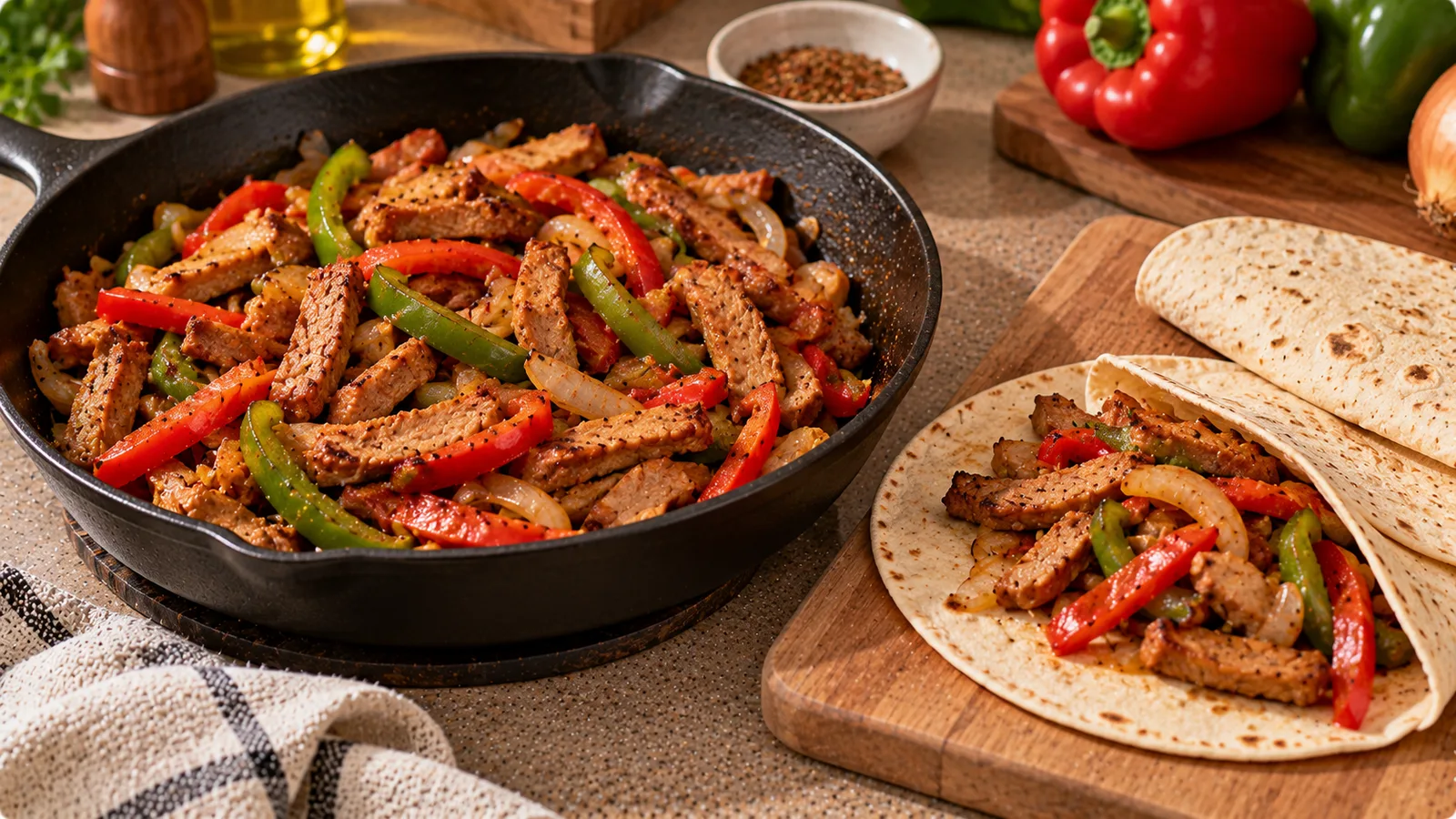
Seitan fajitas with peppers are a quick plant-based dinner built around browned seitan strips, sweet bell peppers, onions and warm tortillas. The filling is seasoned with smoked paprika, cumin, garlic and lime, giving it the familiar flavor of skillet-style fajitas without using meat.
Seitan is made primarily from wheat gluten. Its firm, chewy texture makes it particularly suitable for slicing into strips and cooking over relatively high heat.
This recipe makes four servings and takes approximately 30 minutes.
Recipe at a glance
| Detail | Amount |
|---|---|
| Preparation | 10 minutes |
| Cooking | 20 minutes |
| Total time | About 30 minutes |
| Servings | 4 |
| Main protein | Seitan |
| Cooking method | Large skillet |
| Dietary note | Vegan; contains wheat gluten |
The recipe uses ready-to-cook seitan rather than homemade seitan dough.
Ingredients for four servings
| Ingredient | Quantity |
|---|---|
| Plain seitan | 500 g |
| Red bell pepper | 180 g |
| Yellow bell pepper | 180 g |
| Green bell pepper | 150 g |
| Red onion | 180 g |
| Olive oil | 25 g |
| Garlic | 12 g |
| Lime juice | 30 ml |
| Smoked paprika | 2 tsp |
| Ground cumin | 1½ tsp |
| Dried oregano | 1 tsp |
| Chili powder | ¼–½ tsp |
| Black pepper | To taste |
| Salt | To taste |
| Small wheat tortillas | 8, about 320 g total |
| Fresh cilantro | 10 g, optional |
Choose plain seitan if possible. Marinated products can contain additional oil, sugar and salt, which change both flavor and nutrition.
For a gluten-free meal, seitan is not suitable. Substituting tofu changes the recipe and requires a separate nutrition calculation.
Step 1: Prepare the filling
Slice the seitan into strips approximately 5–8 mm thick.
Remove the seeds from the peppers and cut them into similarly sized strips.
Slice the onion into thin wedges and mince the garlic.
Keeping the vegetables approximately the same thickness helps them cook evenly.
Pat the seitan dry if it is packed in liquid. A drier surface browns more effectively.
Step 2: Mix the seasoning
In a small bowl, combine:
- Smoked paprika.
- Ground cumin.
- Dried oregano.
- Chili powder.
- Black pepper.
Keep the lime juice separate until the end of cooking.
Adding the juice too early can create excess liquid in the skillet and reduce browning.
Step 3: Brown the seitan
Heat approximately 15 g of olive oil in a large skillet over medium-high heat.
Add the seitan in a relatively even layer.
Cook for 4–6 minutes, turning occasionally, until the edges develop some color.
If your skillet is small, cook the seitan in two batches.
Crowding the pan encourages steaming rather than browning.
Transfer the seitan to a plate.
Step 4: Cook the peppers and onions
Add the remaining 10 g of olive oil to the skillet.
Add the sliced onion and bell peppers.
Cook over medium-high heat for approximately 6–8 minutes, stirring occasionally.
The vegetables should soften and develop lightly browned edges while retaining some texture.
Add the garlic and cook for another 30–60 seconds.
Do not allow the garlic to burn.
Step 5: Combine the filling
Return the seitan to the skillet.
Sprinkle the seasoning mixture over the filling and toss well.
Cook for another 1–2 minutes.
If the spices begin sticking, add one or two tablespoons of water rather than more oil.
Remove the skillet from the heat.
Stir in the lime juice and taste before adding salt.
Seitan can already contain considerable sodium, so extra salt may not be necessary.
Step 6: Warm and assemble the tortillas
Warm the tortillas in a dry skillet for approximately 20–30 seconds per side, or follow the package instructions.
Divide the seitan and vegetable mixture among the eight tortillas.
Each serving contains two small tortillas.
Add cilantro if desired and serve immediately.
For a lighter meal, serve the filling over lettuce or rice instead of tortillas, but calculate the nutritional values for the chosen accompaniment.
Estimated nutrition per serving
The estimates below include one-quarter of the seitan filling and two tortillas.
| Nutrient | Approximate amount |
|---|---|
| Calories | 480–580 kcal |
| Protein | 35–45 g |
| Carbohydrates | 50–65 g |
| Fat | 12–18 g |
| Fiber | 6–10 g |
These are broad estimates, not laboratory measurements.
Seitan products vary substantially in protein, carbohydrate, fat and sodium content. Tortilla size also changes the total.
For accurate food tracking, calculate the recipe using the nutrition labels on your actual seitan and tortillas.
Why seitan works in fajitas
Seitan has a dense, chewy texture that holds its shape during sautéing.
Unlike some softer plant-based proteins, it can be sliced thinly and tossed with vegetables without breaking apart.
It also provides a substantial amount of protein, although the exact quantity depends on the product.
Because seitan is made from wheat gluten, it is unsuitable for people with celiac disease or wheat allergy.
A vegan label does not make a product gluten-free.
How to get better browning
The biggest difference between flavorful fajitas and a watery skillet mixture is moisture management.
Use a large enough pan.
Dry the seitan before cooking.
Brown the seitan separately from the vegetables.
Cook over medium-high heat, but reduce the temperature if the spices start burning.
Add lime juice only after the main cooking stage.
Avoid adding a large amount of sauce while the vegetables are still releasing moisture.
These steps help produce browned edges without making the peppers excessively soft.
Adjusting the heat
For mild fajitas, omit the chili powder.
For moderate heat, use approximately ¼ teaspoon.
For a spicier filling, increase it gradually or add sliced fresh chili.
Different chili powders vary widely in intensity.
Smoked paprika contributes smoky flavor but is not necessarily hot.
Taste the finished mixture before making further adjustments.
Serving variations
With avocado
Add sliced avocado after cooking.
It contributes creaminess and additional fat, so include it in the nutrition calculation.
With yogurt-style sauce
Combine unsweetened plant-based yogurt with lime juice and chopped herbs.
Check the ingredient list if you need to avoid soy, nuts or other allergens.
As a fajita bowl
Serve the filling with cooked rice, lettuce and tomatoes.
The calorie total will depend on the rice portion and toppings.
With extra vegetables
Add mushrooms or zucchini, but cook them separately if they release substantial water.
This prevents the entire filling from becoming soggy.
Can you prepare the filling ahead of time?
Yes.
You can slice the peppers, onion and seitan in advance and refrigerate them separately.
The cooked filling can also be portioned for later meals.
Cool it promptly and store it in covered containers in the refrigerator.
As a general US food-safety reference, cooked leftovers should be refrigerated within two hours, or within one hour in very hot conditions.
For properly handled leftovers, US guidance generally recommends refrigeration for three to four days at 4°C / 40°F or below.
Reheat thoroughly before serving.
Keep tortillas separate until mealtime to prevent them from becoming damp.
Common mistakes
Using heavily seasoned seitan without adjusting the spices.
Prepared seitan may already contain strong seasonings and significant sodium.
Cooking everything together from the beginning.
Peppers release moisture, making it harder to brown the seitan.
Adding lime juice too early.
The liquid can reduce surface browning.
Overcooking the peppers.
They lose their texture and become very soft.
Assuming all seitan has identical nutrition.
Protein and calorie values can differ substantially between brands.
Forgetting the tortillas in calorie tracking.
The tortillas may contribute a significant share of the meal's total energy.
Ingredient and allergen checks
Seitan is concentrated wheat gluten and must not be served as a gluten-free alternative.
Check the ingredients of ready-made seitan for soy, sesame or other allergens when relevant.
Wheat tortillas also contain gluten unless a suitable alternative is used.
People with medically diagnosed gluten-related disorders should follow the guidance of their healthcare professional.
For packaged foods sold in the EU, allergen information is governed by Regulation (EU) No 1169/2011.
Sources
- USDA FoodData Central — ingredient nutrition reference data.
- FDA: Safe Food Handling — food handling and storage guidance.
- USDA Food Safety and Inspection Service — leftover storage and reheating guidance.
- EU Regulation No 1169/2011 — food allergen information.
A practical plant-based dinner
Seitan fajitas with peppers work especially well when the filling is cooked in stages: brown the seitan first, sauté the vegetables next and combine everything briefly with the spices.
Serve the mixture in warm tortillas and adjust the toppings to your preferences and nutritional goals.