
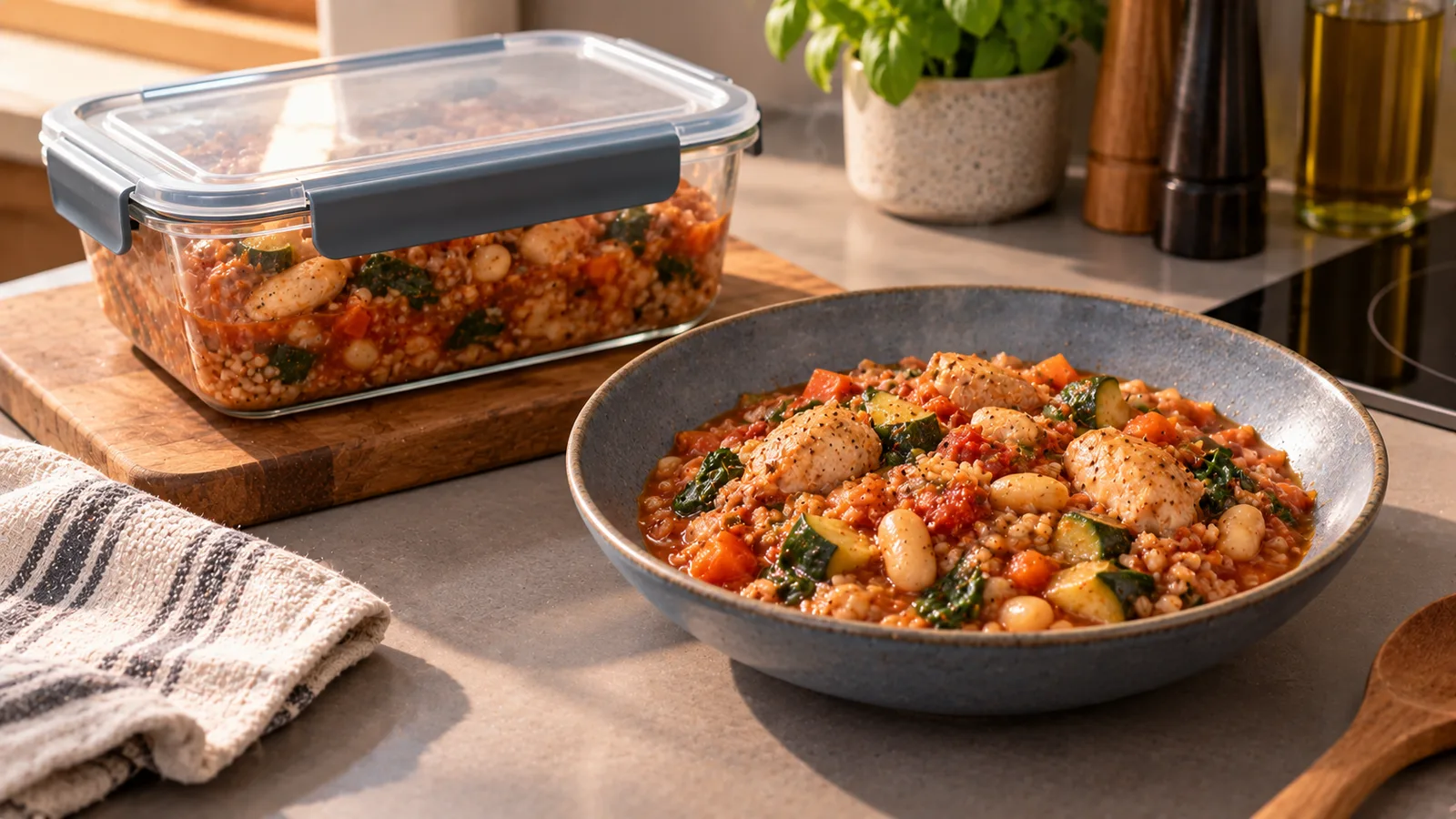
A freezer dinner is only useful if it still tastes good after reheating.
Some meals freeze naturally well because they contain enough sauce, moisture or cooking liquid to protect their texture. Others become dry, watery or unpleasant when frozen and reheated without adjustment.
The recipes below are designed around ingredients and cooking methods that work well for make-ahead dinners.
They also use ordinary ingredients rather than specialized meal-prep products.
What makes a dinner freezer-friendly?
Meals usually reheat better when they contain at least one moisture-preserving component such as:
- tomato sauce;
- broth;
- cooked lentils or beans;
- a moderate amount of cooking liquid;
- vegetables incorporated into a sauce;
- yogurt or another suitable finishing ingredient added after reheating.
Dry pieces of lean meat, overcooked pasta and delicate raw vegetables are more likely to lose quality.
Another important rule is simple: do not overcook the meal before freezing it.
The food will receive additional heat when reheated.
Freezing and reheating basics
Before the recipes, a few practical rules apply to all of them.
Cool cooked food promptly rather than leaving it at room temperature for long periods.
Divide large batches into smaller containers so they cool more efficiently.
Use freezer-safe containers or bags and leave appropriate space for foods that expand.
Label each portion with:
- recipe name;
- freezing date;
- number of portions.
For best quality, use frozen cooked meals within a reasonable storage period. Food-safety authorities distinguish between freezer storage for safety and storage times recommended for quality.
Thaw frozen meals in the refrigerator when practical, or use another safe thawing method recommended for the food.
Reheat leftovers thoroughly. Follow official food-safety guidance for temperatures and handling rather than relying only on appearance.
1. Tomato Lentil and Vegetable Stew
This is one of the simplest freezer meals because lentils remain surrounded by a moist tomato base.
Servings
4
Ingredients
- 250 g dry red lentils;
- 800 g canned chopped tomatoes;
- 500 ml water or low-salt vegetable stock;
- 2 carrots, about 200 g;
- 1 large onion, about 150 g;
- 1 bell pepper, about 150 g;
- 200 g frozen spinach;
- 15 ml olive or rapeseed oil;
- 2 garlic cloves;
- 2 teaspoons paprika;
- 1 teaspoon ground cumin;
- black pepper to taste.
Method
- Dice the onion, carrots and pepper.
- Heat the oil in a large saucepan.
- Cook the onion and carrots for several minutes.
- Add garlic, paprika and cumin.
- Add lentils, tomatoes and water or stock.
- Simmer until the lentils are tender, adding a little water if the stew becomes too thick.
- Stir in the spinach near the end.
- Cool before portioning for the freezer.
How to freeze
Divide into four individual portions.
The stew can thicken during freezing and reheating, so do not reduce it until completely dry before freezing.
How to reheat
Thaw in the refrigerator when possible.
Reheat in a saucepan or microwave until thoroughly hot.
Add a small amount of water if the consistency has become too thick.
Why it reheats well
The lentils are surrounded by tomato and cooking liquid, so moisture is distributed throughout the dish rather than sitting only on the surface.
---
2. Chicken, Tomato and Bean Stew
Chicken can become dry after reheating, so this recipe keeps relatively small pieces inside a tomato and bean sauce.
Servings
4
Ingredients
- 600 g boneless chicken thigh meat;
- 400 g canned kidney beans, drained;
- 400 g canned chopped tomatoes;
- 300 g mixed vegetables;
- 1 onion, about 150 g;
- 15 ml rapeseed or olive oil;
- 200 ml water or low-salt stock;
- 1 teaspoon paprika;
- 1 teaspoon dried oregano;
- black pepper.
Method
- Cut the chicken into bite-sized pieces.
- Dice the onion.
- Heat the oil and cook the onion briefly.
- Add the chicken and cook until the outside is no longer raw.
- Add tomatoes, water or stock, paprika and oregano.
- Simmer until the chicken is safely cooked.
- Add the beans and vegetables and cook until heated through.
- Avoid continuing to cook the chicken long after it is done.
- Cool promptly.
Freezing
Portion the stew with plenty of sauce around the chicken.
Do not freeze the chicken separately from the sauce.
Reheating
Thaw safely and reheat thoroughly.
Stir during reheating so the chicken heats evenly.
If necessary, add one or two tablespoons of water.
Why it reheats well
Chicken thigh generally tolerates reheating better than very lean breast meat, while the surrounding sauce reduces moisture loss.
---
3. Turkey and Vegetable Tomato Pasta Sauce
Instead of freezing fully cooked pasta in sauce, freeze the sauce separately and cook fresh pasta when serving.
This prevents the pasta from becoming excessively soft.
Servings
4 portions of sauce
Ingredients
- 500 g lean ground turkey;
- 800 g canned chopped tomatoes;
- 2 carrots, about 200 g;
- 1 onion, about 150 g;
- 1 zucchini, about 250 g;
- 15 ml olive oil;
- 2 garlic cloves;
- 2 teaspoons dried Italian herbs;
- black pepper.
For serving:
- approximately 75–100 g dry pasta per adult portion, depending on individual needs.
Method
- Finely dice the onion, carrots and zucchini.
- Heat the oil.
- Cook the onion and carrots until they begin to soften.
- Add the turkey and cook it thoroughly, breaking it into small pieces.
- Add garlic, zucchini, tomatoes and herbs.
- Simmer until the vegetables are tender and the sauce has thickened slightly.
- Leave enough liquid for reheating.
- Cool and divide into four portions.
Freezing
Freeze only the sauce.
Reheating
Reheat the sauce thoroughly while cooking fresh pasta.
If the sauce has thickened, add a small amount of pasta water.
Why this method works
Freshly cooked pasta provides better texture than pasta that has already been fully cooked, frozen and reheated.
---
4. Chickpea and Spinach Curry
Curries are particularly suitable for freezing because the ingredients remain coated in sauce.
Servings
4
Ingredients
- 2 cans chickpeas, about 480 g drained total;
- 400 g canned chopped tomatoes;
- 400 ml light coconut milk;
- 300 g frozen spinach;
- 1 onion, about 150 g;
- 15 ml oil;
- 2 garlic cloves;
- 1 tablespoon mild curry powder;
- 1 teaspoon ground cumin;
- 150 ml water as needed.
Method
- Dice the onion.
- Heat the oil and cook the onion until softened.
- Add garlic, curry powder and cumin.
- Add tomatoes, coconut milk and chickpeas.
- Simmer for about 15 minutes.
- Add spinach.
- Adjust the consistency with water if needed.
- Cool promptly after cooking.
Freezing
Divide into four portions.
Rice can be frozen separately if desired, but the curry itself is the component most worth preparing ahead.
Reheating
Reheat thoroughly and stir well.
If the curry separates slightly, stirring usually restores a more even texture.
Why it reheats well
Chickpeas do not depend on a crisp texture, and the sauce protects the dish from drying.
---
5. Beef and Lentil Bolognese
Using both beef and lentils creates a sauce with enough body to freeze and reheat well.
Servings
6 portions of sauce
Ingredients
- 400 g lean ground beef;
- 200 g dry red or brown lentils;
- 800 g canned chopped tomatoes;
- 2 carrots, about 200 g;
- 1 large onion;
- 2 celery stalks, about 120 g;
- 15 ml olive oil;
- 500 ml water or low-salt stock;
- 2 garlic cloves;
- 2 teaspoons dried Italian herbs;
- black pepper.
Method
- Finely chop onion, carrot and celery.
- Heat the oil and cook the vegetables until they begin to soften.
- Add the beef and cook thoroughly, breaking it apart.
- Add garlic and herbs.
- Add lentils, tomatoes and water or stock.
- Simmer until the lentils are tender.
- Add more water during cooking if necessary.
- Stop reducing the sauce while it still has enough moisture for reheating.
- Cool promptly.
Freezing
Divide into six portions.
Freeze the sauce separately from pasta.
Reheating
Reheat thoroughly while preparing fresh pasta, potatoes or another side.
Add a splash of water if needed.
Why it reheats well
The tomato base and lentils retain moisture and help prevent the meat sauce from becoming dry.
---
6. Chicken and Vegetable Rice Casserole
Rice dishes can freeze well when they contain enough sauce and are handled safely.
Servings
4
Ingredients
- 500 g boneless chicken thigh;
- 250 g dry rice;
- 500 g mixed vegetables;
- 1 onion;
- 600 ml low-salt chicken or vegetable stock;
- 200 g canned chopped tomatoes;
- 15 ml oil;
- 1 teaspoon paprika;
- black pepper.
Method
- Dice the chicken and onion.
- Heat the oil in a large oven-safe pan or casserole.
- Cook the onion briefly.
- Add chicken and cook until the exterior changes color.
- Add rice, vegetables, tomatoes, stock and paprika.
- Cook until the rice is tender and the chicken is safely cooked.
- Avoid drying the casserole completely; a little moisture improves reheating.
- Cool promptly.
Freezing
Divide into shallow individual portions once safely cooled.
Reheating
Thaw in the refrigerator when possible.
Add a tablespoon or two of water before reheating.
Reheat thoroughly and stir where practical so the rice heats evenly.
Food-safety note
Cooked rice requires careful cooling and storage. Do not leave it standing warm for extended periods.
---
7. White Bean and Vegetable Soup
Soup is naturally freezer-friendly because reheating does not require preserving a dry or crisp texture.
Servings
6
Ingredients
- 2 cans white beans, about 480 g drained;
- 800 g canned chopped tomatoes;
- 3 carrots, about 300 g;
- 2 celery stalks;
- 1 onion;
- 300 g cabbage;
- 1 litre low-salt vegetable stock or water;
- 15 ml olive oil;
- 2 garlic cloves;
- 1 teaspoon dried herbs;
- black pepper.
Method
- Chop all vegetables.
- Heat the oil in a large pot.
- Cook onion, carrots and celery for several minutes.
- Add garlic.
- Add tomatoes, stock and cabbage.
- Simmer until the vegetables are tender.
- Add beans and cook until heated through.
- Cool promptly.
Freezing
Divide into portions, leaving expansion space in rigid containers.
Reheating
Reheat until thoroughly hot.
Add water if the soup has thickened.
Why it works
There is little risk of the meal becoming dry because the ingredients are stored in broth.
---
8. Red Lentil Sweet Potato Curry
Sweet potato softens during freezing, which works well in a curry where a tender texture is desirable.
Servings
4
Ingredients
- 250 g dry red lentils;
- 500 g sweet potato;
- 400 g canned chopped tomatoes;
- 400 ml light coconut milk;
- 1 onion;
- 200 g spinach;
- 15 ml oil;
- 1 tablespoon curry powder;
- 1 teaspoon cumin;
- water as needed.
Method
- Peel and cube the sweet potato.
- Dice the onion.
- Cook the onion briefly in oil.
- Add spices and stir.
- Add sweet potato, lentils, tomatoes and coconut milk.
- Add enough water for the lentils to cook without the mixture drying.
- Simmer until the sweet potato and lentils are tender.
- Add spinach near the end.
- Cool promptly.
Freezing and reheating
Freeze in individual portions.
Reheat thoroughly, adding water if needed.
The sweet potato may become softer after freezing, but that texture suits the dish.
---
9. Turkey Meatballs in Tomato Sauce
Meatballs freeze better when stored directly in sauce rather than dry in a separate container.
Servings
4
Ingredients
For the meatballs:
- 500 g ground turkey;
- 1 egg;
- 40 g oats, finely ground or used as-is;
- 1 small onion, finely chopped;
- black pepper;
- 1 teaspoon dried herbs.
For the sauce:
- 800 g canned chopped tomatoes;
- 1 carrot, grated;
- 1 onion;
- 15 ml olive oil;
- 2 garlic cloves;
- dried herbs.
Method
- Mix the turkey, egg, oats, onion and seasoning.
- Form small meatballs.
- Cook them thoroughly using a pan or oven.
- For the sauce, cook onion and carrot in oil.
- Add garlic, tomatoes and herbs.
- Simmer briefly.
- Add the cooked meatballs to the sauce.
- Cool everything together.
Freezing
Freeze the meatballs submerged or well coated in tomato sauce.
Reheating
Reheat the meatballs and sauce thoroughly.
Serve with freshly cooked pasta, rice or potatoes.
Why it reheats better than dry meatballs
The sauce surrounds the meat during storage and reheating, reducing surface drying.
---
10. Black Bean and Vegetable Chili
A bean-based chili is highly suitable for batch freezing.
Servings
6
Ingredients
- 3 cans black or kidney beans, about 720 g drained;
- 800 g canned chopped tomatoes;
- 2 bell peppers;
- 2 carrots;
- 1 large onion;
- 300 g corn;
- 15 ml oil;
- 2 garlic cloves;
- 2 teaspoons paprika;
- 1 teaspoon cumin;
- chili powder to taste;
- 300 ml water.
Method
- Dice the vegetables.
- Heat oil and cook onion and carrots.
- Add peppers and garlic.
- Add spices, tomatoes and water.
- Simmer until the vegetables soften.
- Add beans and corn.
- Cook until everything is thoroughly hot.
- Cool promptly.
Freezing
Freeze in individual or family-sized portions.
Reheating
Reheat thoroughly, stirring occasionally.
Add water if the chili has become too thick.
A freezer dinner formula you can reuse
You do not need a new recipe every time.
A practical freezer meal can often be built from:
Protein
- beans;
- lentils;
- chicken thigh;
- turkey;
- lean beef.
Vegetables
- carrots;
- spinach;
- peppers;
- cabbage;
- mixed frozen vegetables.
Moisture
- tomatoes;
- stock;
- curry sauce;
- soup broth.
Optional carbohydrate
- rice;
- potatoes;
- pasta cooked fresh when serving.
The key is to preserve enough moisture for the second heating cycle.
Foods that often need extra care
Some foods can be frozen but may lose more quality.
Fully cooked pasta
It may become softer after freezing and reheating.
When practical, freeze the sauce and cook pasta fresh.
Very lean meat
Lean meat can dry out if cooked aggressively twice.
Use sauce and avoid overcooking before freezing.
Raw salad vegetables
Lettuce, cucumber and similar high-water vegetables generally do not retain a desirable raw texture after freezing.
Add fresh salad components at serving time.
Cream-heavy sauces
Some dairy-based sauces can separate after freezing.
The result depends on the recipe.
Crispy coatings
Foods designed to stay crisp can soften in a sealed freezer container.
They may require a different reheating method than stews or sauces.
How much should you freeze in each container?
Freeze according to how you actually eat.
For one person, individual portions are usually more useful than freezing a six-serving batch in one container.
For a household, consider:
- individual lunches;
- two-person dinners;
- family-sized portions.
This avoids thawing more food than you need.
Label portions clearly
A useful freezer label can be as simple as:
Chicken and bean stew — 1 portion — frozen 12 Oct
This helps you identify older meals without opening containers.
It also makes freezer inventory easier.
Reheating without drying out
For many of these recipes:
- thaw safely when needed;
- transfer the food to the appropriate pan or microwave-safe container;
- add a small amount of water or stock if the meal has thickened;
- cover where appropriate to retain steam;
- stir during reheating when possible;
- heat thoroughly;
- add fresh finishing ingredients only after reheating.
A tablespoon or two of water can make a large difference to a thick stew or rice dish.
Do not compensate with excessive liquid before freezing
There is a difference between keeping a dish moist and turning it into unnecessary soup.
Freeze the dish at its normal consistency or slightly looser if you know it thickens substantially.
Then adjust during reheating.
Build a freezer rotation
Freezer meals work best when they are actually used.
Keep a simple list containing:
- meal;
- number of portions;
- freezing date.
Use older suitable portions before repeatedly adding new batches.
This prevents the freezer from becoming long-term storage for meals you have forgotten.
A simple batch-cooking schedule
You do not need to cook ten recipes in one day.
A more manageable system is:
Week 1: make one double batch and freeze two portions.
Week 2: make a different double batch and freeze two portions.
Week 3: repeat with another recipe.
After several weeks, the freezer contains different dinners without requiring a full day of meal preparation.
Final takeaway
The best freezer dinners are not simply meals that survive freezing.
They should also remain enjoyable after reheating.
Recipes based on:
- tomato sauces;
- lentils;
- beans;
- soups;
- curries;
- moist casseroles
are particularly practical because they naturally retain moisture.
For meat dishes, keep the meat in sauce and avoid overcooking it before freezing.
For pasta, consider freezing the sauce separately.
For rice, use careful cooling, storage and reheating practices.
And instead of freezing one huge batch in a single container, portion meals according to how you will actually use them.
That turns the freezer into a practical dinner system rather than a place where leftovers disappear.
Sources
- U.S. Department of Agriculture Food Safety and Inspection Service (USDA FSIS), Freezing and Food Safety.
- U.S. Food and Drug Administration (FDA), Safe Food Handling.
- Bundeszentrum für Ernährung (BZfE), guidance on freezing, storing and handling foods.
- Bundesinstitut für Risikobewertung (BfR), consumer guidance on food hygiene.
- European Food Safety Authority (EFSA), consumer information on food safety and hygiene.