
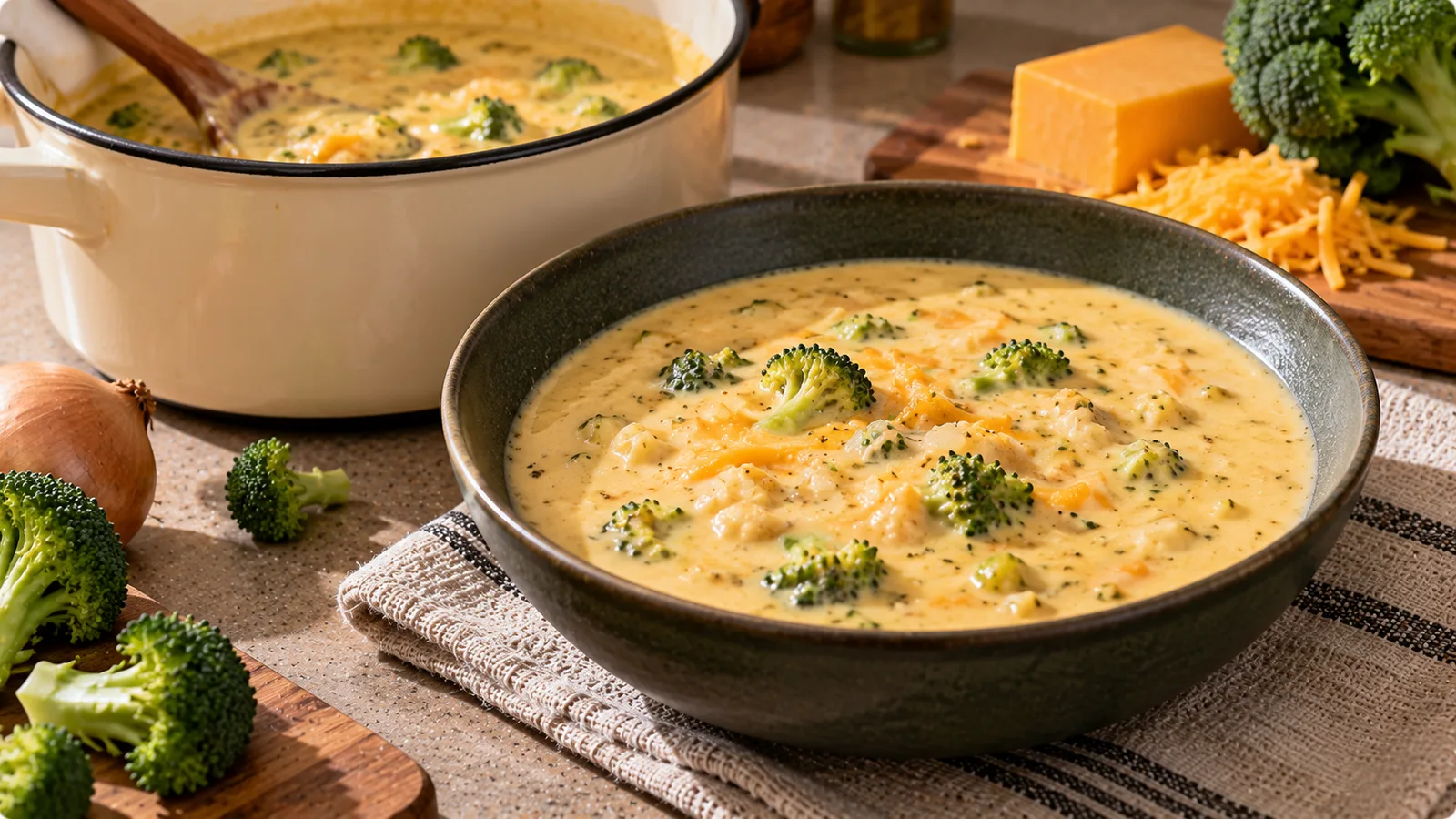
Broccoli and cheddar soup combines tender broccoli with a smooth, savory cheese base. It is comforting enough for a cool evening but simple enough for a weekday lunch.
The key to a good result is to cook the broccoli until tender, thicken the liquid gently and add the cheddar over low heat. Boiling the soup aggressively after adding cheese can make the texture grainy.
This version uses fresh broccoli, onion, carrot, garlic, milk, vegetable stock and mature cheddar. A small amount of butter and flour helps the soup become creamy without requiring heavy cream.
Recipe overview
| Detail | Amount |
|---|---|
| Servings | 4 |
| Preparation | 10 minutes |
| Cooking | 25 minutes |
| Total time | About 35 minutes |
| Difficulty | Easy |
| Main allergens | Milk, wheat |
Ingredients
For 4 generous portions:
| Ingredient | Quantity |
|---|---|
| Fresh broccoli, including tender stems | 600 g |
| Mature cheddar, grated | 180 g |
| Onion | 120 g |
| Carrot | 120 g |
| Garlic | 10 g |
| Unsalted butter | 25 g |
| Plain wheat flour | 25 g |
| Milk, 2% fat | 500 ml |
| Low-sodium vegetable stock | 600 ml |
| Dijon mustard | 10 g |
| Black pepper | To taste |
| Ground nutmeg | A small pinch |
| Salt | As needed |
| Lemon juice, optional | 5–10 ml |
Use cheddar grated from a block when possible. Pre-shredded cheese sometimes contains anti-caking ingredients that can affect melting.
Choose a vegetable stock with a flavor you enjoy, because it forms a substantial part of the soup.
Equipment
You will need a large saucepan or Dutch oven, a knife, a cutting board, a whisk and a wooden spoon.
An immersion blender is optional. It can make part of the soup smoother while leaving some broccoli pieces intact.
How to make broccoli cheddar soup
Step 1: Prepare the vegetables
Cut the broccoli into small florets.
Peel the thick outer layer from any tough stems and dice the tender interior. The stems are edible and contribute flavor and texture.
Finely dice the onion and carrot.
Mince the garlic.
Grate the cheddar before cooking so it is ready when the soup reaches the correct temperature.
Step 2: Soften the aromatics
Melt the butter in a large saucepan over medium heat.
Add the onion and carrot.
Cook for 5–6 minutes, stirring occasionally, until they begin to soften.
Add the garlic and cook for another 30 seconds.
Avoid browning the garlic heavily.
Step 3: Make a light roux
Sprinkle the flour over the vegetables.
Stir for about 1 minute to coat them and cook away the raw flour taste.
Gradually pour in the milk while whisking.
Add the vegetable stock in several additions, stirring until the mixture is smooth.
A few small vegetable pieces are normal; the aim is to avoid dry flour lumps.
Step 4: Cook the broccoli
Add the broccoli florets and diced stems.
Bring the soup to a gentle simmer.
Reduce the heat and cook for approximately 10–12 minutes, or until the broccoli is tender enough to pierce easily with a fork.
Do not cook it much longer than necessary, as excessive cooking can dull its flavor and color.
Step 5: Adjust the texture
For a chunky soup, leave the broccoli as it is.
For a creamier texture, briefly blend part of the soup with an immersion blender.
Do not completely purée it unless you prefer a smooth soup.
If using a countertop blender, follow the manufacturer's precautions for hot liquids and blend in small batches.
Step 6: Add the cheddar
Turn the heat to low or remove the saucepan from the burner.
Add the grated cheddar a handful at a time, stirring until each addition melts.
Do not allow the soup to boil vigorously after adding the cheese.
Stir in the Dijon mustard, black pepper and nutmeg.
Taste before adding salt: cheddar and vegetable stock may already contain substantial sodium.
Step 7: Finish and serve
If the soup is too thick, stir in a little additional warm stock or milk.
If it is too thin, let it simmer gently before adding the cheese, or allow it to stand for a few minutes after cooking.
A small amount of lemon juice can brighten the flavor, but add it gradually to avoid overwhelming the cheese.
Serve warm.
How to keep the soup creamy
Add cheese at a low temperature
Cheddar melts more smoothly when added gradually to hot, but not rapidly boiling, soup.
High heat can cause the proteins to tighten and the fat to separate.
Grate the cheese finely
Finely grated cheese melts more quickly and evenly than large cubes.
Use a little flour
The flour-and-butter base helps stabilize the soup and gives it body.
Avoid excessive blending
Blending part of the broccoli makes the soup thicker while preserving some vegetable texture.
Adjust liquid gradually
Broccoli releases moisture as it cooks, and different cheeses affect thickness.
Add extra liquid in small amounts rather than making the soup too thin.
Estimated nutrition per serving
The recipe makes 4 portions without bread or toppings.
Using typical ingredient values, one portion provides approximately:
| Nutrient | Per serving |
|---|---|
| Calories | 390–450 kcal |
| Protein | 19–24 g |
| Fat | 25–30 g |
| Carbohydrates | 23–30 g |
| Fiber | 5–7 g |
These are estimates. The exact numbers depend on the cheddar, milk, stock and broccoli used.
The total finished soup weight also depends on evaporation during cooking.
For precise tracking, enter each ingredient using its actual package label and divide the completed recipe into four portions or weigh the finished batch.
Where do the calories come from?
Cheddar and butter contribute much of the fat and energy.
Milk adds protein, carbohydrates and additional calories.
Broccoli, onion and carrot contribute volume, fiber and micronutrients.
Flour helps thicken the soup and adds some carbohydrates.
Can broccoli cheddar soup be made lighter?
Yes, although changes affect flavor and texture.
You can:
- Reduce the cheddar from 180 g to 120–140 g.
- Use lower-fat milk.
- Replace some milk with vegetable stock.
- Increase the proportion of broccoli.
- Reduce the butter slightly and use a little less flour.
A lower-cheese version will generally taste less rich.
Avoid assuming that a soup is low-calorie simply because it contains vegetables. Cheese, butter and accompaniments can contribute substantial energy.
Can you make it without flour?
Yes.
For a flour-free version, omit the wheat flour and blend some of the cooked broccoli with a portion of the liquid to thicken the soup naturally.
The result may be less velvety than the original.
If a gluten-free recipe is necessary, also verify that the stock, mustard and other packaged ingredients are suitable.
Do not substitute flour with an arbitrary amount of cornstarch without adjusting the method: cornstarch should generally be mixed with cold liquid before being added to hot soup.
Fresh versus frozen broccoli
Frozen broccoli works well in this recipe.
Use approximately the same weight as fresh broccoli.
Because frozen broccoli has usually been blanched, it may soften faster and release more water.
Start checking its texture earlier.
Frozen broccoli may produce a slightly softer soup, which is not necessarily a disadvantage when part of the soup will be blended.
Easy variations
Broccoli cheddar soup with potatoes
Add 200–250 g diced potato along with the broccoli.
Cook until the potatoes are tender.
The soup will become more filling and thicker, and the total calories will increase.
Broccoli and cauliflower soup
Replace about half the broccoli with cauliflower.
This produces a milder flavor while keeping a similar cooking method.
Spicy broccoli cheddar soup
Add a pinch of chili flakes or cayenne pepper.
Start with a small quantity so the heat does not overpower the cheese.
Extra-vegetable version
Add finely chopped celery or a handful of spinach near the end.
Cook the vegetables until tender before adding the cheddar.
Smooth blended soup
Blend the cooked vegetable base before adding the cheese.
Then reduce the heat and stir in the cheddar gradually.
What to serve with broccoli cheddar soup
The soup can be served as a standalone meal or alongside:
- Whole-grain bread.
- A simple green salad.
- A small sandwich.
- Roasted chickpeas.
- Toasted sourdough.
Bread, croutons and other additions are not included in the nutrition estimate.
If you are tracking a complete meal, count the accompaniments separately.
How to store broccoli cheddar soup
Cool the soup promptly after cooking.
Transfer it into shallow, covered containers and refrigerate.
As a general food-safety guideline, properly refrigerated cooked leftovers are usually best used within 3–4 days.
Keep the refrigerator at 4°C / 40°F or below.
Reheat the soup gently, stirring frequently, until thoroughly hot throughout.
Avoid repeated cycles of cooling and reheating.
Can you freeze broccoli cheddar soup?
It can be frozen, but dairy-based soups may separate or become grainy after thawing.
For the best texture, refrigerating short-term portions is preferable.
If you plan to freeze the soup, one option is to freeze the broccoli and stock base before adding the milk and cheddar, then finish the soup after thawing and reheating.
If freezing the complete soup, use suitable containers, cool promptly and reheat carefully.
Troubleshooting
The cheese turned grainy
The soup may have been too hot when the cheese was added.
Next time, remove the pan from direct heat and stir in finely grated cheddar gradually.
The soup is too thick
Add warm stock or milk a little at a time.
The soup is too watery
Before adding the cheese, simmer gently to reduce some liquid.
You can also blend a portion of the cooked vegetables.
The broccoli is mushy
Reduce the simmering time and cut the florets into similar sizes.
The soup tastes bland
Check the salt level, add freshly ground pepper and consider a little mustard or lemon juice.
Allergens and dietary considerations
The standard recipe contains milk and wheat.
Dijon mustard is also an allergen that requires declaration under EU food information rules.
Check stock and packaged ingredients for additional allergens.
Cheddar is not automatically suitable for vegetarians: some cheeses use animal-derived rennet. Choose a cheese made with vegetarian-compatible rennet if needed.
This soup is not vegan as written.
Frequently asked questions
Can I use mild cheddar?
Yes. Mature cheddar provides a stronger cheese flavor, but mild cheddar melts well and produces a gentler result.
Can I use broccoli stems?
Yes. Peel tough outer layers and dice the tender inner stem so it cooks evenly.
Can I make the soup ahead?
Yes. Refrigerate promptly and reheat gently. Add a little milk or stock if it thickens during storage.
Do I need heavy cream?
No. Milk, flour and cheddar provide a creamy texture without heavy cream.
Can I use a blender?
Yes. Blend part or all of the vegetable base before adding cheese, taking care with hot liquids.
References
- USDA FoodData Central — general ingredient nutrition data.
- USDA Food Safety and Inspection Service — food storage and leftover safety.
- European Commission: Food Allergens — food information and allergen labeling framework.
Nutrition estimates depend on the actual products and quantities used.
Final tips
For smooth broccoli and cheddar soup, cook the vegetables gently, make a light flour-and-butter base and add the cheese only after reducing the heat.
The result is a comforting, vegetable-rich soup that takes about 35 minutes and can be adapted to different tastes and portion sizes.