
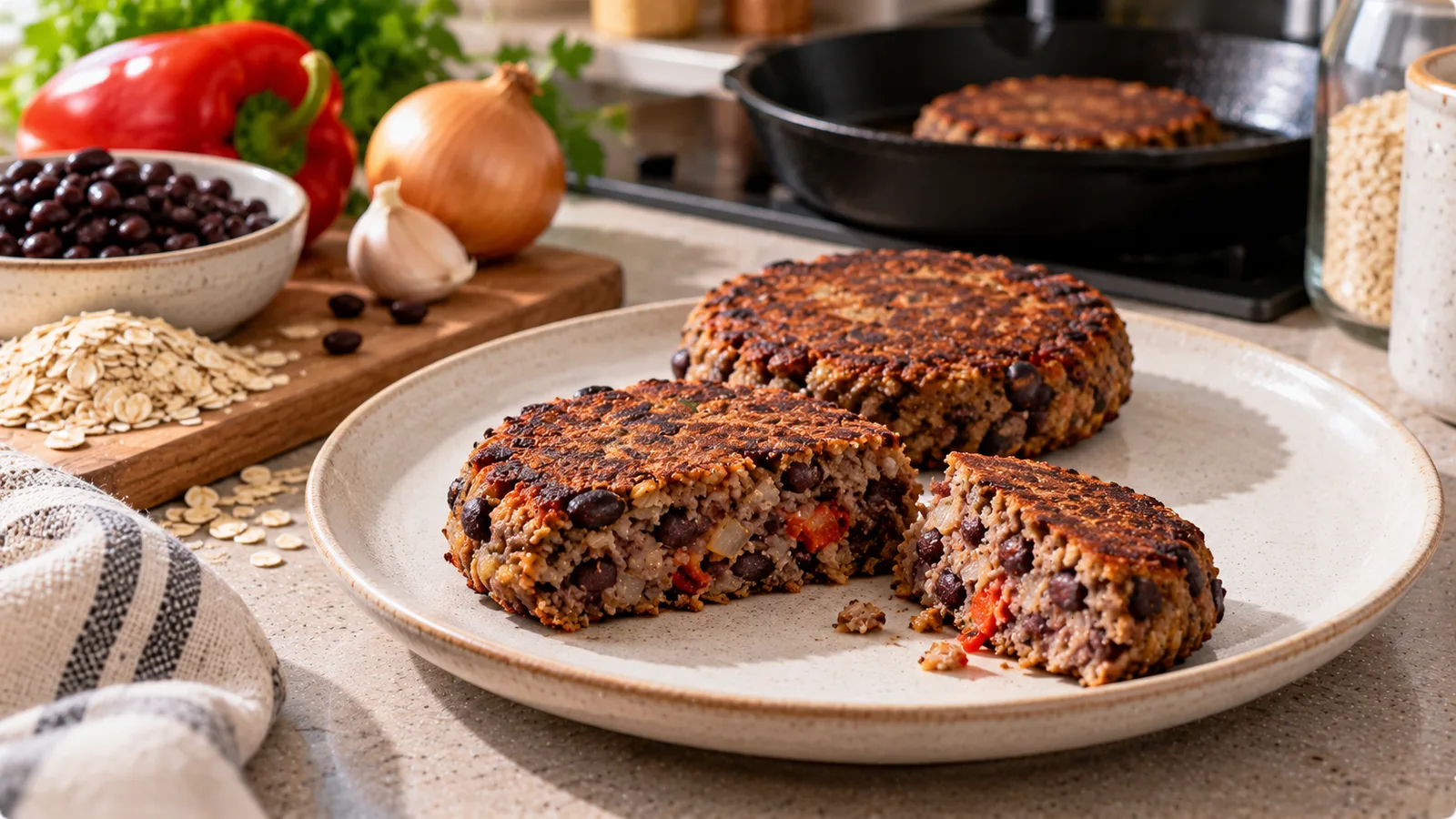
Black bean burgers are a practical alternative to meat burgers when you want a filling meal made from affordable pantry ingredients.
This version combines cooked black beans, rolled oats, vegetables and spices to create patties that are flavorful, easy to shape and suitable for cooking in a skillet.
The oats absorb moisture and help the mixture hold together without requiring breadcrumbs.
The recipe is vegetarian, and it can be made vegan by replacing the egg with a suitable binder.
Recipe at a glance
| Detail | Amount |
|---|---|
| Servings | 4 burgers |
| Preparation time | 20 minutes |
| Chilling time | 15–20 minutes |
| Cooking time | 12–16 minutes |
| Total time | Approximately 50–55 minutes |
| Cooking method | Stovetop |
| Difficulty | Easy |
| Main ingredients | Black beans, oats, onion, egg, spices |
The recipe makes four medium patties. The nutrition estimates below refer to the patties without buns or toppings.
Ingredients for four burgers
| Ingredient | Quantity |
|---|---|
| Cooked black beans, drained | 480 g |
| Rolled oats | 80 g |
| Egg | 1 large, approximately 50 g without shell |
| Onion, finely chopped | 100 g |
| Red bell pepper, finely chopped | 100 g |
| Garlic | 2 cloves, approximately 8 g |
| Olive oil | 15 g |
| Tomato paste | 20 g |
| Smoked paprika | 2 tsp |
| Ground cumin | 1 tsp |
| Dried oregano | 1 tsp |
| Salt | 1/2 tsp, or to taste |
| Black pepper | To taste |
Optional additions:
- Chopped parsley or coriander.
- Chili flakes for extra heat.
- A little lemon or lime juice.
- A small amount of extra oats if the mixture is too wet.
For serving, you may also need four burger buns, lettuce, tomatoes, pickles and a sauce of your choice.
These additions are not included in the patty nutrition estimate.
How to make black bean burgers with oats
Step 1: Prepare the beans
Drain the black beans thoroughly.
If using canned beans, rinse them under cold water and allow them to drain.
Pat the beans dry with kitchen paper or a clean towel.
Excess moisture is one of the main reasons homemade bean burgers fall apart.
Place the beans in a large bowl.
Mash approximately two-thirds with a fork or potato masher, leaving some beans partially intact.
The mixture should contain both a soft base and visible pieces of beans.
Avoid turning everything into a completely smooth paste.
Step 2: Cook the vegetables
Heat approximately 5 g of the olive oil in a skillet over medium heat.
Add the chopped onion and bell pepper.
Cook for 4–5 minutes, stirring occasionally, until the vegetables soften and some moisture evaporates.
Add the minced garlic and cook for another 30–60 seconds.
Remove from the heat and let the vegetables cool slightly.
Cooking the vegetables before mixing improves their flavor and reduces excess water.
Step 3: Prepare the oats
For a more cohesive texture, pulse the rolled oats briefly in a food processor.
They should resemble coarse oat flour rather than fine powder.
You can also use whole rolled oats if you prefer a more textured burger.
Instant oats may absorb moisture differently, so adjust the mixture if necessary.
Step 4: Mix the burger mixture
Add the oats, cooked vegetables, egg, tomato paste, smoked paprika, cumin, oregano, salt and pepper to the mashed beans.
Mix thoroughly.
The mixture should be moist enough to hold together when pressed but not so wet that it sticks heavily to your hands.
If it is too wet, add 10–15 g of oats and allow a few minutes for absorption.
If it is too dry, add a teaspoon of water at a time.
Step 5: Shape and chill
Divide the mixture into four equal portions.
Shape each portion into a patty approximately 2 cm thick.
Place the patties on a plate lined with baking paper.
Refrigerate for 15–20 minutes.
Chilling allows the oats to absorb additional moisture and helps the patties become firmer.
Step 6: Cook the burgers
Heat the remaining 10 g olive oil in a nonstick skillet over medium heat.
Add the patties, leaving space between them.
Cook for approximately 6–8 minutes on the first side.
Turn carefully with a wide spatula.
Cook for another 6–8 minutes until both sides are browned and the patties are heated through.
Because the mixture contains egg, cook the center thoroughly. A food thermometer reading of 74°C is a conservative target for this recipe.
Avoid repeatedly turning the patties, especially during the first few minutes.
Allow them to form a crust before flipping.
Why oats work in bean burgers
Rolled oats provide structure in several ways.
They absorb some of the liquid released by the beans and vegetables.
They also contribute starch and soluble fiber, which help create a cohesive mixture.
Unlike breadcrumbs, oats add a slightly nutty flavor and a more substantial texture.
However, oats alone do not guarantee that a burger will hold together.
The final texture also depends on moisture, mashing, chilling and careful cooking.
Rolled oats versus oat flour
Rolled oats produce a more rustic patty.
Coarsely ground oats bind more evenly and give a smoother interior.
Very finely ground oat flour may create a dense texture if used in excess.
For this recipe, coarsely processed rolled oats offer a good balance.
How to stop black bean burgers from falling apart
The most common problems are easy to correct.
Problem: the mixture is too wet
Possible causes include poorly drained beans, raw vegetables or too much sauce.
Solutions:
- Dry the beans before mashing.
- Cook the onion and pepper first.
- Add a small amount of oats.
- Refrigerate the mixture before shaping.
Problem: the mixture is too dry
Too many oats or overly dry beans can make patties crumbly.
Add a little water or another moist ingredient.
Mix and let the oats absorb the liquid before deciding whether more is needed.
Problem: the burgers break when flipped
Turning them too early can damage the crust.
Use medium heat and wait until the underside is firm.
A wide spatula helps support the entire patty.
Problem: the burgers are mushy inside
Overprocessing the beans can create a paste-like texture.
Leave some whole or partly mashed beans.
Avoid making excessively thick patties.
Estimated nutrition per patty
The following values are approximate and refer to one of four patties without a bun, cheese, sauce or other toppings.
| Nutrient | Estimated amount |
|---|---|
| Calories | 290–320 kcal |
| Protein | 14–17 g |
| Carbohydrates | 40–46 g |
| Fat | 8–10 g |
| Fiber | 11–14 g |
These estimates depend on the exact beans, oats, egg and oil used.
Black beans contribute plant protein, carbohydrates and fiber.
Oats provide additional carbohydrates, fiber and some protein.
The egg helps bind the mixture and contributes protein and fat.
For accurate tracking, calculate the values from your specific ingredients and divide by four.
What about the complete burger?
A typical bun may add approximately 140–220 kcal.
Vegetables add relatively little energy, while cheese, mayonnaise and other sauces can contribute considerably more.
A finished burger can therefore contain substantially more calories than the patty alone.
Serving ideas
Classic burger
Serve the patty in a toasted bun with lettuce, tomato, pickles and a yogurt-mustard sauce.
Burger bowl
Place the patty over mixed greens with cucumber, tomato, cooked grains and a lemon dressing.
With roasted vegetables
Serve alongside roasted carrots, sweet potatoes or seasonal vegetables.
With a fresh salad
A simple cabbage slaw with lemon juice can balance the rich flavor of the beans and spices.
Variations
Vegan black bean burgers
Replace the egg with a flaxseed mixture.
Combine 1 tablespoon ground flaxseed with 3 tablespoons water.
Allow it to thicken for approximately 10 minutes before adding it to the beans.
The resulting patties may be slightly more delicate, so chill them thoroughly.
Spicy burgers
Add chili flakes, cayenne pepper or finely chopped jalapeño.
Adjust the amount to your preferred heat level.
Higher-protein version
You can experiment with a small amount of soy flour or another suitable protein-rich ingredient.
However, changes to dry ingredients can alter the texture.
Do not assume that a modified recipe has a specific protein content without recalculating the nutrition.
Gluten-free version
Use certified gluten-free oats if gluten avoidance is medically necessary.
Also verify the other ingredients, seasonings and toppings.
Oats can be affected by cross-contact with gluten-containing grains.
Can you bake or air-fry these burgers?
Yes, although skillet cooking gives a particularly good browned crust.
For an oven version, arrange the patties on a lined tray and bake at approximately 200°C until firm and heated through, turning carefully if necessary.
For an air fryer, use approximately 180°C and check frequently because appliance performance varies.
The exact cooking time depends on patty thickness and equipment.
For this egg-containing mixture, ensure the center is cooked thoroughly.
Storage and freezing
Refrigerating cooked burgers
Allow cooked patties to cool promptly.
Store them in a covered container in the refrigerator at approximately 4°C or below.
As a general guide, many cooked leftovers can be refrigerated for up to 3–4 days under USDA recommendations, but follow stricter local guidance when applicable.
Freezing
Cooked patties can be frozen individually.
Place baking paper between them to prevent sticking.
Use freezer-safe packaging and label the date.
For best quality, aim to use them within approximately 2–3 months.
Freezing preserves safety only when the food was handled and stored correctly before freezing.
Reheating
Reheat in a skillet, oven or microwave until thoroughly hot throughout.
For the egg-containing recipe, a center temperature of 74°C is a cautious reheating target.
Do not repeatedly cool and reheat the same patties.
Frequently asked questions
Can I use canned black beans?
Yes. Drain, rinse and dry them thoroughly before mashing.
Can I make these burgers without a food processor?
Yes. A fork or potato masher works well for the beans, and whole rolled oats can be used.
Do I need breadcrumbs?
No. The oats provide structure and absorb moisture.
Can I prepare the mixture in advance?
You can prepare it ahead and refrigerate it promptly in a covered container. For best quality and safe handling, shape and cook the patties within a short refrigerated storage period.
Why are my bean burgers soft?
They may contain too much moisture, insufficient binder or overly processed beans. Cooking the vegetables, drying the beans and chilling the patties usually help.
Are black bean burgers high in protein?
They provide a useful amount of plant protein, but the exact amount depends on the recipe. This version is estimated to provide approximately 14–17 g per patty.
Sources
- USDA FoodData Central — reference nutrition data for beans, oats, eggs and other ingredients.
- USDA Food Safety and Inspection Service — cooking, refrigeration and leftover storage guidance.
- USDA MyPlate — information about beans, legumes and balanced meals.
Final takeaway
Black bean burgers with oats are easy to prepare using affordable pantry ingredients.
The most important steps are to drain the beans thoroughly, cook moisture-rich vegetables before mixing, chill the patties and avoid flipping them too early.
The result is a satisfying homemade veggie burger that can be served in a bun, with a salad or as part of a balanced meal.