
How to Store Prepared Salad Bowls Without Soggy Greens
Meal-prepped salad bowls fail most often because water from freshly washed lettuce, tomatoes, warm grains or dressing sits against delicate leaves. The solution is to control moisture, temperature and assembly order—not to buy special containers or make unverifiable promises that a dressed salad will remain crisp for five days. This practical guide covers prepared leafy salad bowls rather than a generic salad recipe or meal plan.
The result is two grain-and-bean salad bowls for one person, assembled from measured ingredients, with a concrete timeline for refrigeration and serving. Use it as a method that can be adapted to other combinations, not as a laboratory shelf-life claim.
The goal: crisp greens, not a five-day safety promise
The result is two grain-and-bean salad bowls for one person, assembled from measured ingredients, with a concrete timeline for refrigeration and serving. Use it as a method that can be adapted to other combinations, not as a laboratory shelf-life claim.
What makes a prepared salad go soggy?
| Source of moisture | What happens | Better practice |
|---|---|---|
| Washed leafy greens | Surface water softens leaves | Drain well and dry carefully |
| Cut tomatoes and cucumbers | Juices collect at the bottom | Keep apart or pack on the bottom |
| Warm grains or beans | Steam condenses inside closed boxes | Cool promptly in shallow containers before assembly |
| Lemon or yogurt dressing | Acid and salt wilt tender leaves | Add immediately before eating |
Water is not automatically unsafe; the first issue here is texture. However, wet vegetables that remain too warm or unrefrigerated also raise food-safety concerns. FDA food-safety guidance recommends refrigeration for perishable produce and keeping raw ready-to-eat food separate from uncooked animal foods.
Choose ingredients according to moisture
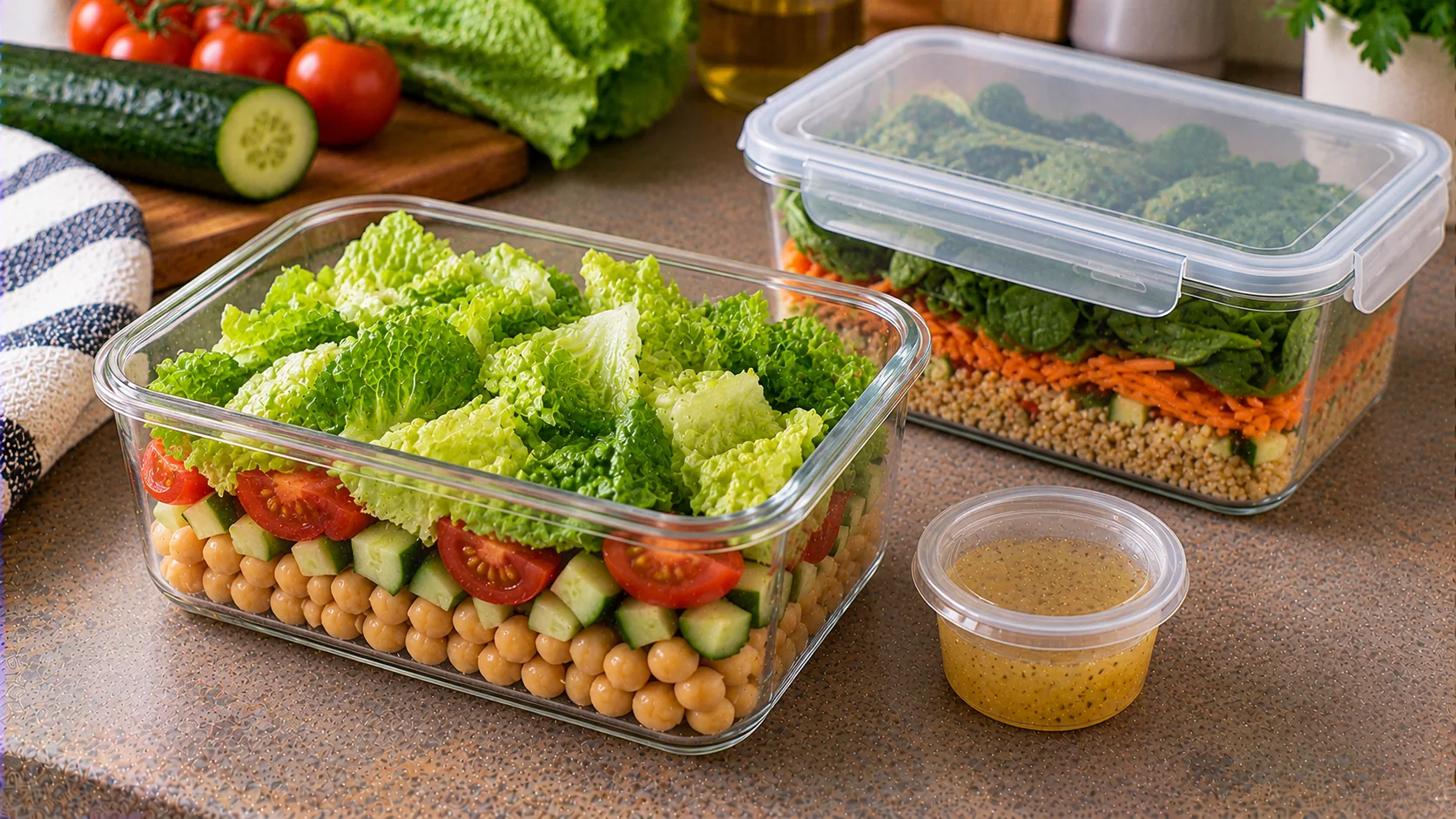
Pack sturdy components at the bottom and fragile greens at the top. In an upright jar: dressing in a separate cup is easiest; then cooked and fully cooled grains, drained legumes and firm cut vegetables, followed by thoroughly dried greens. If using a broad shallow container, place a small dry divider or closed pot of dressing beside the salad instead of pouring it over the leaves. A single sheet of clean paper towel may absorb incidental moisture but must be removed before eating and must not replace refrigeration.
Keep crunchy toppings such as nuts, seeds, croutons and toasted chickpeas in a dry sachet. They soften when trapped next to cucumber or vinaigrette. Use only food-safe containers with secure lids; avoid filling them above the rim.
A reliable order for packing a bowl
Pack sturdy components at the bottom and fragile greens at the top. In an upright jar: dressing in a separate cup is easiest; then cooked and fully cooled grains, drained legumes and firm cut vegetables, followed by thoroughly dried greens. If using a broad shallow container, place a small dry divider or closed pot of dressing beside the salad instead of pouring it over the leaves. A single sheet of clean paper towel may absorb incidental moisture but must be removed before eating and must not replace refrigeration.
Keep crunchy toppings such as nuts, seeds, croutons and toasted chickpeas in a dry sachet. They soften when trapped next to cucumber or vinaigrette. Use only food-safe containers with secure lids; avoid filling them above the rim.
A two-portion example with precise quantities
Makes 2 lunch bowls; around 20 minutes hands-on plus cooking and cooling time. Measurements below refer to food in the stated condition. Rice or bulgur is weighed dry; beans are weighed drained; vegetables are weighed as prepared edible pieces.
| Ingredient | For both bowls | Per bowl |
|---|---|---|
| Dry bulgur | 100 g | 50 g |
| Drained canned chickpeas | 240 g | 120 g |
| Washed and well-dried mixed greens | 100 g | 50 g |
| Cucumber | 160 g | 80 g |
| Cherry tomatoes | 160 g | 80 g |
| Olive oil | 20 g | 10 g |
| Lemon juice | 30 g | 15 g |
| Parsley | 10 g | 5 g |
The bowl contains wheat gluten from bulgur; substitute an appropriate cooked gluten-free grain if needed. Chickpeas may contain added salt, so check the can label. All amounts are edible ingredient weights; canned-liquid weight is excluded.
Prepare and assemble the two bowls
- Rinse the bulgur if directed on its package. Cook 100 g dry bulgur in the water quantity specified by that brand until tender; drain any surplus. Spread promptly into a shallow clean container and refrigerate to cool. Do not seal a steaming mound beneath the greens.
- Drain the chickpeas and weigh 240 g of the drained beans, not 240 g of can-plus-liquid. Rinse only if desired and drain thoroughly.
- Wash loose lettuce leaves under running water and dry in a salad spinner or clean towel. Follow the packaging directions for ready-to-eat prewashed greens; unnecessary rewashing can introduce contamination.
- Cut and blot the cucumber and tomatoes. Mix 20 g oil, 30 g lemon juice and chopped parsley in two small sealed dressing cups.
- Into each of two clean containers put 50 g dry-equivalent cooked bulgur and 120 g chickpeas. Position the cucumber and tomato separately from the leaves. Add 50 g dry greens last; close, label and refrigerate immediately.
- Immediately before eating, combine everything, shake the dressing cup and pour over only the portion to be eaten. Eat promptly after taking the salad from refrigeration.
What belongs in a separate container?
The two dressing cups are about 30 g each including parsley. Set out a separate small container for each portion. The cucumber and tomato can share the firm-vegetable compartment, but their cut surfaces will release juice over time. To maximise crispness, cut tomatoes on the day of eating.
For an extra-crunch version, bring 10 g pumpkin seeds per serving in a dry cup; that ingredient is not included in the base recipe or its quantities. A creamy yogurt sauce belongs in a chilled, leakproof cup and must not be left warm on the desk. practical tips for preparing grains ahead gives a related way to use make-ahead grains without putting sauce onto greens.
Refrigeration and safe holding times
Refrigerate perishable cut vegetables and greens at 4°C / 40°F or below, as recommended by the FDA. Return portions to cold storage immediately after packing; use an insulated bag with frozen cold packs for travel. The USDA leftover guidance says to refrigerate leftovers within two hours, or within one hour in temperatures above 32°C / 90°F, and use cooked leftovers in three to four days when kept cold. This does not mean prepared lettuce is guaranteed to stay crisp that long.
For best texture, prepare the more delicate leafy part on the evening before or morning of eating. If cooking grains for several days, chill cooked portions promptly and freeze later portions rather than treating an assembled five-day salad as shelf-stable. Follow earlier use-by dates on purchased greens and discard food with spoilage or unsafe temperature exposure.
Transport to work or school
Bring a cold pack and keep the packed salad chilled until eating. A sealed lid does not turn cut leaves, cooked bulgur or chickpeas into room-temperature-stable food. If there is no refrigerator at the destination, use a reliably insulated cooler; otherwise change the meal choice rather than gamble on a prolonged commute.
If the bowl is only slightly watery, tip off the liquid before mixing, add the dressing right at the end and keep a crunchy component separate. Once leaves are slimy or spoiled, do not try to restore them with more oil or vinegar. another guide to preparing packed lunches covers another practical way to organise packed lunches.
How to recover texture before serving
Bring a cold pack and keep the packed salad chilled until eating. A sealed lid does not turn cut leaves, cooked bulgur or chickpeas into room-temperature-stable food. If there is no refrigerator at the destination, use a reliably insulated cooler; otherwise change the meal choice rather than gamble on a prolonged commute.
If the bowl is only slightly watery, tip off the liquid before mixing, add the dressing right at the end and keep a crunchy component separate. Once leaves are slimy or spoiled, do not try to restore them with more oil or vinegar. another guide to preparing packed lunches covers another practical way to organise packed lunches.
Common failures and practical fixes
| Symptom | Likely cause | Next time |
|---|---|---|
| Leaves wilt before lunch | Dressing added too early | Use a closed dressing cup |
| Water pool in container | Vegetables packed wet | Spin and blot everything |
| Condensation on lid | Warm grains packed | Cool grains promptly before combining |
| Toppings turn soft | Nuts beside wet vegetables | Pack crunch separately |
| Strange smell or sliminess | Spoilage or unsafe handling | Discard; do not taste-test |
Packing salad components separately is a texture-management method, not a food-preservation treatment. There is no universal number of days of crispness; leaf age, package date, temperature and moisture vary.
How this differs from an ordinary salad recipe
This article teaches an assembly and cold-storage process for prepared salad bowls. It does not replace an ordinary salad recipe, a seven-day menu, or a guide to the nutrient profile of greens. The order of layers, the dry versus drained weights and timing of the dressing are the distinctive deliverables.