
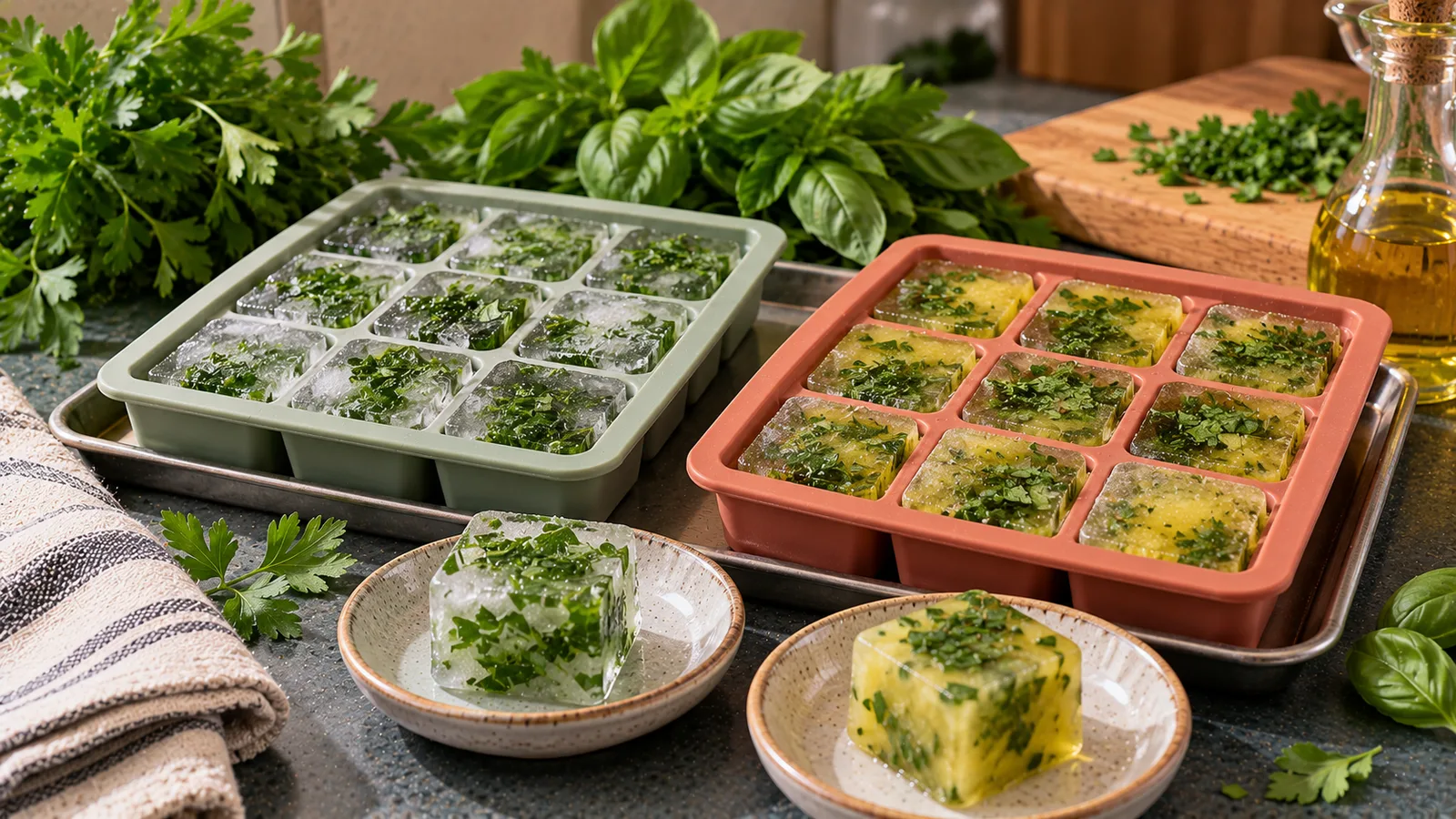
Water or oil: choose by the dish, not by appearance
Freezing herbs in small portions can rescue a bunch of parsley, dill, basil or chives before it wilts. Water and oil both work, but they are not interchangeable ingredients. A water cube brings herbs and a little liquid to a soup or stew. An oil cube contributes herbs and cooking fat, making it more suitable for a pan sauce, sauté or other hot savoury preparation. Neither method recreates the texture of freshly picked leaves. Once thawed, delicate leaves are usually softer and better stirred into food than placed on a finished salad.
The key distinction is safety. Freezing a prepared herb-and-oil portion is not the same as keeping homemade herb-infused oil in a cupboard. Fresh herbs contain water, and oil excludes oxygen; an improperly stored mixture can permit growth of Clostridium botulinum. University food-safety guidance therefore says to freeze fresh herbs in oil promptly and never store the mixture at room temperature. Water cubes are simpler when you do not need additional fat.
Prepare clean, accurately measured herbs
Start with sound, fresh leaves. Discard slimy, mouldy or badly damaged parts rather than trying to preserve them. Rinse the herbs under cool running water, remove unwanted thick stems and dry them thoroughly with a clean towel or salad spinner. Chop them to the size you normally cook with. This treatment is for ordinary culinary herbs; do not include garlic, uncooked meat or other ingredients casually in a stored oil mixture. Mixing in other low-acid foods adds safety complications that these instructions are not designed to address.
Have clean ice-cube trays and freezer-safe bags or containers ready before chopping. Work in small batches so the prepared herbs do not sit around at room temperature. A measured spoonful of herbs in each compartment is a convenient starting point, but a tablespoon of loose leaves has no dependable fixed weight. For reproducible calories or recipe portions, weigh the herbs and the oil. Label each bag with its contents, the freezing date and the amount of oil in a cube if relevant.
Method one: freeze herbs in water
Divide the chopped herbs among the compartments, add potable water and push the leaves under the surface. Freeze promptly. Once firm, transfer the cubes to a labelled freezer bag or suitable container, pressing out excess air without crushing the cubes. Pennsylvania State University's extension guidance describes a water-cube method that fills trays partway, freezes and tops them up; the exact layering is optional for everyday home cooking. Water is particularly convenient for parsley and dill destined for soups, vegetable broths and stews.
A water cube is not a fresh herb garnish and it should not be expected to stay crisp. If your sauce is already watery, allow for the extra liquid or use a smaller cube. Water itself contributes essentially no energy, so the herb amount is the main nutritional input. This is the clearest default for anyone tracking added fats or wanting the flexibility to decide later whether a dish needs oil.
Method two: freeze herbs in oil immediately
For an oil version, dry the washed herbs especially well, chop them, portion them into a clean tray and add just enough edible cooking oil for the intended recipe. Place the tray straight in the freezer. Do not leave a jar of fresh herb-and-oil mixture on the counter to mature. South Dakota State University Extension explicitly recommends immediate freezing, while Oregon State University warns against room-temperature storage of fresh herbs in oil because of botulism risk. These cubes are frozen seasonings, not shelf-stable infused oils.
Oil may feel soft or pliable rather than form a hard, water-like ice cube at freezer temperatures; this is not proof that the freezer is malfunctioning. Once portioned, store the product sealed and labelled, and take out only what you need for cooking. If a homemade fresh-herb oil mixture was inadvertently left unrefrigerated, do not assume freezing it later makes that earlier storage safe. Discard a mishandled mixture rather than taste-testing it.
Worked example: eight measured portions
Suppose a household has 40 g of chopped herbs and wants eight equal portions. Each cube contains 5 g of herbs in both methods. For the water method, add 120 ml water in total, approximately 15 ml per cube. For the oil method, instead use 80 g oil in total, exactly 10 g oil per cube. These are illustrative amounts, not universal tray capacities or an instruction to use equal volumes of water and oil. Actual compartments and herb packing vary.
| Component | Water version, per cube | Oil version, per cube |
|---|---|---|
| Chopped fresh herbs | 5 g | 5 g |
| Added liquid | 15 ml water | 10 g oil |
| Energy from added liquid | 0 kcal | about 88 kcal |
| Best first use | Soups or stews | Hot savoury dishes |
Using an illustrative oil value of 884 kcal per 100 g, 10 g contributes 88.4 kcal, rounded to about 88 kcal per oil cube. Eight cubes contain 80 g oil, equivalent to 707.2 kcal from oil alone. This does not include the small energy contribution from the herbs or any other ingredients. Oil measured by a tablespoon should be weighed if precision matters: grams and millilitres are not interchangeable. The calculation is for oil actually added, not oil remaining in a bottle.
Separate safe handling from freezer quality
A dated, good-looking cube may still be unsafe if fresh herbs were mixed with oil and left warm before freezing. Oregon State University Extension recommends refrigerating fresh herb-and-oil mixtures for use within four days, or freezing them for longer storage. The water and oil techniques described here are freezer methods, not tested room-temperature preservation recipes. Refrigeration is not permission to keep opening a jar indefinitely, and the oil itself does not preserve wet leaves against every hazard.
Do not add raw garlic or extra fresh vegetables to oil cubes casually: that would create a different mixture with additional food-safety considerations. Avoid taste-testing a mixture suspected of poor storage, because botulism hazards are not reliably identified by appearance or smell. If it was improperly held outside refrigeration before freezing, discard it. Freeze small portions promptly and keep the handling steps simple; a quality recommendation such as three months in the freezer is not a substitute for these safety precautions.
Add cubes directly to cooking; avoid leisurely thawing
Use a water cube straight from frozen in a simmering soup, stew, stock or sauce. Put an oil cube into a pan or hot cooked dish where the added fat fits the recipe, and let it heat as part of normal food preparation. Both methods are intended primarily for cooked dishes because frozen herb leaves lose much of their fresh texture. For a raw salad, pesto or cold garnish, fresh herbs are usually the more reliable choice. A water cube may dilute a dressing; an oil cube can change both fat content and mouthfeel.
Avoid leaving a bowl of frozen herb-and-oil cubes to defrost on the countertop. Remove the portion needed and return the remainder to the freezer promptly. If you thaw a portion for immediate use, keep it refrigerated and use it promptly rather than treating it as a long-lived infused oil. Do not repeatedly thaw and refreeze the entire batch. The food-safety issue is safe handling as well as whether the herbs still look green.
Storage, quality and the sensible default
Freeze at a consistently cold setting, ideally −18°C or colder, in sealed, dated containers. For a simple conservative household plan, aim to use either type within three months for best quality, not as a claim that every cube becomes unsafe the next day. Canada's public-health cooking guidance gives a three-month freezer recommendation for water-packed herbs; other extension services discuss longer quality periods for some herb methods. Date the batch and judge freezer-burnt, stale-tasting portions as quality failures rather than trying to rescue them with more oil.
Choose water when you want versatility and no added cooking oil; choose oil when the future dish already calls for measured fat. The distinction is a cooking decision, not a guarantee of identical freshness after freezing. Keep food safety separate from flavour: a sealed, attractive-looking herb oil is not evidence that room-temperature storage was safe.
Sources