
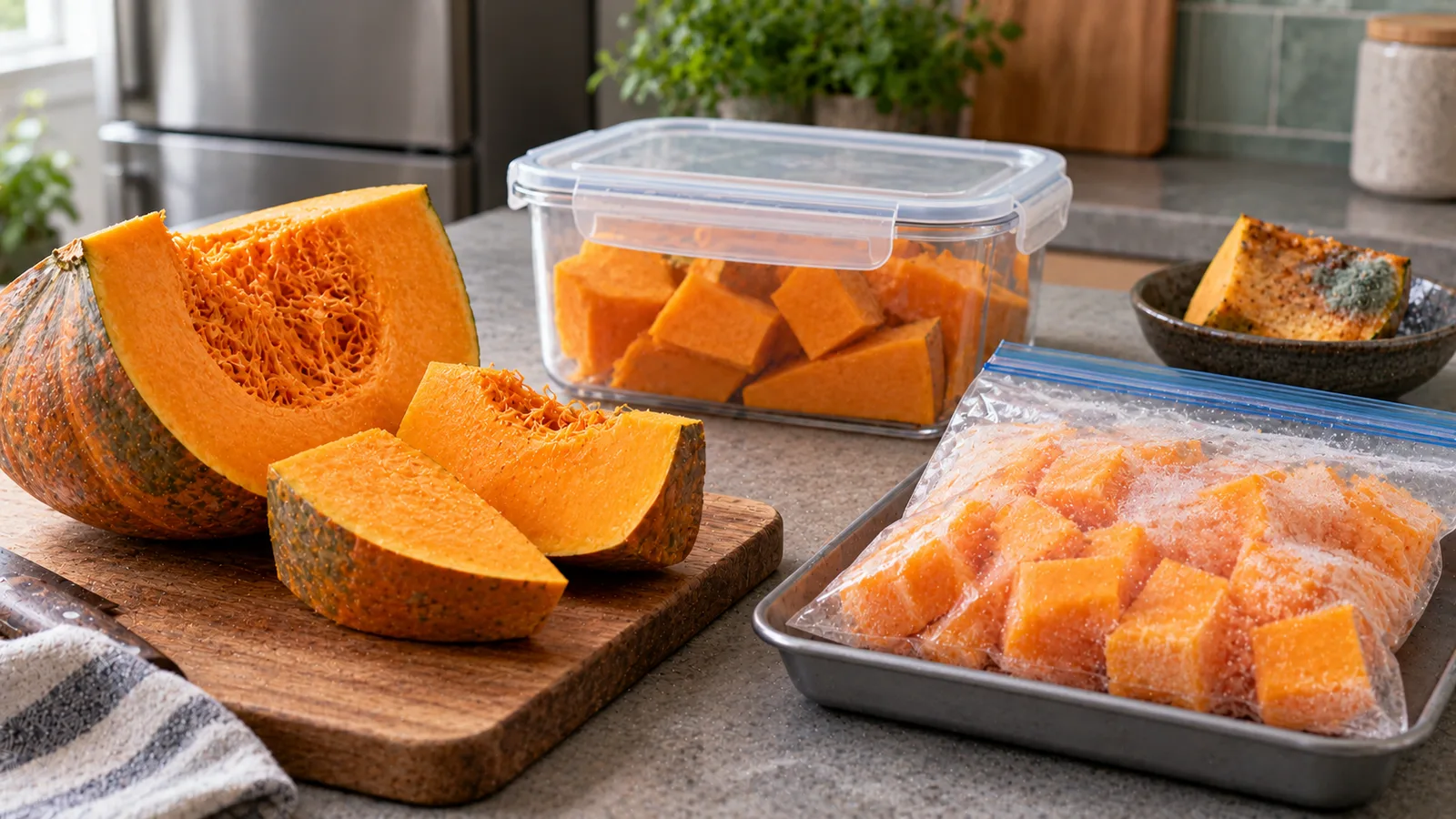
Once a pumpkin has been cut, it is no longer the same storage problem as an intact pumpkin on a cool shelf. The knife exposes moist flesh and can move microorganisms from the rind to the cut surfaces. A wedge for tomorrow's soup belongs in the refrigerator; a large surplus intended for next month is better prepared for the freezer. Treating the two situations as interchangeable is where much avoidable waste—and sometimes unsafe storage—begins.
This guide concerns raw, freshly cut edible pumpkin or winter squash. It does not assign the storage life of a whole pumpkin to cut flesh, and it does not treat homemade pumpkin purée, pumpkin pie or cooked soup as raw produce. Variety, maturity, handling and refrigerator performance all matter. The FDA's produce advice is a useful basis: keep perishable produce cold, work cleanly and refrigerate pre-cut produce.
The storage decision: what belongs where?
Start with when you expect to cook the pumpkin, not with the size of the original fruit. An intact, sound pumpkin may be stored according to the particular variety and growing conditions, but a cut wedge must be handled as exposed produce. The University of Maryland Extension distinguishes whole pumpkin storage from the need to handle prepared produce carefully.
| What you have | Recommended action | Practical interpretation |
|---|---|---|
| Whole undamaged pumpkin | Follow whole-squash storage guidance | Not the same as an exposed cut surface |
| Raw wedge or cubes for an imminent meal | Covered container in the fridge at 4°C or below | Refrigerate immediately after cutting |
| More raw pumpkin than you will cook promptly | Cook and freeze in measured portions | Reliable guidance exists for freezing cooked pumpkin |
| Cooked pumpkin or purée | Chill promptly; treat as cooked leftovers | Generally 3–4 days refrigerated under safe conditions |
| Previously mishandled or suspicious pumpkin | Discard | Freezing cannot make unsafe food safe |
For a household plan, aim to use refrigerated raw cut pumpkin within 2–3 days. That is a conservative quality-oriented planning target, not a universally validated microbiological expiry time for all pumpkin varieties. If the package has an earlier use-by date, follow it. Time and visible appearance alone cannot prove safety.
How to prepare and refrigerate a fresh cut
Rinse the outside of the whole pumpkin under running water before cutting; do not wash it with soap or detergent. Use a clean board and knife. Keep the raw vegetable away from raw meat juices and wash hands and utensils before switching tasks. Cutting through a dirty rind can introduce contamination to the portion you intend to eat.
Remove stringy material and seeds if that suits the recipe. Keep sound edible rind when appropriate for the variety, but do not assume every ornamental gourd is edible. Pat obvious surface water off the pumpkin; place the cut pieces in a clean, lidded container or wrap the cut face well. Label the container with the cutting date, and place it in the cold part of the refrigerator rather than on the door, where temperatures fluctuate more.
The USDA FSIS answer on cut produce advises covered refrigeration or freezing and warns against leaving cut fruit and vegetables at room temperature for more than 2 hours. For an especially hot environment above 32°C, the FoodSafety.gov guidance uses a 1-hour limit for perishable food. Your fridge should hold 4°C or below; use a thermometer rather than assuming the dial setting is accurate.
How long is cut pumpkin good in the fridge?
There is no reliable single countdown that makes every cut pumpkin safe until the same hour. The clock starts with preparation and depends on initial freshness, surface cleanliness, temperature, moisture and interruptions to refrigeration. The 2–3 days above are therefore an intentionally cautious cooking plan for raw cut pieces, not a safety guarantee or an official universal shelf-life claim. A piece that develops spoilage earlier must be discarded sooner.
If you bought pre-cut pumpkin, follow its date and storage instructions, especially any use-by date. Do not reset the clock because you transfer the pieces into a new box. If you cut it at home, date the container and plan the next meal immediately. For example, 1,200 g of usable pumpkin could be divided into four 300 g portions; refrigerate only the portions you will actually cook soon and prepare the rest for freezing.
Cooked pumpkin follows a different category: the Illinois Extension pumpkin guidance advises using refrigerated homemade purée within 3–4 days and permits freezing for longer storage. These 3–4 days should never be automatically applied to raw pumpkin. Also remember that a refrigerator slows deterioration; it does not reverse contamination acquired during cutting.
Freezing pumpkin without compromising the result
For dependable home preservation, follow a tested method rather than simply putting wet raw cubes into a bag and hoping they will retain their structure. The National Center for Home Food Preservation recommends washing, cutting, removing seeds, cooking the pumpkin until soft, separating pulp from rind, mashing, cooling promptly and freezing in suitable containers with about ½ inch (1.3 cm) headspace. This works well for soup, sauces, baking and other dishes that do not require firm cubes.
To cool purée, set its pan in cold water and stir occasionally before portioning. Label the freezer bag or container with the date and grams. Freeze at −18°C or below. That temperature is a standard freezer target; it is not a guarantee of unchanged flavour or texture indefinitely. Freezing halts most microbial growth but does not sterilise the food. Purée often becomes wetter or separates after thawing; stir it into soup or drain excess liquid if the recipe needs a thicker texture.
If cubes matter, the Penn State Extension preservation guide describes blanching cubes for about 3 minutes, then draining, chilling, patting dry, freezing on a tray and packing them into freezer bags. Follow that specific tested procedure rather than treating raw and blanched pieces as interchangeable. Never thaw frozen pumpkin overnight on the counter; use the refrigerator or cook from frozen when the dish allows.
Spoilage signs: when to throw the pumpkin away
Visible mould, a sour or rotten smell, unusual sliminess, leaking liquid and patches that have turned wet and mushy are reasons to discard the pumpkin. If mould grows on a stored cut piece, do not scrape away one spot and assume the rest is safe. Likewise, do not taste a questionable piece to decide whether it is still edible. The Maryland Extension storage advice identifies mould, foul odour, major texture changes and abnormal discoloration as spoilage signals.
However, a normal colour or smell does not establish that food is safe. Some harmful microbes cause no obvious odour or colour change. Discard cut pumpkin if it has spent more than 2 hours unrefrigerated (or 1 hour above 32°C), if the refrigeration history is unknown after a significant temperature failure, or if contamination from raw meat or dirty surfaces is suspected. Cooking spoiled pumpkin is not a reliable rescue technique, and freezing is not one either.
Firm flesh can dry slightly at a cut edge without necessarily showing spoilage; distinguish minor dehydration from a slippery or decaying surface. When storage history is uncertain, do not let a desire to avoid waste override food safety.
Portion planning and avoiding unnecessary waste
A simple system reduces the number of times you open and handle the same wedge. Before chilling, decide whether you need diced pumpkin for roasting, strips for a stew or cooked purée for later. Weigh the usable flesh so you can match it to the recipe; 1,200 g divided into four 300 g portions is an example, not a nutritional claim about every pumpkin. Record the weight after removing seeds and inedible parts, rather than the weight of the whole fruit.
Place tomorrow's portion in a covered container at 4°C or below. Prepare and freeze the surplus soon, rather than waiting until its last acceptable day in the fridge. Keep a freezer label with the processing date, preparation method and weight. Once thawed, check the storage history and cook appropriately; do not leave the package on the worktop while deciding what to make.
For related ingredient questions, see how storage and cooking affect vitamin C · pumpkin seed nutrition and portions.
This guide is intentionally about cut pumpkin storage. For a cooked soup, filled pie or dish containing dairy, meat or eggs, the finished recipe and its own food-safety conditions govern storage. A fixed date on a calendar helps you organise meals; it cannot substitute for clean handling, reliable cold storage and sound judgement.
Sources
- FDA — Selecting and Serving Produce Safely: washing, handling and chilled storage of produce.
- USDA FSIS — How should I store cut fruit and vegetables?: covered refrigerated or frozen storage and the 2-hour rule.
- FoodSafety.gov — 4 Steps to Food Safety: 4°C, −18°C and the 1-hour hot-weather limit.
- National Center for Home Food Preservation — Freezing Pumpkin: tested cooked-pumpkin freezing procedure.
- Penn State Extension — Preserving Pumpkin Purée Safely at Home: purée and blanched-cube methods.
- Illinois Extension — Preserving Pumpkin: cooked-purée refrigerator guidance.
- University of Maryland Extension — Storing Garden Fruits and Vegetables: whole-pumpkin context and warning signs.