
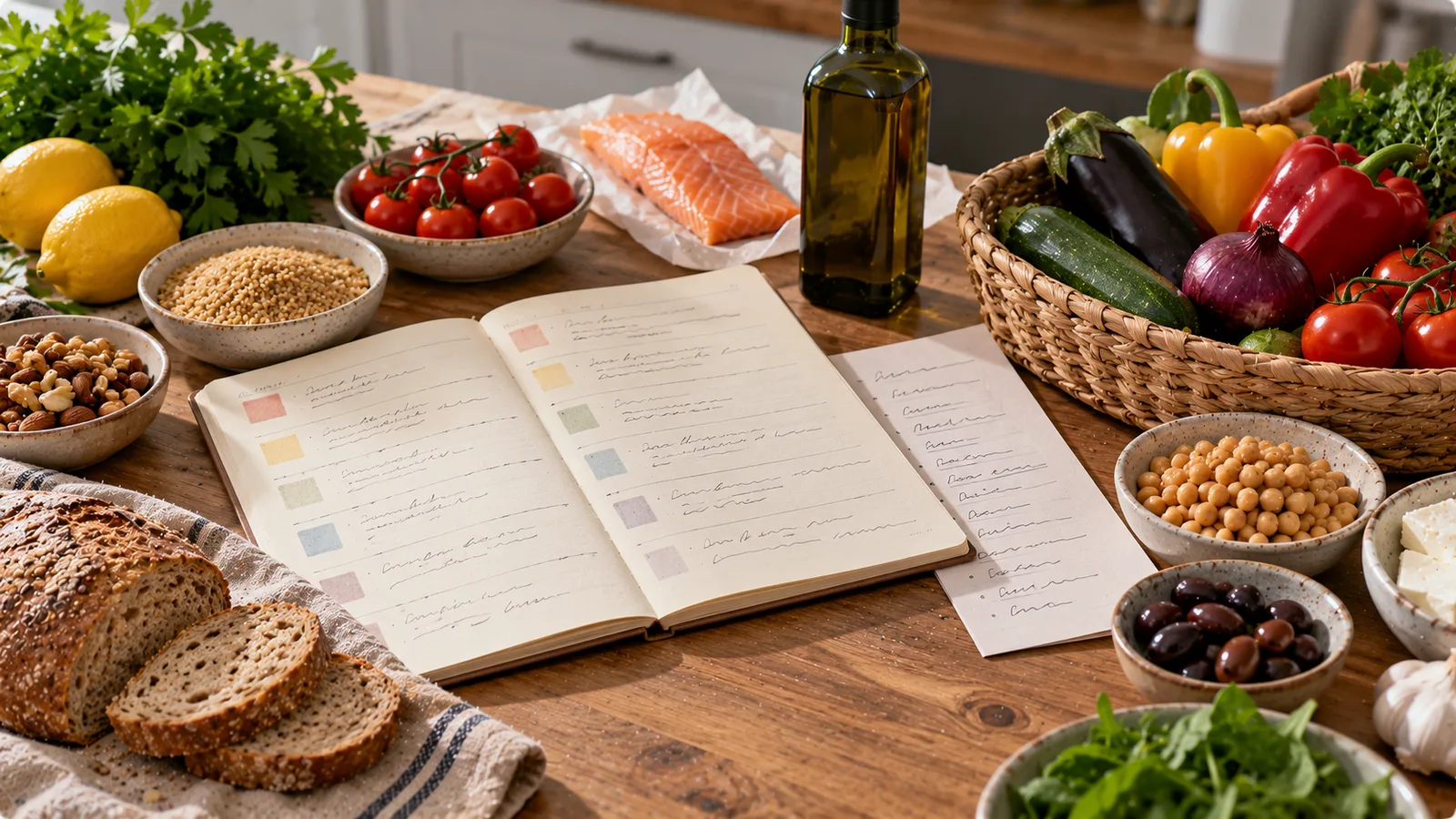
The Mediterranean-style eating pattern is built around vegetables, fruit, legumes, whole grains, nuts, olive oil and a variety of protein sources. Fish and fermented dairy foods can feature regularly, while red meat and heavily processed foods generally play smaller roles.
You do not need complicated recipes, expensive ingredients or a perfect daily menu to follow this approach.
This seven-day plan is designed for an ordinary week. It reuses ingredients intelligently, provides substantial protein and fibre, and includes a consolidated grocery list.
It is a flexible example for one adult, not a personalised medical diet or a fixed calorie prescription.
How to use this seven-day plan
The plan includes three main meals and an optional snack each day.
Most days provide approximately 1,900–2,200 kcal with the snack included, although actual values depend on product brands, cooking methods and portion sizes.
The meals use familiar supermarket ingredients available across much of Europe.
Adjust portions to your needs. People have different energy requirements depending on body size, age, activity, health and goals. Add or reduce bread, grains, potatoes, olive oil, nuts and other foods rather than treating the example portions as mandatory.
Water is the default drink. Unsweetened tea and coffee can also fit.
The plan does not require wine. Alcohol is not necessary to obtain the benefits of a Mediterranean-style dietary pattern.
The seven-day meal plan at a glance
| Day | Breakfast | Lunch | Dinner | Optional snack |
|---|---|---|---|---|
| Monday | Greek yoghurt, oats and berries | Chickpea and tomato salad with wholegrain bread | Baked salmon, potatoes and broccoli | Apple and almonds |
| Tuesday | Spinach omelette and wholegrain toast | Leftover salmon grain bowl | Lentil and vegetable soup with bread | Orange and walnuts |
| Wednesday | Overnight oats with banana and chia | Lentil soup and cucumber salad | Chicken, roasted vegetables and bulgur | Plain yoghurt and berries |
| Thursday | Skyr with pear and walnuts | Chicken and bulgur salad | Wholewheat pasta with tomato, white beans and spinach | Carrot sticks and hummus |
| Friday | Eggs, tomatoes and wholegrain bread | Leftover bean pasta with green salad | Baked cod, rice and courgettes | Fruit and almonds |
| Saturday | Yoghurt bowl with oats and apple | Tuna and white bean salad | Chickpea and vegetable traybake with couscous | Hummus and vegetables |
| Sunday | Vegetable omelette with toast | Leftover chickpea couscous bowl | Chicken and vegetable stew with potatoes | Yoghurt and fruit |
The sequence is designed so that several cooked components can be reused safely in later meals.
Refrigerate perishable leftovers promptly, follow local food-safety guidance and use or freeze them within an appropriate period.
Day 1: Monday
Breakfast: Greek yoghurt with oats and berries
Combine:
- 250 g plain Greek-style yoghurt, approximately 2% fat
- 60 g rolled oats
- 120 g berries
- 15 g walnuts
- Cinnamon, if desired
Mix and serve immediately, or prepare the oats ahead and refrigerate.
Lunch: Chickpea and tomato salad
Use:
- 160 g drained cooked chickpeas
- 180 g tomatoes
- 100 g cucumber
- 40 g red onion
- 15 g olive oil
- Lemon juice and parsley
- 80 g wholegrain bread
Mix the vegetables and chickpeas with olive oil and lemon juice. Serve with bread.
Dinner: Baked salmon with potatoes and broccoli
Use:
- 160 g salmon fillet
- 280 g potatoes
- 250 g broccoli
- 10 g olive oil
- Lemon, garlic and herbs
Roast the potatoes, cook the broccoli and bake the salmon until safely cooked.
Optional snack
One medium apple and 25 g almonds.
Daily estimate: approximately 2,100–2,250 kcal and 95–110 g protein.
The exact result depends particularly on yoghurt fat content, salmon size and olive oil.
Day 2: Tuesday
Breakfast: Spinach omelette
Use:
- 3 eggs
- 80 g spinach
- 150 g tomatoes
- 10 g olive oil
- 90 g wholegrain bread
Cook the spinach and eggs in a pan and serve with tomatoes and toast.
Lunch: Salmon grain bowl
Use:
- 100 g cooked leftover salmon, properly refrigerated
- 180 g cooked bulgur
- 150 g cucumber and tomatoes
- 60 g plain yoghurt
- 10 g olive oil
- Lemon and herbs
Combine the ingredients and add the yoghurt dressing.
Dinner: Lentil and vegetable soup
For one generous portion:
- 100 g dry lentils
- 150 g carrots
- 100 g celery
- 150 g canned tomatoes
- 60 g onion
- 10 g olive oil
- Vegetable stock and spices
- 80 g wholegrain bread
Simmer until the lentils are tender. Make extra for Wednesday.
Optional snack
One orange and 25 g walnuts.
Daily estimate: approximately 1,950–2,150 kcal and 95–110 g protein.
Day 3: Wednesday
Breakfast: Banana overnight oats
Combine:
- 65 g oats
- 200 g plain yoghurt or skyr
- 120 g banana
- 15 g chia seeds
- 100 ml milk or fortified unsweetened soy drink
Refrigerate overnight.
Lunch: Leftover lentil soup
Serve a generous portion of Tuesday's soup with:
- 150 g cucumber and tomato salad
- 10 g olive oil
- 60 g wholegrain bread
Dinner: Chicken with roasted vegetables and bulgur
Use:
- 180 g raw chicken breast
- 85 g dry bulgur
- 200 g courgette
- 150 g bell pepper
- 100 g red onion
- 15 g olive oil
- Garlic, paprika and oregano
Roast the chicken and vegetables until safely cooked. Prepare extra chicken and bulgur for Thursday.
Optional snack
150 g plain yoghurt and 100 g berries.
Daily estimate: approximately 1,950–2,150 kcal and 105–125 g protein.
Day 4: Thursday
Breakfast: Skyr, pear and walnuts
Combine:
- 250 g plain skyr
- 65 g oats
- 160 g pear
- 25 g walnuts
Lunch: Chicken and bulgur salad
Use:
- 130 g cooked chicken from Wednesday
- 180 g cooked bulgur
- 200 g tomatoes, cucumber and leafy greens
- 15 g olive oil
- Lemon juice
Serve cold only if the cooked ingredients have been stored safely.
Dinner: Wholewheat pasta with white beans
Use:
- 100 g dry wholewheat pasta
- 170 g drained white beans
- 200 g passata
- 100 g spinach
- 80 g onion
- 15 g olive oil
- 20 g Parmesan, optional
Cook the pasta. Simmer the sauce with beans and vegetables, then combine.
Prepare an extra portion for Friday's lunch.
Optional snack
150 g carrots and 70 g hummus.
Daily estimate: approximately 2,000–2,200 kcal and 105–125 g protein.
Day 5: Friday
Breakfast: Eggs, tomatoes and toast
Use:
- 3 eggs
- 200 g tomatoes
- 90 g wholegrain bread
- 10 g olive oil
- Fresh herbs
Lunch: Leftover white bean pasta
Serve one portion of Thursday's pasta with:
- 100 g mixed leafy greens
- 10 g olive oil
- Lemon juice or vinegar
Dinner: Baked cod with rice and courgettes
Use:
- 200 g raw cod
- 100 g dry brown rice
- 250 g courgette
- 150 g carrots
- 20 g olive oil
- Lemon and herbs
Cook the rice and vegetables and bake the cod until safely cooked.
Optional snack
One piece of fruit and 30 g almonds.
Daily estimate: approximately 2,000–2,200 kcal and 100–120 g protein.
Day 6: Saturday
Breakfast: Yoghurt, oats and apple
Combine:
- 250 g plain yoghurt
- 70 g oats
- 180 g apple
- 20 g almonds
- Cinnamon
Lunch: Tuna and white bean salad
Use:
- 130 g drained canned tuna
- 180 g drained white beans
- 200 g tomatoes and cucumber
- 40 g red onion
- 15 g olive oil
- Lemon and parsley
- 70 g wholegrain bread
Mix and serve.
Choose canned tuna according to applicable national advice on fish consumption, particularly for pregnancy and children.
Dinner: Chickpea and vegetable traybake
Use:
- 200 g drained chickpeas
- 200 g courgette
- 150 g bell pepper
- 150 g tomatoes
- 100 g red onion
- 20 g olive oil
- 90 g dry wholewheat couscous
- Paprika, cumin and lemon
Roast the vegetables and chickpeas. Serve over couscous.
Prepare extra for Sunday lunch.
Optional snack
70 g hummus and 200 g cucumber or carrots.
Daily estimate: approximately 2,000–2,200 kcal and 90–110 g protein.
Day 7: Sunday
Breakfast: Vegetable omelette
Use:
- 3 eggs
- 100 g spinach
- 150 g tomatoes
- 10 g olive oil
- 90 g wholegrain bread
Lunch: Chickpea couscous bowl
Use a generous portion of Saturday's prepared chickpeas, vegetables and couscous.
Add:
- 80 g plain yoghurt
- Lemon juice
- Fresh herbs
Dinner: Chicken and vegetable stew
Use:
- 180 g raw chicken breast
- 300 g potatoes
- 150 g carrots
- 120 g celery
- 150 g tomatoes
- 80 g onion
- 15 g olive oil
- Garlic and herbs
Simmer the ingredients until the chicken is thoroughly cooked and the vegetables are tender.
Optional snack
200 g plain yoghurt and one piece of fruit.
Daily estimate: approximately 1,950–2,150 kcal and 105–125 g protein.
Consolidated grocery list for one adult
The quantities below are approximate purchase targets, not a precise inventory reconciliation. They include a little flexibility for trimming, variation and package sizes.
Vegetables and herbs
| Ingredient | Approximate amount |
|---|---|
| Tomatoes, fresh | 1.4–1.7 kg |
| Cucumber | 700–900 g |
| Courgettes | 700–900 g |
| Carrots | 800 g–1 kg |
| Broccoli | 250–400 g |
| Spinach | 350–450 g |
| Bell peppers | 300–450 g |
| Red and regular onions | 600–800 g |
| Celery | 250–350 g |
| Mixed salad greens | 200–300 g |
| Garlic | 1 bulb |
| Lemons | 4–5 |
| Parsley and other herbs | 1–2 bunches |
Fruit
| Ingredient | Approximate amount |
|---|---|
| Apples | 3 |
| Bananas | 1–2 |
| Pears | 1–2 |
| Oranges | 1–2 |
| Berries, fresh or frozen | 350–450 g |
| Additional snack fruit | 2 pieces |
Grains, bread and potatoes
| Ingredient | Approximate amount |
|---|---|
| Rolled oats | 350–450 g |
| Wholegrain bread | 650–850 g |
| Dry bulgur | 200–250 g |
| Wholewheat pasta | 200–250 g |
| Brown rice | 100–150 g |
| Wholewheat couscous | 180–220 g |
| Potatoes | 900 g–1.2 kg |
Protein foods, legumes and dairy
| Ingredient | Approximate amount |
|---|---|
| Eggs | 9 |
| Salmon | 250–300 g |
| Cod | 200 g |
| Chicken breast | 500–650 g raw |
| Canned tuna | 1 large can or enough for 130 g drained |
| Cooked chickpeas | 550–650 g drained |
| Cooked white beans | 450–550 g drained |
| Dry lentils | 180–220 g |
| Plain yoghurt and skyr combined | 1.5–2 kg |
| Milk or fortified soy drink | 100–250 ml |
| Hummus | 150–200 g |
| Parmesan, optional | 20–40 g |
Oils, nuts and pantry items
| Ingredient | Approximate amount |
|---|---|
| Olive oil | 250–350 ml |
| Almonds | 80–120 g |
| Walnuts | 70–100 g |
| Chia seeds | 15–30 g |
| Passata or canned tomatoes | 500–700 g |
| Vegetable stock | As needed |
| Cinnamon, oregano, paprika, cumin and pepper | As needed |
Buy according to actual pack sizes and what you already have.
Olive oil, dried grains and spices will often last beyond this week.
A realistic preparation schedule
You do not need to cook every meal from scratch.
Before Monday: 45–60 minutes
Wash and prepare vegetables that store well.
Cook a batch of bulgur for the first part of the week.
Wash fruit and portion nuts.
Prepare a simple lemon and olive oil dressing.
Keep raw fish and chicken refrigerated or frozen until needed.
Tuesday evening: 15 minutes of extra preparation
Cook additional lentil soup for Wednesday.
Refrigerate the extra portion promptly in a suitable container.
Wednesday evening: prepare Thursday lunch
Cook enough chicken and bulgur for Wednesday dinner and Thursday lunch.
Cool and refrigerate the extra portion promptly.
Thursday evening: prepare Friday lunch
Cook an extra portion of wholewheat pasta with beans.
Store it refrigerated and reheat thoroughly when appropriate.
Saturday evening: prepare Sunday lunch
Make additional chickpeas, roasted vegetables and couscous.
Refrigerate promptly.
For all leftovers, follow local guidance on refrigeration temperatures, storage periods and reheating.
How to adjust the plan to your calorie needs
The plan is an example, not a requirement to eat a fixed number of calories.
For a lower-energy version, you can reduce portions of grains, bread, nuts and added oil while retaining vegetables and appropriate protein.
For a higher-energy version, add larger portions of whole grains, potatoes, olive oil, nuts, yoghurt or other suitable foods.
As simple arithmetic examples:
- Adding 30 g dry oats contributes roughly 110–120 kcal.
- Adding 10 g olive oil contributes about 90 kcal.
- Adding 30 g almonds contributes roughly 170–180 kcal.
- Adding 100 g cooked potatoes contributes roughly 75–90 kcal.
Actual values depend on the food and preparation.
Do not reduce intake below your individual nutritional requirements simply to match an example plan.
Mediterranean-style eating without fish
Fish is common in many Mediterranean-style patterns, but the overall pattern is not defined by one ingredient.
For a fish-free version, replace salmon, cod and tuna with suitable combinations of:
- Lentils and beans.
- Tofu or tempeh.
- Eggs, if eaten.
- Plain yoghurt or other suitable protein-rich dairy foods.
- Other protein sources that fit your preferences.
Adjust quantities to maintain an appropriate protein intake.
If you avoid all animal foods, pay particular attention to nutrients such as vitamin B12 and use reliable fortified foods or supplementation as appropriate.
What if you have a food allergy?
This example contains or may use fish, eggs, milk, wheat, nuts and soy, depending on substitutions and purchased products.
It is not an allergen-free plan.
Check the ingredients and allergen declarations of every product.
Replace foods only with alternatives that are safe for your diagnosed allergy.
For complex allergies or medical dietary restrictions, seek individual guidance from an appropriately qualified clinician or dietitian.
Is the Mediterranean diet scientifically supported?
The Mediterranean-style dietary pattern has been studied extensively.
Its defining features are a high intake of plant foods, olive oil as a major fat source and an emphasis on minimally processed foods.
A major randomised trial, PREDIMED, investigated a Mediterranean diet supplemented with extra-virgin olive oil or nuts in adults at elevated cardiovascular risk. Its corrected republication reported fewer major cardiovascular events in the intervention groups, although interpretation should consider the study's design and population.
See the 2018 PREDIMED republication in the New England Journal of Medicine.
The American Heart Association also describes Mediterranean-style eating as broadly consistent with heart-healthy dietary recommendations.
These findings support an overall eating pattern. They do not mean that every individual recipe or a single week of meals produces a measurable health benefit.
Common questions about the plan
Can I repeat meals?
Yes.
Repeating meals can make shopping easier, reduce food waste and simplify preparation.
The plan deliberately reuses ingredients while keeping the main meals varied.
Do I need extra-virgin olive oil?
Olive oil is a characteristic part of Mediterranean-style eating.
Extra-virgin olive oil is a practical choice for dressings and many cooking methods, but you can adapt to availability, budget and culinary needs.
Are potatoes allowed?
Yes.
Potatoes can be included in a Mediterranean-style pattern, especially when boiled, baked or roasted with moderate amounts of added fat.
The overall meal composition matters more than excluding potatoes.
Is this a weight-loss diet?
Not automatically.
The plan can be adapted to different energy needs.
Weight change depends on the overall energy balance over time, not simply on the name of the eating pattern.
Must every meal be traditional Mediterranean cuisine?
No.
Mediterranean-style eating refers to the overall food pattern rather than a strict list of regional recipes.
Ordinary meals built around vegetables, legumes, whole grains, olive oil and appropriate protein sources can fit.