
A meal plan becomes much more useful when it can be converted into a grocery list quickly.
Without that step, it is easy to plan several good meals and then discover that they require too many separate ingredients, duplicate foods you already own or leave half-used products at the end of the week.
A practical grocery list connects three things:
- what you plan to eat
- what you already have
- what you actually need to buy
The goal is not to create the longest possible shopping list.
It is to buy enough useful food to support the plan without filling the kitchen with ingredients that have no clear purpose.
Start with the meal plan, not the supermarket
A common approach is to walk through the store and decide what to buy while shopping.
That can work, but it makes it easier to forget ingredients, buy duplicates or collect foods that do not fit together.
Instead, start with the meals you expect to prepare.
For example:
Monday:
chicken, potatoes and vegetables
Tuesday:
lentil pasta with tomato sauce
Wednesday:
salmon, rice and broccoli
Thursday:
leftover chicken wraps
Friday:
tofu stir-fry with rice and vegetables
The grocery list should be built from these meals.
If you do not yet have a weekly structure, see Weekly Meal Planning Template.
Step 1: check what you already have
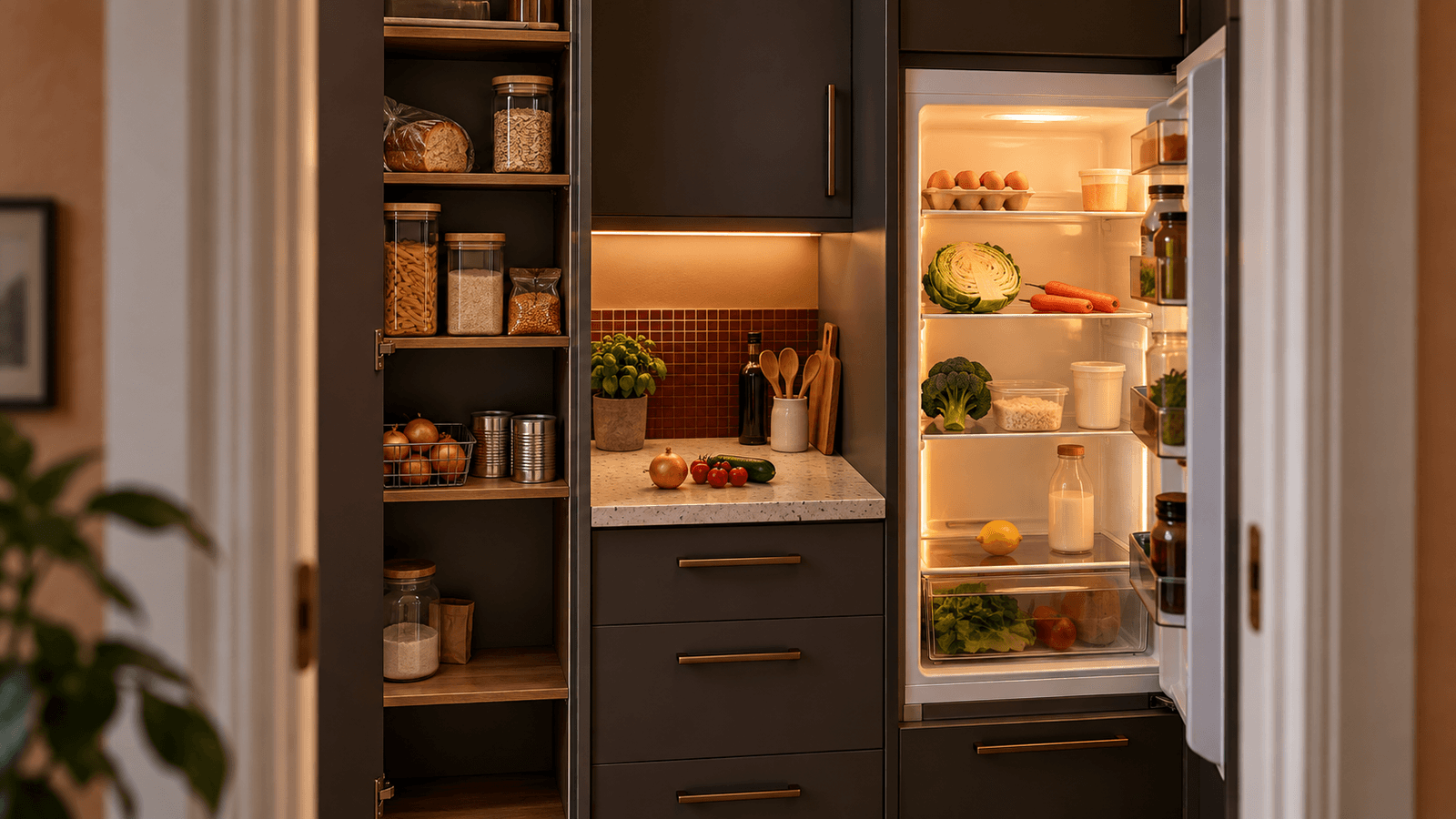
Before adding anything to the shopping list, check:
- refrigerator
- freezer
- pantry
- fruit and vegetable storage
- frequently used staples
Look specifically for ingredients that need to be used soon.
For example, you might already have:
- half a bag of spinach
- three potatoes
- two carrots
- rice
- frozen peas
- eggs
- an open jar of tomato sauce
Those foods should influence the plan.
Using existing food first can reduce both grocery spending and waste.
Create a quick inventory
You do not need a detailed database of every item in the kitchen.
A short inventory is often enough.
Use soon
Foods with a short remaining life:
- fresh vegetables
- opened dairy products
- cooked leftovers
- ripe fruit
- opened sauces
Available staples
Foods that can support several meals:
- rice
- pasta
- oats
- potatoes
- canned beans
- lentils
- frozen vegetables
- eggs
Freezer
Check for:
- meat
- fish
- bread
- frozen vegetables
- prepared leftovers
This takes only a few minutes and can immediately remove unnecessary items from the future grocery list.
Step 2: list the ingredients for each planned meal
Take one meal at a time.
Suppose Monday's dinner is:
Chicken with potatoes and roasted vegetables.
Ingredients might be:
- chicken
- potatoes
- broccoli
- carrots
- olive oil
- seasoning
Then move to Tuesday.
Lentil pasta with tomato sauce:
- lentil pasta
- tomato sauce
- onion
- garlic
- spinach
Continue until every planned meal has been reviewed.
Do not worry about duplicates yet.
Step 3: combine repeated ingredients
Now look for ingredients that appear several times.
For example:
Monday:
carrots
Wednesday:
carrots
Friday:
carrots
Instead of writing carrots three times, combine them into one realistic quantity.
The same applies to:
- onions
- garlic
- rice
- potatoes
- yogurt
- eggs
- chicken
- vegetables
- herbs
- sauces
This turns a recipe-by-recipe list into an actual shopping list.
Ingredient overlap makes meal planning easier
A good weekly plan does not require every meal to use completely different ingredients.
Ingredient overlap can make shopping simpler.
For example, one bag of spinach could be used for:
- breakfast eggs
- pasta
- a wrap
- a side dish
A package of yogurt could be used for:
- breakfast
- a sauce
- a snack
A batch of roasted vegetables could support:
- dinner
- lunch the next day
- a grain bowl
- a wrap
This is not the same as eating identical meals every day.
The ingredients repeat, but the meals can still change.
Step 4: subtract what you already own
Now compare the combined ingredient list with your kitchen inventory.
Suppose the meal plan requires:
- 1 kg potatoes
- 500 g rice
- 6 eggs
- 2 onions
But you already have:
- 300 g potatoes
- enough rice for the week
- 4 eggs
- 1 onion
Your shopping list should reflect only the approximate amount still needed.
This simple step can significantly reduce duplicate purchases.
Step 5: estimate realistic quantities
The goal is not perfect mathematical precision.
You need quantities that are useful enough for shopping.
Think about:
- number of people
- number of meals
- approximate portions
- package sizes
- leftovers
- whether an ingredient appears in several recipes
For example, if two dinners use broccoli, buying one larger head may make more sense than treating each recipe independently.
Do not blindly follow recipe quantities
Recipes often assume a fixed number of servings.
Your household may need more or less.
A recipe for four servings may become:
- one dinner for two people plus two lunches
- one dinner for a family
- two separate meals for one person
Translate recipe quantities into your actual plan before shopping.
Step 6: decide where leftovers belong
Leftovers should be part of the meal plan rather than an accident.
If Monday's dinner produces two extra portions, decide when they will be eaten.
For example:
Monday dinner:
chicken and potatoes
Tuesday lunch:
leftover chicken and potatoes
This means Tuesday lunch does not require a completely separate set of ingredients.
Planned leftovers can reduce:
- shopping
- cooking
- food waste
- decision-making
Step 7: add breakfast and snacks
People often create grocery lists from dinners and forget everything else.
Review:
- breakfast
- lunch
- snacks
- drinks
- coffee additions
- fruit
- yogurt
- bread
- eggs
- other routine foods
If breakfast is nearly identical every day, this part of the list can be simple.
For example:
- oats
- yogurt
- bananas
- berries
- eggs
Step 8: add household staples only when needed
Before automatically adding common staples, check whether they actually need replacing.
Examples:
- cooking oil
- salt
- pepper
- spices
- flour
- oats
- rice
- pasta
- coffee
- tea
Buying these every week “just in case” creates duplicates.
Step 9: organize the grocery list by store section
Once the list is complete, reorganize it.
For example:
Produce
- potatoes
- onions
- carrots
- broccoli
- spinach
- tomatoes
- apples
- bananas
Protein and dairy
- chicken
- salmon
- tofu
- eggs
- yogurt
Pantry
- lentil pasta
- canned beans
- tomato sauce
- tortillas
Frozen
- frozen peas
- frozen berries
This can make shopping faster and reduce repeated movement through the store.
Organize the list for the store you actually use
You do not need universal categories.
If your regular shop has produce first, organize the list that way.
If frozen food comes before dairy, adjust the order.
The best grocery list follows your real shopping route.
Separate essential items from optional items
A useful grocery list can have two levels.
Essential
Needed for planned meals.
Optional
Useful if:
- price is good
- quality looks good
- budget allows
- you want additional variety
This creates flexibility without losing the structure of the meal plan.
Build flexibility into the plan
A grocery list should support the week even if plans change.
Choose some ingredients that can work in several meals.
Examples:
- eggs
- potatoes
- rice
- frozen vegetables
- yogurt
- beans
- tortillas
- canned tomatoes
If Wednesday's planned meal does not happen, these foods can usually be redirected.
Highly specialized ingredients are harder to reuse.
Use versatile protein sources
Protein foods often represent a meaningful part of the grocery budget.
Choosing flexible options can help.
Examples include:
- eggs
- chicken
- tofu
- lentils
- beans
- yogurt
- canned fish
- frozen fish
One protein source can sometimes support multiple meals without those meals becoming identical.
Use versatile carbohydrate sources
Useful examples include:
- potatoes
- rice
- oats
- pasta
- bread
- tortillas
These can be combined with different proteins, vegetables and sauces.
Use fresh and frozen vegetables together
A grocery list does not need to rely entirely on fresh produce.
Fresh vegetables can be useful early in the week.
Frozen vegetables can provide flexibility later.
For example:
Early week:
fresh spinach, tomatoes and mushrooms
Later week:
frozen broccoli, peas or mixed vegetables
This reduces pressure to use every vegetable immediately.
Think about shelf life
When planning seven days of groceries, consider which foods should be eaten first.
Use earlier:
- delicate leafy greens
- berries
- fresh herbs
- ripe fruit
- opened products
Use later:
- carrots
- cabbage
- potatoes
- onions
- frozen vegetables
- canned foods
- dry staples
The grocery list can therefore influence the order of meals.
Do not buy seven days of fragile food
A weekly grocery shop does not mean every ingredient must remain fresh for seven days.
You can combine:
- fresh foods
- frozen foods
- shelf-stable foods
This makes the plan more resilient.
Grocery list example for a simple week
Suppose the plan contains:
Breakfast
Oats, yogurt and fruit on several days.
Eggs and toast on other days.
Lunch
Leftovers, wraps and lentil bowls.
Dinner
Chicken with potatoes and vegetables.
Pasta with tomato sauce and spinach.
Salmon with rice and broccoli.
Bean wraps.
Tofu stir-fry.
The combined grocery list could look like:
Produce
- potatoes
- broccoli
- spinach
- carrots
- onions
- garlic
- tomatoes
- bananas
- apples
Protein and dairy
- chicken
- salmon
- tofu
- eggs
- yogurt
Pantry
- oats
- rice
- pasta
- beans
- tomato sauce
- tortillas
- bread
Frozen
- mixed vegetables
- berries
Before shopping, remove anything already available at home.
Avoid buying an ingredient for only one tablespoon
Recipes sometimes call for ingredients that have no other use during the week.
Before buying them, ask:
Can I use this elsewhere?
Can I substitute something I already have?
Can another planned meal use the rest?
If not, decide whether the ingredient is worth buying.
This is especially useful for:
- herbs
- specialty sauces
- unusual condiments
- specialty cheeses
- niche baking ingredients
Plan around package sizes
The amount you need and the amount sold may differ.
Suppose you need 200 g of spinach but the store sells 300 g bags.
Plan another use for the remaining 100 g.
This could be:
- eggs
- pasta
- soup
- wrap
- side dish
Package-aware planning reduces forgotten leftovers.
Grocery planning on a budget
If cost matters, build the list around ingredients that can serve several purposes.
For example:
- oats
- eggs
- potatoes
- rice
- beans
- lentils
- seasonal vegetables
- frozen vegetables
- yogurt
Then add more expensive or specialized ingredients selectively.
See Healthy Eating on a Budget.
Compare useful price, not just package price
A cheaper package is not always cheaper if much of it goes unused.
Consider:
- price
- usable amount
- shelf life
- number of meals
- likelihood of actually eating it
A slightly more expensive ingredient that is fully used may be better value than a cheaper large package that is partly discarded.
Keep one or two backup meals
Plans change.
Keep ingredients for simple backup meals.
Examples:
- eggs + bread + vegetables
- pasta + tomato sauce + beans
- rice + frozen vegetables + tofu
- potatoes + eggs + vegetables
- lentil soup
Backup meals reduce the need for unplanned takeout when the original meal plan becomes inconvenient.
Do not overplan
Planning every bite of the week can create unnecessary complexity.
Leave some flexibility for:
- leftovers
- restaurant meals
- social plans
- changing appetite
- schedule changes
A useful meal plan provides structure without requiring the week to happen exactly as predicted.
A practical shopping workflow
Step 1
Choose the meals for the week.
Step 2
Check refrigerator, freezer and pantry.
Step 3
Identify food that should be used first.
Step 4
Write ingredients for each planned meal.
Step 5
Combine repeated ingredients.
Step 6
Subtract what you already have.
Step 7
Adjust quantities for actual portions and leftovers.
Step 8
Add breakfast, snacks and routine foods.
Step 9
Add one or two flexible backup meals.
Step 10
Organize the final list by store section.
This entire process can become very fast once repeated.
Common grocery-list mistakes
Shopping before checking the kitchen
This creates duplicates.
Planning every meal with different ingredients
This makes the list unnecessarily long.
Forgetting breakfast and snacks
The dinner plan may be complete while the rest of the week is not.
Ignoring leftovers
You buy ingredients for meals that are not actually needed.
Buying ingredients without a specific use
They often become food waste.
Ignoring package size
Half-used products accumulate.
Buying too much fragile produce
Some of it may spoil before it can be used.
Making the list too rigid
One schedule change can disrupt the entire plan.
How Mealisa can help create a grocery list
Mealisa can connect meal planning with the foods already available to you.
Instead of treating the grocery list as a separate task, the process can begin with:
- planned meals
- saved recipes
- available ingredients
- household preferences
- calorie and macro targets
- budget
- cooking time
If several meals use the same ingredient, those requirements can be combined.
Foods already available can be removed from the shopping requirement.
The result is a list based on what the plan actually needs rather than a generic collection of healthy foods.
Mealisa can also help prioritize flexible ingredients that work across several meals, making it easier to adapt the week when plans change.
Grocery list and meal planning should work together
The meal plan determines what needs to be purchased.
But the grocery list can also improve the meal plan.
If the list becomes:
- too long
- too expensive
- full of one-use ingredients
- dependent on highly perishable foods
that is useful feedback.
Go back to the plan and simplify it.
A good weekly plan should produce a grocery list that feels manageable.
Frequently asked questions
Should I make my grocery list before or after meal planning?
Usually after creating at least a basic meal plan. The plan tells you which ingredients are actually needed.
Should I check my pantry before making the list?
Yes. Checking the refrigerator, freezer and pantry can prevent duplicate purchases and help use food you already have.
How many meals should I plan before grocery shopping?
There is no universal number. Plan enough to give the week structure while leaving room for leftovers and schedule changes.
Should every meal use different ingredients?
No. Reusing versatile ingredients across different meals can simplify shopping and reduce waste.
Should leftovers be included in the meal plan?
Yes. Planned leftovers can replace entire cooking sessions and reduce the amount of food you need to buy.
Is frozen food useful for meal planning?
Yes. Frozen vegetables, fruit, fish and other foods can add flexibility and reduce spoilage.
How can I avoid buying too much food?
Check existing food first, estimate realistic portions, consider package sizes and give every perishable ingredient a likely use.
Should I organize my grocery list by recipe?
You can begin that way, but the final list is usually easier to use when combined and organized by store section.
How can I make a grocery list cheaper?
Use versatile staples, compare prices, reuse ingredients across meals, plan leftovers and avoid buying specialty ingredients that have no second use.
The bottom line
A grocery list should be the practical output of your meal plan.
Start with the meals you expect to eat.
Check what is already in your kitchen.
Combine repeated ingredients.
Subtract what you already own.
Adjust quantities for real portions, leftovers and package sizes.
Then organize the result for the store.
The best grocery list is not the longest or most detailed one.
It is the list that gives you enough useful food to execute your meal plan while minimizing unnecessary purchases and waste.
This article provides general nutrition and meal-planning information and is not individualized medical or dietary advice.