
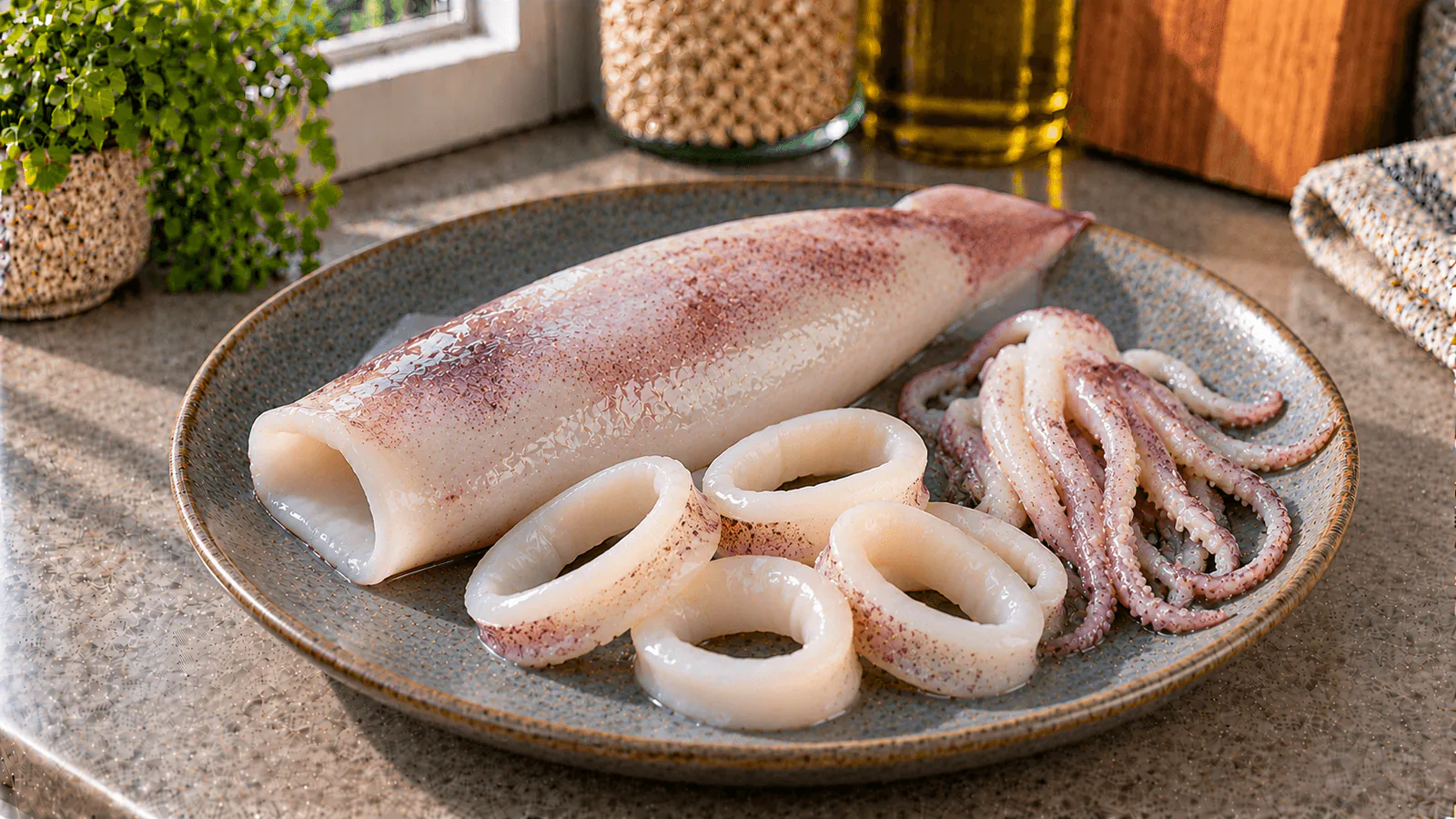
Squid can be a quick, protein-rich ingredient or the centrepiece of a restaurant plate of calamari rings. Those dishes do not have the same energy content. In the USDA FoodData Central references, raw squid has 92 calories per 100 g, while an entry for cooked, fried squid has 175 calories per 100 g. The latter is a particular prepared-food reference, not a promise that every grilled ring, breaded appetizer or deep-fried dish has precisely that value. For a realistic estimate, start with the state you weighed, account for coatings and oil, and include the accompanying sauce.
How many calories are in squid per 100 g?
The USDA SR Legacy database describes mixed-species squid in two relevant states: raw (FDC 174223) and cooked, fried (FDC 171982). The following figures refer to 100 g of the edible squid or prepared food as described in each record. They are not values for a whole, uncleaned animal, a frozen package with ice glaze or a basket of squid and fries.
| Squid reference per 100 g | Calories | Protein | Fat | Carbohydrate | Sodium |
|---|---|---|---|---|---|
| Raw, mixed species | 92 kcal | 15.58 g | 1.38 g | 3.08 g | 44 mg |
| Cooked, fried, mixed species | 175 kcal | 17.94 g | 7.48 g | 7.79 g | 306 mg |
Sources: USDA FoodData Central raw squid, FDC 174223 and USDA FoodData Central fried squid, FDC 171982.
The raw entry provides approximately 15.6 g protein for 92 kcal, with modest fat. Squid also contains naturally occurring cholesterol, which is not the same as saturated fat. Whether a squid dish fits an individual's nutrition goals depends on their full diet, portions and method of cooking. Its reputation as either a universally “light” seafood or a universally “high-calorie” bar snack oversimplifies how it is served.
The fried reference contains more fat and carbohydrate than the raw reference. That difference reflects the state and preparation represented by the record. We cannot tell from these two unrelated database records exactly how much of the difference comes from moisture loss, absorbed oil or other preparation details. Nor does the difference mean that frying creates energy from nothing: calories in added cooking fat or coating must originate in the ingredients.
Squid calories by serving size
These values scale the two USDA reference numbers to different edible weights. Each column describes a separate weighed state. A 150 g raw portion that becomes smaller during cooking is not automatically identical to 150 g of finished fried squid.
| Edible squid weight | Raw (92 kcal/100 g) | Fried reference (175 kcal/100 g) |
|---|---|---|
| 25 g | 23 kcal | 44 kcal |
| 50 g | 46 kcal | 88 kcal |
| 75 g | 69 kcal | 131 kcal |
| 85 g | 78 kcal | 149 kcal |
| 100 g | 92 kcal | 175 kcal |
| 125 g | 115 kcal | 219 kcal |
| 150 g | 138 kcal | 263 kcal |
| 200 g | 184 kcal | 350 kcal |
For example, 150 g of raw cleaned squid is approximately 138 kcal before other ingredients. 150 g of already fried squid is approximately 263 kcal when the USDA fried reference is applicable. A smaller 85 g fried portion is approximately 149 kcal. All values are rounded to the nearest whole kilocalorie. A restaurant’s “one portion” may mean a small starter or an entire shared platter; that description alone is not a weight. See our explanation of portion size versus serving size when comparing food labels with what you actually eat.
The weighing point matters. At home, raw cleaned tubes and tentacles are easiest to record before cooking; the full recipe can then be divided into portions. At a restaurant, weighing the cooked edible pieces is often more plausible, but the particular restaurant preparation may differ from the reference. Rely on the package label where available, particularly when it states calories per 100 g of prepared product rather than uncooked contents.
Raw weight, cooked weight and water loss
Squid releases moisture when heated. Even when no oil is added, the finished weight can differ from the starting weight. That change concentrates calories and protein per 100 g of finished food: it does not necessarily change the total energy of the original ingredient by the same proportion. There is no universally reliable “raw-to-cooked squid conversion factor,” since the yield depends on size, temperature, duration and whether liquid remains in the pan.
Suppose you begin with 150 g of edible raw squid, about 138 kcal by the selected USDA raw reference. After cooking, weigh the finished squid or record it as part of the complete recipe. Do not enter 138 kcal for the raw squid and then add 263 kcal for what you assume is the same portion after cooking; that would count the seafood twice. Conversely, if someone serves you 150 g of ready-fried squid, the fried reference gives about 263 kcal before extra sauces. These are different scenarios, not the before-and-after measurement of one batch.
A frozen raw pack may include surface ice. Thaw and drain it according to instructions, and compare the weight actually used with the label’s definition of net weight. If the package lists both frozen and drained weights, the edible ingredient weight matters more for portion calculation. Discarded entrails, cartilage, beak and other inedible parts should not be treated as eaten squid. Avoid generic “one squid” estimates because animals vary enormously in size and preparation.
Grilled squid, pan-fried squid and calamari rings
Grilled or steamed squid without additional fat is not the same as the database's cooked-fried entry. It may start from the low-fat raw ingredient, then lose water during heating. If you know the raw quantity, an ingredient-based estimate is usually clearer than assigning the fried figure to everything cooked. Brush-on oil, garlic butter and marinades can change the final total.
For a simple home calculation, begin with 150 g raw cleaned squid (138 kcal) and use 10 g olive oil (about 90 kcal), assuming all the oil is eaten. The squid plus oil then contributes about 228 kcal, excluding vegetables, bread, sauce and any other ingredients. If some oil remains in the pan, this is an upper estimate for the oil portion. The recipe may weigh less than 160 g after cooking because water has evaporated; that does not make the added oil disappear.
A plate of breaded calamari rings may include flour, starch, egg, crumbs and absorbed frying oil. Some products are oven-ready but were pre-fried before freezing. For these items, read the label for “as sold” versus “as prepared” nutritional figures and whether any extra oil is specified. Do not automatically use 175 kcal/100 g for every restaurant calamari dish; the actual number can be higher or lower according to batter, oil uptake and final weight.
Another distinction is a fried reference value versus extra oil on the plate. The USDA 175 kcal/100 g fried figure already reflects the listed preparation. If you use that number for fried rings, do not add a guessed allowance for the same frying oil a second time. Count only additional oil, dressing or sauce that is not already incorporated in the food estimate. The ingredient approach and the prepared-product approach are alternatives, not two layers that should always be stacked.
What changes the calories in a restaurant squid meal?
The squid might be only one part of a larger serving. A bowl of calamari with aioli, a plate of grilled squid with potatoes, or squid in a creamy pasta sauce can exceed the calories of plain squid because of the accompaniments. More useful than arguing over a few calories per ring is identifying the substantial additions.
Consider a home plate with 150 g raw squid (138 kcal), 10 g oil (90 kcal), 200 g boiled potatoes and vegetables. The known squid-and-oil subtotal is 228 kcal; potatoes and vegetables must be counted using their own cooked weights and ingredients. If someone instead reports a fried calamari appetizer of 150 g finished rings (about 263 kcal under the USDA fried reference) plus a dip, that dip is a separate food. A creamy dip can materially change the total even if the seafood weight is unchanged.
For comparison, shrimp calories also depend on whether the seafood is plain or served in a rich sauce. The same idea applies to canned tuna and its packing liquid: the word naming the seafood does not fully specify the prepared meal. These comparisons help clarify method, not establish which species is universally healthier.
Protein, carbohydrate and sodium in squid
Raw squid in the USDA reference contains 15.58 g protein, 1.38 g fat and 3.08 g carbohydrate per 100 g. Those values are useful for weighing an unseasoned recipe. The fried reference lists 17.94 g protein, 7.48 g fat and 7.79 g carbohydrate per 100 g. These are database descriptions, not precise predictions for every recipe. The prepared product has less protein per calorie than the raw reference because more of its energy is associated with the greater fat and carbohydrate content.
Sodium is also preparation-dependent: the USDA reference is 44 mg/100 g raw and 306 mg/100 g fried. Salted marinades, sauces and commercial seasonings can add more. For the European-style salt equivalent, 306 mg sodium is approximately 0.77 g salt per 100 g, using sodium in milligrams multiplied by 0.0025. That is a conversion, not a claim about the precise salt added by a cook. Our sodium-to-salt conversion guide explains how to read the two label conventions.
Squid may contribute minerals and other nutrients to a varied diet. Still, a meal of only squid does not provide every nutrient or the plant-derived fibre that vegetables, pulses and whole grains can supply. Pairing it with vegetables or a whole-grain side may improve the meal's overall balance, depending on the quantities and your requirements. Calorie density alone is not a complete measure of nutritional quality.
Cleaning, storage and safe preparation
Choose squid handled under appropriate refrigeration or freezing and follow any package instructions. Thaw frozen seafood in a refrigerator rather than leaving it on the counter. Prevent raw seafood juices from contacting foods that will be eaten without further cooking; clean knives, boards and hands after handling it. A lemon marinade does not substitute for safe cooking or assured parasite-control processing.
The CDC's information on anisakiasis identifies raw or undercooked squid as a possible source of parasitic infection and recommends adequate cooking. It cites 145°F (approximately 63°C) as a safe cooking temperature for seafood generally. Food-service preparations intended for raw consumption need appropriate professional controls; home diners should not assume freezing for an unspecified duration makes a raw squid dish safe. People with seafood allergies should check species, shared fryers and cross-contact risks when ordering.
For leftovers and storage, follow the FDA's seafood handling advice. Freshness and food safety matter independently of the calorie count. If a product has an unusual sour or ammonia-like smell, do not use nutrition estimates as a reason to eat it anyway.
Which calorie number should you log?
Use 92 kcal per 100 g when you measured raw, edible, unseasoned squid and can record other ingredients separately. Use 175 kcal per 100 g only when the selected USDA cooked-fried preparation is a reasonable stand-in for the finished food. A branded frozen calamari pack, restaurant fried rings, canned squid in oil or cooked squid salad may require different values shown on the label or in a recipe breakdown. Keep the weight, state and additions consistent.
For transparency, the two figures above are from USDA raw squid, FDC 174223 and USDA fried squid, FDC 171982. If the precise species or method is uncertain, record a reasonable estimate and note the uncertainty rather than presenting a restaurant dish as an exact laboratory measurement.