
How many calories are in poppy seeds?
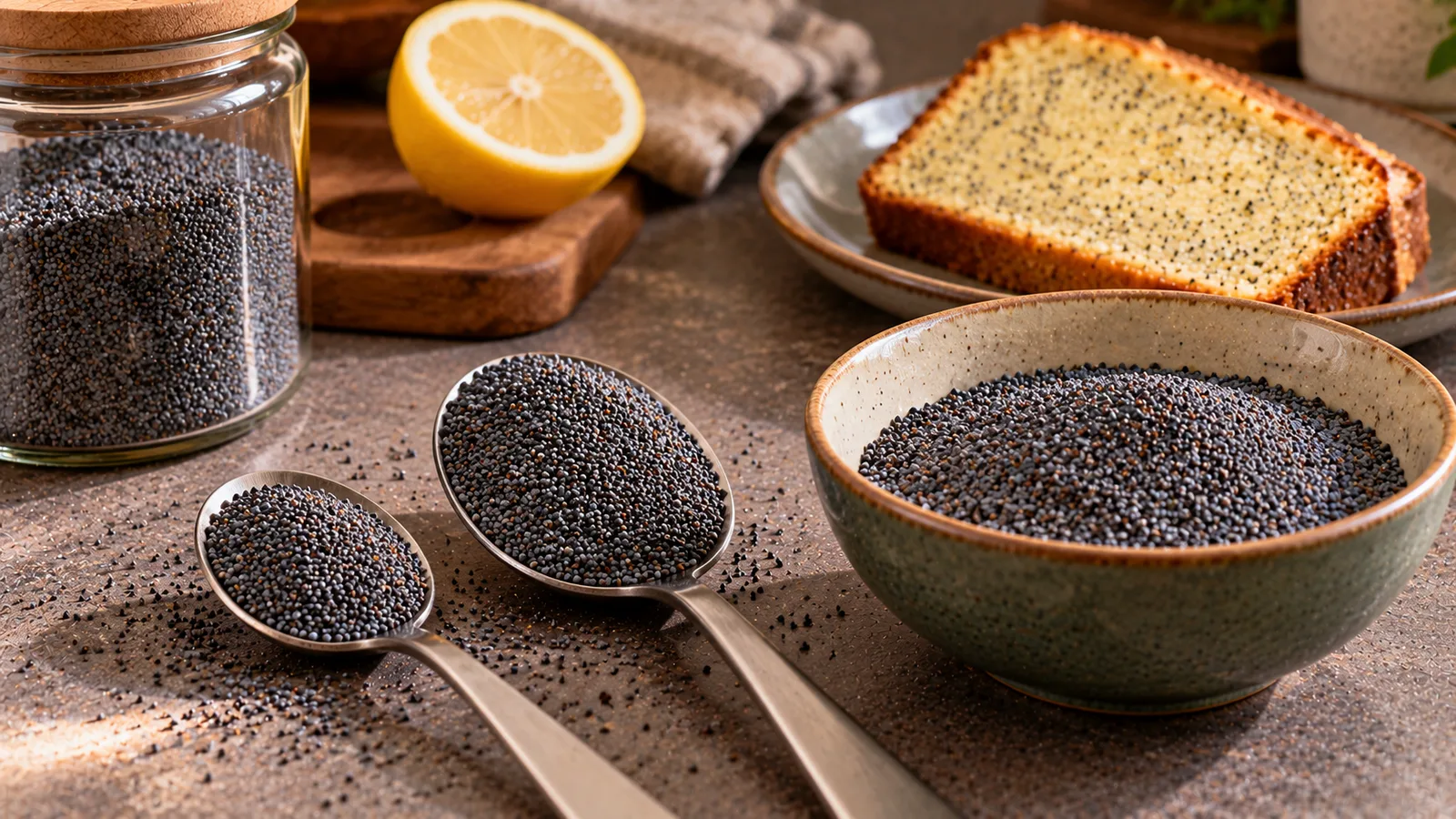
Food-grade poppy seeds are small, but they are not a calorie-free decoration. The USDA SR Legacy entry Spices, poppy seed (FoodData Central ID 171330) reports 525 kcal per 100 g of plain seeds. An ordinary baking sprinkle is much lighter. For the reference household measures, one level teaspoon weighs 2.8 g and supplies about 15 kcal, while one level tablespoon weighs 8.8 g and supplies about 46 kcal. These figures describe the seeds, not a glazed bun, a poppy-seed filling or sweetened poppy paste.
The relevant decision is how much of the ingredient you actually add. A spoon is convenient for a quick estimate, but it cannot guarantee a precise weight: rounded spoons, grinding, moisture and packing all change how many grams fit. If you weigh ingredients for a recipe, the scale should take precedence over a household measure. The underlying figures can be checked in USDA FoodData Central and its SR Legacy portion record.
Teaspoon, tablespoon and gram-based portions
| Serving | Weight | Energy |
|---|---|---|
| 100 g | 100 g | 525 kcal |
| Level teaspoon | 2.8 g | 14.7 kcal |
| Level tablespoon | 8.8 g | 46.2 kcal |
| 10 g | 10 g | 52.5 kcal |
| 20 g | 20 g | 105 kcal |
| Seeds in one of 9 muffins | 4 g | 21 kcal |
The 4 g per muffin row is a worked example, not another standard spoon. Each result comes from multiplying seed weight by 525/100 = 5.25 kcal per gram. The table rounds for practical logging; no spoon holds exactly the same mass every time. In particular, a tablespoon is not simply three times the USDA teaspoon by weight: 8.8 g versus 2.8 g are separate recorded household measures.
Protein, fat, carbohydrate and fibre per 100 g
| Serving | 100 g |
|---|---|
| Protein | 17.99 g |
| Fat | 41.56 g |
| Total carbohydrate | 28.13 g |
| Fibre | 19.5 g |
These are USDA reference values for plain poppy seeds. At 100 g, the record contains 17.99 g protein, 41.56 g fat, 28.13 g total carbohydrate and 19.5 g dietary fibre. Fat is a major contributor to energy density. A small topping may add texture and flavour without making a meaningful contribution to daily protein intake. Minerals such as calcium are present, but the nutrient content of 100 g should not be mistaken for what a teaspoon supplies.
The carbohydrate definition matters across borders. The 28.13 g figure follows the US convention of total carbohydrate, which includes fibre. On European labels, carbohydrate is generally shown separately from fibre. Simply comparing those two label headings as though they are identical can make one package appear inconsistent with another. Use the appropriate food record and serving quantity when logging macros.
How to calculate calories in a baking recipe
Suppose a muffin recipe uses 36 g of plain poppy seeds and produces 9 muffins of equal size. The seeds contribute 36 × 5.25 = 189 kcal to the entire batch. If divided evenly, each muffin receives 4 g of seeds and approximately 21 kcal from the poppy seeds alone. The flour, sugar, oil, eggs, milk and any topping need to be calculated separately; the muffin does not contain only 21 kcal.
For unequal portions, count the total recipe first and divide by measured final portions or use the weighed amount of filling in each pastry. If some seeds fall off a baked roll, the amount actually eaten may be lower than the amount originally added. Avoid inventing an exact loss percentage: weigh what remains if a precise result matters.
Whole seeds, ground seeds and sweet poppy fillings
Grinding does not, by itself, create calories. If you grind 20 g of plain seeds and use all of them, the reference estimate remains 105 kcal. A commercial poppy filling is different: added sugar, honey, fat or liquid can change calories per 100 g and serving density. Use the actual package label for that prepared mixture, rather than applying the plain-seed value to an entire filling. A recipe that contains poppy seeds and oil should count both ingredients separately.
A poppy-seed topping can also be distributed across several loaves or rolls. Record the total grams added and the number or weight of finished portions. For someone tracking meals in an app, grams of plain seeds are a more reproducible entry than the vague description “poppy topping”.
What can affect the estimate?
Reference nutrition values are averages rather than a laboratory test of your bag. Variety, processing, product moisture and labeling conventions may shift the result. A heavy, rounded tablespoon can exceed the 8.8 g reference, so its energy will exceed the 46 kcal table figure. When a bread recipe lists poppy seeds by volume, measuring that brand's spoonful once on a scale makes later batches easier to track.
A second issue is edible weight. Poppy seeds do not have a shell removed at the table in the way some nuts do, but spilled seeds and leftovers still should not be counted as eaten. Do not adjust for oven water loss by multiplying seed calories: evaporating water changes food weight and calorie concentration, not the total calories of the seeds you used.
Food safety: use culinary seeds, not seed tea
Poppy seeds are a normal food ingredient, but food safety is a separate question from calories. The FDA explains that opiate alkaloids from other parts of the poppy plant can contaminate seed surfaces during harvesting. It does not generally advise avoiding ordinary foods containing poppy seeds, but it specifically warns not to prepare poppy-seed “tea”, a practice linked to severe harm. The EFSA assessment notes that unusually high exposure may occur with large portions or unprocessed contaminated seeds.
Buy poppy seeds intended for food from reputable suppliers and follow any product instructions. Washing or baking is not a home test that certifies a batch free of alkaloids. EU contaminant limits for food products are set within the EU regulatory framework; these limits do not turn a calorie comparison into a safety guarantee. Store dry seeds sealed, away from heat and moisture, and discard products with rancid odour or visible contamination.
Quick checks before adding seeds to a food diary
Choose a food entry for plain poppy seeds, not for poppy-seed oil, cake or sweetened filling. Weigh the amount added to a batch. Apply 5.25 kcal per gram only as an estimate based on this specific USDA entry, and divide the total among the servings that contain the seeds. Keep US total carbohydrates separate from EU label carbohydrates. If you use a branded, prepared filling, the branded nutritional label takes priority.
The purpose here is the calorie and portion profile of poppy seeds themselves, not a claim that they are nutritionally equivalent to sesame or hemp seeds.