
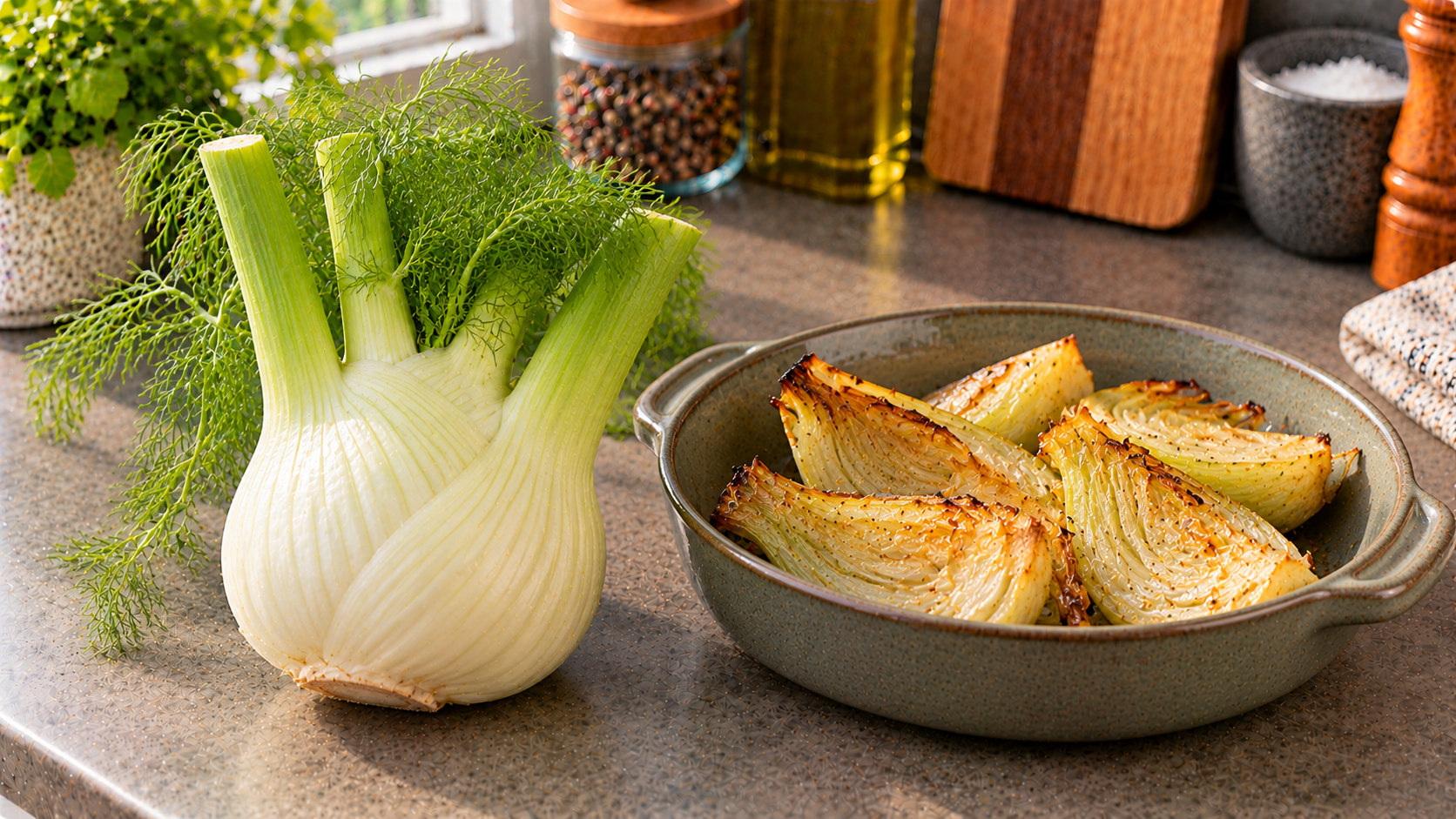
A raw fennel bulb contains approximately 31 calories per 100 g of edible portion, according to USDA FoodData Central. Fennel is a crisp, aromatic vegetable with a mild anise-like flavour. It can be eaten raw in salads or cooked in soups, braises and roasted vegetable dishes.
The important detail for calorie tracking is which part of the plant you actually consume. A supermarket fennel bulb may include tough stalks, outer layers and feathery fronds. The weight you buy is not necessarily the edible weight in your meal. Cooking oil, dressings and other ingredients can also change the calorie total more than the fennel itself.
Fennel nutrition per 100 g
These reference values describe raw fennel bulb, not fennel seeds, tea or an entire prepared dish. They come from the USDA SR Legacy entry for fennel bulb, raw (FDC 169385).
| Nutrient per 100 g raw edible bulb | Amount |
|---|---|
| Energy | 31 kcal |
| Protein | 1.24 g |
| Carbohydrates, by difference | 7.30 g |
| Dietary fibre | 3.10 g |
| Total sugars | 3.93 g |
| Fat | 0.20 g |
| Water | 90.21 g |
| Potassium | 414 mg |
Source: USDA FoodData Central — fennel, bulb, raw. The carbohydrate figure is based on the USDA database convention, which includes fibre; European labels often present available carbohydrates separately from fibre. Avoid directly comparing values from different labelling systems without checking the definitions.
Fennel is not a concentrated protein source. Its nutritional role in a meal is mainly as a vegetable that adds volume, texture, fibre and micronutrients for relatively little energy.
Fennel calories by serving size
The table uses 31 kcal and 3.1 g fibre per 100 g of raw edible bulb. Each row is calculated from that same reference, not independently measured.
| Edible raw fennel | Calories | Fibre |
|---|---|---|
| 30 g | 9 kcal | 0.9 g |
| 50 g | 16 kcal | 1.6 g |
| 87 g | 27 kcal | 2.7 g |
| 100 g | 31 kcal | 3.1 g |
| 150 g | 47 kcal | 4.7 g |
| 200 g | 62 kcal | 6.2 g |
| 250 g | 78 kcal | 7.8 g |
Calories = edible raw fennel weight in grams × 31 ÷ 100. For example, 180 g of raw fennel contributes approximately 56 kcal before adding other foods.
How many calories are in one fennel bulb or one cup?
There is no reliable universal number for one bulb: small and large fennel bulbs vary considerably. As an illustration, 200 g of trimmed edible raw bulb contains about 62 kcal, while 300 g contains about 93 kcal. These are weight-based examples, not standardized bulb sizes.
USDA's common-measure data uses approximately 87 g for one cup of sliced raw fennel, corresponding to about 27 kcal. The weight of a loosely filled or densely packed cup can differ. Measuring the edible amount on a kitchen scale is more dependable than estimating by volume.
Discarded stalk sections and damaged outer layers should not count towards a consumed portion. Tender stalks and fronds can be eaten, but they should not automatically be assigned the identical nutritional profile of the bulb when precision is important.
Raw, boiled, steamed and roasted fennel
Raw fennel is crunchy and works well with citrus, apples or leafy greens. Steaming and boiling soften its texture. Roasting brings a sweeter flavour and may reduce the vegetable's water weight.
If you weigh fennel after roasting or boiling, refer to the guide to raw and cooked vegetable weights before switching nutrition entries.
The 31-kcal figure is for raw fennel. It should not be described as a laboratory measurement of 100 g of boiled or roasted fennel. When fennel loses water, the amount of energy per 100 g of finished food can change even without adding energy to the original vegetables.
To track a homemade cooked recipe accurately, weigh the raw ingredients, calculate their energy and then divide the finished recipe by the portions actually eaten. If using a cooked-food database entry, ensure both the food state and the weighed portion match that entry.
For instance, 200 g raw fennel contributes roughly 62 kcal. If the recipe also contains 10 g olive oil that is entirely consumed, the oil adds approximately 90 kcal; the combined ingredients contribute around 152 kcal. This is an example calculation, not the average nutrition value of roasted fennel.
Salads, dressings, gratins and packaged fennel
A raw fennel salad dressed with lemon juice may remain relatively light. Olive oil, nuts, cheese and creamy dressings can contribute substantial extra energy. A fennel gratin with cream and cheese should be calculated as a full recipe rather than entered as plain fennel.
Packaged vegetable dishes can also differ because of sauces, added fats and serving sizes. For these products, the manufacturer's nutrition label is more relevant than a generic raw-vegetable figure. Check whether label values apply to the product as sold or after preparation.
If the recipe makes several portions, calculate all ingredients first. Divide by the actual share eaten, especially if the sauce or oil is not distributed evenly. A 200-g serving of finished casserole is not necessarily equivalent to 200 g of raw fennel.
Bulb, fennel seeds and fennel tea are different foods
The vegetable bulb is often confused with fennel seeds used as a spice. Seeds have a much lower water content and a considerably different energy density. Do not substitute a fennel-seed database entry for fresh fennel bulb.
Fennel tea is a different product again. An unsweetened infusion does not contain the same edible plant mass as a serving of fresh bulb; added honey or sugar must be considered separately. The same distinction applies to extracts and concentrates.
These preparations may share a familiar aroma, but their nutritional values cannot be assumed interchangeable.
Fibre, potassium and digestion
The raw bulb's USDA reference contains 3.1 g fibre and 414 mg potassium per 100 g. A 150-g raw portion therefore provides about 4.7 g fibre and 621 mg potassium by simple scaling. These are estimates based on a reference sample; actual produce varies.
Dietary fibre contributes to normal bowel function and may support fullness. Increasing fibre intake suddenly can cause gas or discomfort in some people, so serving sizes can be adjusted to individual tolerance.
Potassium contributes to normal muscle and nerve function. People following medically prescribed potassium restrictions should use individualized advice rather than treating all vegetables as interchangeable.
Is fennel good for weight management?
Plain fennel has a high water content and relatively low energy density. It may be useful in salads or cooked meals where vegetables replace part of a more calorie-dense ingredient, but fennel does not cause weight loss by itself.
For a balanced main meal, combine fennel with an appropriate protein source and other foods according to energy and nutritional needs. For example, fennel with beans and tomatoes is different nutritionally from fennel with fish, potatoes and olive oil; both can be sensible meals when portions are appropriate.
Track the amount actually eaten, and count added oil or sauce separately. Those two steps matter more than whether a bulb happens to be labelled small or medium.
Source and calculation method
The numbers above are for the edible raw bulb. Portions and recipe examples are calculated, rounded estimates. Freshness, trimming, preparation and added ingredients affect real meals.