
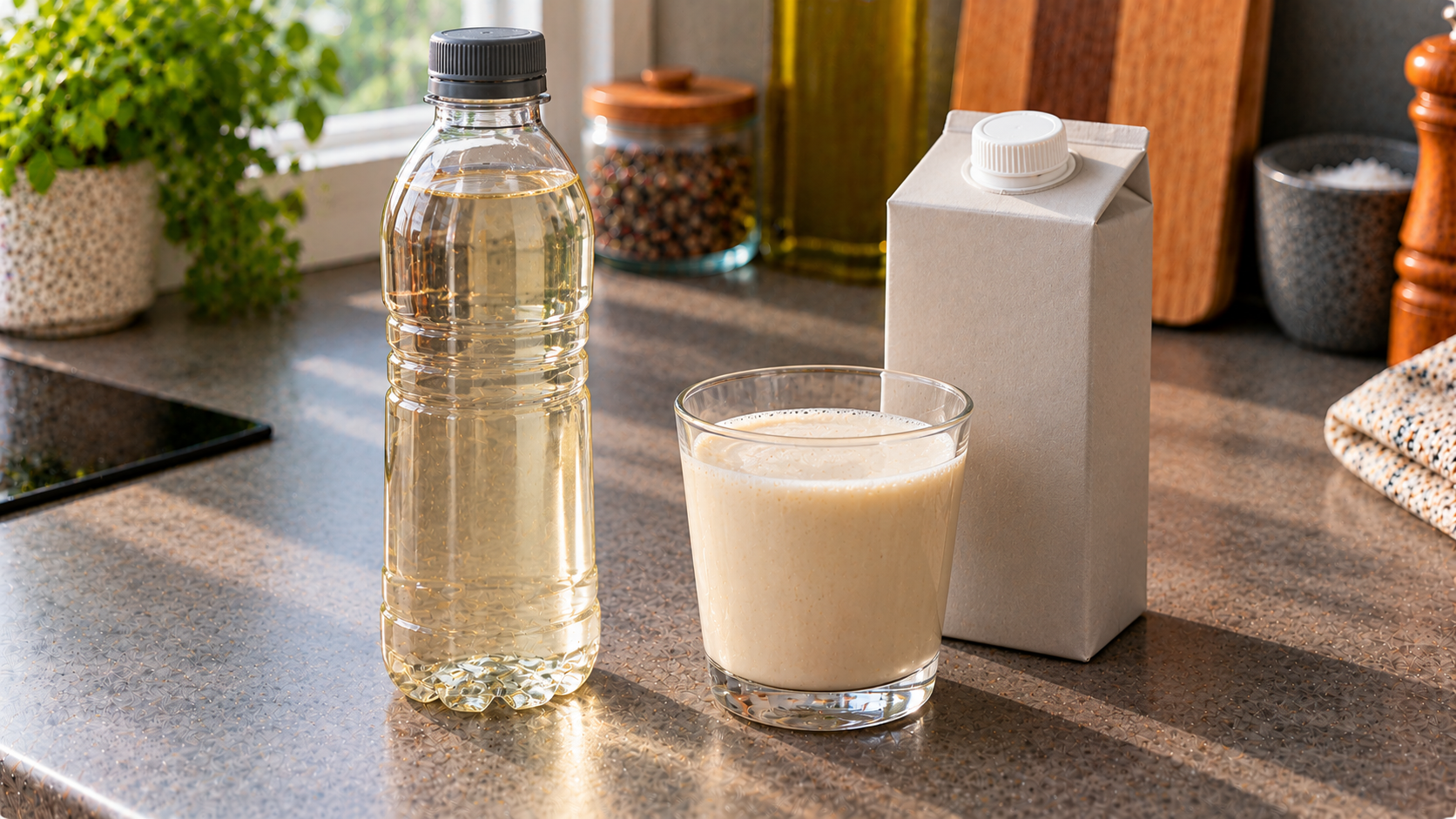
Protein water and protein shakes can both help you reach a daily protein target, but they solve different problems. Protein water is typically a clear, fruit-flavoured drink using a soluble protein such as clear whey isolate. A shake may be milk-based, plant-based or mixed from powder, and often has a creamier texture. Neither format is automatically higher quality, cheaper or better for muscle recovery.
When comparing products, ignore the size of the bottle at first. Look at protein per entire serving, total calories, ingredients and the price per gram of protein. Then consider taste, digestion and whether you want a refreshing drink or something closer to a snack.
Protein water vs protein shake: the practical differences
| Feature | Protein water | Protein shake |
|---|---|---|
| Typical texture | Clear, light and juice-like | Creamy or milk-like |
| Common protein sources | Clear whey isolate; sometimes other soluble proteins | Whey, casein, milk protein, soy, pea or blends |
| Milk ingredients | Often present even when the drink looks clear | Present in dairy shakes; optional in plant-based shakes |
| Calories | Can be low, but check the label | Vary widely with milk, sugar and fat |
| Fullness | Often feels like a flavoured drink | Thicker options may feel more filling |
| Best use | Convenient refreshment with protein | Snack, breakfast addition or post-exercise drink |
These are format differences, not guaranteed nutrient specifications. A ready-to-drink shake may contain only protein and water, while some bottled protein waters contain sweeteners, acids and flavourings. Ingredient lists matter more than marketing names.
How much protein and how many calories?
Consider three illustrative labels, not actual market averages:
| Example product | Serving | Protein | Calories | Protein per 100 kcal |
|---|---|---|---|---|
| A: clear protein water | 500 ml | 20 g | 90 kcal | 22.2 g |
| B: ready-to-drink shake | 330 ml | 25 g | 180 kcal | 13.9 g |
| C: powder mixed with water | 30 g powder | 23 g | 115 kcal | 20.0 g |
Calculate protein per 100 kcal as protein grams ÷ calories × 100. This helps when energy intake matters. Example A gives more protein relative to calories, whereas B delivers more protein per bottle. However, none of these figures should be attributed to a real product without checking its label.
Check if protein is stated per 100 ml, per bottle or per preparation. A 500 ml drink listing 4 g protein per 100 ml contains 20 g in the whole bottle. A powder label may report figures for dry powder or a prepared serving with milk. Those are different comparisons.
Is the protein itself different?
Clear protein water is frequently made with whey protein isolate processed to dissolve in a transparent acidic drink. Whey is a complete protein containing all essential amino acids. Conventional shakes can use the same whey isolate, whey concentrate, milk protein, casein or plant proteins. A creamy appearance does not imply better or worse protein.
For muscle-focused nutrition, protein dose and amino-acid profile are relevant, but exercise, total daily protein intake and overall diet matter too. The International Society of Sports Nutrition position stand discusses approximately 1.4–2.0 g protein per kilogram of body weight per day for many regularly exercising adults, and commonly discusses protein doses around 20–40 g. These are context-specific sports-nutrition figures, not a prescription for everyone. See the ISSN position stand.
A product with 20 g whey protein may be entirely practical. More expensive packaging does not automatically produce greater results. If comparing vegan products, check the stated protein source and full amino-acid quality rather than assuming all blends match dairy protein identically.
Will a shake keep you full for longer?
Liquid protein can contribute to satiety, but an individual drink's effect depends on portion size, energy content, viscosity and the rest of the meal. A thicker shake made with milk, yoghurt or oats may be more satisfying than a flavoured clear drink, partly because it provides additional nutrients and calories.
That is not a universal rule: a sweetened milkshake can also contain substantially more energy than protein water. Protein water works well when the goal is a light drink alongside a normal meal. A nutritious smoothie or shake may work better when replacing a missed snack, but protein alone does not make a drink a nutritionally complete meal.
Sugar, sweeteners, lactose and allergens
A clear appearance does not mean a drink is sugar-free, lactose-free or dairy-free. Check the ingredients and allergen declaration. Clear whey isolate is derived from milk and is unsuitable for someone with a milk-protein allergy, even if it resembles fruit juice. Low lactose and no lactose are not interchangeable claims.
Protein waters often have acidic flavourings and sweeteners. Shakes may contain sugar, milk sugars, sweeteners, emulsifiers or added fibre. Neither category is inherently unhealthy, but ingredients can affect taste, dental exposure to acidic drinks and digestive comfort.
Compare the actual sugar grams per bottle rather than a front-of-pack claim. A product described as 'low sugar' may still differ in calories from another because of fat, protein or serving size.
Protein water vs shake: which is better value?
The fairest first calculation is price per 20 g protein, not price per bottle or per litre.
For comparing drinks sold in different bottle sizes, use the same basis, as shown in the cost-per-gram-of-protein guide.
Cost per 20 g protein = product price ÷ grams protein per serving × 20.
| Illustrative purchase | Protein | Example price | Cost per 20 g protein |
|---|---|---|---|
| Protein water, one bottle | 20 g | €2.49 | €2.49 |
| Ready-to-drink shake, one bottle | 25 g | €2.29 | €1.83 |
| Powder, one 30 g serving | 23 g | €0.90 | €0.78 |
These are hypothetical price scenarios, not checked retail prices. Substitute prices from your own supermarket or online order. Powders may appear economical but can require milk, a shaker and preparation. Bottles cost more partly because packaging and convenience are included.
For a second perspective, compare price per 100 kcal if you intend the drink to replace a snack. A low-calorie protein water and a more energy-dense meal shake do not satisfy precisely the same need.
When each product makes sense
Choose protein water if you prefer a light, refreshing flavour, need portable protein, dislike creamy textures or want a relatively low-calorie option. Check acidity and tolerability, especially if sipping frequently.
Choose a conventional shake if you enjoy a creamy drink, want flexible preparation with milk or plant drinks, or deliberately need a more substantial snack. A shake containing oats, fruit or nut butter becomes a different recipe and must be tracked accordingly.
Choose powder mixed at home if you prioritise cost per gram and can handle preparation and storage. You do not need either product when ordinary foods already meet your protein needs. Yoghurt, beans, eggs, tofu, fish and other foods also provide useful nutrients beyond protein.
Reading EU protein claims correctly
Under European Commission nutrition-claim rules, 'source of protein' requires at least 12% of the food's energy to come from protein; 'high protein' requires at least 20%. Neither phrase guarantees a particular number of protein grams per bottle. See the European Commission nutrition claims guidance.
The words “high protein” have defined conditions in EU labelling; the guide to high-protein food claims explains what the label can and cannot promise.
A drink could legitimately be labelled high in protein while delivering fewer total grams than a larger competing drink. Always calculate the whole serving and distinguish regulated label claims from informal advertising language.
A five-point buying check
Before buying, read the complete serving amount, grams of protein, total calories, sugar and ingredient/allergen list. Divide the actual price by protein grams to compare value. Finally, decide whether you need hydration with added protein or a filling snack. The better product is the one that suits that specific job, not the one with the more impressive label.
Sources and methodology
- ISSN position stand on protein and exercise — sports-nutrition context and protein intake.
- European Commission: authorised nutrition claims — EU definitions of source of protein and high protein.
Example labels and prices are explicitly illustrative calculations, not surveys of available products. Always rely on the actual purchased product's label for dietary tracking.