
A healthy breakfast does not have to involve a frying pan, oven or even a microwave.
With a few useful ingredients in the refrigerator and pantry, you can build breakfasts around protein, fruit, whole grains, fiber and healthy fats in just a few minutes.
The 15 ideas below require no cooking at the time you eat them. Some use ingredients such as oats, bread or canned foods that are already ready to eat.
Portions can be adjusted to your appetite and energy needs.
1. Greek yogurt, berries and oats
Ingredients
- 200 g plain Greek yogurt
- 100 g berries
- 30 g rolled oats
- 10 g chopped nuts
Method
Add the yogurt to a bowl and top with berries, oats and nuts.
If you prefer softer oats, mix them into the yogurt several minutes before eating.
Why it works
The yogurt provides protein, while oats, berries and nuts add carbohydrates, fiber and fats.
For a larger breakfast, increase the oats or add a banana.
2. Skyr with banana and peanut butter
Ingredients
- 200 g plain skyr
- 1 banana
- 15 g peanut butter
- cinnamon, optional
Method
Slice the banana over the skyr and add the peanut butter.
Sprinkle with cinnamon if desired.
Practical adjustment
Peanut butter is energy-dense, so measuring it can be useful if you track calories.
For a higher-energy breakfast, add oats or whole-grain bread.
3. Overnight oats with yogurt and apple
This breakfast is assembled the night before but requires no cooking.
Ingredients
- 50 g rolled oats
- 150 g plain yogurt
- 100 ml milk or suitable alternative
- 1 small apple
- cinnamon
Method
Mix the oats, yogurt and milk in a container.
Refrigerate overnight.
Add chopped apple and cinnamon before eating, or mix the apple in the night before if you prefer a softer texture.
4. Cottage cheese with berries and walnuts
Ingredients
- 200 g cottage cheese
- 100 g berries
- 15 g walnuts
- optional small amount of honey
Method
Combine everything in a bowl.
Why it works
This is a simple protein-rich breakfast that requires almost no preparation.
Fruit can be changed according to season and availability.
5. Whole-grain bread with cottage cheese and tomato
Ingredients
- 2 slices whole-grain bread
- 100 g cottage cheese
- 1 tomato
- black pepper
- herbs, optional
Method
Spread cottage cheese over the bread.
Top with sliced tomato, pepper and herbs.
This savory option is useful if you do not want a sweet breakfast.
6. Hummus, cucumber and tomato toast
Ingredients
- 2 slices whole-grain bread
- 50 g hummus
- cucumber
- tomato
- pepper or herbs
Method
Spread hummus on the bread and add sliced cucumber and tomato.
Optional addition
If you want more protein, pair it with plain yogurt, skyr or another protein-rich food that fits your diet.
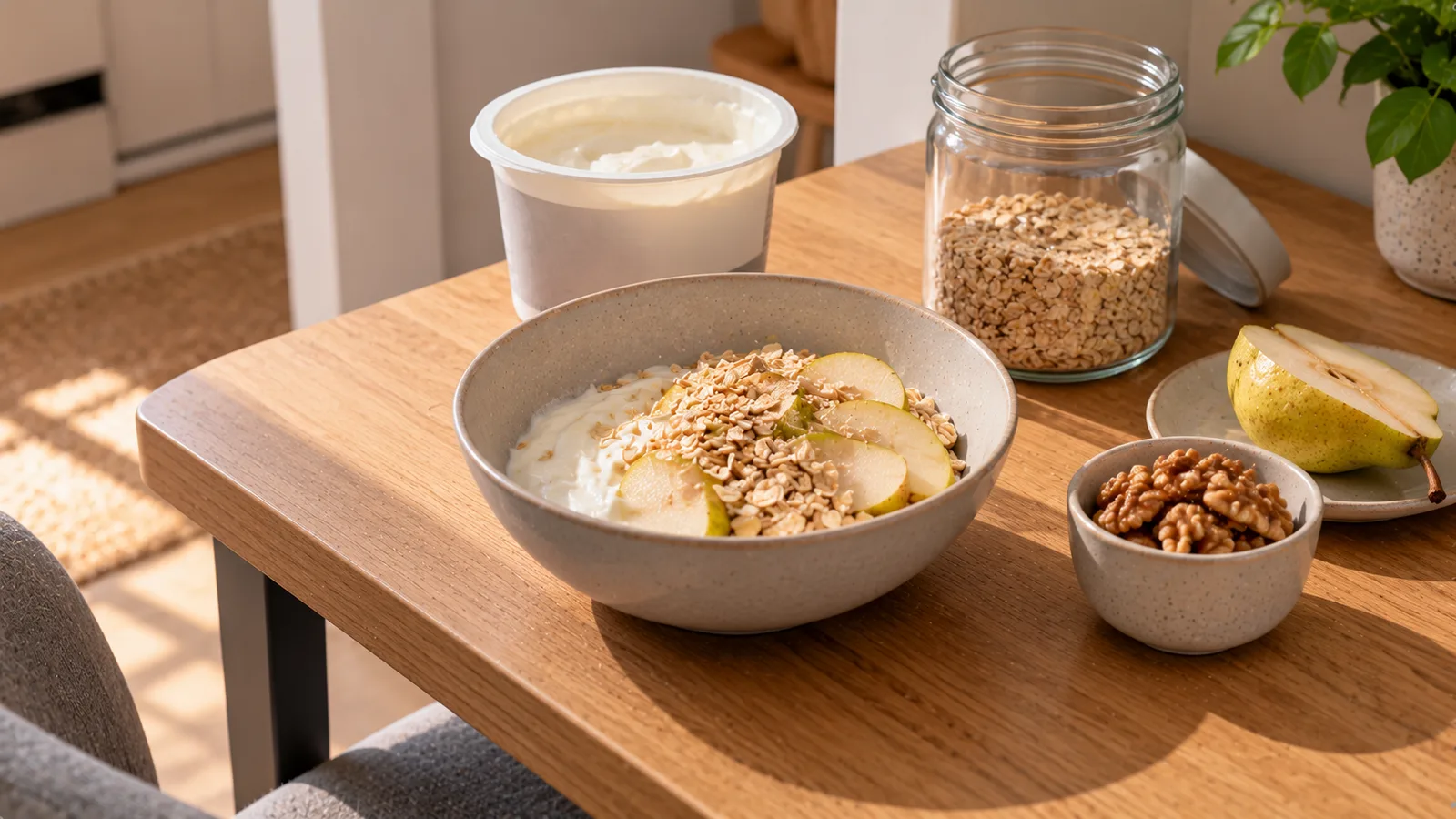
7. Yogurt, pear and pumpkin seeds
Ingredients
- 200 g plain yogurt or skyr
- 1 pear
- 15 g pumpkin seeds
- 30 g oats
Method
Chop the pear and combine all ingredients.
The combination gives you a quick breakfast with fruit, grains, seeds and a protein-containing dairy base.
8. Banana oat yogurt cup
Ingredients
- 200 g Greek yogurt
- 1 banana
- 40 g oats
- 10 g chia seeds
Method
Slice or mash the banana.
Mix with yogurt, oats and chia seeds.
Eat immediately for a firmer texture or let it stand in the refrigerator for softer oats.
9. Cottage cheese, apple and cinnamon bowl
Ingredients
- 200 g cottage cheese
- 1 apple
- cinnamon
- 15 g almonds
Method
Dice the apple and combine it with cottage cheese.
Add cinnamon and almonds.
This can also be packed in a container for breakfast at work.
10. Smoked salmon and cucumber bread
Ingredients
- 2 slices whole-grain or rye bread
- 60–80 g smoked salmon
- cucumber
- 30 g plain cream cheese or thick yogurt, optional
- lemon juice or herbs, optional
Method
Spread the optional cream cheese or yogurt over the bread.
Add smoked salmon and cucumber.
Finish with herbs or a little lemon juice if desired.
Note
Smoked salmon can be relatively high in salt, so it does not need to be your everyday breakfast protein.
11. Avocado and cottage cheese toast
Ingredients
- 2 slices whole-grain bread
- 70 g avocado
- 100 g cottage cheese
- tomato or cucumber
- black pepper
Method
Mash or slice the avocado over the bread.
Add cottage cheese and vegetables.
Season with pepper.
Portion note
Avocado contributes useful fats but also adds substantial energy compared with many vegetables, so adjust the amount to the rest of your breakfast.
12. Muesli with yogurt and fruit
Ingredients
- 50 g unsweetened muesli
- 200 g plain yogurt
- 1 portion of fruit
Method
Combine the ingredients and eat immediately.
Shopping tip
Muesli products vary widely.
Check the ingredient list and nutrition label rather than assuming every muesli has the same amount of sugar, nuts or dried fruit.
13. Quick chickpea breakfast bowl
Ingredients
- 120 g canned chickpeas, drained and rinsed
- 100 g cherry tomatoes
- 100 g cucumber
- 40 g feta
- 1 teaspoon olive oil
- lemon juice
- herbs
Method
Combine the chickpeas, tomatoes, cucumber and feta.
Add olive oil, lemon juice and herbs.
No cooking is required.
Why it works
Breakfast does not have to use traditional breakfast foods.
This option combines legumes, vegetables, cheese and a small amount of added fat.
14. Kefir, banana and oat breakfast
Ingredients
- 250 ml plain kefir
- 1 banana
- 40 g oats
- 15 g nuts or seeds
Method
Place the ingredients in a bowl or wide container and eat with a spoon.
Alternatively, if you already use a blender and want a drinkable breakfast, blend them together.
The solid version may be more convenient when you want to eat rather than drink breakfast.
15. No-cook breakfast box
This option works well when you need breakfast away from home.
Ingredients
- 150–200 g skyr, Greek yogurt or cottage cheese
- 1 piece of fruit
- 2 slices whole-grain bread or crispbread
- sliced cucumber or tomatoes
- 15 g nuts
Method
Pack the ingredients separately or in a divided container.
Nothing needs to be cooked in the morning.
This format is also easy to adjust: increase the bread or fruit for more carbohydrate, or choose a larger portion of the protein-rich food when appropriate.
How to build your own no-cook breakfast
You do not need a new recipe every morning.
A simple framework is:
protein source + fruit or vegetables + carbohydrate/fiber source + optional fat source
For example:
| Component | Options |
|---|---|
| Protein | Greek yogurt, skyr, cottage cheese, kefir, hummus |
| Fruit/vegetables | berries, banana, apple, pear, tomato, cucumber |
| Carbohydrate/fiber | oats, whole-grain bread, muesli, crispbread |
| Fat | nuts, seeds, peanut butter, avocado, olive oil |
Pick one item from several columns and adjust the portions to your needs.
How to make breakfast more filling
If a no-cook breakfast leaves you hungry soon afterward, look at its structure before simply making it much larger.
Ask whether it contains:
- a meaningful protein source;
- a fiber-rich food;
- enough total food for your needs;
- some fruit or vegetables;
- an appropriate amount of fat.
For example, a banana alone is quick but may not function like a complete breakfast for many people.
Adding skyr and oats changes the nutritional structure substantially.
No-cook does not mean no preparation
Some breakfasts are easier when you do a small amount of preparation earlier.
You can:
- wash fruit;
- portion nuts;
- prepare overnight oats;
- keep bread sliced in the freezer;
- portion yogurt;
- wash and cut vegetables;
- keep suitable canned foods available.
The goal is to remove cooking from the morning rather than eliminate every form of preparation.
What to keep at home for fast breakfasts
A useful no-cook breakfast inventory might include:
- plain yogurt or skyr;
- cottage cheese;
- oats;
- whole-grain bread;
- fruit;
- tomatoes and cucumber;
- nuts and seeds;
- hummus;
- canned chickpeas;
- nut butter.
You do not need all of them at once.
Choose ingredients that can also be used in other meals so that breakfast planning does not create unnecessary food waste.
Sweet and savory options
If every quick breakfast in your routine is sweet, having a few savory options can make the rotation easier to maintain.
Sweet examples include:
- yogurt with fruit and oats;
- overnight oats;
- cottage cheese with apple.
Savory examples include:
- cottage cheese and tomato bread;
- hummus and vegetable toast;
- chickpea and feta bowl;
- salmon and cucumber bread.
Variety can come from changing the format rather than buying completely different ingredients every week.
Adjust portions instead of changing the whole recipe
The same breakfast can work on different days with different portions.
For example, yogurt, oats and berries can be made more substantial by increasing oats, yogurt or both.
For a lighter version, you might use a smaller portion of oats or nuts while keeping the fruit and protein source.
This is often easier than maintaining separate “diet” and “normal” breakfast recipes.
A simple five-day rotation
If you want less decision-making during the week, use a short rotation.
Monday: Greek yogurt, berries and oats.
Tuesday: cottage cheese and tomato bread.
Wednesday: overnight oats with apple.
Thursday: hummus, cucumber and tomato toast.
Friday: skyr with banana and peanut butter.
The following week, change two or three options rather than rebuilding the entire plan.
The practical takeaway
A no-cook breakfast can still have useful nutritional structure.
Start with a protein source, add fruit or vegetables, include a suitable carbohydrate or fiber source and use nuts, seeds, avocado or other fats when they fit your needs.
The best option is not the most complicated one.
It is the breakfast you can assemble quickly, enjoy eating and realistically repeat on busy mornings.