
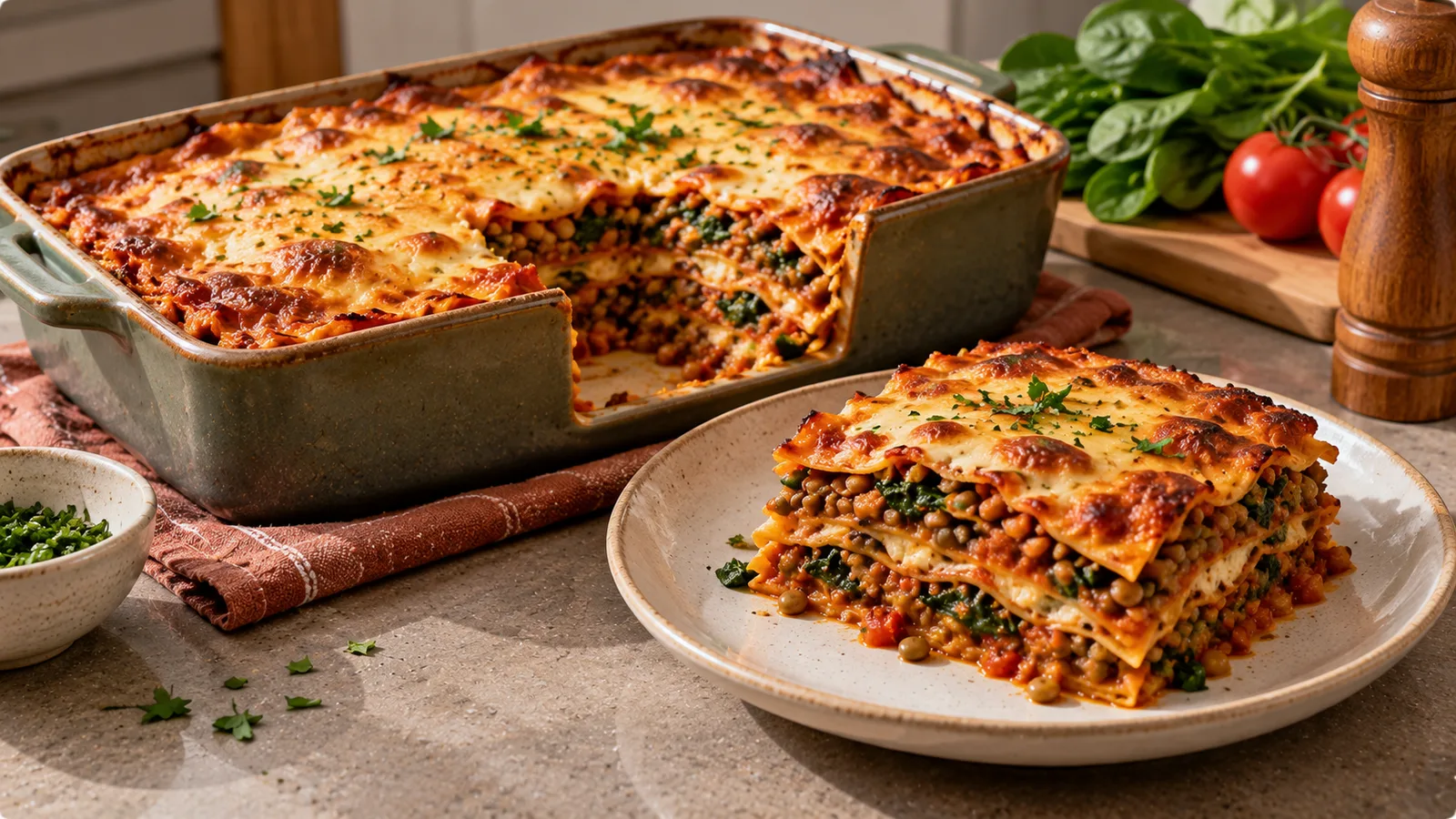
Lentil and spinach lasagna is a hearty vegetarian alternative to traditional meat lasagna. Cooked lentils give the tomato filling a substantial texture, while spinach adds vegetables without overwhelming the flavor. Layers of pasta, creamy béchamel and melted cheese bring everything together.
This recipe is designed for an everyday family dinner. It uses familiar supermarket ingredients, makes generous portions and reheats well.
The most important technique is to cook the lentil filling until it is thick but still moist. A filling that is too watery can produce a loose lasagna, while one that is too dry may leave the pasta sheets undercooked.
Recipe at a glance
| Detail | Amount |
|---|---|
| Servings | 6 |
| Preparation time | 25 minutes |
| Cooking time | 55–65 minutes |
| Total time | Approximately 80–90 minutes |
| Baking dish | Approximately 20 × 30 cm |
| Difficulty | Moderate |
| Diet | Vegetarian, if using suitable cheese |
The timing assumes canned or already cooked lentils and dried lasagna sheets that do not require pre-boiling.
If you cook dry lentils first, allow additional time.
Ingredients
Lentil and spinach filling
- 480 g cooked lentils, drained, approximately two standard cans depending on drained weight
- 300 g frozen spinach, thawed and squeezed lightly
- 700 g tomato passata
- 1 medium onion, approximately 150 g, finely diced
- 2 garlic cloves, minced
- 1 medium carrot, approximately 100 g, finely diced
- 15 g olive oil
- 20 g tomato paste
- 150 ml water or vegetable stock
- 1 teaspoon dried oregano
- 1 teaspoon dried basil
- ½ teaspoon smoked paprika, optional
- Salt and black pepper to taste
Béchamel sauce
- 40 g butter
- 40 g plain wheat flour
- 600 ml milk
- A pinch of ground nutmeg
- Salt and black pepper to taste
Assembly
- 200 g dried lasagna sheets, or the amount needed for your dish
- 150 g grated mozzarella
- 40 g grated hard vegetarian cheese, optional
Check the packaging of the cheese if you need the recipe to be strictly vegetarian. Some hard cheeses are made using animal rennet.
Step 1: Prepare the vegetables
Dice the onion and carrot into small pieces.
Mince the garlic.
If using frozen spinach, thaw it completely and gently squeeze out excess liquid.
You do not need to remove every drop of water, but the spinach should not release a large pool of liquid into the filling.
Drain and rinse canned lentils if appropriate for the product.
Green or brown lentils work especially well because they generally hold their shape after cooking.
Red lentils can also be used, but they tend to break down and create a softer sauce.
Step 2: Cook the lentil tomato sauce
Heat the olive oil in a large frying pan or saucepan over medium heat.
Add the onion and carrot.
Cook for approximately 6–8 minutes, stirring occasionally, until they begin to soften.
Add the garlic and tomato paste.
Cook for another minute.
Stir in the passata, water or vegetable stock, oregano, basil and optional smoked paprika.
Add the drained lentils.
Bring to a gentle simmer and cook uncovered for 10–15 minutes.
Stir occasionally to prevent sticking.
The sauce should become slightly thicker, but remain moist enough to help cook the lasagna sheets in the oven.
If it becomes too thick, add a little water.
Season with salt and pepper.
Finally, fold in the spinach and cook for another 2–3 minutes.
Taste again before assembling.
Step 3: Make the béchamel
Melt the butter in a saucepan over medium-low heat.
Add the flour and whisk continuously for about one minute.
Gradually add the milk, whisking to prevent lumps.
Continue cooking and stirring for approximately 5–7 minutes until the sauce thickens.
It should coat the back of a spoon while remaining easy to spread.
Add a pinch of nutmeg, salt and black pepper.
If the sauce becomes too thick, whisk in a small amount of additional milk.
A pourable béchamel is easier to distribute between the pasta layers.
Step 4: Assemble the lasagna
Preheat the oven to 190°C conventional heat or approximately 170°C fan.
Lightly grease a baking dish measuring around 20 × 30 cm.
Spread a thin layer of lentil sauce across the bottom.
Add a layer of lasagna sheets.
Cover with approximately one-third of the remaining lentil filling.
Spoon over some béchamel.
Repeat the layers until the ingredients are used.
Aim for three pasta layers, depending on the shape and size of your dish.
Finish with béchamel and the grated cheeses.
Make sure exposed pasta edges are covered with sauce.
Dry edges can become hard during baking.
Step 5: Bake and rest
Cover the dish loosely with foil.
Bake for approximately 30 minutes.
Remove the foil and continue baking for another 15–25 minutes until the top is golden and the pasta is tender.
Cooking times depend on the pasta brand, oven and depth of the dish.
Insert a knife into the center to check whether the pasta sheets are soft.
If the top browns too quickly, cover it again.
Let the lasagna rest for 10–15 minutes before cutting.
Resting helps the layers settle and makes serving easier.
Estimated nutrition per serving
The following estimates assume the recipe is divided into six equal portions and uses the ingredient quantities listed above.
| Nutrient | Approximate amount |
|---|---|
| Calories | 570 kcal |
| Protein | 28 g |
| Carbohydrates | 70 g |
| Fat | 20 g |
| Fiber | 12 g |
These are approximate recipe estimates, not laboratory measurements. Actual values depend on the drained lentil weight, pasta brand, milk fat percentage, cheese and portion size.
For more precise calculations, use your ingredient labels or a food composition database such as USDA FoodData Central.
The estimate is intended for meal planning rather than medical or clinical dietary decisions.
Why lentils work in lasagna
Lentils provide a substantial texture and absorb the flavor of tomato sauce, garlic and herbs.
They also contribute plant protein and dietary fiber.
Unlike a filling made entirely from finely chopped vegetables, lentils give the sauce more body.
Brown and green lentils remain relatively distinct, which creates a texture closer to a traditional chunky lasagna filling.
Red lentils soften more thoroughly and produce a smoother result.
Neither choice is inherently better; it depends on the texture you prefer.
Fresh versus frozen spinach
Both options work.
Frozen spinach is convenient because it is already chopped and can be kept for future meals.
Thaw it and remove excess liquid before adding it to the sauce.
Fresh spinach can be cooked directly in the pan until wilted.
For this recipe, approximately 400–450 g fresh spinach can replace 300 g frozen spinach, depending on how much it reduces during cooking.
These amounts are flexible because spinach varies in water content and volume.
If using fresh spinach, add it in batches.
How to prevent watery lasagna
Excess liquid is one of the most common problems with vegetable lasagna.
Three ingredients deserve attention.
Spinach: Squeeze out excess water after thawing.
Lentils: Drain canned lentils rather than pouring their packing liquid directly into the filling.
Tomato sauce: Simmer uncovered until the filling is thick enough to hold its shape briefly when stirred.
Do not reduce the sauce until completely dry.
The pasta still needs moisture during baking.
A useful test is to drag a spoon through the sauce. The gap should close slowly rather than immediately filling with thin liquid.
How to prevent dry pasta sheets
If you use no-boil dried lasagna sheets, they need enough moisture from the sauces.
Spread the filling evenly and cover every pasta layer.
Do not leave large dry corners exposed.
If your sauce is particularly thick, add a little water or vegetable stock before assembling.
Follow the pasta manufacturer's instructions because some brands have different hydration requirements.
If using fresh pasta sheets, the baking time may be shorter.
Variations
Lentil and mushroom lasagna
Add 200 g finely chopped mushrooms to the onion and carrot.
Cook until their released moisture has mostly evaporated before adding the tomato sauce.
This produces a deeper, more savory filling.
Lentil and zucchini lasagna
Add one small diced zucchini.
Cook it with the other vegetables to reduce excess moisture.
Zucchini is especially useful when you want to include more vegetables without changing the overall structure of the recipe.
Vegan lentil and spinach lasagna
Replace butter with olive oil or vegan margarine.
Use unsweetened fortified soy milk or another suitable unsweetened plant drink for the béchamel.
Choose plant-based cheese or omit the cheese topping.
Check that the pasta sheets do not contain eggs.
Plant-based substitutes can change the flavor, texture and nutritional values.
Higher-protein version
Use a higher-protein milk or suitable soy drink for the béchamel and consider increasing the lentils modestly.
If adding more lentils, adjust the passata and liquid so the filling remains spreadable.
Avoid assuming that a product labelled high-protein is automatically nutritionally superior; compare the actual nutrition labels.
What to serve with lentil lasagna
The lasagna is substantial enough to serve on its own.
If you want a side dish, consider a simple green salad with lemon dressing, roasted broccoli or cucumber and tomato salad.
A fresh side can provide contrast to the creamy pasta.
For a larger meal, add bread or another side according to appetite and energy needs.
Make-ahead instructions
You can prepare the lentil filling one day ahead.
Cool it promptly and refrigerate in a covered container.
The béchamel can also be made in advance, although it thickens as it cools.
Whisk in a little milk when reheating if necessary.
Alternatively, assemble the entire lasagna, cover it and refrigerate before baking.
If baking directly from the refrigerator, allow extra time and verify that the center is thoroughly heated.
Avoid leaving assembled food at room temperature for extended periods.
Refrigeration and leftovers
Cool leftovers promptly and refrigerate in shallow, covered containers.
A practical conservative target is to use refrigerated cooked leftovers within 3–4 days when stored at 4°C or colder.
Reheat until thoroughly hot throughout.
For general storage guidance, see FoodSafety.gov's cold food storage information.
Local food safety recommendations and individual circumstances may differ.
Can you freeze lentil lasagna?
Yes.
Let the cooked lasagna cool promptly, divide it into portions and freeze in suitable containers.
Label each portion with the date.
For best eating quality, aim to use frozen portions within approximately 2–3 months.
Longer frozen storage at a consistently safe temperature may remain safe, but texture and flavor can deteriorate.
Thaw in the refrigerator when possible.
Reheat thoroughly before serving.
The béchamel may become slightly less smooth after freezing, but the dish generally reheats well.
How to use leftovers
Leftover lasagna can be a convenient lunch.
Pack a portion with a small salad or cooked vegetables.
If you are preparing meals for several days, divide the lasagna into individual containers after cooling.
This makes portions easier to store and reheat.
Avoid repeatedly heating and cooling the entire baking dish.
Common substitutions
| Original ingredient | Alternative | What changes |
|---|---|---|
| Brown or green lentils | Red lentils | Softer, smoother filling |
| Frozen spinach | Fresh spinach | More preparation volume |
| Cow's milk | Unsweetened soy drink | Different béchamel flavor |
| Mozzarella | Another suitable melting cheese | Different salt and fat content |
| Wheat lasagna sheets | Gluten-free lasagna sheets | Different hydration and baking behavior |
| Carrot | Finely diced celery or zucchini | Slightly different flavor and moisture |
For gluten-free preparation, also replace the wheat flour in the béchamel with a suitable gluten-free thickener.
Check all packaged ingredients if cooking for someone with a food allergy or medically necessary dietary restriction.
A practical shopping list
For one six-serving lasagna, buy:
- Lentils, enough for 480 g cooked and drained.
- 300 g frozen spinach.
- 700 g passata.
- One onion.
- One carrot.
- Garlic.
- Tomato paste.
- Lasagna sheets.
- Milk.
- Butter.
- Flour.
- Mozzarella.
- Optional vegetarian hard cheese.
Olive oil, herbs, salt, pepper and nutmeg may already be in your pantry.
Checking existing supplies before shopping can prevent buying duplicate ingredients.
Make the recipe fit your weekly meal plan
This lasagna is useful for meal planning because it combines a grain-based pasta component, legumes, vegetables and dairy ingredients in one dish.
You can prepare it for dinner and reserve portions for another day.
If you want to manage grocery spending, compare the cost of the complete ingredient list with the number of portions you expect to eat.
For example, a hypothetical €12 ingredient cost divided by six portions equals €2 per serving.
That is only an illustrative budget calculation, not a current supermarket price.
The real cost depends on where you shop, package sizes and ingredients already available at home.
Final cooking tips
Use lentils that are cooked but not falling apart if you prefer a textured filling.
Reduce the tomato sauce enough to avoid a watery dish.
Keep the béchamel pourable.
Cover all dried pasta sheets with sauce.
Let the baked lasagna rest before cutting.
With those details in place, lentil and spinach lasagna becomes a reliable vegetarian dinner that is practical for leftovers, batch cooking and everyday meal planning.