
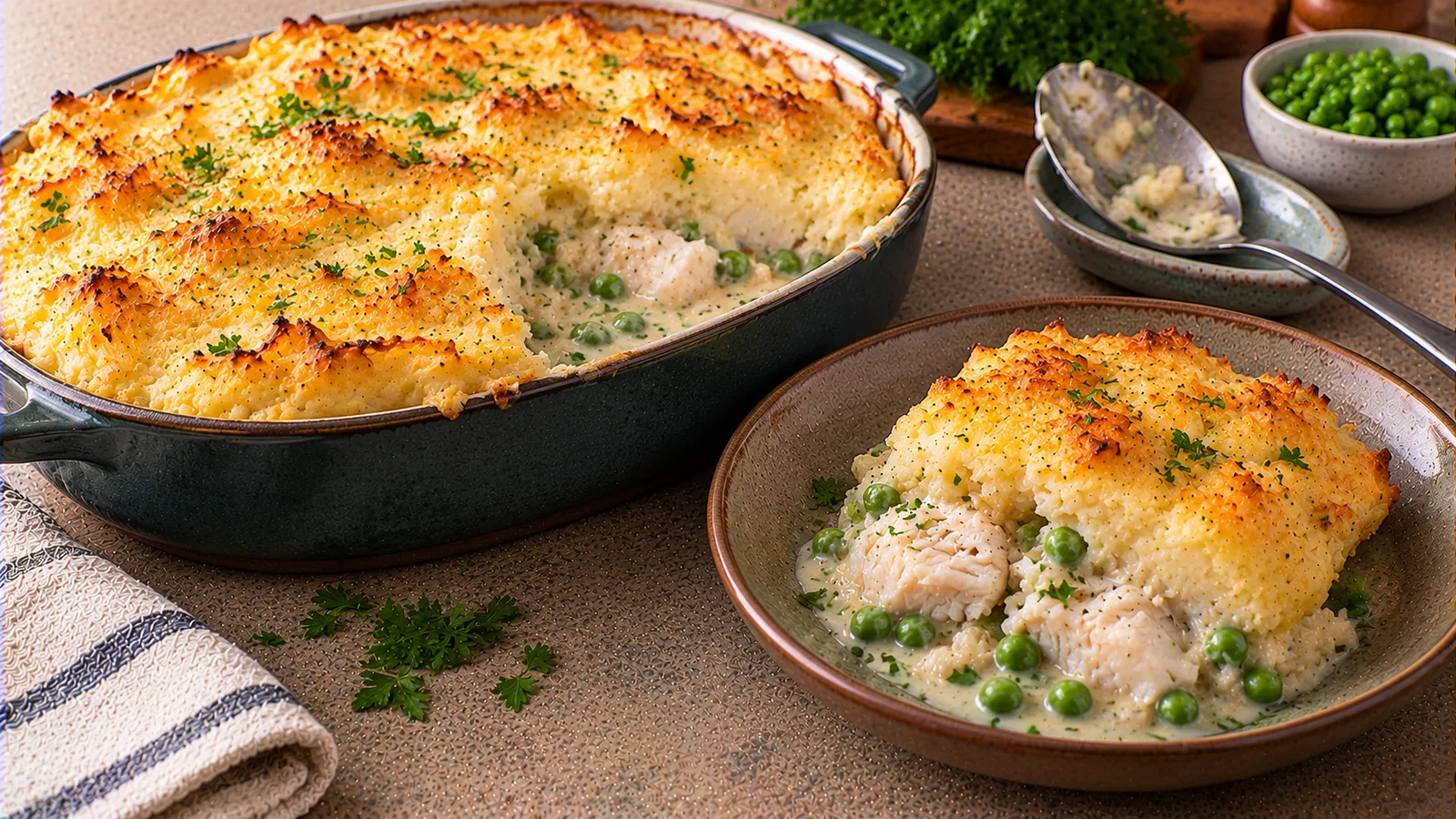
This cod and green pea fish pie is a practical, oven-baked main course with pieces of white fish in a lightly thickened vegetable sauce and a soft potato topping. Despite its name, a British-style fish pie does not need pastry: the potato mash is the lid. This version produces four main-course portions in one baking dish. It uses 480 g of boneless cod, 240 g of green peas, and 720 g of peeled potatoes, with the other ingredients measured so that the filling does not become watery.
The method deliberately cooks the vegetables before adding the raw fish. That keeps the cod from breaking into flakes during a long pan simmer. The oven then cooks the assembled casserole until the centre is thoroughly hot. Allow about 20 minutes of active preparation, 25 minutes of stovetop work and 25–30 minutes in the oven; the stages may overlap slightly. Thawing frozen cod in the refrigerator happens beforehand and is not included in the timing.
What you need for four portions
| Ingredient | Amount and measurement basis |
|---|---|
| Cod fillet, boneless, skinless, raw and thawed | 480 g |
| Green peas, frozen | 240 g |
| Potatoes, peeled weight, raw | 720 g |
| Carrot, raw, finely diced | 160 g |
| Leek, trimmed and washed, finely sliced | 120 g |
| Milk, divided between topping and sauce | 240 ml |
| Butter, divided | 25 g |
| Plain wheat flour | 20 g |
| Olive or rapeseed oil | 10 g |
| Water or unsalted vegetable stock | 100 ml |
| Lemon juice | 15 ml |
| Chopped parsley | 10 g |
| Black pepper | to taste |
| Salt | to taste, after checking the seasoning |
Use a baking dish of roughly 20 × 25 cm, a saucepan, a frying pan and a potato masher. A food thermometer makes it easier to check the middle of the finished casserole. The 480 g is the edible raw fish weight after thawing and removing packaging and any excess glaze, not the gross weight of an ice-coated bag. The 720 g of potato is its weight after peeling. If your pack of peas or fillets has different directions for cooking from frozen, follow those instructions or thaw safely first.
The ingredient allocation, with no hidden extras
Split the 240 ml milk into 80 ml for the mash and 160 ml for the filling. Split the 25 g butter into 10 g for the potatoes and 15 g for the sauce. The 10 g oil goes into the leek and carrot; the 20 g flour thickens the sauce; and the 100 ml water is added to that sauce, not to the potatoes. The fish and peas go into the prepared filling without additional oil. This allocation matters because an ingredient list that says 'a little extra butter' later makes any eventual nutrient estimate inaccurate.
You can use lactose-free milk and a compatible butter alternative, but their labels may change the texture and nutrient values. Wheat flour and milk are allergens; cod is fish. If you must avoid an allergen, choose certified suitable alternatives and check all packaged ingredients. Do not assume that replacing flour one-for-one with a different starch always works: its thickening behaviour may change.
Step 1: Soften the potatoes
Cut the 720 g peeled potatoes into fairly even pieces of about 3–4 cm. Place them in a saucepan, cover with cold water, bring to a boil and simmer gently for 15–20 minutes or until a knife goes through the largest piece without resistance. Drain thoroughly and return the potatoes to the warm pan for a minute so surface moisture evaporates. Mash with 80 ml milk and 10 g butter, adding a little black pepper. The mash should be spreadable but fairly firm, not pourable: it must sit on the filling rather than sink into it.
If the potatoes are particularly wet, hold back some of the measured milk and add only what they can absorb. You are not required to use every last millilitre when the potato variety makes that undesirable; record the amount actually used if you calculate nutrients precisely. Avoid whipping the mash in a blender, which can make it gluey. You can prepare the vegetable sauce while the potatoes cook.
Step 2: Make the leek and carrot sauce
Heat 10 g oil in a wide pan over medium heat. Add the 160 g carrot and 120 g leek. Stir for 6–8 minutes until softened but not browned hard. Add 15 g butter and allow it to melt; sprinkle over 20 g wheat flour and stir for around one minute. Gradually add 160 ml milk while stirring, followed by 100 ml water or unsalted vegetable stock. Let the mixture bubble gently for 3–4 minutes so the flour cooks through and the sauce thickens.
This is a fairly thick filling sauce because the peas and fish release moisture during baking. The mixture should coat the back of a spoon; if it is runny, continue a brief uncovered simmer before adding fish. Taste for pepper and only then add salt if necessary. A salted stock changes the final salt amount, so using water gives more control. Switch off the heat before the raw cod goes in.
Step 3: Add cod, peas and lemon
Cut the 480 g cod into approximately 3 cm chunks and pat them dry. Check carefully for pin bones. Stir the 240 g frozen peas into the hot sauce, then fold in the cod gently. Add 15 ml lemon juice and 10 g chopped parsley. Do not keep boiling the fish in the pan: the pieces will finish cooking in the oven, and vigorous stirring can break them apart. Transfer the mixture promptly to the baking dish. Spread it evenly so that the central portion contains fish and vegetables rather than mainly sauce.
Frozen peas may cool the mixture briefly. That is not a problem if you put the assembled dish into the preheated oven promptly and cook it to the required centre temperature. Do not leave the assembled raw-fish dish on the kitchen counter while waiting for the oven. Set the oven to 200°C conventional / 180°C fan before assembly so it is ready.
Step 4: Top and bake
Spoon the mash over the filling in small dollops, starting around the rim, then join the dollops with a spoon. Drag a fork across the surface to create shallow ridges that brown more easily. There is no need for an unlisted cheese topping. Bake on a middle rack for approximately 25–30 minutes. Timing depends on the dish depth, oven performance, initial temperature of the peas and size of the cod chunks, so it is a guide rather than a safety guarantee.
For this mixed fish-and-vegetable casserole, check several spots near the centre and aim for 74°C internal temperature, the USDA/FDA benchmark for casseroles and reheated mixed dishes. A separate cooked finfish fillet is commonly listed at 63°C, but the higher casserole check is a conservative, practical target for this assembled pie. The filling should be steaming, the potato top lightly golden and the fish cooked through. If the top colours before the middle reaches temperature, cover loosely and continue baking. The FDA safe food handling guide and USDA temperature chart provide the reference values.
Let the pie settle for 5 minutes before serving so the filling becomes easier to portion. That rest is about serving texture; it is not a substitute for reaching the appropriate internal temperature during cooking.
How to portion it accurately
Cut the pie into four equal areas and transfer one section to each plate, bringing up filling and mash together. Based on the raw ingredient allocation, each quarter started with 120 g raw edible cod, 60 g frozen peas and 180 g peeled raw potato. The final plated weight will differ because fish, vegetables and potatoes lose or take up water. Do not describe the 120 g as the cooked fish weight: weighing the cooked fish separately would be required for that claim.
If you track calories or protein, use the labels and food-composition entries that match your actual ingredients and measurement state. Sum the whole recipe, including oil, butter, milk and flour, then divide the total by four equal portions. Do not calculate a fish-only nutritional value and label it as the whole pie. A consumer looking specifically for matched cooked cod portions can read cod versus haddock, on a cooked-weight basis; it is a different comparison task from this one-dish recipe.
Keep the pie thick, not watery
Three things are responsible for most failures. First, cod that has not been drained after thawing introduces liquid. Pat it dry and discard liquid from the thawing container. Second, watery mash slides into the filling rather than resting on top; drain potatoes thoroughly before adding measured milk. Third, a sauce that has not been simmered after adding flour may not hold the vegetables together. The sauce should visibly thicken before the fish is added.
If the surface is brown but liquid bubbles up at the corners, do not assume it is unsafe or safe from appearance alone: check the centre temperature. A little sauce is normal for fish pie. If the filling is extremely loose, it often firms up during the short settling period; next time reduce the stock slightly or thicken the sauce more before assembly. Do not sprinkle uncooked flour into the baked pie to rescue it.
Changes that keep the recipe recognisable
- Fish: choose other boneless white fish only after checking its package and cooking characteristics; do not present the resulting recipe as nutritionally identical to cod.
- Vegetables: replace part of the peas with finely chopped spinach, but squeeze out excess water. Keep the total vegetable quantity similar if you want the same pan depth.
- Topping: use a mixture of mashed potato and cooked cauliflower for a softer lid; dry the cauliflower carefully or the topping may slip.
- Herbs: parsley can be changed to dill; keep the 15 ml lemon juice as a starting point, then adjust by taste.
- No stock: water is sufficient. The fish, leek and parsley make a mild flavour; add pepper to taste rather than relying on a very salty stock cube.
For a different cod main course without a potato topping, see cod with tomatoes and white beans. That article centres on cod, tomatoes and white beans; it should not be treated as a duplicate fish pie recipe.
Safe thawing, storage and reheating
If using frozen cod, thaw it in the refrigerator, protected from drips onto other foods. Do not leave frozen fish on the counter overnight. The FDA seafood guidance describes cold storage, separation of raw seafood and cooking precautions. Wash hands, knives and boards after handling the fish, and keep them away from food that will be eaten without cooking.
Serve immediately where possible. Divide leftovers into shallow containers and refrigerate them within two hours, or within one hour in very hot conditions above 32°C. Keep the refrigerator at 4°C or below. For a conservative household plan, eat refrigerated leftover fish pie within 48 hours or freeze it promptly; this is a deliberately shorter practical recommendation than the general USDA 3–4 days for many cooked leftovers. Reheat a portion to 74°C in the centre, taking care because mash can heat more slowly than sauce. Do not use smell alone to judge safety. The USDA leftovers guidance gives the broader handling rules.
Sources
- FDA — Safe Food Handling: cooking temperature and prompt chilling practices.
- USDA FSIS — Safe Minimum Internal Temperature Chart: 63°C for fish and 74°C for casseroles and leftovers.
- FDA — Selecting and Serving Fresh and Frozen Seafood Safely: safe handling and thawing of seafood.
- USDA FSIS — Leftovers and Food Safety: refrigeration, freezing and reheating.
The ingredient amounts and technique above are a Mealisa home-recipe formulation; the linked agencies support food-safety guidance, not a claim that an agency has tested this particular pie.