
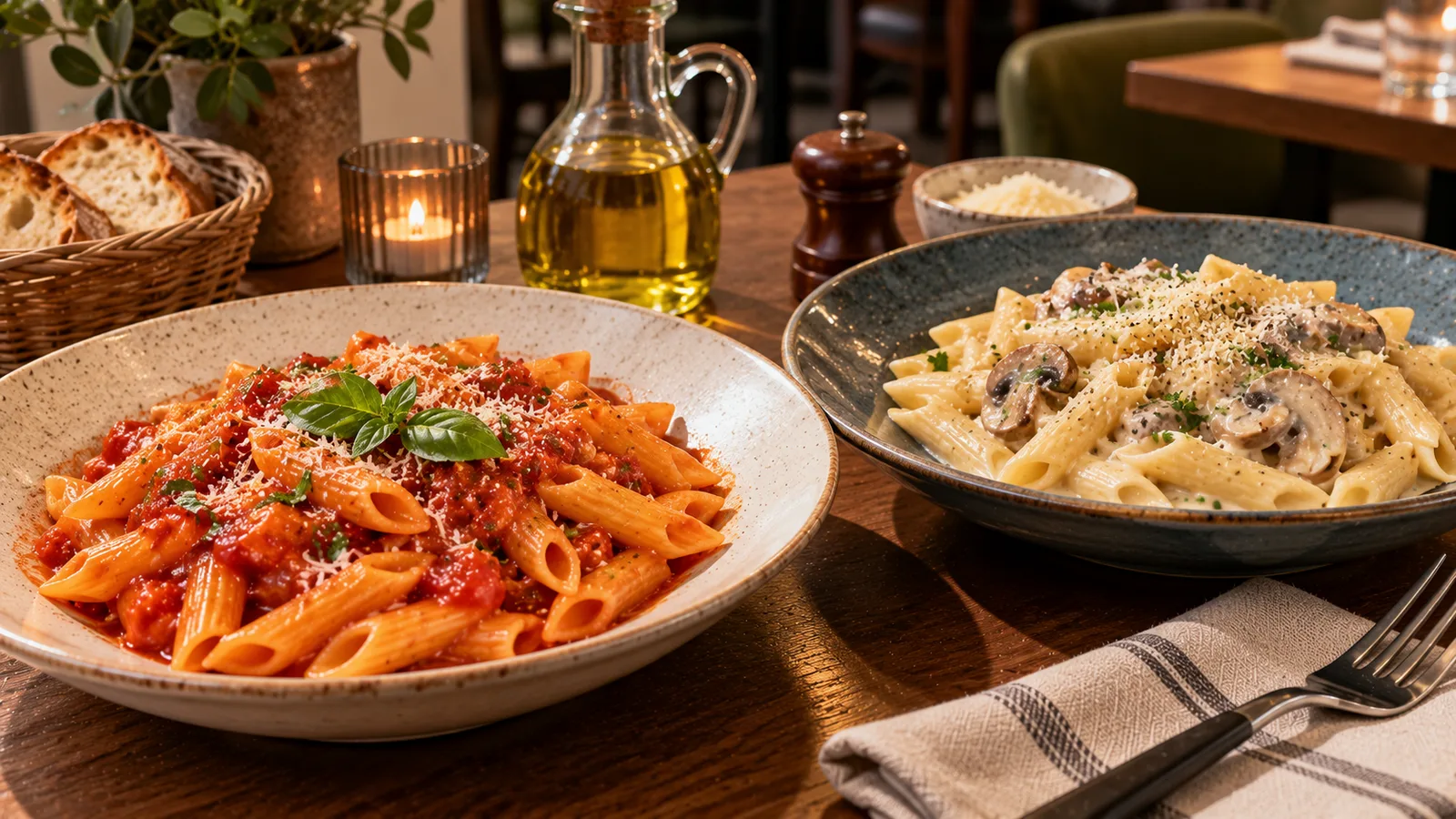
A restaurant pasta order is not merely a bowl of cooked noodles. Sauce, oil and garnishes can change the energy content substantially, even when two plates start with the same amount of pasta. Here is a transparent method, not a claim about any restaurant menu.
Why the sauce changes the whole plate
Start by listing the components of the dish rather than guessing calories from its appearance. A shiny red sauce can contain oil or butter, while a pale sauce might be made with cream, cheese, milk, stock or combinations of these. Colour and thickness do not reveal the recipe. The portion served may also be much larger than an ordinary home portion. This article compares two deliberately specified preparations, so every number can be traced to a food and weight. A restaurant's actual ingredients remain unknown unless the business publishes them or staff can describe the preparation. The comparison is useful for learning which missing details matter most.
Start with the cooked pasta, not dry weight
For both examples use 250 g of plain cooked pasta. The USDA reference for cooked enriched pasta without added salt reports 158 kcal per 100 g; therefore the pasta contributes 395 kcal before any sauce is counted. The 250 g is an illustrative cooked weight, not a standard restaurant serving. Do not use the weight of dry pasta with the energy figure for cooked pasta: water changes its mass during boiling. Likewise, if a menu gives a total plated weight, that includes sauce and perhaps toppings. Establish what the given number weighs before calculating. Pasta type, recipe and cooking time can make actual figures differ from this reference.
Worked plate A: tomato sauce and olive oil
Imagine the cook serves 250 g of cooked pasta, 150 g of plain canned tomato sauce and 10 g of olive oil retained in the dish. The pasta supplies 395 kcal. At 24 kcal per 100 g, the tomato sauce adds 36 kcal; olive oil at 884 kcal per 100 g adds 88.4 kcal. The sum is 519.4 kcal, or approximately 519 kcal for the specified plate. This is a component calculation, not a published restaurant nutrition fact. It excludes Parmesan, meat, sugar, extra cooking fat and bread. A sauce based on roasted tomatoes with more oil could produce a very different result.
Worked plate B: cream sauce and olive oil
Now keep the same 250 g of cooked pasta but model 100 g of heavy whipping cream and 15 g of olive oil. The pasta still supplies 395 kcal; the reference cream at 340 kcal per 100 g contributes 340 kcal; and the oil adds 132.6 kcal. Total: 867.6 kcal, approximately 868 kcal. These are not identical sauce weights or recipes, and the model does not suggest every white sauce consists of pure heavy cream. It simply shows how a particular high-fat ingredient and the additional oil change the arithmetic. Cheese-based or milk-based sauces require their own composition, rather than borrowing this cream figure.
Compare the two complete restaurant portions
Read the table as two worked ingredient lists, not the average of all restaurant pasta dishes. Both begin with exactly 250 g of cooked pasta, but the sauce quantities differ because they describe different possible dishes. The rounded plate estimates are 519 and 868 kcal, respectively: a difference of roughly 350 kcal. It would be misleading to declare that all creamy pasta is 350 kcal higher than tomato pasta. Cream type, sauce dilution, cheese, meat, vegetables, cooking oil and actual plated quantity all alter the outcome. If you share a dish, split the estimated complete total by the fraction eaten, not just by the dry pasta.
| Component | Tomato plate | Cream plate |
|---|---|---|
| Cooked pasta, 250 g | 395 kcal | 395 kcal |
| Plain tomato sauce, 150 g | 36 kcal | — |
| Heavy whipping cream, 100 g | — | 340 kcal |
| Olive oil | 10 g = 88.4 kcal | 15 g = 132.6 kcal |
| Whole plate | ≈519 kcal | ≈868 kcal |
Why a little extra oil matters
Olive oil contains about 884 kcal per 100 g in the chosen USDA record. That makes 5 g worth about 44 kcal and 10 g about 88 kcal. A teaspoon is not guaranteed to contain precisely 5 g, so weighing or using a known measure gives a more defensible estimate. Oil in a pan is not necessarily all served: some may remain in the pan or be used for other portions. Conversely, oil can be stirred into the pasta after cooking or poured on top at the table. Count only a reasonable estimate of what ends up in your portion; do not treat every drop added to the restaurant kitchen as consumed.
How to estimate a dish when dining out
When nutrition information is supplied by the restaurant, use the serving definition and look for whether toppings, bread and dressings are included. Otherwise ask about the sauce's principal ingredients, whether cream or cheese is used, and whether oil is added at the finish. A useful personal estimate has three lines: cooked pasta amount, sauce type and plausible amount, plus additional oils and toppings. Keep uncertain quantities as ranges rather than printing a precise-looking calorie total. If the plate is unusually large, ask for a takeaway container or note how much you ate. The goal is consistent logging, not the impossible task of reconstructing an unseen kitchen recipe.
What the estimate cannot tell you
The reference data describe specific foods per 100 g, not an audit of a restaurant kitchen. A tomato sauce containing fried onion and oil differs from the plain canned sauce used here. Cream labelled as cooking cream can contain less fat than heavy whipping cream; substituting its label is appropriate when known. Sodium, allergens, protein and saturated fat are separate questions; calorie totals alone do not settle them. Avoid judging food quality or a person's choices from these two numerical examples. For a meal log, record the most plausible ingredients, label the result an estimate and revise it only when better information becomes available.