
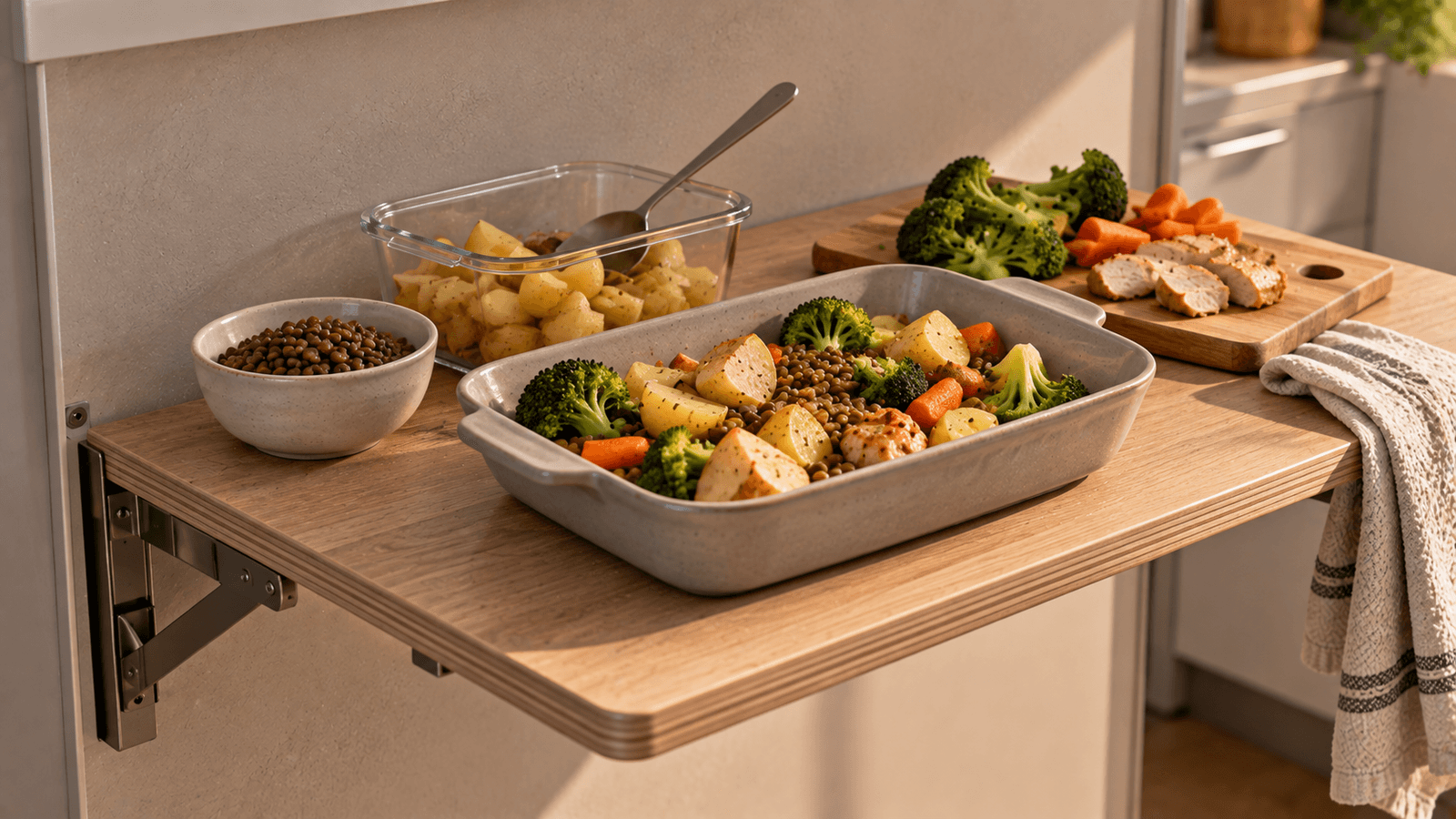
You do not have to eliminate carbohydrates to lose weight.
Carbohydrate intake can vary substantially between successful weight-loss diets. What matters most for weight loss is whether your overall eating pattern creates a sustainable energy deficit while still providing adequate nutrition.
That means the useful question is usually not:
“How low should I push my carbs?”
but:
“How much carbohydrate fits my calorie target, activity, food preferences and the rest of my macros?”
There is no single carb target for weight loss
There is no universal number of carbohydrate grams that causes weight loss.
Two people can lose weight while eating very different amounts of carbohydrate.
For example, one person may prefer:
- more potatoes, rice, oats and fruit
- less dietary fat
while another may prefer:
- smaller portions of carbohydrate-rich foods
- somewhat more fat
Both approaches can potentially fit an appropriate calorie intake.
The carbohydrate target is therefore part of the overall diet rather than an independent weight-loss switch.
How much carbohydrate do adults generally eat?
Reference ranges can provide context, but they are not weight-loss prescriptions.
European Food Safety Authority reference values place total carbohydrate intake at about 45–60% of total energy intake for adults and children.
Current WHO healthy-diet guidance also emphasizes that carbohydrate intake can vary and that carbohydrate quality matters. WHO recommends obtaining carbohydrates primarily from foods such as whole grains, vegetables, fruits and pulses.
These population-level recommendations are useful context, but an individual weight-loss diet does not have to hit one exact carbohydrate percentage every day.
Converting carbohydrate percentage into grams
Carbohydrate provides approximately 4 kcal per gram.
So the calculation is:
carbohydrate grams = calories from carbohydrate ÷ 4
Suppose someone eats 1,800 kcal per day.
If 45% of energy comes from carbohydrate:
1,800 × 0.45 = 810 kcal
810 ÷ 4 = about 203 g carbohydrate
At 50%:
1,800 × 0.50 = 900 kcal
900 ÷ 4 = 225 g carbohydrate
At 60%:
1,800 × 0.60 = 1,080 kcal
1,080 ÷ 4 = 270 g carbohydrate
These numbers illustrate the calculation. They are not a recommendation that everyone trying to lose weight should eat 203–270 g of carbohydrate.
Example carbohydrate ranges at different calorie intakes
Using 45–60% of calories as a reference range:
| Daily calories | 45% carbohydrate | 50% carbohydrate | 60% carbohydrate |
|---|---|---|---|
| 1,500 kcal | ~169 g | ~188 g | ~225 g |
| 1,800 kcal | ~203 g | ~225 g | ~270 g |
| 2,000 kcal | ~225 g | ~250 g | ~300 g |
| 2,200 kcal | ~248 g | ~275 g | ~330 g |
| 2,500 kcal | ~281 g | ~313 g | ~375 g |
Again, this is a conversion table, not a personalized weight-loss prescription.
Your appropriate calorie intake and macro distribution depend on factors such as body size, activity, goals and individual circumstances.
Do you need to eat fewer carbs to lose weight?
Not necessarily.
Reducing carbohydrate can reduce calorie intake if it causes you to eat less overall.
For example, if someone regularly eats very large portions of:
- pastries
- sweets
- sugary drinks
- chips
- large servings of refined snack foods
reducing those foods may lower both carbohydrate and total calorie intake.
But the weight-loss effect should not automatically be attributed to carbohydrate reduction itself.
The person may simply be consuming less energy.
Low-carb diets can work — but they are not the only option
Some people find lower-carbohydrate diets easier to follow.
Others find them unnecessarily restrictive.
A lower-carb approach may naturally reduce certain foods and simplify food choices, which can help some people control total intake.
But another person may prefer a diet containing:
- oats at breakfast
- fruit during the day
- potatoes or rice with meals
- beans and lentils
- whole-grain bread
and still maintain an appropriate calorie deficit.
The best macro distribution is one you can follow while meeting nutritional needs and supporting your lifestyle.
Carb quality matters
Total grams are only part of the picture.
Carbohydrate-containing foods can differ dramatically in:
- fiber
- micronutrients
- water content
- energy density
- food structure
- degree of processing
- how satisfying they are in a particular meal
For most people, useful carbohydrate sources include:
- whole grains
- potatoes
- oats
- beans
- lentils
- chickpeas
- vegetables
- whole fruit
- other minimally processed carbohydrate-rich foods
This does not mean every carbohydrate must come from these foods.
It means they can form the foundation of carbohydrate intake.
For the basic differences between carbohydrate types, see What Are Carbohydrates? Simple vs Complex Carbs Explained.
Fiber is especially relevant
When reducing calories, it is easy to focus only on carbohydrate grams and overlook fiber.
That can be counterproductive.
Foods such as:
- beans
- lentils
- oats
- whole grains
- vegetables
- fruit
provide carbohydrate together with fiber and other nutrients.
WHO guidance emphasizes carbohydrate quality and recommends that people older than 10 obtain at least 25 g of naturally occurring dietary fiber per day.
A low-carb diet built by removing many fiber-rich foods without replacing them thoughtfully can make the overall diet less balanced.
Carbohydrate foods are not all equivalent
Compare four carbohydrate sources:
| Food | Main practical characteristics |
|---|---|
| Sugary soft drink | carbohydrate with little protein, fiber or solid-food volume |
| Whole fruit | carbohydrate plus water, fiber and micronutrients |
| Lentils | carbohydrate plus fiber, protein and micronutrients |
| Oats | carbohydrate plus fiber and some protein |
They all contain carbohydrate.
But treating them as nutritionally interchangeable simply because they contain carbs misses most of the useful information.
What about sugar?
Sugar is a carbohydrate.
But “carbs” and “sugar” are not synonyms.
Carbohydrate also includes starches and fiber.
WHO recommends limiting free sugars to less than 10% of total energy intake, with a further reduction to 5% potentially providing additional health benefits.
Free sugars include sugars added to foods and drinks as well as sugars naturally present in honey, syrups and fruit juices.
This recommendation is about free sugars, not about eliminating all carbohydrate foods or avoiding whole fruit.
Do carbs prevent fat loss?
No.
Eating carbohydrate does not automatically prevent the body from losing fat over time.
After a carbohydrate-containing meal, the body may temporarily use more carbohydrate for energy.
That does not tell you whether body fat will increase or decrease across days and weeks.
Long-term weight change depends on overall energy balance, not on what fuel is being oxidized at one moment after a meal.
Why does weight sometimes drop quickly on a low-carb diet?
Reducing carbohydrate intake can cause an early drop in scale weight that is larger than the amount of body fat lost.
Stored carbohydrate in the body is associated with water.
When carbohydrate intake and glycogen stores decrease, body water can also decrease.
This is one reason scale weight may fall quickly during the first days of a substantial carbohydrate reduction.
Likewise, increasing carbohydrate again can increase scale weight through glycogen and associated water without representing an equivalent increase in body fat.
This distinction is useful when interpreting short-term weight fluctuations.
How much carbohydrate should you personally eat?
A practical approach is to build the target in this order:
1. Set an appropriate calorie target
Weight loss requires the overall diet to provide less energy than is expended over time.
Do not start by choosing a random carbohydrate number.
2. Make sure protein is adequate
Protein requirements and preferences influence how many calories remain available for carbohydrate and fat.
3. Include sufficient dietary fat
Dietary fat is an essential part of the diet.
Pushing fat extremely low simply to make room for more carbohydrate is not necessary.
4. Use carbohydrate for the remaining calories
Once calorie, protein and fat needs are considered, carbohydrate can fill much of the remaining energy according to preference and activity.
This is essentially what a macro calculator does.
Use the Macro Calculator if you want to explore different macro distributions.
Example: building macros rather than guessing carbs
Suppose a hypothetical calorie target is 1,900 kcal.
Instead of deciding first that you “must” eat 100 g of carbs, you could:
- establish an appropriate protein intake
- choose a reasonable fat intake
- allocate the remaining calories to carbohydrate
- assess whether the resulting meals are practical and satisfying
If the carbohydrate number feels unnecessarily restrictive or makes training difficult, you can adjust the fat-carbohydrate split while keeping the overall calorie target similar.
If the diet contains more carbohydrate than you enjoy eating, the opposite adjustment may work better.
The macro split is adjustable.
Carbs and exercise
Activity can influence how practical different carbohydrate intakes feel.
Carbohydrate is an important fuel source for many forms of exercise, particularly moderate- to high-intensity activity.
Someone who:
- runs regularly
- cycles
- plays field sports
- performs high-volume resistance training
- has a physically demanding job
may prefer more carbohydrate than someone who is less active.
This does not mean every active person needs a high-carbohydrate diet.
It means activity is one factor worth considering instead of using the same carb target for everyone.
Should you eat carbs before or after exercise?
For general weight loss, precise carbohydrate timing is usually less important than:
- overall calorie intake
- adequate nutrition
- training quality
- a dietary pattern you can maintain
People doing long, frequent or demanding training may have more reason to pay attention to carbohydrate availability around exercise.
For ordinary recreational activity, you usually do not need to build the entire diet around precise carb timing.
A practical plate example
Consider this dinner:
- chicken
- rice
- vegetables
- olive oil
If calories need to be reduced, there are several possible adjustments.
You could:
- reduce the rice portion
- reduce the amount of oil
- slightly reduce both
- increase low-energy-density vegetables
- adjust another meal instead
Only the first option directly reduces carbohydrate.
This illustrates why weight-loss adjustments do not always have to come from carbs.
What if you are hungry on a lower-carb diet?
Review what was removed.
If cutting carbs meant removing:
- oats
- potatoes
- fruit
- beans
- lentils
- whole grains
without replacing their food volume or fiber, the new diet may feel less satisfying despite containing fewer carbohydrates.
Possible adjustments include:
- bringing back a portion of a high-fiber carbohydrate food
- increasing vegetables
- checking protein
- reviewing total calories
- choosing meals with greater food volume
The lowest carbohydrate intake is not automatically the easiest one for appetite control.
What if you are hungry on a higher-carb diet?
The problem may not be carbohydrate itself.
Look at the types of foods and the complete meals.
A diet dominated by:
- sugary drinks
- sweets
- refined snacks
- small low-protein meals
is very different from a carbohydrate-rich diet based around:
- potatoes
- oats
- legumes
- whole grains
- fruit
- vegetables
- adequate protein
If meals feel unsatisfying, review protein, fiber, total food volume and energy density rather than blaming the carbohydrate percentage alone.
Do you need to avoid bread, rice, pasta or potatoes?
No.
All can fit into a weight-loss diet.
Portion size and preparation matter.
For example, 250 kcal from boiled potatoes is a different physical amount of food from 250 kcal of a highly energy-dense pastry.
Likewise, pasta calories depend on the amount eaten and what is added to it.
Carbohydrate foods should be evaluated as foods and portions, not simply as members of a forbidden category.
A simple way to adjust carb portions
You do not necessarily need to count every carbohydrate gram.
If your current diet is appropriate overall but calories are too high, identify the largest adjustable sources.
For example:
Breakfast: oats + yogurt + berries
Lunch: rice + chicken + vegetables
Snack: fruit + yogurt
Dinner: potatoes + fish + vegetables
You might reduce:
- oats from a very large portion to a moderate one
- rice by a small amount
- potatoes by a small amount
while keeping fruit, vegetables and protein-rich foods.
This creates a moderate reduction instead of eliminating an entire macronutrient.
When tracking grams is useful
Tracking carbohydrate grams can be useful when:
- you already track macros
- you want consistent meal planning
- your sports nutrition requires more structure
- you are comparing different macro distributions
- you want to understand where your calories come from
It is less useful when the number becomes a target disconnected from total calories and food quality.
When tracking grams is unnecessary
Many people can lose weight without setting a carbohydrate target.
Instead, they may focus on:
- total portions
- protein-rich foods
- vegetables and fruit
- fiber-rich staples
- fewer calorie-dense extras
- fewer sugary drinks
- consistent meals
Macro tracking is a tool, not a requirement.
Three different weight-loss approaches
Imagine three people with the same hypothetical calorie target.
Person A: moderate carbohydrate
Uses oats, fruit, rice and potatoes throughout the day.
Person B: lower carbohydrate
Uses smaller starch portions and somewhat more fats.
Person C: higher carbohydrate
Prefers legumes, grains, fruit and potatoes and keeps dietary fat more moderate.
All three approaches can potentially work if they:
- maintain an appropriate calorie deficit
- provide adequate protein and essential fats
- include enough fiber and micronutrients
- are sustainable
The carbohydrate percentage alone does not determine success.
Signs your carb target may be unnecessarily restrictive
Consider reassessing if your chosen target:
- removes many foods you enjoy
- makes social eating unusually difficult
- leaves little room for fruit, legumes or whole grains
- reduces fiber substantially
- makes your usual exercise feel harder
- repeatedly leads to abandoning the diet
A weight-loss plan only works while it can actually be followed.
Signs your current carb portions may be worth reviewing
Carbohydrate portions may be one useful place to adjust if:
- they occupy a very large share of meals
- portions are routinely much larger than intended
- sugary drinks contribute substantial calories
- sweets and refined snacks frequently add calories without much fullness
- total calorie intake remains above your target
But carbohydrate is only one possible source of excess energy.
Large amounts of oils, sauces, cheese, nuts, alcohol and other calorie-dense foods can matter too.
A better target than “as few carbs as possible”
For most people trying to lose weight, a more useful target is:
enough carbohydrate to support a nutritious, enjoyable and active lifestyle while keeping the overall diet within an appropriate calorie target.
That amount is individual.
You can start with a moderate distribution, monitor how the diet feels and adjust rather than assuming that lower is always better.
- How Much Carbohydrate Do You Need Per Day?
- Macro Calculator
- How Many Calories Should You Eat to Lose Weight?
- Protein and Satiety: How Protein Affects Fullness