
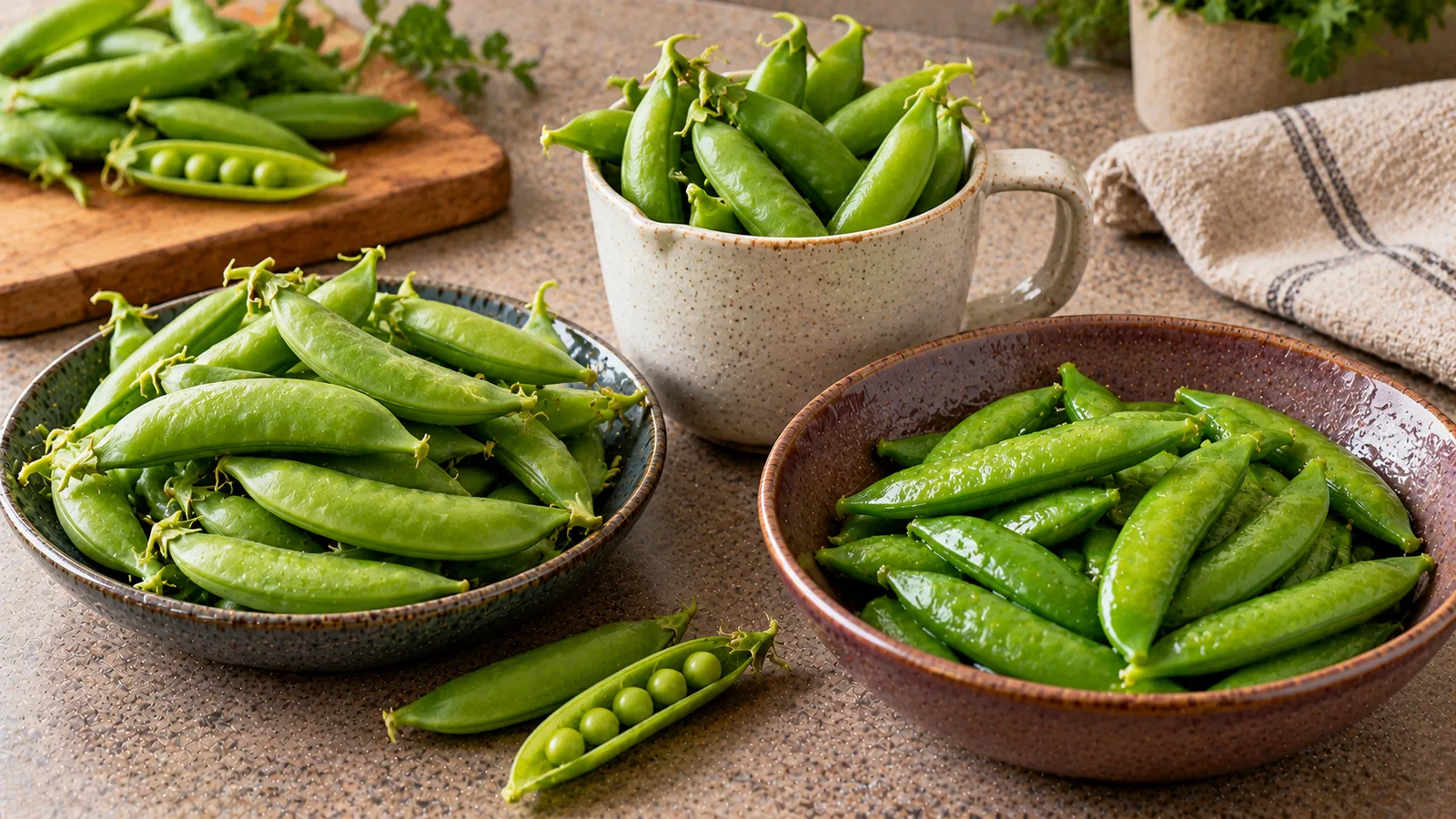
Sugar snap peas are a crunchy vegetable whose pod is eaten along with the small peas inside it. They can look substantial in a bowl, yet the calorie count is modest. The key is knowing whether a cup means whole pods or chopped pieces, and whether the weight was taken before or after cooking. This guide keeps those measurements separate so a food diary does not turn a convenient serving into a misleading number.
How many calories are in sugar snap peas?
The USDA SR Legacy entry for raw edible-podded peas provides 42 kcal per 100 g of edible portion. It covers edible-podded peas, including sugar snap peas and snow peas, rather than a laboratory result for every individual cultivar. As an everyday reference, use 42 kcal/100 g for plain raw sugar snap peas unless a more specific label or validated entry applies. A 150 g raw serving therefore provides about 63 kcal, while 200 g provides about 84 kcal. These figures do not include dressing, frying oil or dip.
One cup can mean two quite different weights
A USDA household measure of one cup of whole raw pods is 63 g, or roughly 26 kcal. For one cup of chopped pods, the reference is 98 g, or roughly 41 kcal. Both are described as a cup, but chopped pieces occupy the space more densely. Neither cup is a universal weighing instrument: pod size, how you fill it and how much you press down all change the mass. When precision matters, put the edible peas on a kitchen scale and enter grams.
| Plain raw portion | Reference weight | Approximate energy |
|---|---|---|
| 10 edible pods, reference measure | 34 g | 14 kcal |
| One cup, whole pods | 63 g | 26 kcal |
| One cup, chopped pods | 98 g | 41 kcal |
| Edible portion | 100 g | 42 kcal |
| Large raw side | 150 g | 63 kcal |
| Shared bowl | 200 g | 84 kcal |
The ten-pod row is only a USDA household reference. Ten very large pods need not weigh 34 g. Also, count edible weight rather than including discarded damaged ends and tough strings.
Carbohydrates, protein and fibre per 100 g
The same raw USDA entry reports approximately 7.55 g carbohydrate by difference, 2.80 g protein, 2.60 g fibre, 4.00 g naturally occurring sugars and 0.20 g fat per 100 g. Sodium is about 4 mg per 100 g before seasoning. Sugar snap peas taste sweet because they contain natural sugars; that does not make them equivalent to sweets with added sugar. The food also brings substantial water and a useful contribution of fibre. Carbohydrate reporting can differ between American food databases and European labels because the conventions for handling fibre differ. Match the calculation method to the label rather than subtracting fibre twice.
Raw, boiled, steamed or stir-fried?
The separate USDA entry for edible-podded peas, boiled and drained without salt, lists about 42 kcal per 100 g and a 160 g cooked cup at around 67 kcal. This happens to be close to the raw 100 g figure; it does not prove that a particular 100 g batch weighs the same after cooking. Steaming or boiling may change water content, and drained weight can differ from the raw starting mass. For a homemade serving, weigh the peas before cooking, note what goes into the pan, and divide the final dish by the portions served. If you weigh only after cooking, use a matching cooked entry and state that basis.
Oil and dips change the total faster than the peas
Plain boiled or steamed sugar snaps need no extra fat. However, 5 g of oil adds about 44 kcal on top of the vegetable. A hypothetical plate made with 150 g raw edible pods and 5 g oil therefore starts at about 107 kcal: 63 from the peas plus 44 from the oil. If two people share that pan equally, the food before other ingredients averages about 54 kcal per plate. Do not count the entire bottle of oil; count what was actually used or a transparent estimate. Sesame dressing, mayonnaise and sweet sauces also change the result, sometimes more than the peas themselves.
Sugar snap peas, snow peas and green peas are not interchangeable entries
Sugar snap peas normally have rounded pods with noticeable small peas inside. Snow peas, often sold as mangetout, typically have flatter pods. Both are edible-podded vegetables, which is why a shared legacy USDA description exists. Shelled green peas are different: the pod is removed and the seed has its own composition and weight. A package of frozen green peas must not automatically receive the 42 kcal figure for raw edible-podded peas. Read the exact product name, whether the pod is eaten, and whether the package lists raw or prepared values.
calories in shelled green peas
A worked example for a quick lunch
Imagine making a two-person lunch salad with 200 g washed sugar snap peas, lemon, herbs and 10 g olive oil. The peas contribute approximately 84 kcal and the oil approximately 88 kcal, for a subtotal of 172 kcal before any other ingredients. Divide by two: about 86 kcal per person from these components. Bread, cheese or beans added later must be entered separately. This ingredient-level approach is much more useful than trying to assign one calorie figure to every salad containing sugar snaps.
Choosing and storing them
Choose crisp pods without slimy patches. Keep them refrigerated and follow the package's storage instructions, especially after opening. Before eating or cutting loose fresh produce, rinse under running water and discard spoiled portions; FDA advises against soap or commercial produce wash. A 'washed and ready to eat' package may already be prepared for direct use, but check its instructions. When blanching, cook only until the texture suits the dish and cool promptly if preparing them ahead. Storage practices affect food quality and safety, not the intrinsic calorie value of a plain raw portion.
A practical way to log the portion
First identify edible pods rather than shelled peas. Second decide whether you measured raw or cooked weight. Third enter 42 kcal/100 g for plain raw edible-podded peas or a better matching product-specific value. Fourth add oil and sauces as separate ingredients. Finally, treat cups as rough household guides, especially when the pods are uncut. This gives an auditable estimate without pretending the shape of a vegetable makes a measuring cup precise.