
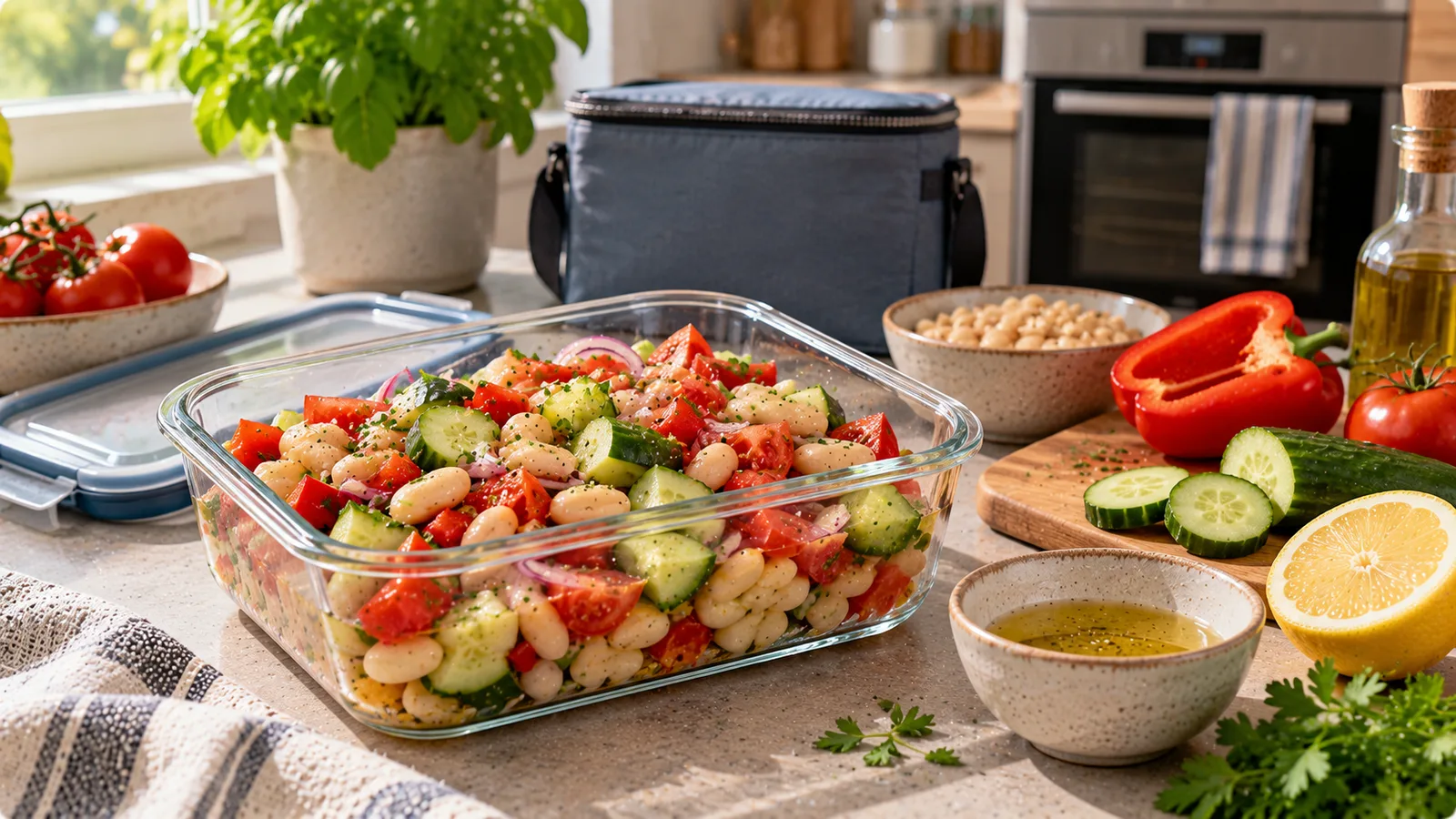
When summer temperatures rise, turning on the oven can make an already warm kitchen uncomfortable.
Fortunately, you can prepare satisfying breakfasts, lunches and dinners without baking or roasting anything.
The key is to build meals around fresh produce, ready-to-eat ingredients, quick stovetop cooking and safe refrigerated leftovers.
This guide provides a realistic seven-day meal plan for two adults, a consolidated grocery list, a short preparation schedule and practical food-safety guidance.
It is designed for a household with a refrigerator, basic utensils and access to a stovetop. Most meals can also be adapted for a microwave or an electric kettle.
What counts as an oven-free summer meal?
An oven-free meal does not necessarily have to be raw or cold.
You can use:
- Fresh vegetables and fruit.
- Canned beans and lentils.
- Bread, wraps and couscous.
- Yogurt, cheese and other refrigerated foods.
- A stovetop for brief cooking.
- A microwave or kettle, if available.
- Pre-cooked ingredients that can be served cold or reheated safely.
The objective is to avoid heating the oven and reduce time spent cooking in a hot kitchen.
For particularly warm days, prioritize meals that require no cooking at all.
The seven-day summer meal plan
The menu below is an example for two adults.
Portions should be adjusted to appetite, activity level and individual energy needs.
| Day | Breakfast | Lunch | Dinner |
|---|---|---|---|
| Monday | Greek yogurt, oats and berries | Chickpea, cucumber and tomato salad with bread | Chicken and avocado wraps |
| Tuesday | Overnight oats with banana | Leftover chicken wraps with salad | Quick lemon couscous with feta and vegetables |
| Wednesday | Cottage cheese, peach and toast | Couscous salad with chickpeas | Tomato, mozzarella and white bean plates |
| Thursday | Yogurt with fruit and nuts | White bean and tomato pita pockets | Cold rice noodle salad with tofu |
| Friday | Peanut butter and banana toast | Leftover rice noodle salad | Tuna, potato and green bean salad |
| Saturday | Skyr with oats and berries | Tuna and vegetable sandwiches | Quick skillet shrimp with couscous and cucumber |
| Sunday | Yogurt, seasonal fruit and toast | Mediterranean bean salad | Hummus, vegetables, eggs and pita |
This plan uses ingredients repeatedly without making every meal identical.
For example, cucumbers and tomatoes appear in different combinations, while chickpeas and white beans provide convenient protein and fiber.
The menu also alternates between no-cook meals and meals requiring brief stovetop preparation.
Monday: start with fresh ingredients
Breakfast: Combine Greek yogurt, oats and berries. Add nuts or seeds if desired.
Lunch: Mix drained chickpeas with chopped cucumber, tomato, lemon juice and olive oil. Serve with bread.
Dinner: Fill tortillas with cooked chicken, avocado, lettuce and a yogurt-based sauce.
Use freshly cooked chicken or a properly refrigerated ready-to-eat product. Follow its storage instructions.
Tuesday: use planned leftovers
Breakfast: Prepare overnight oats in the refrigerator using oats, milk or yogurt and banana.
Lunch: Use safely refrigerated leftover chicken in wraps with fresh salad.
Dinner: Prepare couscous with hot water according to package instructions. Let it cool safely, then mix with feta, peppers, tomatoes, parsley and lemon.
Do not leave cooked couscous sitting at room temperature for hours.
Wednesday: focus on beans and dairy
Breakfast: Cottage cheese with sliced peach and whole-grain toast.
Lunch: Use the remaining couscous with chickpeas and fresh vegetables.
Dinner: Serve sliced tomatoes, mozzarella, white beans, basil and bread.
This is a convenient no-cook dinner, provided all refrigerated ingredients have been stored correctly.
Thursday: change the flavor profile
Breakfast: Yogurt with fruit and nuts.
Lunch: Fill pita bread with white beans, chopped tomato, cucumber and a lemon dressing.
Dinner: Prepare rice noodles according to the package. Cool promptly, then combine with cooked tofu, shredded carrot, cucumber and a sesame-lime dressing.
Choose a tofu product suitable for the intended preparation and follow its label instructions.
Friday: use potatoes strategically
Breakfast: Peanut butter and banana on toast.
Lunch: Eat the refrigerated noodle salad if it has been stored safely and remains within a suitable leftover-storage period.
Dinner: Boil potatoes and green beans briefly, then cool them promptly. Add canned tuna, tomatoes and a mustard-lemon dressing.
This meal can be served warm or chilled.
Saturday: keep cooking short
Breakfast: Skyr, oats and berries.
Lunch: Make sandwiches with tuna, lettuce and cucumber.
Dinner: Cook shrimp thoroughly in a skillet. Serve with couscous and a fresh cucumber salad.
Keep raw seafood refrigerated and prevent cross-contamination with ready-to-eat vegetables.
Sunday: use the remaining ingredients
Breakfast: Yogurt, seasonal fruit and toast.
Lunch: Combine remaining canned beans with vegetables, herbs and dressing.
Dinner: Serve hummus, sliced vegetables, hard-boiled eggs and pita bread.
This flexible final meal helps reduce waste before the next shopping trip.
Grocery list for two adults
Quantities are approximate and depend on appetite, package sizes and whether the household already has pantry staples.
Vegetables and fruit
| Ingredient | Approximate quantity |
|---|---|
| Tomatoes | 1.5–2 kg |
| Cucumbers | 4–5 medium |
| Bell peppers | 3–4 |
| Lettuce or mixed greens | 2 bags or heads |
| Carrots | 4–5 |
| Green beans | 400–500 g |
| Potatoes | 600–800 g |
| Avocados | 2 |
| Lemons and limes | 5–6 total |
| Bananas | 5–6 |
| Peaches or nectarines | 4–6 |
| Berries | 500–700 g |
| Fresh herbs | 2 bunches |
Choose local seasonal produce where it is reasonably priced.
Frozen berries can replace fresh berries if they offer better value and are suitable for the intended use.
Protein and refrigerated foods
| Ingredient | Approximate quantity |
|---|---|
| Greek yogurt or skyr | 1.5–2 kg |
| Cottage cheese | 300–400 g |
| Feta | 200 g |
| Mozzarella | 250 g |
| Chicken | 350–450 g |
| Firm tofu | 300–400 g |
| Shrimp | 300–400 g |
| Canned tuna | 3–4 small cans |
| Eggs | 6 |
| Hummus | 250–300 g |
Pantry and grains
| Ingredient | Approximate quantity |
|---|---|
| Rolled oats | 400–500 g |
| Bread | 1–2 loaves |
| Tortillas | 1 package |
| Pita bread | 1 package |
| Couscous | 350–450 g dry |
| Rice noodles | 200–250 g dry |
| Canned chickpeas | 3 cans |
| Canned white beans | 3 cans |
| Peanut butter | Small jar |
| Olive oil | As needed |
| Mustard | As needed |
| Nuts or seeds | 150–200 g |
| Sesame or soy-based dressing ingredients | As needed |
This is a flexible shopping framework, not a requirement to buy every item from scratch.
Use what you already have before purchasing duplicates.
A 45-minute preparation session
A little preparation can reduce work during the hottest part of the week.
You do not need to cook seven days of meals in advance.
A practical session might look like this:
| Time | Task |
|---|---|
| 0–10 minutes | Check refrigerator space, wash hands, organize ingredients |
| 10–20 minutes | Wash and dry sturdy vegetables; prepare a dressing |
| 20–30 minutes | Portion oats and pantry ingredients; organize canned foods |
| 30–40 minutes | Prepare one short-lived meal component for the next day |
| 40–45 minutes | Label containers, refrigerate perishables, clean surfaces |
Avoid chopping all delicate vegetables at once.
Tomatoes, lettuce and cucumbers often retain better texture when prepared closer to serving.
For proteins and cooked grains, make only what you can store and consume safely.
How to keep the kitchen cooler
Cook early or late
If you need to boil potatoes or prepare shrimp, consider doing so when outdoor and indoor temperatures are lower.
This does not remove the need for safe cooling and refrigeration.
Use lids and small pots
Covered pots can shorten cooking time and reduce unnecessary heat and moisture in the kitchen.
Use an appropriately sized burner and cookware.
Choose quick-cooking ingredients
Couscous, thin rice noodles and eggs usually require less cooking time than dried beans or large cuts of meat.
Canned legumes eliminate the need for lengthy cooking.
Plan several no-cook dinners
A dinner of beans, vegetables, bread and a suitable protein source can be nutritionally useful without turning on any cooking appliance.
Food safety during hot weather
Summer meal planning requires particular attention to temperature control.
Bacteria can multiply rapidly in perishable foods when they remain too warm.
Keep cold foods cold
Maintain your refrigerator at approximately 4°C or below, following applicable local food-safety recommendations.
Check the actual temperature with a refrigerator thermometer if possible.
Keep dairy, cooked meat, seafood and other perishable ingredients refrigerated until needed.
Limit time at room temperature
A widely used USDA guideline is to refrigerate perishable foods within two hours, or within one hour when ambient temperatures exceed approximately 32°C.
Other national authorities may give additional or different practical guidance.
For outdoor meals, use insulated bags and ice packs.
Cool cooked foods promptly
Cooked rice, noodles, potatoes and couscous should not be left to cool slowly on the counter for extended periods.
Divide large amounts into shallow containers and refrigerate promptly.
Cooked rice requires particular care because some bacterial spores can survive cooking.
Follow local food-safety guidance for cooling, storage and reheating.
Handle seafood carefully
Store raw shrimp separately from ready-to-eat foods.
Use clean utensils and surfaces.
Cook seafood thoroughly and refrigerate leftovers promptly.
Be cautious with leftovers
Many general USDA guidelines recommend using refrigerated cooked leftovers within three to four days, but some foods and national guidance require shorter periods.
Do not use a generic maximum as a guarantee of safety.
Follow product instructions and stricter local recommendations where relevant.
If food has been stored improperly, reheating does not necessarily make it safe.
How to make the plan nutritionally balanced
An oven-free meal plan can provide protein, fiber and a variety of micronutrients.
For each main meal, consider combining:
- A protein source such as beans, eggs, fish, chicken, tofu or dairy.
- Vegetables or fruit.
- A carbohydrate source such as bread, couscous, potatoes or oats.
- A suitable source of fat such as olive oil, nuts, seeds or avocado.
Exact amounts depend on personal needs.
Example: balanced no-cook lunch
A practical lunch might contain:
- 150 g drained chickpeas.
- 200 g mixed tomato and cucumber.
- 60 g whole-grain bread.
- 10 g olive oil.
- Lemon juice and herbs.
This provides a combination of carbohydrates, plant protein, fiber and fat.
The exact nutrient values depend on the products used.
For someone with higher protein requirements, an additional protein source may be useful.
Budget tips for summer meals
Oven-free cooking does not automatically save money.
Pre-cut vegetables, ready-made salads and premium convenience foods can be expensive.
To manage costs:
- Compare prices per kilogram rather than per package.
- Use canned beans as a convenient protein source.
- Choose seasonal produce when it offers good value.
- Buy larger yogurt containers when they will be used before expiry.
- Reuse ingredients across several different meals.
- Avoid buying large quantities of delicate vegetables that may spoil.
- Keep a small reserve of shelf-stable foods for unexpected hot days.
Example of ingredient reuse
One cucumber can appear in a chickpea salad, a chicken wrap and a yogurt-based sauce.
One package of couscous can support a vegetable dinner and a chilled lunch.
This reduces the number of specialized ingredients required.
What if you have no stovetop?
The plan can be adjusted further.
Replace cooked chicken with an appropriate ready-to-eat protein.
Use canned tuna or beans instead of skillet shrimp.
Choose bread or wraps instead of cooked rice noodles.
Use pre-cooked potatoes only if they are properly stored and ready to eat according to their labeling.
A fully no-cook plan can still offer variety, but pay attention to safe food handling and adequate nutrition.
Frequently asked questions
Can I meal prep for seven days without an oven?
You can plan seven days of meals, but it is generally better not to prepare and refrigerate every perishable dish for the entire week.
Prepare short-lived ingredients in smaller batches and use shelf-stable foods where appropriate.
Are cold meals less nutritious than hot meals?
Not inherently. Nutritional quality depends on ingredients, portions and the overall dietary pattern.
Is canned food suitable for summer meal planning?
Yes. Canned beans, lentils and fish can be convenient, shelf-stable ingredients before opening.
Once opened, follow appropriate refrigeration and storage guidance.
Can I leave a pasta or rice salad outside during a picnic?
Perishable salads should not remain unrefrigerated for extended periods, particularly in hot weather.
Use insulated containers and ice packs and follow local food-safety guidance.
What is the easiest oven-free dinner?
A bean salad with vegetables, bread and a protein source is one of the simplest options because it requires little or no cooking.
Sources
- USDA Food Safety and Inspection Service — food storage, temperature control and leftover safety.
- UK Food Standards Agency — food hygiene, cooling and storage guidance.
- USDA MyPlate — balanced meal planning principles.
- WHO: Healthy Diet — general healthy eating recommendations.
Final takeaway
Summer meal planning without an oven works best when you combine fresh produce, convenient proteins, quick-cooking grains and a realistic shopping routine.
Plan the week, but prepare perishable foods in smaller batches.
This keeps meals flexible, reduces time in a hot kitchen and makes food safety easier to manage.