
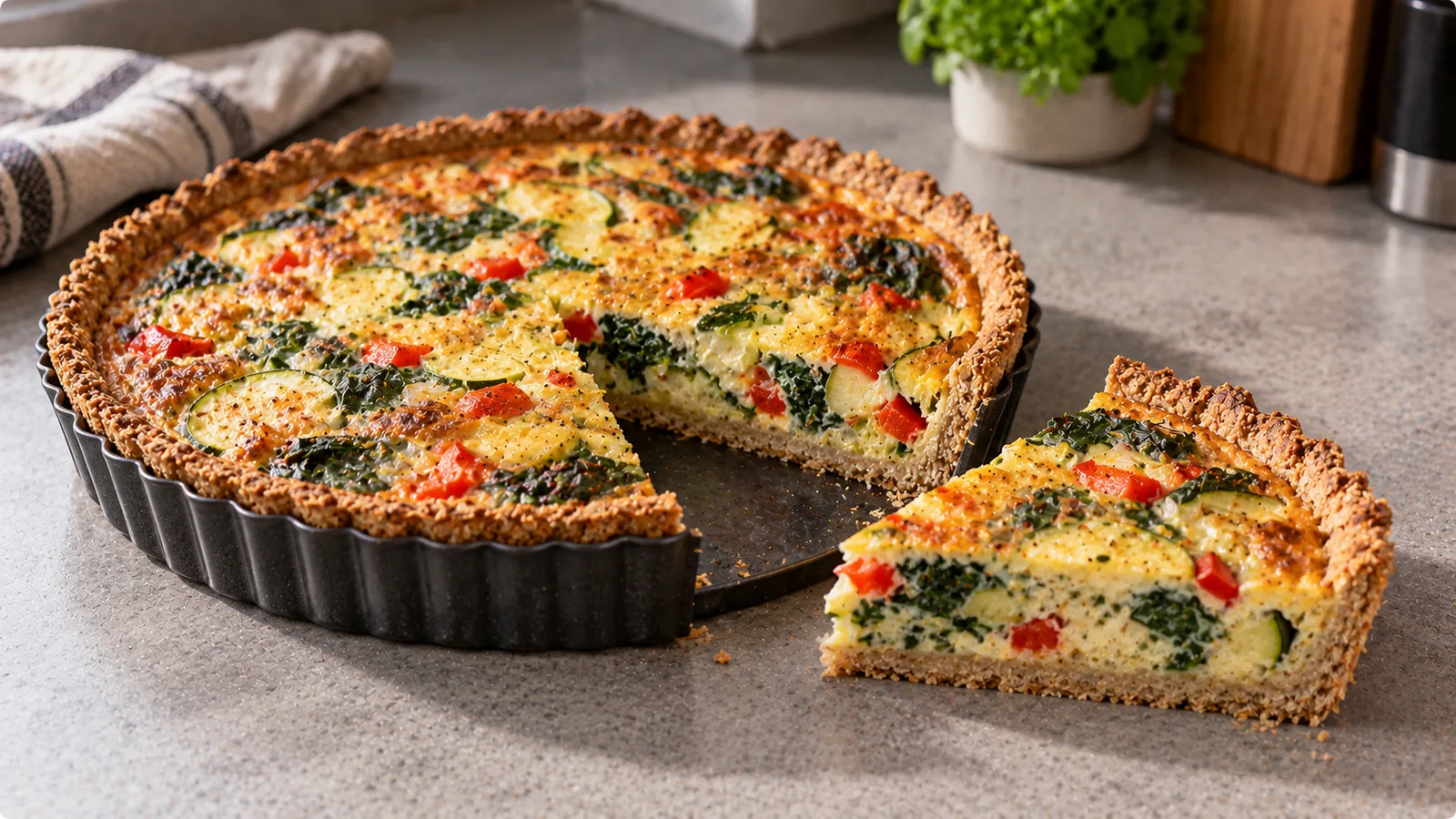
A vegetable quiche with an oat crust is a practical alternative to a traditional shortcrust pastry quiche. The base combines oats, egg and olive oil, while the filling brings together vegetables, eggs, milk and cheese.
The result is a savoury tart with a lightly nutty crust and a soft, sliceable filling. It works for lunch, dinner or a make-ahead meal.
This recipe makes six portions in a 24 cm tart tin. Allow approximately 25 minutes for preparation, 12 minutes to pre-bake the crust, 30–35 minutes for the filled quiche and 10–15 minutes for cooling.
Ingredients
For the oat crust
| Ingredient | Amount |
|---|---|
| Rolled oats | 160 g |
| Large egg | 1 |
| Olive oil | 25 g |
| Cold water | 40–60 ml |
| Salt | ¼ tsp |
| Dried thyme, optional | ½ tsp |
For the vegetable filling
| Ingredient | Amount |
|---|---|
| Zucchini | 200 g |
| Red bell pepper | 150 g |
| Fresh spinach | 100 g |
| Onion | 100 g |
| Olive oil | 10 g |
| Large eggs | 3 |
| Milk, 1.5% fat | 150 ml |
| Grated Gouda or similar cheese | 80 g |
| Salt | ¼ tsp, or to taste |
| Black pepper | To taste |
| Ground nutmeg, optional | A pinch |
Use a 24 cm tart or quiche tin. A removable base makes serving easier.
The quantities are designed for a relatively shallow quiche. If your tin is much smaller, the filling may be too deep and require a longer baking time.
What makes an oat crust different?
Traditional quiche pastry commonly uses wheat flour and butter. This version uses oats, olive oil and an egg to form a press-in crust.
Oats produce a different texture from wheat pastry. Expect a more rustic, slightly crumbly base rather than a flaky laminated crust.
The oats can be processed into a coarse flour for a smoother finish or left somewhat textured for a more noticeable oat flavour.
Oats contain dietary fibre, including beta-glucans, but this does not automatically make every oat-based recipe low in calories. The oil, eggs and cheese still contribute energy.
The main advantage here is a simple crust that can be pressed directly into the tin without rolling.
Step 1: Prepare the oat crust
Preheat the oven to 190°C conventional heat, or approximately 175°C fan.
Lightly grease the tart tin or line its base with baking parchment.
Place the rolled oats in a food processor and blend until they resemble coarse flour. A little texture is fine.
Add the egg, olive oil, salt and optional thyme.
Mix, then add cold water gradually until the mixture can be pressed together.
Start with 40 ml water. Add more only if the dough is too dry.
The mixture should hold together when squeezed but should not be wet or sticky.
Press it evenly across the base and up the sides of the tin.
Aim for a consistent thickness, especially where the base meets the sides.
Prick the bottom several times with a fork.
Step 2: Pre-bake the crust
Bake the empty crust for approximately 12 minutes.
It should begin to feel set and look slightly dry on the surface.
This initial baking step helps prevent the moist filling from soaking directly into the raw oat mixture.
The crust does not need to become deeply golden at this stage.
Remove it from the oven and leave it in the tin while preparing the filling.
If the base has puffed slightly, press it down gently with the back of a spoon.
Step 3: Cook the vegetables
Dice the zucchini and bell pepper into small pieces.
Finely chop the onion.
Heat 10 g olive oil in a large frying pan over medium heat.
Cook the onion for approximately 3 minutes.
Add the bell pepper and zucchini, then cook for another 5–7 minutes, stirring occasionally.
The vegetables should soften and release some of their moisture.
Add the spinach and cook for 1–2 minutes, just until wilted.
Remove the pan from the heat.
If liquid has collected in the pan, drain it before assembling the quiche.
Reducing excess vegetable moisture is one of the most important steps for a sliceable quiche.
Raw zucchini and spinach can release water during baking, potentially leaving the filling soft or the base damp.
Step 4: Mix the egg filling
In a bowl, whisk together:
- Three eggs.
- 150 ml milk.
- Salt.
- Black pepper.
- Optional nutmeg.
Stir in approximately two-thirds of the grated cheese.
The remaining cheese will be used on top.
Avoid vigorous whisking that creates excessive foam. The goal is a uniform mixture.
The eggs set the filling as the quiche bakes, while the milk helps create a tender texture.
Step 5: Assemble the quiche
Spread the cooked vegetables evenly over the pre-baked oat crust.
Pour the egg mixture over the vegetables.
Use a fork to redistribute the vegetables if necessary so every slice contains a balanced amount.
Sprinkle the remaining cheese over the top.
Do not overfill the tin. Leave a little space below the rim to prevent spills.
If your tin is particularly shallow, reserve any extra filling and bake it separately in a small oven-safe dish.
Step 6: Bake until set
Return the quiche to the oven.
Bake at 190°C conventional heat or 175°C fan for approximately 30–35 minutes.
The top should be lightly golden and the centre should be set rather than liquid.
A slight wobble in the centre can be normal near the end of baking, but the filling should not flow when the tin is moved.
For food safety, egg dishes should reach an internal temperature of 74°C (165°F), measured with a food thermometer.
If the crust edges brown too quickly, cover them loosely with foil.
Actual baking time depends on the oven, tin material and filling depth.
Step 7: Cool before slicing
Remove the quiche from the oven and let it rest for 10–15 minutes.
This allows the filling to firm up and makes cleaner slices possible.
Cut into six portions.
Serve warm with a simple salad or allow the quiche to cool for a packed lunch.
The oat crust is more delicate than conventional pastry, so a sharp knife and a flat serving spatula are useful.
Estimated nutrition per serving
The following estimates are calculated for six portions using representative ingredient values.
| Nutrient | Per serving, approximately |
|---|---|
| Calories | 300 kcal |
| Protein | 14 g |
| Carbohydrates | 27 g |
| Fat | 15 g |
| Fibre | 4 g |
The full quiche is estimated at approximately 1,800 kcal.
These figures are estimates rather than laboratory-tested nutrition information.
The actual values depend on egg size, cheese type, oat brand, milk, vegetable weights and the amount of oil retained in the finished dish.
For more accurate tracking, enter the ingredients and their actual weights into your recipe calculator, then divide by the number of portions eaten.
How to keep the oat crust from becoming soggy
Three factors matter most.
Pre-bake the crust. A short initial bake helps the oat mixture hold its shape.
Cook watery vegetables first. Zucchini, mushrooms and spinach can release considerable moisture.
Avoid an excessively wet egg mixture. Keep the milk-to-egg ratio close to the recipe unless you are deliberately adjusting the filling.
Letting the quiche rest after baking also improves slicing.
If you use frozen spinach, thaw it completely and squeeze out excess water before adding it.
Vegetable substitutions
The recipe is flexible, but the water content of each vegetable matters.
| Vegetable | Suggested preparation |
|---|---|
| Mushrooms | Fry until most released moisture evaporates |
| Broccoli | Cut into small florets and briefly blanch or steam |
| Leeks | Slice and sauté until softened |
| Cherry tomatoes | Halve and remove some seeds if very juicy |
| Asparagus | Cut into short pieces and pre-cook thick stems |
| Frozen spinach | Thaw and squeeze thoroughly |
Try to keep the total cooked vegetable volume reasonably similar to the original recipe.
Adding a large quantity of raw vegetables can prevent the filling from setting evenly.
Can you make it without cheese?
Yes. The quiche can be made without cheese, although the flavour and texture will change.
Cheese adds savouriness, fat and protein.
Without it, consider adding herbs, garlic or a small amount of mustard to the egg mixture.
The total calories will generally decrease, but the exact change depends on the replacement ingredients.
Is an oat crust gluten-free?
Oats are naturally free from wheat gluten, but they can be contaminated with gluten-containing grains during growing or processing.
For someone who needs a strict gluten-free diet, use oats specifically labelled gluten-free and check all other ingredients.
This recipe should not be described as reliably gluten-free when ordinary, uncertified oats are used.
Can you prepare the quiche in advance?
Yes.
You can cook the vegetables and prepare the oat mixture earlier in the day.
Keep perishable ingredients refrigerated until needed.
You can also bake the complete quiche and refrigerate it after cooling.
For food safety, refrigerate promptly and avoid leaving cooked egg dishes at room temperature for extended periods.
Storage and reheating
Store leftovers in a covered container in the refrigerator at 4°C or below.
Use within 3–4 days.
Reheat until the centre reaches 74°C (165°F).
An oven at moderate heat can help preserve more of the crust's texture than prolonged microwave heating.
The quiche can also be frozen in individual portions, although the crust may become softer after thawing.
Thaw safely in the refrigerator before reheating.
Serving ideas
A slice of vegetable quiche works well with:
- Mixed salad leaves and a light dressing.
- Sliced cucumber and tomatoes.
- Roasted vegetables.
- A small bowl of vegetable soup.
- Fresh fruit as part of a larger meal.
The best combination depends on the desired meal size and nutritional targets.
Why this recipe works
The crust is pressed into the tin rather than rolled, making preparation straightforward.
Pre-baking helps it retain structure.
Cooking the vegetables first reduces excess moisture.
The egg-and-milk mixture binds the filling, while the cheese adds flavour and browning.
Resting the baked quiche improves the final texture.
The result is a practical homemade quiche with a distinct oat crust rather than an imitation of traditional buttery pastry.
Sources and food-safety references
- USDA FoodData Central — ingredient nutrient-composition reference.
- USDA Food Safety and Inspection Service: Safe Minimum Internal Temperature Chart — safe cooking temperatures for egg dishes.
- USDA Food Safety and Inspection Service: Leftovers and Food Safety — refrigeration and leftover guidance.
- Celiac Disease Foundation: Oats — gluten cross-contact considerations.
Nutrition values are approximate recipe calculations. Cooking times are practical estimates and should be adjusted to the actual oven and pan.