
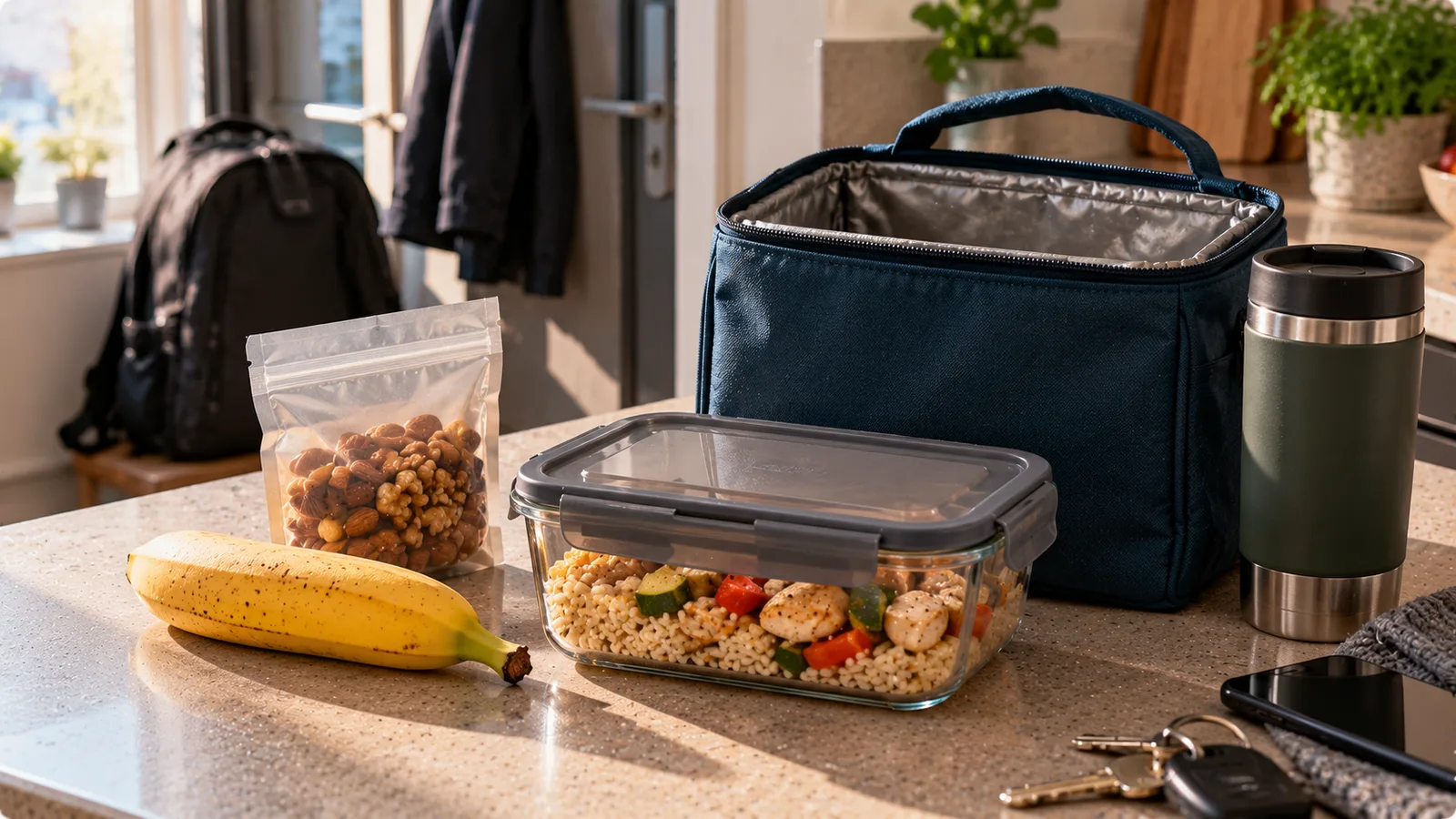
A long commute changes the way meals need to work.
You may leave home before breakfast feels convenient, spend hours away from a kitchen, eat lunch wherever your schedule allows and arrive home too tired to prepare dinner from scratch.
The challenge is not simply finding portable recipes. It is creating a meal routine that survives early departures, delayed trains, traffic, limited refrigeration and changing arrival times.
A useful commuting meal plan answers four questions:
- What can you eat before leaving, or safely carry for breakfast?
- What will you eat during the longest stretch away from home?
- What happens if the journey takes longer than expected?
- What will be ready when you return?
The best solution is usually a small, repeatable system rather than an elaborate weekly menu.
Start with your actual commuting schedule
Before choosing meals, map out the times when eating is realistically possible.
Consider this example:
| Time | Activity | Meal-planning implication |
|---|---|---|
| 06:15 | Wake up | Breakfast must be quick or prepared ahead |
| 07:00 | Leave home | Packed food needs to be ready |
| 08:30 | Arrive at work | Possible second breakfast |
| 12:30 | Lunch break | Main packed meal |
| 17:30 | Leave work | A planned snack may help during the journey |
| 19:15 | Arrive home | Dinner should require little effort |
These times are illustrative. Your own schedule may be very different.
The important step is identifying the longest period without reliable access to food.
If you leave home at 07:00 and cannot eat a proper meal until 13:30, that gap deserves attention before you start choosing recipes.
A realistic plan also accounts for the journey home. A 45-minute delay can turn a manageable evening into a rushed dinner decision.
Build a four-part commuting meal system
You do not necessarily need four separate meals every day. These are four planning functions that can be combined or adjusted.
| Part | Purpose | Practical examples |
|---|---|---|
| Departure breakfast | Provide a convenient start | Overnight oats, eggs with toast, yogurt and fruit |
| Packed main meal | Cover the longest time away | Rice bowl, pasta salad, bean wrap, leftovers |
| Delay-resistant snack | Provide an option if plans change | Nuts, whole fruit, crackers, shelf-stable snack |
| Low-effort dinner | Avoid lengthy cooking after travel | Pre-cooked soup, frozen portions, quick omelet |
Each component should fit your appetite, nutritional needs and access to safe storage.
The aim is not to eat on a rigid clock. It is to have an appropriate option available when you need one.
Breakfast when you leave early
Early departures often make breakfast inconvenient.
Some people prefer eating before leaving. Others find it easier to take breakfast to work or eat after the first part of their journey.
Both approaches can work.
Option 1: Breakfast at home in five minutes
Choose foods requiring little preparation:
- Plain yogurt or skyr with fruit and oats.
- Whole-grain toast with eggs prepared the previous evening.
- Cottage cheese with bread and tomatoes.
- A banana with peanut butter on toast.
A short breakfast can still include protein, carbohydrates and some fiber.
Option 2: Breakfast prepared the night before
Overnight oats are convenient because they require no cooking in the morning.
For one serving, combine approximately:
- 50 g rolled oats.
- 170 g plain yogurt.
- 100 ml milk or a suitable alternative.
- 100 g berries or chopped fruit.
- 10 g nuts or seeds.
Refrigerate overnight.
If carrying the mixture, keep it properly chilled until consumption.
The ingredient quantities are a practical example, not a personalized calorie prescription.
Option 3: Breakfast at your destination
If you have access to a refrigerator at work, you may keep appropriate breakfast ingredients there.
This can reduce the amount you need to carry each morning.
However, a breakfast plan that depends on a workplace refrigerator will not work on days when you travel directly to another location.
Have a separate plan for those days.
Packed lunches that work beyond a kitchen
The ideal packed lunch depends on where you can eat it.
A meal requiring a microwave is less useful if you regularly spend lunch breaks on a train or at a temporary worksite.
Think about three categories.
Meals you can eat cold
Examples include:
- Chickpea and vegetable salad.
- Whole-grain pasta salad with beans.
- Couscous with roasted vegetables.
- A sandwich with an appropriate filling.
- A wrap with lentils and crunchy vegetables.
Many of these meals contain perishable ingredients and still require temperature control.
Cold serving does not mean safe storage at room temperature all day.
Meals you can reheat
If reliable refrigeration and a microwave are available:
- Lentil soup.
- Chicken with rice and vegetables.
- Bean chili.
- Vegetable curry.
- Leftover pasta with a protein source.
Store the food safely, transport it chilled and reheat thoroughly according to appropriate food-safety guidance.
Meals that need minimal equipment
For days without a kitchen, consider combinations of foods that can be safely stored and assembled at the point of eating.
For example:
- An unopened shelf-stable bean pouch or can, with a suitable opening method.
- Whole-grain crackers.
- A whole tomato or another vegetable.
- Whole fruit.
- A small packet of nuts.
Check whether each item actually is shelf-stable before opening. Once opened, storage requirements may change.
Food safety matters more on long journeys
One of the biggest differences between ordinary meal prep and commuting meal prep is transport time.
A lunch packed at 06:30 might not be eaten until 13:00.
If it contains cooked rice, chicken, eggs, dairy, seafood or other perishable ingredients, carrying it for hours without adequate temperature control can be unsafe.
Use an insulated bag appropriately
An insulated lunch bag can help maintain temperature when used with sufficiently frozen ice packs.
It is not a refrigerator by itself.
For perishable foods, the goal is to keep them cold throughout transport and until they can be refrigerated or eaten.
USDA guidance generally recommends keeping cold perishable food at 40°F / 4°C or below.
Do not assume food remains safe just because the bag still feels cool.
Avoid the room-temperature trap
USDA guidance advises that perishable food generally should not remain in the temperature danger zone for more than two hours, or one hour when ambient temperatures exceed 90°F / 32°C.
These are general guidelines, not permission to keep every food unrefrigerated for that duration.
The total time outside appropriate temperature control matters, including preparation, travel and waiting.
Be especially careful with cooked rice
Cooked rice can pose a risk if cooled or stored incorrectly because of Bacillus cereus.
Cool cooked rice promptly, refrigerate it and maintain appropriate temperatures during transport.
Reheating does not reliably eliminate every toxin that may have formed after unsafe storage.
Consider a workplace food station
If you have a reliable refrigerator and storage space at work, keeping selected ingredients there may reduce daily transport risks.
Examples include sealed yogurt, suitable spreads, fresh vegetables and other foods stored according to their labels.
For people without refrigeration, prioritize genuinely shelf-stable unopened products and purchase refrigerated items close to the time of consumption.
Build a backup snack for unpredictable delays
A backup snack is not necessarily an extra daily meal.
It is a contingency for missed connections, traffic jams, overtime or unexpected errands.
A useful backup should be:
- Easy to carry.
- Appropriate for your dietary requirements.
- Safe to store under expected conditions.
- Resistant to crushing or leaking.
- Simple to eat when a suitable opportunity arises.
Possible options include whole fruit, nuts, seeds, crackers or an appropriately labeled shelf-stable snack.
Avoid keeping perishable sandwiches or yogurt in a warm backpack for an entire day.
Also remember that eating while driving can be distracting. Plan a safe stop rather than handling food behind the wheel.
Dinner after a long commute
Late arrival often makes ambitious cooking plans unrealistic.
If you get home at 19:30 or 20:30, a dinner that requires 45 minutes of active preparation may not be practical.
Use three levels of effort.
Level 1: Dinner already prepared
Examples:
- Refrigerated leftovers within their safe storage period.
- A frozen portion of homemade soup.
- Pre-cooked chili stored and reheated correctly.
- A prepared vegetable and protein dish.
These meals reduce evening decisions.
Level 2: Dinner in 10–15 minutes
Examples:
- Omelet with vegetables and bread.
- Whole-grain pasta with canned beans and tomato sauce.
- Couscous with chickpeas and vegetables.
- A quick rice bowl using properly stored ingredients.
- Scrambled eggs with potatoes prepared ahead.
Keep the ingredients simple enough that cooking does not become another demanding task.
Level 3: Emergency dinner
Some days everything runs late.
Maintain a small supply of suitable shelf-stable or frozen foods so you can prepare something reasonable without a supermarket visit.
Examples include canned lentils, frozen vegetables, pasta, canned tomatoes and frozen portions of previously cooked meals.
The purpose is not to create a perfect dinner. It is to avoid having no workable option.
A realistic five-day commuting meal plan
This example assumes a person commutes on weekdays, has access to refrigeration at work and can reheat lunch on some days.
Adjust portions to your needs.
| Day | Breakfast | Packed lunch | Backup snack | Dinner |
|---|---|---|---|---|
| Monday | Overnight oats with berries | Chicken, rice and vegetables | Apple and nuts | Lentil soup with bread |
| Tuesday | Eggs and whole-grain toast | Chickpea pasta salad | Banana and crackers | Omelet with vegetables |
| Wednesday | Skyr with oats and fruit | Bean chili with rice | Pear and nuts | Quick pasta with tomato sauce and tuna |
| Thursday | Cottage cheese with bread | Lentil and roasted vegetable wrap | Whole fruit and seeds | Frozen homemade soup |
| Friday | Yogurt with fruit | Leftover vegetable curry with rice | Crackers and nuts | Baked potatoes with beans and yogurt sauce |
Refrigerate and transport perishable meals correctly.
The menu is an example of meal organization, not a fixed nutrition target.
It can be modified for vegetarian eating, allergies, budget or personal preferences.
Prepare the week in two short sessions
A long commute makes daily cooking harder, but preparing everything for seven days in one session can also be unrealistic.
A two-session approach may be easier.
Sunday: prepare the foundation
Choose two main dishes rather than five different recipes.
For example:
- Cook a batch of lentil soup.
- Prepare chicken or chickpeas with vegetables.
- Cook a suitable amount of rice or another grain.
- Wash vegetables and portion snacks.
- Freeze portions that will not be eaten within a safe refrigerated storage period.
Use shallow containers for prompt cooling and follow appropriate refrigeration and freezing guidance.
Wednesday: refresh the plan
Midweek, prepare another small batch.
Possible tasks:
- Make pasta salad for the next day.
- Prepare a fresh batch of cooked vegetables.
- Refill portable snacks.
- Move a frozen dinner portion to the refrigerator for safe thawing.
This prevents the entire week from depending on food cooked many days earlier.
What if your commute changes every day?
Some commuters have predictable train schedules. Others face rotating shifts, changing offices or variable travel times.
A fixed Monday-to-Friday menu may not suit the second group.
Instead, create three day types.
| Day type | Typical conditions | Meal strategy |
|---|---|---|
| Normal day | Predictable departure and return | Regular packed lunch and prepared dinner |
| Early-start day | Little time before departure | Breakfast prepared ahead and portable lunch |
| Delay-prone day | Uncertain return time | Shelf-stable backup plus frozen or ready dinner |
Choose the day type the evening before.
You can then pack the appropriate combination without rebuilding your entire plan.
Budgeting for commuting meals
Long commutes can increase spending through station cafés, vending machines, delivery fees and last-minute takeaway.
A packed meal does not always cost less, but repeated convenience purchases can add up.
Consider an illustrative comparison:
| Expense | Buying during commute | Bringing food |
|---|---|---|
| Lunch | €9.50 | €3.80 |
| Snack | €2.50 | €0.90 |
| Daily total | €12.00 | €4.70 |
| Five commuting days | €60.00 | €23.50 |
In this hypothetical example, the difference is €36.50 per five-day week.
These are illustrative prices, not market averages.
Your real comparison should include groceries, preparation time, storage equipment and food waste.
The most useful budget improvement may be preparing lunch three days a week rather than insisting on perfect preparation every day.
Reduce the amount you carry
Commuters often abandon meal prep because the bag becomes too heavy.
You can reduce the burden by:
- Using appropriately sized leak-resistant containers.
- Carrying one main meal instead of several bulky dishes.
- Keeping reusable cutlery at work.
- Storing permitted shelf-stable items at your destination.
- Keeping refrigerated ingredients at work when suitable facilities exist.
- Choosing meals with less packaging.
Do not reduce insulation or cooling capacity when doing so would compromise food safety.
Make the plan easier to repeat
A sustainable commuting routine should require fewer decisions over time.
Try this evening checklist:
- Confirm tomorrow's departure and expected return.
- Choose where breakfast will happen.
- Pack or schedule the main meal.
- Check whether refrigeration or reheating will be available.
- Add a suitable backup snack.
- Decide which dinner will be ready at home.
- Refrigerate perishable food until departure.
If the routine takes too long, simplify the menu rather than adding more planning rules.
A long commute already consumes time and attention. Your meal system should give some of that time back.
Sources and food-safety references
- USDA FSIS — Keeping Bag Lunches Safe — packed lunch temperature control and safe transport.
- USDA FSIS — Danger Zone — general time and temperature guidance.
- FoodSafety.gov — Cold Food Storage Chart — refrigerated and frozen food storage.
- NHS — How to Store Food and Leftovers — practical guidance on cooling, storing and reheating leftovers.
A commuting meal plan works when it is built around your actual day: a realistic breakfast, a safely stored main meal, a backup for delays and a dinner that still feels manageable when you finally get home.